
Let me start with something most hair loss articles do not say plainly: if you are shedding far beyond your usual amount, thinning for more than a few months, losing hair suddenly, or seeing patchy loss, the first step is not an oil or an herb. It is a proper assessment. Discuss a scalp examination and basic blood work with a qualified clinician, including a complete blood count, ferritin with iron studies, thyroid testing, and selected nutrient or hormone tests when your symptoms point in that direction. This Ayurvedic hair loss guide takes the whole picture seriously: traditional pattern reading, scalp care, diet, lifestyle, and modern diagnosis together.
Dosha-Specific Hair Loss Patterns
Ayurveda does not treat “hair loss” as one single condition. Classical discussions include terms such as Khalitya for hair fall or baldness, Indralupta for patchy loss, Palitya for premature greying, and Darunaka for dandruff-like scalp disturbance. The practical approach is to read the scalp, hair texture, digestion, sleep, stress, and associated symptoms together so the treatment matches the dominant pattern.
Vata-Type Hair Loss
Pattern: Hair becomes dry, frizzy, rough, and brittle. Breakage may occur mid-shaft rather than only from the root. Split ends are prominent. The scalp can feel tight, dry, or flaky without much oiliness, and thinning may appear diffuse across the scalp.
Root cause: Vata carries dry, light, mobile, and depleting qualities. In Ayurvedic physiology, hair and nails are traditionally linked with the nourishment of Asthi Dhatu, so chronic depletion, irregular eating, poor sleep, overwork, anxiety, and dryness can show up as weaker hair. For a deeper understanding of Vata imbalance and its systemic effects, see our dosha guide.
Key indicators: Dry skin, brittle nails, cracking joints, constipation, light sleep, worry, anxiety, and irregular routines. When these accompany hair fall, the pattern is usually Vata-dominant.
Pitta-Type Hair Loss
Pattern: Thinning may be more visible at the crown, temples, or part line. Premature greying can accompany the hair loss. The scalp may feel warm, sensitive, reddish, itchy, or easily irritated. Hair may be fine, soft, and gradually sparse.
Root cause: Pitta carries heat, sharpness, and intensity. In hair and scalp conditions, Pitta often combines with Rakta-related heat, irritation, sensitivity, and inflammatory-looking scalp changes. Patterned thinning at the crown or temples should also be evaluated medically because genetics, androgen sensitivity, thyroid issues, low iron status, and other systemic factors may be involved.
Key indicators: Heat intolerance, acidity, irritability, early greying, inflamed acne, oily T-zone, red or sensitive scalp, loose stools, and a tendency to worsen with spicy, sour, fried, or fermented foods.
Kapha-Type Hair Loss
Pattern: The scalp is oily, heavy, and greasy soon after washing. Hair may feel limp, coated, and slow-growing. Dandruff may be thick, sticky, or yellowish, and the head may feel heavy or congested.
Root cause: Kapha carries heaviness, oiliness, coldness, and stagnation. When Kapha combines with Ama, the scalp environment can become clogged and sluggish. Dandruff, seborrheic-type scaling, itching, and persistent oiliness may need appropriate cleansing, diet correction, and, when severe, dermatological care.
Key indicators: Weight gain, lethargy, sinus congestion, slow digestion, low motivation, water retention, oily skin, and a tendency to feel worse after heavy, sweet, dairy-rich, or fried foods.
Internal Support by Type
Internal treatment in Ayurveda is not simply “take a hair herb.” The goal is to improve digestion, correct the dominant dosha pattern, support tissue nourishment, and address medical causes when they are present. Herbs should be chosen by constitution, symptoms, medications, reproductive status, and the nature of the hair loss.
Foundational Herbs and Foods
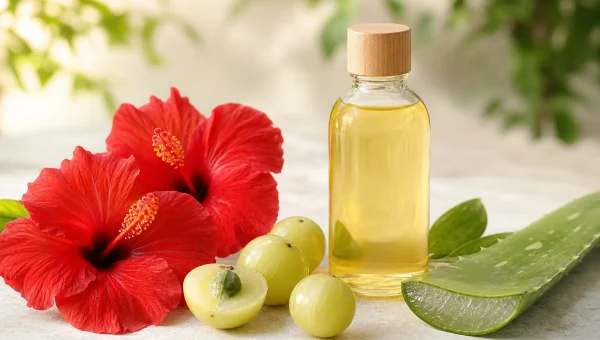
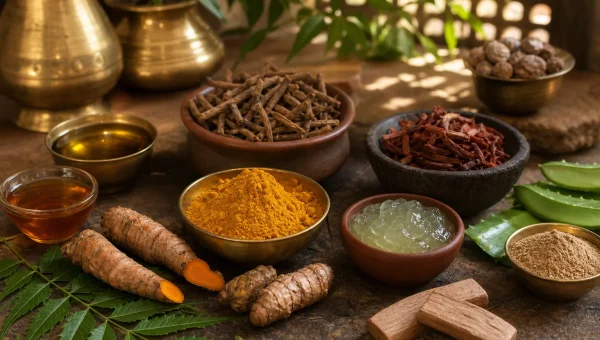
Bhringraj (Eclipta alba) is one of Ayurveda’s best-known hair-support herbs. The Ayurvedic Pharmacopoeia of India lists Bhringaraja as Keshya, meaning supportive for hair, and includes classical formulations such as Bhringaraja Taila, Bhringamalakadi Taila, Nili Bhringadi Taila, and Bhringarajasava. Modern animal experiments have also investigated Eclipta extracts for hair-growth activity, but this does not replace diagnosis or individualized treatment in people.
Amalaki (Emblica officinalis or Phyllanthus emblica) is widely used in Ayurveda as a rejuvenative fruit and a component of Triphala. It is naturally rich in vitamin C, with reported values varying by cultivar and analysis, and it fits especially well when Pitta heat, tissue depletion, or digestive correction are part of the picture.
Shatavari (Asparagus racemosus) is a nourishing, cooling Ayurvedic herb traditionally used for female reproductive and tissue-support contexts. It may be considered when dryness, depletion, postpartum weakness, or Pitta-Vata aggravation is present, but it should not be used as a blanket solution for every case of androgen-related or hormonally complex hair loss.
Food matters as much as herbs. Regular meals, adequate protein, iron-rich foods, mineral-rich seeds, seasonal fruits, cooked vegetables, and appropriate fats support the body’s ability to build and maintain tissues. Very restrictive dieting, crash weight loss, chronic fasting, and low-protein intake can worsen shedding in susceptible people.
Vata-Specific Additions
Vata-type hair loss responds best to nourishment, warmth, rhythm, and oiliness in the right amount. Favor warm cooked meals, soups, stews, mung dal, sesame, soaked almonds, ghee if suitable, and a consistent sleep schedule. Black sesame seeds are traditionally valued for mineral-rich nourishment, while Ashwagandha or Shatavari may be considered by a practitioner when depletion, stress, and poor recovery are prominent.
Pitta-Specific Additions
Pitta-type hair loss responds best to cooling, calming, and reducing inflammatory triggers. Favor Amalaki, coriander, fennel, bitter greens, soaked raisins, coconut in suitable forms, and a diet that reduces excessive chilli, sour pickles, alcohol, deep-fried foods, and fermented foods when they clearly worsen heat symptoms. Guduchi and Sariva are traditionally used in cooling and Pitta-Rakta contexts, but they should be selected with professional guidance, especially if there is liver disease, autoimmune disease, pregnancy, or ongoing medication use.
Kapha-Specific Additions
Kapha-type hair loss responds best to lightening, stimulation, and channel-clearing routines. Reduce excess sugar, heavy dairy, fried foods, daytime sleeping, and late-night heavy meals. Favor warm water, lighter dinners, movement that produces mild sweating, and spices such as ginger and black pepper when appropriate. Trikatu is a classical combination of ginger, black pepper, and long pepper, while Guggulu is traditionally used in Kapha-Ama and channel-stagnation contexts; both should be used carefully and only when suitable.
External Treatments: Oils by Type
Oil therapy is useful when it matches the scalp. A dry Vata scalp often benefits from regular oiling, while a hot Pitta scalp needs cooling and gentle oils, and a heavy Kapha scalp usually needs less oil and better cleansing. More oil is not always better.
Vata-Type Hair Oil Protocol
Warm Bhringraj Taila or Bhringraj-infused sesame oil is a useful Vata approach when the scalp is dry and the hair is brittle. Warm 2–3 tablespoons by placing the bottle in hot water, apply section by section to the scalp, and massage gently with the fingertips for about 10 minutes. Leave it for at least 1 hour, or overnight if it suits your scalp, then wash with a gentle shampoo. Repeat 2–3 times per week if the scalp remains dry and comfortable.
Pitta-Type Hair Oil Protocol
For Pitta-type heat, sensitivity, redness, or premature greying tendency, choose cooling and gentle oils such as Brahmi Taila in a coconut base or Neelibhringadi Taila, a traditional formulation that includes Neeli and Bhringraj. Avoid overheating the oil, harsh rubbing, chemical irritation, and prolonged heat exposure after oiling. A night application followed by morning washing may suit some Pitta scalps, provided it does not increase itching or clogging.
Kapha-Type Hair Oil Protocol
Kapha-type scalps usually need restraint with oil. Apply a small amount only to the scalp, not heavily through the lengths, and leave it for 30–45 minutes before washing thoroughly. Once weekly oiling may be enough. If the scalp is sticky, itchy, scaly, or greasy soon after washing, prioritize light cleansing, diet correction, exercise, and professional evaluation for persistent dandruff or seborrheic dermatitis.
When to Check: The Blood Work List
If hair loss is sudden, patchy, scarring, painful, associated with illness, or persistent beyond a few months, discuss testing with a qualified healthcare provider. The exact tests depend on the pattern, history, diet, menstrual history, medications, and scalp examination.
| What to Discuss | Why It Matters | Notes |
|---|---|---|
| Complete blood count | Helps screen for anemia and other general health issues that can contribute to shedding | Useful when fatigue, heavy periods, dietary restriction, or chronic illness is present |
| Ferritin with iron studies | Hair follicles can be sensitive to low iron stores even before severe anemia appears | Interpret with a clinician because ferritin is also affected by inflammation and infection |
| TSH and free T4 | Both underactive and overactive thyroid states can contribute to diffuse hair loss | Especially important with weight change, fatigue, cold or heat intolerance, menstrual changes, or palpitations |
| Vitamin D, B12, zinc, or other nutrient tests when indicated | Nutrient deficits can worsen shedding and poor hair quality | Most useful when diet is restricted, digestion is poor, or deficiency symptoms are present |
| Androgen-related tests such as total testosterone, free testosterone, DHEA-S, SHBG, prolactin, or PCOS evaluation when indicated | Patterned thinning with acne, irregular cycles, hirsutism, or scalp oiliness may have a hormonal driver | Choose tests based on medical history rather than ordering a random panel |
| Dermatology scalp examination | Patchy loss, scarring, redness, scaling, pain, or rapid progression may require specific diagnosis | Early treatment matters in scarring alopecia and inflammatory scalp disease |
Realistic Timelines
Hair growth is slow. Scalp hair spends years in the growth phase, and shedding patterns often reflect triggers that happened weeks or months earlier. Ayurvedic care, nutrition correction, stress reduction, medical treatment, and topical therapy all require patience and consistency.
- Reduced shedding: often 6–12 weeks after the trigger is corrected, though timing varies
- Improved scalp comfort and hair texture: about 8–12 weeks with suitable care
- New short hairs becoming visible: commonly 3–6 months
- Noticeable density improvement: often 6–12 months, depending on the diagnosis
- Long-term stabilization: may require ongoing seasonal, nutritional, hormonal, or medical management
If a product promises dramatic regrowth in a few days, be cautious. A realistic plan should reduce the cause of shedding, protect the scalp, support nutrition, and track progress over months, not days.
When Minoxidil or Finasteride Is Appropriate Alongside Ayurveda
Ayurveda and dermatology do not have to compete. In female pattern hair loss, topical minoxidil is an established medical option and may be considered alongside Ayurvedic diet, lifestyle, and scalp care. Apply minoxidil to a clean, dry scalp as directed by a clinician, and keep oiling on separate days or with enough separation that the scalp is not coated immediately over the medication.
Finasteride is a 5-alpha reductase inhibitor used mainly for male pattern hair loss. It is contraindicated in pregnancy and should not be handled or used by women who are pregnant or may become pregnant unless a physician specifically advises otherwise. In selected post-menopausal women, dermatologists may consider it off-label, but that decision belongs in specialist medical care, not self-treatment.
The most practical approach is integrated: diagnose the type of hair loss, correct iron or thyroid issues when present, reduce the dosha pattern that is visible in the scalp and body, use topical medicines when appropriate, and support long-term tissue nourishment. For more on how seasonal routines affect hair health, particularly dryness and scalp sensitivity, see our Ritucharya guide.
Safety note: Bhringraj, Shatavari, Guduchi, Guggulu, Trikatu, medicated oils, and supplements should be discussed with a qualified practitioner or healthcare provider if you are pregnant, breastfeeding, trying to conceive, taking hormonal medication, using thyroid medication, taking blood thinners, managing liver disease, or living with a chronic medical condition. Guggulu and Guduchi deserve particular caution in people on medication or with liver, thyroid, autoimmune, or metabolic concerns.
Nothing in this article diagnoses or treats a medical condition. Use it as educational information and consult a qualified Ayurvedic practitioner or physician before starting herbs, supplements, detoxes, topical medicines, or therapeutic protocols, especially if pregnant, managing a condition, or taking medication.
References
- Aad (aad.org)
- Mayoclinic (mayoclinic.org)
- Aad (aad.org)
- Cks (cks.nice.org.uk)
- Easyayurveda (easyayurveda.com)
- Easyayurveda (easyayurveda.com)
- Jaims (jaims.in)
- Ijhsr (ijhsr.org)
- Ijrap (ijrap.net)
- Ayurvedic Pharmacopoeia of India
- Eclipta alba extract with potential for hair growth promoting activity (2009), PubMed
- Hair growth promoting activity of Eclipta alba in male albino rats (2008), PubMed
- Plant profile, phytochemistry and pharmacology of Asparagus racemosus (Shatavari): A review (2013), PubMed Central
- Functional and Nutraceutical Significance of Amla (Phyllanthus emblica L.): A Review (2022), PubMed Central
- Ayurvedic Pharmacopoeia of India
- An Ayurvedic formulation ‘Trikatu’ and its constituents (1992), PubMed
- Mskcc (mskcc.org)
- NCBI
- NCBI
- Integrative and Mechanistic Approach to the Hair Growth Cycle and Hair Loss (2023), PubMed Central
- My (my.clevelandclinic.org)
- Iron plays a certain role in patterned hair loss (2013), PubMed Central
- The Diagnostic Value of Serum Ferritin for Telogen Effluvium: A Cross-Sectional Comparative Study (2021), PubMed Central
- Cochrane (cochrane.org)
- Cks (cks.nice.org.uk)
- FDA
- NCBI
- NCCIH
The blood test recommendation before reaching for an oil or herb is the most responsible thing any Ayurvedic hair article has ever said. I spent six months applying Bhringraj oil while my ferritin was at 9. Getting the ferritin right changed everything.
I was looking for a plain explanation of The Ayurvedic Hair Loss. This would be easier to follow with a one-week sample plan.
My thyroid condition was missed for 18 months while I was trying everything topically. The advice to test first is the correct starting point and I’m glad it’s given such prominence here rather than buried in a disclaimer at the end.
I was skeptical when my vaidya first suggested dosha but six weeks in and I can tell something has shifted. Not placebo either, my blood work confirmed it.
The 100 hairs per day threshold and three months duration before seeking investigation is the clinical guidance that was missing from everything I’d read. Most articles panic you at any shedding. This one calibrates when it’s genuinely worth investigating.
I was looking for a plain explanation of The Ayurvedic Hair Loss. The examples make the advice less abstract.
The Pitta scalp inflammation photograph description (redness, warmth, sensitivity at crown) is my presentation exactly and I’ve been using Kapha-protocol oils recommended by an unqualified online source. No wonder they made things worse. This explains why dosha typing matters.
The realistic expectations section is the most honest part. Hair loss protocols in Ayurveda take 6-12 months minimum. Anyone promising faster results is either misleading you or you have a very specific and tractable cause.
I have PCOS-related hair loss and the hormonal driver makes pure topical approaches insufficient. How does the Ayurvedic protocol address the androgen excess that’s driving the follicle miniaturization in PCOS-pattern hair loss?
Checking ferritin first changed how I view hair loss routines.
My wife started the protocol described here 18 months ago after years of diffuse thinning and normal thyroid results. The density change became visible after about nine months. Not dramatic. But it moved in the right direction consistently.
The scalp massage technique specifications (direction, pressure, frequency) are the detail most hair oil articles completely omit. You can use the right oil incorrectly and not get the results. The mechanical stimulation component has its own therapeutic mechanism.
The advice around The Ayurvedic Hair Loss is specific enough to be useful. Would be useful to see a short checklist next.
The dosha breakdown helped me see why my frizzy hair isn’t just dryness.
Is it safe to mix minoxidil with Bhringraj oil on alternate days?
Seeing the realistic timeline makes six months feel more honest than two week miracle claims.
my vaidya in Pune recommended exactly this. nice to see it confirmed here
the bhringraj oil treatment you described actually reverses the smell problem if you add a few drops of rosemary. game changer
The warning about Guggulu and thyroid meds is something I hadn’t considered before.
🌿 Thanks!
sharing with my mom
does the approach differ for someone with multiple doshas elevated at once? ❤️
what about hair loss from postpartum hormonal changes? the causes section mentions this but the treatment protocol doesn’t differentiate
started this protocol 2 weeks ago. nothing notable yet but will report back in a month
same here
useful info but hard to find a practitioner who does this type of treatment outside major cities
I wish more doctors knew about this approach
after 6 months of consistent oiling with brahmi infused oil my hair thickness noticeably improved. takes patience though
I tried something similar on my own without guidance and had side effects. really recommend consulting a vaidya first
been doing this for 6 months, amazing difference in energy levels
धन्यवाद for the detailed protocol
tried this for 30 days, mixed results. maybe my constitution assessment is wrong
which of these approaches works best for Kapha constitution? the article mixes all three doshas
The The Ayurvedic Hair Loss angle is useful here. The timing advice is the part I would start with.
Good read
does anyone know if these herbs are safe while on blood thinners? would really appreciate a response ❤️
reading this in 2027, has anything changed about the dosage recommendations since this was published?
I came for The Ayurvedic Hair Loss and this answered the main question. Small daily changes are easier to follow than a perfect plan.
useful
tried 3 of the suggestions here. 2 worked well, 1 made no difference. good enough ratio for me
late to this but wanted to ask if anyone has combined these approaches with conventional treatment
Will try
bhringraj grown in my garden makes a much stronger oil than anything I’ve bought commercially 🙌
this is the most detailed breakdown of the topic I’ve found. saving for reference
नमस्ते, this is exactly what I was looking for 🙏
This makes sense for The Ayurvedic Hair Loss. Small daily changes are easier to follow than a perfect plan.
not sure about some of the claims here. would like to see proper citations for the traditional references
following this from UK, hard to find some of these herbs here
the seasonal rotation idea is something I had never considered before
the translation of Sanskrit terms throughout helps a lot for those of us learning this system
good information but the references section would make this much more credible