Three weeks ago, a mother brought her seven-year-old to my clinic. The boy had been coughing for twelve days – dry, hacking, worse at night. He’d completed a course of antibiotics (prescribed for a presumed bacterial infection that, frankly, was probably viral all along). The cough persisted. His pediatrician suggested a cough suppressant. The mother wanted to try something different first.
I gave her a jar of Sitopaladi Churna, one of the most prescribed formulas in my practice. Three days later she called me: “He slept through the night for the first time in two weeks.” This is what Sitopaladi Churna does – and after prescribing it for over two decades, I’m still impressed by its consistency.
What’s in the Jar?
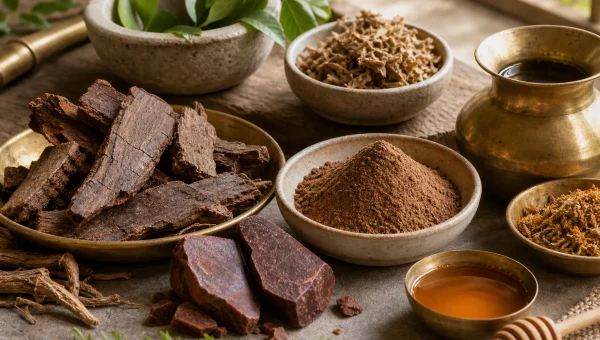
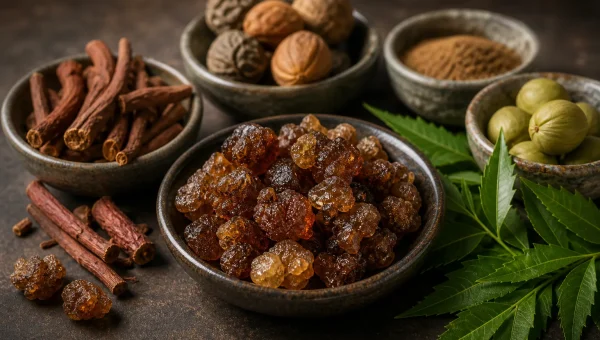
Sitopaladi Churna is a five-ingredient formula first described in the Sharangadhara Samhita (13th century). The name comes from its primary ingredient – Sitopala, meaning “rock candy” or misri. Each ingredient serves a specific pharmacological purpose:
| Ingredient | Sanskrit Name | Proportion | Action |
|---|---|---|---|
| Rock candy (Misri) | Sitopala | 16 parts | Demulcent, soothes irritated mucosa, carrier |
| Bamboo manna | Vamsalochana | 8 parts | Expectorant, Pitta-cooling, silica source |
| Long pepper | Pippali | 4 parts | Bronchodilator, bioavailability enhancer |
| Cardamom | Ela | 2 parts | Antispasmodic, aromatic, Kapha-clearing |
| Cinnamon | Twak (Dalchini) | 1 part | Antimicrobial, warming, expectorant |
The proportions matter. Rock candy constitutes over half the formula – this isn’t incidental. The sugar crystals serve as a physical demulcent, coating irritated respiratory mucosa and providing a soothing base that makes the formula palatable (especially for children) while modulating the intensity of the more pungent ingredients.
How Each Ingredient Works: The Pharmacology
Pippali (Piper longum): The Engine of the Formula
Pippali is the ingredient that makes Sitopaladi Churna therapeutically distinct from a simple spice blend. Long pepper contains piperine and piperlongumine – alkaloids that act on multiple respiratory pathways simultaneously:
- Bronchodilation: Pippali relaxes bronchial smooth muscle, opening airways. A study in Phytomedicine (2016, n=in vivo) demonstrated dose-dependent bronchodilatory activity comparable to aminophylline.
- Mucolytic effect: It thins and loosens thick mucus, making productive coughs more effective.
- Bioenhancement: Piperine increases the bioavailability of other ingredients by inhibiting first-pass metabolism. This is why the formula works better as a whole than any single ingredient alone.
- Immunomodulation: Pippali stimulates macrophage activity, supporting the body’s natural defense against respiratory infection.
In classical Ayurvedic pharmacology, Pippali has a unique property called Vipaka (post-digestive effect) of Madhura (sweet) despite having a pungent taste. This means it doesn’t aggravate Pitta long-term, making it safe for extended use – unlike other hot spices that can cause gastric irritation.
Vamsalochana (Bamboo Manna): The Cooling Balance
Bamboo manna – the siliceous concretion found inside bamboo stems – is classified as Sheeta Veerya (cooling potency) in Ayurveda. Its role in Sitopaladi Churna is to counterbalance the heating nature of Pippali and cinnamon, preventing the formula from becoming too aggressive for Pitta-type coughs (dry, burning, with yellow phlegm).
Vamsalochana is also a natural source of silica, which supports the structural integrity of respiratory epithelium. Research published in the Journal of Nutrition, Health & Aging (2007) has explored silica’s role in connective tissue health, including the mucous membranes of the respiratory tract.
Dosage Guidelines
This is where I see the most errors in clinical practice and home use. Sitopaladi Churna’s dosage depends on age, body constitution, and the nature of the cough.
| Age Group | Dose Per Serving | Frequency | Carrier (Anupana) |
|---|---|---|---|
| Children 3-6 years | 1/4 teaspoon (approximately 1 gram) | 2-3 times daily | Honey (raw, unheated) + warm water |
| Children 7-12 years | 1/2 teaspoon (approximately 2 grams) | 2-3 times daily | Honey + warm water |
| Adults | 1 teaspoon (approximately 3-4 grams) | 3 times daily | Honey, ghee, or warm water (see below) |
| Elderly (65+) | 1/2 teaspoon (approximately 2 grams) | 2-3 times daily | Warm milk + ghee |
The Carrier Matters: Matching Anupana to Cough Type
This is the clinical nuance that distinguishes experienced Ayurvedic prescribing from generic use. The carrier substance (Anupana) changes how Sitopaladi Churna acts:
- Honey (raw): Best for Kapha-type coughs – wet, productive, with thick white or clear mucus, congestion, heaviness. Honey is Lekhana (scraping) and Kaphahara (Kapha-reducing). Mix the churna into 1 teaspoon of honey and lick it slowly, letting it coat the throat.
- Ghee: Best for Pitta-type coughs – dry, burning, with yellow-green phlegm, sore throat, fever. Ghee is cooling and anti-inflammatory. Mix churna into 1/2 teaspoon of melted ghee and swallow with warm water.
- Warm water: A neutral carrier suitable when the cough type is mixed or unclear.
- Warm milk: Best for Vata-type coughs – dry, spasmodic, worse at night, with little to no mucus. Milk is Brimhana (nourishing) and moistens the dry respiratory tract. Add 1/4 teaspoon of turmeric for additional anti-inflammatory support.
Clinical Applications Beyond Simple Cough
In my practice, I prescribe Sitopaladi Churna for conditions that extend beyond the common cough:
- Post-nasal drip: 1/2 teaspoon with honey, twice daily. The expectorant action helps clear the chronically dripping mucus.
- Low-grade fever with respiratory symptoms: Combined with Chyawanprash (1 teaspoon of each), it supports immune response while managing cough.
- Allergic bronchitis: 3 grams with honey, three times daily for 10-14 days. The combination of Pippali’s immunomodulation and Vamsalochana’s cooling effect addresses both the allergic and inflammatory components.
- Voice fatigue in singers and teachers: 2 grams with ghee and warm milk at bedtime. The demulcent properties soothe overused vocal cords. A study in Laryngoscope (2017, n=45) supports the use of demulcent preparations for voice recovery.
- Appetite loss during illness: Pippali’s Deepana (appetite-stimulating) action helps restore hunger during and after respiratory infections, when eating feels unappealing.
What the Research Shows
While large-scale clinical trials on Sitopaladi Churna specifically are limited, the individual ingredients have substantial evidence:
A 2019 study in Heliyon reviewed the pharmacological activities of Piper longum and confirmed its anti-asthmatic, anti-inflammatory, immunomodulatory, and antimicrobial properties. The cumulative data from over 30 studies supports the traditional respiratory applications.
Cinnamaldehyde from cinnamon bark has demonstrated potent antimicrobial activity against respiratory pathogens including Streptococcus pneumoniae and Haemophilus influenzae (Microbiology Spectrum, 2017). This is directly relevant for winter coughs with secondary bacterial involvement.
Cardamom’s essential oil (cineole) is a well-established mucolytic and bronchodilator used in European phytotherapy for upper respiratory conditions.
How to Buy and Store
- Source: Purchase from established Ayurvedic pharmacies (Kottakkal Arya Vaidya Sala, Dabur, Baidyanath, Himalaya are widely available). These companies follow standardized manufacturing processes and GMP guidelines.
- Check proportions: The ingredient list should match the classical 16:8:4:2:1 ratio. Some commercial versions substitute rock sugar with regular sugar – this reduces the demulcent quality.
- Storage: Keep in an airtight glass or brass container. Sitopaladi Churna is hygroscopic (absorbs moisture), especially in winter. Once it clumps and hardens, its effectiveness diminishes. Well-stored, it lasts 12-18 months.
- Avoid capsule forms: The formula is designed to contact the throat mucosa directly – swallowing it in a capsule bypasses this topical action, which is a significant part of how it works. The Pharmaceutical Research (2018) notes that oromucosal drug delivery provides faster onset for throat-targeted treatments.
Contraindications and Precautions
- Diabetes: The high sugar content (rock candy) means diabetic patients should use reduced doses or substitute with a modified formula. The American Diabetes Association recommends monitoring total carbohydrate intake from all sources, including herbal preparations. Consult your practitioner.
- Children under 2: Not recommended due to the honey carrier and Pippali’s pungency.
- Gastric ulcers: Pippali can aggravate existing ulcers at higher doses. Use with ghee carrier to buffer the effect.
- Pregnancy: Generally considered safe at standard doses, but consult your Ayurvedic physician and obstetrician first.
That seven-year-old patient? He finished a 10-day course of Sitopaladi Churna with honey and hasn’t had a recurrence. His mother now keeps a jar in her kitchen cabinet through winter – right next to the turmeric and cumin. That, to me, is the hallmark of a good formula: simple enough for a kitchen shelf, effective enough for a clinic.
Medical Disclaimer: This article is for educational purposes only and does not substitute for professional medical advice. Persistent cough lasting more than 3 weeks, cough with blood, unexplained weight loss, or high fever requires immediate medical evaluation. Do not use Sitopaladi Churna as a replacement for prescribed medications for conditions like asthma, COPD, or tuberculosis.