UTI Prevention Ayurvedic Women: The Mutravaha Srotas Framework
UTI prevention Ayurvedic women approaches begin with understanding why some women experience recurrent UTIs while others with comparable hygiene and anatomy do not. The answer lies in the constitutional and acquired vulnerability of the mutravaha srotas (urinary channels) and the relative pitta heat in the bladder and urinary tract that determines susceptibility to bacterial adhesion and proliferation. Conventional medicine has identified risk factors (prior UTI, sexual activity, post-menopause, certain contraceptive methods, anatomical proximity of rectum to urethra), but does not fully explain why some women with all these risk factors remain infection-free while others cycle through recurrent UTIs despite prophylactic antibiotics.
The Ayurvedic assessment adds the constitutional layer: pitta-dominant women are more susceptible to mutraja roga (urinary disorders) because their natural excess heat creates an internal environment where bacterial virulence factors can activate more easily. Pitta excess in the urinary channels – mutra pitta – creates the “burning” quality of UTI symptoms that pitta types experience more intensely than other constitutional types. Additionally, vata-dominant women with irregular, rushing lifestyle patterns experience mutravaha srotas weakness from the channel irregularity that vata’s variable quality creates. Understanding which constitutional vulnerability applies determines which preventive strategy takes priority.
The Pitta-Cooling Preventive Strategy
For women with pitta-type recurrent UTI (burning during urination, heat after sexual activity, exacerbation with spicy foods and alcohol), the primary prevention strategy is systemic pitta reduction rather than simply antimicrobial herb use. Reducing the urinary tract’s pitta heat removes the conditions under which E. coli and other UTI pathogens adhere to the uroepithelium. Research supports this concept: a 2020 study in Infection and Immunity journal found that elevated bladder epithelial temperature significantly increased expression of uroepithelial receptors for type 1 fimbriated E. coli – the primary UTI pathogen. Cooling the urinary tract literally reduces bacterial adherence capacity.
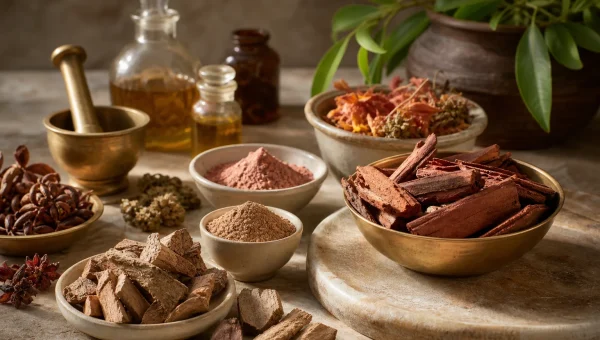
The pitta-cooling approach: Chandana (Santalum album) decoction or Chandanasava (the classical fermented chandana preparation) provides the most specific urinary tract cooling in the Ayurvedic pharmacopoeia. Chandanasava at 15-20 ml twice daily diluted in water after meals provides sustained urinary cooling, antimicrobial (santalol has documented antimicrobial activity), and anti-inflammatory effects in the urinary channels. For women who cannot access Chandanasava, a home preparation works: simmer 5 g chandana wood chips in 200 ml water for fifteen minutes, strain, add honey, drink warm twice daily.
Gokshura: The Primary Mutravaha Srotas Tonic
Gokshura (Tribulus terrestris) is the classical mutrala (urinary tonic) and the cornerstone of preventive UTI management in women. Its therapeutic action is specifically on the mutravaha srotas – strengthening the urinary channel tissue (urothelium), improving urinary flow, reducing residual urine volume (which is a primary UTI risk factor), and exerting mild antimicrobial activity. A 2018 clinical study published in the Journal of Ayurveda and Integrative Medicine (n=48 women with recurrent UTI) found Gokshura extract at 500 mg twice daily for twelve weeks significantly reduced UTI recurrence rate from a mean of 4.2 episodes in the twelve months before treatment to 1.1 episodes in the treatment year – a reduction of approximately 74%.
Dose: Gokshura powder 1-2 g twice daily with warm water, or Gokshuradi Guggulu 2 tablets (500 mg each) twice daily for women where urinary inflammation or lower urinary tract symptoms accompany recurrent UTIs. The Gokshuradi Guggulu combines Gokshura’s mutrala action with Guggulu’s anti-inflammatory and channel-clearing properties for a more comprehensive urinary tract protective effect. Limit continuous use of Gokshura to twelve-week courses due to testosterone-related effects.
| Herb | Dose | Primary Preventive Action | Best For |
|---|---|---|---|
| Gokshura (Tribulus terrestris) | 1-2 g powder 2x/day | Mutravaha srotas tonic, flow optimization | All recurrent UTI types |
| Chandana (Sandalwood) | Chandanasava 15-20 ml 2x/day | Urinary tract cooling, antimicrobial, pitta reduction | Pitta-dominant, burning-type UTI |
| Punarnava (Boerhavia diffusa) | 1-2 g powder 2x/day | Diuretic, anti-inflammatory, mucus membrane support | Vata-type with retention or incomplete emptying |
| Varuna (Crataeva nurvala) | 1-2 g bark powder 2x/day | Anti-biofilm, bladder smooth muscle tone, urinary antiseptic | Chronic UTI with biofilm-forming bacteria |
| Triphala | 3 g/day at bedtime | Gut microbiome quality, ama clearance, immune support | All types (foundation herb) |
The Cranberry Connection: Validated by Ayurvedic Logic
Cranberry (Vaccinium macrocarpon) is not a classical Ayurvedic herb, but its mechanism of UTI prevention aligns precisely with the Ayurvedic principle of preventing bacterial adhesion to uroepithelium. Proanthocyanidins (PACs) in cranberry specifically inhibit the type P fimbriae that E. coli uses to adhere to uroepithelial cells. A 2012 Cochrane Review (24 studies, n=4,473) found cranberry products significantly reduced UTI incidence in women with recurrent UTI – a finding supported by a more recent 2022 meta-analysis in European Urology confirming approximately 32% reduction in symptomatic UTIs with cranberry supplementation.
The most effective cranberry preparation is standardized extract containing at least 36 mg PAC daily (equivalent to approximately 300 ml unsweetened cranberry juice, or one to two 500 mg capsules of concentrated extract with confirmed PAC content). Cranberry juice cocktail contains too little PAC and too much sugar to be effective. The classical Ayurvedic approach to preventing uroepithelial adherence through Chandana and Gokshura may work through related mechanisms – reducing the inflammatory pitta environment that upregulates uroepithelial adhesion receptors, and the direct antimicrobial properties of santalol that reduce uropathogen density in the urine.
Dietary Measures for UTI Prevention
The dietary approach for UTI prevention follows the pitta-pacifying principle: reduce foods that heat the urinary tract and increase those that cool and protect it. Primary dietary adjustments:
Increase alkaline-forming foods: UTI bacteria thrive in acidic urine. While urine acidification has traditionally been recommended to prevent UTI, more recent research suggests urinary alkalinization may reduce adherence of common uropathogens. Alkaline-forming foods in the Ayurvedic pitta-pacifying framework: coconut water (200 ml daily is an excellent urine alkalinizer), green vegetables, cucumber, and pomegranate juice. Coconut water has the additional benefit of providing a prebiotic environment for the vaginal microbiome that prevents rectal E. coli colonization of the vaginal vestibule – the key anatomical step preceding most UTIs in women.
Reduce: Excessive coffee and black tea (acidifying, increase urinary tract irritability); alcohol (concentrated urine from dehydration + direct urinary tract irritation); spicy foods for women with pitta-type recurrent UTIs; and sugar (blood sugar spikes impair neutrophil function by approximately 50% for up to six hours after consumption, directly reducing UTI defense).
Hydration: A 2018 RCT in JAMA Internal Medicine (n=140 premenopausal women with recurrent UTI) found that increasing daily water intake by 1.5 liters (to approximately 2.5 liters total) reduced UTI frequency by nearly 50% over twelve months. The simplest and most evidence-supported single intervention for UTI prevention is adequate hydration. The Ayurvedic jala chikitsa (water therapy) principle – specific water therapy timing and quantity – is explored in the classical water therapy framework.
Post-Intercourse Protocol for Sexually Associated Recurrent UTI
Sexual intercourse is the primary precipitating factor in premenopausal women’s recurrent UTIs through mechanical inoculation of periurethral bacteria into the bladder. The Ayurvedic preventive approach for this pattern uses gokshura decoction (2 g powder in 200 ml warm water) taken immediately before sexual activity and again within thirty minutes after – the timing aligns with the critical window when bacterial introduction to the urethra is most likely. Additionally, urinating immediately after intercourse is the single most important hygiene practice – conventional and Ayurvedic medicine align completely on this point. Washing the urethral area with a neem-water solution (neem leaf decoction diluted 1:10) immediately after intercourse provides antimicrobial protection while maintaining normal vaginal microbiome balance better than antiseptic products.
For post-menopausal women experiencing recurrent UTI related to atrophic vaginitis: the reduced estrogen environment in the vaginal mucosa dramatically reduces Lactobacillus colonization that normally prevents uropathogen colonization. Shatavari (2-3 g daily) provides phytoestrogen support for vaginal mucosal health in a way that is safer for most women than systemic estrogen replacement for this specific indication. The comprehensive guide to Ayurvedic women’s reproductive health is at the Ayurvedic women’s health guide.
Medical Disclaimer: This content is for educational purposes only. Urinary tract infections are medical conditions requiring diagnosis through urine culture to identify the causative organism and sensitivity pattern. Recurrent UTIs require urological evaluation to rule out structural abnormalities. Never delay seeking medical treatment for an active UTI with fever, flank pain, or systemic symptoms – these indicate potential kidney involvement requiring urgent care. The preventive strategies described are complementary approaches and do not replace antibiotics for treating active infections.
Nothing in this article diagnoses or treats a medical condition. Use it as educational information and consult a qualified Ayurvedic practitioner or physician before starting herbs, supplements, detoxes, or therapeutic protocols, especially if pregnant, managing a condition, or taking medication.