
Bile Acid Liver Ayurveda: Pachaka Pitta and the Hepatobiliary Interface
Bile acid liver Ayurveda connections are best understood as a functional bridge between two languages of physiology. Modern anatomy describes bile as a liver-made fluid that is stored and concentrated in the gallbladder and released into the duodenum to support fat digestion and removal of cholesterol-derived waste. Ayurveda describes digestion primarily through agni and pachaka pitta, with the main digestive seat in the region of grahani, the small-intestinal digestive centre. The two descriptions should not be collapsed into a single identical concept, but the overlap is clinically useful: both systems place decisive importance on the quality, timing, and downstream effects of digestive transformation.
Modern bile-acid physiology also gives a clear reason why liver, gallbladder, intestine, cholesterol, bowel regularity, glucose metabolism, and gut microbes often move together in clinical practice. Bile acids are synthesized from cholesterol in the liver, secreted into the intestine, modified by intestinal bacteria, and mostly returned to the liver through enterohepatic circulation. They also act as signaling molecules through receptors such as FXR and TGR5, influencing bile-acid synthesis, lipid handling, glucose regulation, and intestinal hormone release. In Ayurvedic language, this belongs to the working field of agni, pitta, meda, mala-pravritti, and srotas flow rather than to digestion alone.
Bile Acid Synthesis and the Cholesterol Connection
In adults, roughly 0.5 g of cholesterol is converted into bile acids each day, mainly into the primary bile acids cholic acid and chenodeoxycholic acid. Only a small portion is lost in stool; most is reabsorbed from the terminal ileum and returned to the liver. This efficient recycling explains why even small changes in bile-acid binding, intestinal transit, liver synthesis, or gallbladder emptying can influence cholesterol balance and digestive comfort.
Bile-acid sequestrant medicines reduce LDL cholesterol by binding bile acids in the intestine and increasing their fecal loss, which pushes the liver to use more cholesterol for new bile-acid production. A gentler dietary version of the same principle is seen with viscous soluble fibers such as psyllium and oat beta-glucan, which can support bile-acid turnover and LDL reduction. Ayurveda does not describe this as “bile-acid sequestration,” but its meda, kleda, agni, and mala framework gives a practical clinical language for why fiber-rich, properly timed meals are preferred over heavy, irregular, low-fiber eating patterns in kapha-meda disorders.
Classical Ayurvedic Map: Agni, Pachaka Pitta, Ranjaka Pitta and Yakrit
Pachaka pitta is classically associated with digestion in the grahani region, while yakrit and pliha are more closely linked with ranjaka pitta and rakta-related transformation. For this reason, it is more accurate to say that hepatobiliary function is an interpretive bridge to Ayurvedic ideas of agni, pachaka pitta, ranjaka pitta, yakrit, meda, and srotas, not that Ayurveda directly describes bile acids in modern biochemical terms. This distinction keeps the classical doctrine intact while still allowing useful modern comparison.
Ayurvedic Herbs with Hepatobiliary Relevance
Several Ayurvedic dravyas act in the liver-intestinal field, but they should be understood through their classical rasa, guna, virya, vipaka, karma, and formulation context rather than as direct substitutes for modern bile-acid drugs. The most relevant herbs here are bitter, digestive, mild laxative, meda-kapha regulating, or yakrit-supportive, and their use depends on the person’s agni, bowel pattern, pitta status, gallbladder symptoms, pregnancy status, medicines, and diagnosis.
Kutuki (Picrorhiza kurroa): Kutuki is one of the more specific Ayurvedic herbs for yakrit-pitta and kamala-type presentations. The Ayurvedic Pharmacopoeia of India identifies the drug as the dried rhizome with root of Picrorhiza kurroa and lists its rasa as tikta, guna as ruksha and laghu, virya as shita, vipaka as katu, and karmas including dipani, bhedini, pittahara, and jvarahara. Its official therapeutic uses include kamala, jvara, daha, kushtha, vishamajvara, arocaka, and shvasa. Modern work on picroliv, a fraction from Picrorhiza kurroa, supports hepatoprotective, choleretic, and anticholestatic activity in animal models. Because Kutuki can be purgative and strong, it belongs in practitioner-guided use rather than casual daily self-supplementation.
Bhumi Amalaki / Tamalaki (Phyllanthus group): In Ayurvedic practice, bhumi amalaki and tamalaki are used in liver, pitta, rakta, and urinary contexts, with Phyllanthus species appearing in pharmacognostic and pharmacopoeial discussions under Tamalaki. For the hepatobiliary discussion, its place is best framed as liver-supportive and pitta-meda relevant, not as a proven gallstone-dissolving herb. Modern clinical and preclinical work on Phyllanthus niruri and related species has focused more on liver enzymes, fatty liver parameters, oxidative stress, and urinary stone biology than on established treatment of gallbladder stones.
Kalmegh (Andrographis paniculata): Kalmegh is a strongly bitter herb traditionally used for appetite, fever, liver, pitta-kapha, and digestive indications. Its bitter profile makes it relevant to the agni-yakrit interface, and andrographolide has been studied for protection in experimental cholestatic liver injury models. The most accurate practical role is as a short-course bitter liver-digestive herb under supervision, especially when there is heat, pitta involvement, poor appetite, or sluggish digestion. It should not be presented as a verified FXR-targeting bile-acid regulator in human clinical practice.
Triphala: Triphala is the classical three-fruit combination of Haritaki, Bibhitaki, and Amalaki. It is not a direct “bile-acid drug,” but it is relevant because bowel regularity, gut microbial metabolism, and meda-kapha balance all influence the intestinal side of bile-acid recycling. Its practical use in this context is gentle support for mala-pravritti, digestive rhythm, and metabolic hygiene, especially when constipation, heaviness, and kapha-meda features are present. Loose stools, dehydration, drug absorption issues, pregnancy, and frailty require caution.
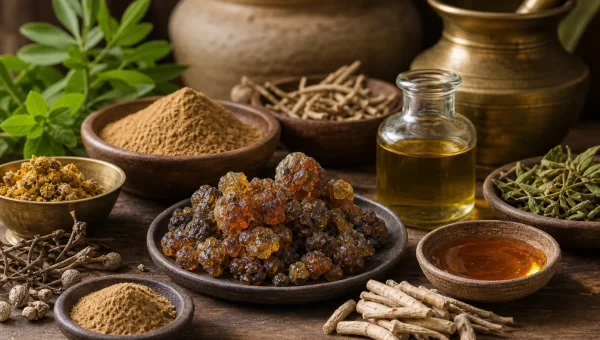
Guggulu: Guggulu is the purified resinous exudate of Commiphora species used in many classical guggulu formulations. Its modern relevance comes from guggulsterones, which interact with the FXR bile-acid receptor in experimental systems and therefore sit at the cholesterol-bile-acid interface. Clinically, however, lipid outcomes have been inconsistent, and guggulu should not be described as a guaranteed LDL-lowering substitute. In Ayurveda it is more properly used in formula context for kapha, meda, granthi, shotha, and channel-clearing indications, after purification and with attention to pitta aggravation, thyroid medicines, anticoagulants, pregnancy, and liver status. The cholesterol management framework for medoroga is developed in the cholesterol medoroga lipid protocol.
| Herb / Formula | Verified Ayurvedic Profile | Hepatobiliary Relevance | Practical Note |
|---|---|---|---|
| Kutuki | Tikta rasa; ruksha-laghu guna; shita virya; katu vipaka; dipani, bhedini, pittahara | Yakrit-pitta and kamala context; choleretic and anticholestatic animal work on picroliv | Strong herb; practitioner-guided use |
| Bhumi Amalaki / Tamalaki | Used in pitta, rakta, liver, and urinary contexts in Ayurvedic practice | Liver-supportive adjunct; fatty-liver and oxidative-stress work is more relevant than gallstone claims | Do not use as primary gallstone treatment |
| Kalmegh | Strong tikta profile; traditionally used for appetite, liver, fever, and pitta-kapha disorders | Bitter agni-yakrit support; andrographolide studied in cholestatic liver injury models | Short-course use; avoid unsupervised use in pregnancy or liver disease |
| Triphala | Haritaki, Bibhitaki, and Amalaki combination | Supports bowel rhythm and the intestinal side of bile-acid recycling | Adjust for loose stools, frailty, and medicine timing |
| Guggulu | Purified resinous exudate used in classical guggulu formulations | Mechanistic interest at the FXR-cholesterol-bile-acid interface; clinical lipid response is inconsistent | Formula-specific and supervision-dependent |
Dietary Support for Bile Acid Health
Dietary care for bile-acid health should focus on rhythm, fiber, moderate fat handling, bowel regularity, and avoidance of extremes. Ayurveda expresses this through agni protection, appropriate ahara timing, lightness where kapha-meda is dominant, and avoidance of heavy, irregular, incompatible, or excessive foods that disturb digestion and srotas flow.
Regular meals and gallbladder emptying: The gallbladder contracts in response to meals, especially when fat and protein stimulate cholecystokinin release. Long fasting, skipped meals, and crash dieting can encourage bile stasis and gallstone risk in susceptible people. A practical Ayurvedic approach is to eat at consistent times, avoid heavy late meals, and keep the main meal when digestive capacity is strongest.
Soluble fiber: Psyllium, oats, barley, vegetables, legumes, and other fiber-rich foods support stool bulk, gut microbial activity, and bile-acid turnover. This fits well with Ayurvedic meda-kapha management when digestion is adequate. Very high fiber taken abruptly can worsen bloating in mandagni, so it should be increased gradually with warm fluids and appropriate spices.
Methi and tikta foods: Fenugreek seed is listed in the Ayurvedic Pharmacopoeia of India with tikta rasa, picchila and snigdha guna, ushna virya, katu vipaka, and actions including balya, rucya, santarpana, mutrala, vajikara, and vrishya. In modern dietary terms, methi is a fiber- and saponin-containing seed that can support lipid and glucose handling when used as food. Bitter vegetables such as karela and methi leaves can be used as part of a kapha-meda balancing plate, while concentrated bitter herbs should be reserved for practitioner-guided use. Connections between diet, agni, and digestive channel health underlying healthy bile function are explored in the agni digestive fire guide.
Phosphatidylcholine and bile composition: Normal bile contains bile salts, cholesterol, and phosphatidylcholine, and this balance helps keep cholesterol dissolved. Food sources of choline and phospholipids, such as egg yolk for those who eat eggs and soy lecithin for those who use soy, may support the raw materials for healthy bile composition. This should be understood as nutritional support, not as a stand-alone treatment for gallstones.
Gallstone Risk and Ayurvedic Prevention
Cholesterol gallstones form when bile becomes supersaturated with cholesterol and gallbladder emptying is impaired, allowing crystals and sludge to develop. Common risk patterns include obesity, insulin resistance, rapid weight loss, prolonged fasting, low-fiber intake, and physical inactivity. Ayurveda would read this pattern through meda accumulation, kapha heaviness, agni disturbance, srotas obstruction, and irregular digestive rhythm rather than through cholesterol chemistry alone.
Prevention therefore has two layers. The modern layer emphasizes steady weight management, regular meals, slow rather than rapid weight loss, physical activity, high-fiber foods, and medical evaluation when symptoms appear. The Ayurvedic layer emphasizes agni protection, appropriate use of tikta-kashaya foods, avoidance of excessive guru-snigdha foods when kapha-meda is high, regular bowel movement, and individualized herbs only after assessment. The connection between srotas health in general, and the biliary field specifically, illustrates how classical channel theory can be used as a practical map of organ-system function. The broader srotas framework is at the srotas system guide.
Medical Disclaimer: This content is for educational discussion only. Liver disease, jaundice, right-upper-abdominal pain, fever with abdominal pain, pale stools, dark urine, vomiting, or suspected gallstones require evaluation by a qualified healthcare provider. Kutuki, Kalmegh, Guggulu, and concentrated hepatobiliary herbs should be used only under the guidance of a qualified Ayurvedic practitioner or physician, especially during pregnancy or breastfeeding, in liver disease, with diabetes medicines, anticoagulants, thyroid medicines, or hepatically metabolized medications. Herbal treatment should not replace urgent or indicated gastroenterological care for symptomatic gallbladder disease.
References
- NCBI
- MedlinePlus
- Bile Acid Metabolism in Liver Pathobiology (2018), PubMed Central
- Med (med.virginia.edu)
- Bile acids as metabolic regulators (2015), PubMed Central
- Intestine farnesoid X receptor agonist and the gut microbiota activate G-protein bile acid receptor-1 signaling to improve metabolism (2018), PubMed
- Frontiersin (frontiersin.org)
- TGR5-mediated bile acid sensing controls glucose homeostasis (2009), PubMed Central
- NCBI
- Effects of psyllium hydrophilic mucilloid on LDL-cholesterol and bile acid synthesis in hypercholesterolemic men (1992), PubMed
- The Cholesterol-Lowering Effect of Oats and Oat Beta Glucan: Modes of Action and Potential Role of Bile Acids and the Microbiome (2019), PubMed Central
- Charaka Samhita — Agni
- Easyayurveda (easyayurveda.com)
- Ayurvedic Pharmacopoeia of India
- Choleretic effect of picroliv, the hepatoprotective principle of Picrorhiza kurroa (1991), PubMed
- Anticholestatic effect of picroliv, active hepatoprotective principle of Picrorhiza kurrooa, against carbon tetrachloride induced cholestasis (1993), PubMed
- Wjgnet (wjgnet.com)
- Pharmacognostical study of Tamalaki (Phyllanthus fraternus Webster), a herb used in Tamaka-svasa (2011), PubMed Central
- Effects of one-year supplementation with Phyllanthus niruri on fibrosis score and metabolic markers in patients with non-alcoholic fatty liver disease: A randomized, double-blind, placebo-controlled trial (2023), PubMed
- Phyllanthus Niruri Standardized Extract Alleviates the Progression of Non-Alcoholic Fatty Liver Disease and Decreases Atherosclerotic Risk in Sprague-Dawley Rats (2017), PubMed Central
- Phyllanthus niruri as a promising alternative treatment for nephrolithiasis (2010), PubMed
- Auajournals (auajournals.org)
- Easyayurveda (easyayurveda.com)
- Sksinternationaluniversity (sksinternationaluniversity.ac.in)
- Effects of andrographolide on intrahepatic cholestasis induced by alpha-naphthylisothiocyanate in rats (2016), PubMed Central
- Nature (nature.com)
- Therapeutic Uses of Triphala in Ayurvedic Medicine (2017), PubMed Central
- Effects of Triphala on Lipid and Glucose Profiles and Anthropometric Parameters: A Systematic Review (2021), PubMed Central
- Natural Ingredient Resource Center
- Guggulsterone is a farnesoid X receptor antagonist in coactivator association assays but acts to enhance transcription of bile salt export pump (2003), PubMed
- Guggulipid for the treatment of hypercholesterolemia: a randomized controlled trial (2003), PubMed
- NCBI
- Nchr (nchr.elsevierpure.com)
- Molecular composition of biliary phosphatidylcholines, as related to cholesterol saturation, transport and nucleation in human gallbladder bile (1992), PubMed
- Phosphatidylcholine-enriched diet prevents gallstone formation in mice susceptible to cholelithiasis (2003), PubMed
- Recent advances in understanding and managing cholesterol gallstones (2018), PubMed Central
- NIDDK
- Mayoclinic (mayoclinic.org)
- Coffee stimulation of cholecystokinin release and gallbladder contraction in humans (1990), PubMed
Had gallstones and post-cholecystectomy bile acid conflicts. The Pachaka Pitta framework makes more sense than the typical avoid-all-fat advice.
How does dietary fat type affect the Pachaka Pitta balance in this framework?