Ghee Medicinal Properties Ayurveda: When Clarified Butter Becomes a Therapeutic Substance
Ayurveda treats ghrita, especially cow ghee, as both a nourishing food and a medicinal lipid. Its value changes with source, freshness, preparation method, age, and whether it has been processed with herbs. Classical Ayurvedic literature places ghrita among the principal sneha dravyas and gives it special importance because it can carry the qualities of substances processed with it while retaining its own character.
The practical lesson is that “ghee” is not one uniform substance in Ayurvedic use. Fresh cow ghee belongs in daily cooking and nourishment; curd-churned ghee preserves a traditional household method; aged ghee is a special physician-directed material; and siddha ghrita is a medicated preparation made through sneha paka. Understanding these distinctions allows ghee to be used with respect rather than as a vague cure-all.
The Ayurvedic Properties Shared by Cow Ghee
Cow ghee is described in Ayurveda as madhura in rasa, madhura in vipaka, sheeta in virya, and guru, snigdha, and mridu in guna. These qualities explain its classical use for vata-pitta pacification, nourishment, softness, and support of ojas. Charaka describes ghrita as useful for those seeking eyesight, strength, complexion, voice, nourishment, vitality, memory, intelligence, digestive strength, and strength of the sense organs.
Because ghrita is heavy and unctuous, Ayurveda does not recommend the same quantity for every person. Diet-level use may be suitable in small amounts when agni is steady, while therapeutic oleation is individualized by constitution, strength, digestion, disease stage, and purpose. Classical guidance also restricts oleation in conditions such as excessive kapha or meda, indigestion, ama, and several acute or vulnerable states.
Food chemistry also supports the practical difference between butter and ghee. Clarification removes most water and milk solids, giving ghee a higher smoke-point range than whole butter and making it more suitable for cooking when not overheated. Ghee is mainly a dairy fat made of triglycerides and fatty acids, with fat-soluble constituents varying by source and processing.
Grade 1: Nava Ghrita (Fresh Cow Ghee)
Nava ghrita, or fresh cow ghee, is the everyday form most suitable for kitchen use, nourishment, and gentle support of vata-pitta balance. In meals, it can soften dry foods, carry the aroma of spices, and add unctuousness without turning ordinary cooking into a medical protocol. Its sweet, cooling, and unctuous profile makes it especially valued where dryness, depletion, heat, or roughness are prominent, provided digestion can handle it.
For cooking, use fresh ghee for tempering spices, finishing dal, enriching rice, sautéing vegetables, and adding softness to dry preparations. Keep the heat below the point at which the fat smokes, because any cooking fat becomes less desirable once overheated. Properly made ghee should smell clean and sweet-nutty, not burnt, sour, or rancid.
Grade 2: Curd-Churned or Bilona-Style Ghee
Traditional household ghee is often made by culturing milk or cream into curd, churning the curd into butter, and then clarifying that butter into ghee. This is best understood as a traditional preparation method rather than a separate classical pharmacological category. The butter stage is navanita, while the clarified final product is ghrita.
Making curd-churned ghee at home: Culture clean pasteurized milk cream or full-fat yogurt-based cream until gently set, chill it, and churn until butter separates from buttermilk. Rinse the butter with clean cold water until the runoff is clear, then melt it slowly in a heavy pan. Simmer on low heat until bubbling subsides, moisture is driven off, the milk solids settle, and the fat becomes clear and fragrant. Strain through clean muslin into a dry glass jar. The goal is a moisture-free, clean, stable ghee; do not leave water, curd residue, or burnt solids in the final product.
| Form | Age / Process | Primary Ayurvedic Profile | Best Applications |
|---|---|---|---|
| Nava Ghrita | Fresh cow ghee | Madhura, sheeta, snigdha, nourishing, vata-pitta pacifying | Everyday cooking, nourishment, culinary anupana |
| Curd-Churned Ghee | Cultured curd or cream churned to butter, then clarified | Traditional cow-ghee profile with careful household processing | Premium culinary ghee, traditional preparation, daily food use |
| Purana Ghrita | Intentionally aged ghee; ten-year-old ghee is specially described in Charaka’s Unmada Chikitsa | Classically sharper, more penetrating, tridosha-alleviating, physician-directed | Special classical contexts such as unmada and apasmara under expert supervision |
| Siddha Ghrita | Ghee processed with herbal paste and liquid through sneha paka | Base ghrita qualities plus the direction of the processed herbs | Practitioner-selected medicated ghee, snehapana, targeted classical formulations |
Grade 3: Purana Ghrita (Aged Ghee)
Purana ghrita is not simply an old kitchen jar of ghee. In classical medical use, aged ghee is treated as a distinct therapeutic substance that requires proper preparation, moisture-free storage, and physician selection. Charaka’s Unmada Chikitsa describes ten-year-stored ghee as purana ghrita and gives it a special place in the management context of unmada and apasmara.
Classically described purana ghrita is not used for its pleasant flavor. It is associated with a stronger odor and a sharper taste profile than fresh ghee, and it is presented as a more potent medicinal material. Aged ghee should therefore be purchased only from trustworthy Ayurvedic pharmacies or prepared under strict storage discipline with clear documentation of age, vessel, batch, and condition.
Do not equate rancidity with purana ghrita. Sour, moldy, paint-like, stale, or visibly contaminated ghee is not therapeutic aged ghee. Properly aged ghrita must remain protected from water, dirt, repeated dipping, excess heat, and loose storage. Internal use, nasya, ocular use, and use in neurological or psychiatric contexts belong under a qualified practitioner’s care.
Grade 4: Siddha Ghrita (Medicated Ghee)
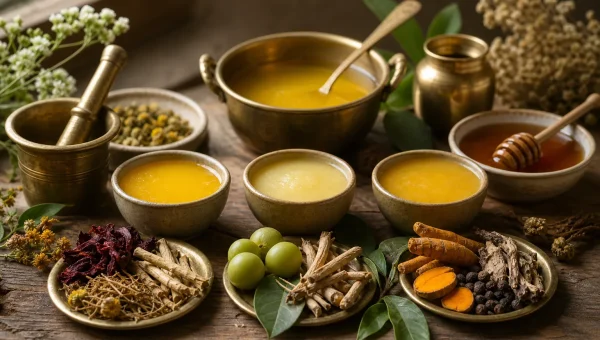
Siddha ghrita is medicated ghee prepared by processing ghrita with herbs, herbal paste, and a suitable liquid such as decoction, juice, milk, or water. This process is called sneha paka. The classical logic is that ghrita acts as a sneha base and carrier while taking on the therapeutic direction of the substances cooked into it.
When the herbs are nourishing, the ghrita is directed toward building and restoration; when stronger, hotter, or channel-clearing herbs are used, the preparation is directed differently. This is why medicated ghees are not interchangeable. Brahmi Ghrita, Panchagavya Ghrita, Triphala Ghrita, and other classical preparations must be understood by their full formulation, indication, dose, route, patient, and disease stage rather than by name alone.
A general sneha kalpana rule uses one part herbal paste, four parts sneha, and sixteen parts liquid when a text does not specify otherwise. Classical pharmacy adjusts this depending on the herb, liquid, formulation, and desired paka. At home, this principle may inform simple culinary herb ghee, but it should not be used to imitate clinical siddha ghrita formulas without training. The connection between internal ghee administration and cleansing procedures is discussed further in the ghrita pana internal ghee therapy guide.
Therapeutic Use and Dose: How Ayurveda Individualizes Ghee
Ayurveda does not define therapeutic ghee use by a single universal dose. Charaka classifies sneha dose by how long it takes to digest: lower, medium, and higher doses are judged by digestion time and by the patient’s strength, agni, bowel tendency, disease, and purpose of treatment. This is why a small amount of ghee in food and a supervised snehapana protocol are completely different uses.
- Cooking and daily diet: use small food quantities according to appetite, digestion, season, constitution, and the heaviness of the meal.
- Shamana use: when ghee is used to pacify a condition, the timing, vehicle, and accompanying diet should match the person’s dosha and agni.
- Shodhana snehapana: internal oleation before cleansing procedures is a supervised protocol, traditionally given after the previous meal has digested and continued only until proper signs appear.
- Nasya, ocular, and local use: use only the exact ghee preparation, route, and dose selected by a qualified practitioner; do not self-administer aged or medicated ghee into the nose or eyes.
Quality Markers: Recognizing Therapeutic Ghee
The therapeutic value of ghee depends on correct source, preparation, storage, and intended use. Good fresh ghee is clear when melted, pleasantly aromatic, free from burnt odor, and free from moisture or sediment. It should be stored in a clean, dry, tightly closed container and handled with a dry spoon to prevent contamination.
For purana ghrita, quality also requires trustworthy age documentation and careful storage history. For siddha ghrita, the label or pharmacy record should identify the classical formulation, ingredients, batch details, and intended use. Avoid products that rely only on marketing words such as “ancient,” “detox,” “A2,” or “medicinal” without transparent preparation and storage information.
Using Ghee Intelligently
Ghee’s healing role in Ayurveda comes from matching the right form to the right purpose. Fresh cow ghee is the most useful daily form; curd-churned ghee preserves a traditional preparation method; purana ghrita is a special aged substance for expert use; and siddha ghrita is medicine shaped by its herbs and processing. The broader role of ghee in nourishment is explored in the ghee healing power complete guide.
Seen this way, ghee is not merely a cooking fat and not a universal remedy. It is a food, an anupana, a sneha substance, and a pharmacy base whose value depends on preparation, dose, digestion, and context. Its movement through the body’s channels is connected with the Ayurvedic understanding of srotas, introduced in the srotas system guide.
Medical Disclaimer: This content is for educational and culinary guidance only. Therapeutic ghee preparations, including purana ghrita, nasya, ocular use, snehapana, and siddha ghrita, should be used only under the guidance of a qualified Ayurvedic practitioner or healthcare provider. People with cardiovascular disease, high cholesterol, gallbladder disease, liver or pancreatic disorders, pregnancy, acute digestive illness, or medication use should consult a qualified clinician before increasing ghee intake or using therapeutic ghee preparations.
Nothing in this article diagnoses, treats, cures, or prevents a medical condition. Use it as educational information and consult a qualified Ayurvedic practitioner or physician before starting herbs, supplements, detoxes, or therapeutic protocols.
References
- Charaka Samhita — Snehadhyaya
- Irjay (irjay.com)
- Chhs (chhs.colostate.edu)
- En (en.wikipedia.org)
- Wisdomlib — classical text
- Natural Ingredient Resource Center
- Charaka Samhita — Unmada Chikitsa
- Charaka Samhita — Psychiatric diseases
- Ovid (ovid.com)
- A comparative review study of Sneha Kalpana (Paka) vis-a-vis liposome (2011), PubMed Central
- Greenpharmacy (greenpharmacy.info)