Bhallataka Ayurvedic Herb: Therapeutic Power and the Price of Carelessness
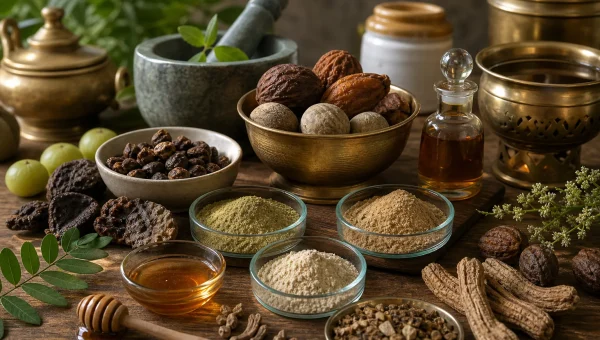
Bhallataka ayurvedic herb is one of the clearest examples of a classical Ayurvedic rule: a medicine can be powerful precisely because it is sharp, heating, penetrating, and dangerous when handled casually. Bhallataka is the fruit of Semecarpus anacardium L.f., commonly called the marking nut. Ayurvedic standards identify it as a potent fruit drug, describe its acrid irritant oil, and place it among medicines that require careful processing and physician-led use rather than household experimentation.
The central lesson of Bhallataka is not fear, but discipline. In the classical Rasayana context, Charaka describes Bhallataka preparations as nectar-like only when used according to the prescribed method, while also calling the fruits sharp, inflaming, and fire-like. This is the exact balance that defines the herb: it can be therapeutically valuable in carefully selected Kapha-dominant and obstructive conditions, yet raw or poorly processed Bhallataka can injure skin and mucosa.
Classical Identity and Ayurvedic Profile
The Ayurvedic Pharmacopoeia of India describes Bhallataka as the mature fruit of Semecarpus anacardium, a medium-sized tree of the Anacardiaceae family. Its Sanskrit synonyms include Aruṣkara and Bhallāta, and its English name is Marking Nut. The same pharmacopoeial monograph gives the fruit a distinctly sharp therapeutic profile: Madhura, Kaṭu, Tikta, and Kaṣāya in rasa; Laghu, Snigdha, and Tīkṣṇa in guṇa; Uṣṇa vīrya; Madhura vipāka; and actions including Dīpana, Pācana, Kaphahara, Vātahara, Chedī, Bhedī, and Medhya.
| Ayurvedic Attribute | Bhallataka Profile | Clinical Meaning |
|---|---|---|
| Rasa | Madhura, Kaṭu, Tikta, Kaṣāya | A complex taste profile used in deep metabolic and Kapha-related disorders |
| Guṇa | Laghu, Snigdha, Tīkṣṇa | Light, unctuous, and sharp; penetrates obstruction but can irritate when misused |
| Vīrya | Uṣṇa | Strongly heating; unsuitable for unsupervised use in active Pitta states |
| Vipāka | Madhura | Supports its Rasayana role when properly processed and tolerated |
| Karma | Dīpana, Pācana, Kaphahara, Vātahara, Chedī, Bhedī, Medhya | Kindles digestion, clears Kapha obstruction, supports Medhya use, and requires careful selection |
Why Bhallataka Burns: Chemistry Behind the Warning
The fruit is not dangerous by folklore alone; the pharmacognosy explains the warning. The Ayurvedic Pharmacopoeia describes oil glands and lysigenous cavities in the fruit containing an acrid, irritant, yellowish oily secretion, and lists the constituents as a tarry oil containing anacardic acid and the non-volatile alcohol cardol. Other phytochemical literature describes bhilawanol, anacardic-acid-related compounds, and urushiol-like catechols in the fruit oil. These compounds can produce blistering contact dermatitis and mucosal irritation when raw Bhallataka or its oil touches the body.
This is why Bhallataka cannot be treated like a common kitchen herb. The same sharp and penetrating quality that gives it a place in classical formulations also explains why careless handling, raw topical application, or improper internal use can lead to burning, itching, blisters, swelling, oral irritation, gastrointestinal distress, and urinary complaints. Bhallataka belongs in the hands of trained practitioners and licensed pharmacies, not in home processing experiments.
Shodhana: The Gatekeeper Between Medicine and Injury
Shodhana is the practical boundary between raw Bhallataka and a preparation that can be considered for therapeutic use. The Ayurvedic Pharmacopoeia notes that Bhallataka shodhana is to be referred to the Ayurvedic Formulary of India, and published Ayurvedic pharmaceutic work describes a traditional process using cow’s urine, cow’s milk, and brick powder. This is not a symbolic ritual; it is a controlled pharmaceutical procedure intended to reduce the vesicant character of the fruit and make it suitable for further formulation.
| Shodhana Stage | Classical/Pharmaceutic Medium | Typical Procedure Described in Pharmaceutic Studies | Purpose |
|---|---|---|---|
| Selection and preparation | Mature fruits; thalamus removed | Well-ripened fruits are selected and cleaned before processing | Reduces unsuitable raw material and prepares the fruit for purification |
| Gomutra soaking | Cow’s urine | Soaked for seven days with daily replacement and washing | Begins the reduction and transformation of irritant constituents |
| Godugdha soaking | Cow’s milk | Soaked for seven days with daily replacement and washing | Moderates sharpness and supports later medicinal use |
| Ishtika churna rubbing | Brick powder | Rubbed thoroughly for several days and washed with hot water | Helps remove residual irritating oil from the surface |
| Drying and storage | Clean drying and airtight storage | Processed fruits are dried and stored for formulation use | Prevents deterioration and contamination after purification |
Analytical comparisons of raw and shodhita Bhallataka report changes in chromatographic profiles after processing, supporting the classical insistence that the processed fruit is pharmaceutically different from the raw fruit. The important practical conclusion is simple: incomplete shodhana leaves a dangerous medicine, and excessive or careless processing may alter the intended formulation character.
Classical Therapeutic Role of Purified Bhallataka
Charaka presents Bhallataka in the Rasayana chapter and describes several preparations, including Bhallataka kṣīra, kṣaudra, taila, sarpi, guda-bhallataka, yūṣa, palala, saktu, lavaṇa, and tarpana. The text states that these preparations should be planned by a physician who understands the disease, constitution, and suitability of the patient. This single instruction is the key to the whole herb: Bhallataka is not merely “strong”; it is strong only when the patient, formulation, dose, season, diet, and tolerance are correctly aligned.
Deepana and Pachana: Bhallataka’s Dīpana and Pācana actions make it relevant in conditions where weak digestive fire, āma, heaviness, and Kapha obstruction dominate the presentation. This does not mean it is a general digestive tonic. It is reserved for specific patterns where the practitioner judges that its Uṣṇa and Tīkṣṇa qualities are appropriate.
Kapha-Vata obstruction: Charaka’s description emphasizes Bhallataka in Kapha-dominant disorders and obstructive states. The pharmacopoeial actions Kaphahara, Vātahara, Chedī, and Bhedī support this use. In Ayurvedic reasoning, this makes Bhallataka suitable only when obstruction, heaviness, sluggish metabolism, or Kapha covering Vata is central, and unsuitable when the main picture is burning, bleeding, acute inflammation, or fragile mucosa.
Arśa, Grahaṇī, Gulma, Krimi, and Kuṣṭha: The Ayurvedic Pharmacopoeia lists therapeutic uses including Arśa, Ānāha, Grahaṇī, Gulma, Krimi, and Kuṣṭha. These indications should be understood as classical categories, not as permission for self-treatment of hemorrhoids, abdominal masses, parasites, skin disease, or chronic digestive illness. In practice, Bhallataka is used through finished classical formulations and individualized prescribing, not by chewing nuts or applying raw oil.
Medhya Rasayana: The pharmacopoeial monograph includes Medhya among Bhallataka’s actions, and Charaka states that properly used Bhallataka promotes medhā and agni. This places it in a distinctive Rasayana category: not the gentle, cooling style of Brahmi or Mandukaparni, but a sharp, heating, Kapha-clearing Rasayana that must be protected by dose, anupāna, and pathya.
Modern Pharmacology Without Losing the Classical Caution
Laboratory pharmacology has examined Semecarpus anacardium extracts and isolated catechol compounds for cytotoxic, apoptosis-related, antioxidant, anti-inflammatory, and cognitive-effect models. One Journal of Ethnopharmacology paper isolated a catechol compound from the kernel and evaluated its activity in tumor cell lines. Later work on leaf extract reported dose-dependent effects in MCF-7 breast cancer cell models and tumor-bearing mice. Separate animal work on nut extracts described nootropic and acetylcholinesterase-related effects, while also noting that shodhana changed activity.
These laboratory findings fit the classical picture of a potent plant, but they do not convert Bhallataka into a casual supplement, cancer treatment, skin remedy, or brain tonic. The safe Ayurvedic use remains formulation-based, processed, low-dose, and supervised. A person with cancer, neurological disease, chronic skin disease, piles, digestive disease, pregnancy, or major systemic illness should not use Bhallataka unless their qualified healthcare provider and Ayurvedic physician judge it appropriate within the full treatment plan.
Safety Protocols and Red-Flag Reactions
Bhallataka must not be self-administered in raw, powdered, oil, paste, decoction, or homemade “purified” form. In India, Bhallataka is listed under Schedule E(1) poisonous substances for Ayurvedic medicines, and medicines containing such ingredients require a cautionary approach and medical supervision. A qualified practitioner should screen constitution, disease stage, digestive capacity, age, pregnancy status, skin sensitivity, liver and kidney health, bleeding tendency, current medicines, and history of allergy before considering any Bhallataka-containing preparation.
- Avoid raw exposure: Do not touch, crush, heat, taste, chew, or apply raw Bhallataka fruit or oil.
- Avoid self-prescribing: Do not use Bhallataka for piles, skin disease, abdominal lumps, parasites, cognition, immunity, weight loss, or “detox” without direct professional supervision.
- Respect Pitta risk: Because Bhallataka is Uṣṇa and Tīkṣṇa, active burning, ulcers, bleeding, fever, acute inflammatory eruptions, and severe heat intolerance require special caution and usually exclusion.
- Use only finished preparations: Only licensed, properly processed preparations from qualified pharmacies should be considered.
- Follow pathya strictly: Charaka’s Bhallataka method uses ghee, milk, gradual dosing, and a regulated diet; these protective measures are part of the therapy, not optional add-ons.
- Stop immediately if reactions appear: Burning in the mouth or throat, blisters, rash, itching, swelling, abdominal burning, vomiting, diarrhea, blood in stool or urine, fever, reduced urination, or unusual thirst require urgent medical assessment.
Quality and Sourcing Considerations
The safest Bhallataka is not the strongest-smelling or darkest fruit; it is the preparation with correct identity, correct shodhana, correct formulation, correct labelling, and correct prescribing. Finished medicines containing Bhallataka should come from licensed Ayurvedic manufacturers following applicable manufacturing standards, with batch identity and classical formulation details clear on the label. Loose nuts, online powders, raw oils, and undocumented “purified” material should be rejected.
For practitioners, Bhallataka demands the same seriousness as other toxic or semi-toxic Ayurvedic drugs: authenticated raw material, documented processing, cautious dose selection, suitable anupāna, strict diet, and follow-up. For patients, the rule is even simpler: do not experiment with Bhallataka. Its value belongs to supervised Ayurveda, not home remedies.
Medical Disclaimer: Bhallataka (Semecarpus anacardium) is a potent Ayurvedic herb with significant risk of burns, dermatitis, mucosal irritation, and systemic toxicity when misused. This article is for educational purposes only. Do not prepare, ingest, apply, or purchase Bhallataka for self-treatment. Consult a qualified Ayurvedic physician and, where relevant, your healthcare provider before using any Bhallataka-containing medicine.
References
- Powo (powo.science.kew.org)
- Ayurvedic Pharmacopoeia of India
- Tnslaim (tnslaim.tn.gov.in)
- Charaka Samhita — Rasayana Adhyaya
- Researchgate (researchgate.net)
- Pdfs (pdfs.semanticscholar.org)
- Urushiol-induced contact dermatitis caused during Shodhana (purificatory measures) of Bhallataka (Semecarpus anacardium Linn.) fruit (2012), PubMed
- Marking nut dermatitis: A case series on factitious dermatitis (2023), PubMed
- Faculty (faculty.fiu.edu)
- Semecarpus anacardium L.f. leaf extract exhibits activities against breast cancer and prolongs the survival of tumor-bearing mice (2024), PubMed
- Drugscontrol (drugscontrol.org)
- Journals (journals.elsevier.com)
- Sciencedirect (sciencedirect.com)