Longevity Herbs Over 70 Ayurveda: The Jara Chikitsa Evidence Base
Longevity herbs over 70 in Ayurveda are best understood through rasayana tantra, the rejuvenative branch concerned with preserving strength, memory, complexion, vitality, immunity, and healthy aging. Classical rasayana is not simply the use of “anti-aging herbs”; it is a complete approach that joins suitable herbs, digestible nourishment, proper daily routine, mental steadiness, and careful preparation of the body before stronger rasayana measures.
In later life, Ayurveda gives special importance to vata because aging is commonly marked by dryness, variable digestion, reduced tissue resilience, disturbed sleep, joint stiffness, constipation, and gradual depletion of dhatu strength. For this reason, the rasayana approach after 70 usually emphasizes brimhana, snigdha, mridu, agni-supporting, and vata-pacifying care rather than aggressive cleansing. Classical texts describe purification before rasayana, but in elders this principle must be individualized: strong shodhana should be considered only under a qualified physician, while gentler bowel regulation, warm food, rest, and digestible nourishment are often more appropriate.
Modern geriatric prescribing supports the same cautious spirit. Older adults commonly have altered drug metabolism, reduced physiological reserve, and polypharmacy concerns; therefore herbal rasayana over 70 should begin in small doses, increase slowly only when tolerated, and be reviewed against current medicines, kidney or liver disease, diabetes, blood pressure disorders, thyroid treatment, anticoagulants, sedatives, and frailty.
Amalaki Rasayana: The Central Longevity Fruit
Amalaki, also known as amla, is one of the most important rasayana fruits in Ayurveda. The Ayurvedic Pharmacopoeia of India identifies Amalaki fresh fruit pulp as Emblica officinalis Gaertn., and the dried fruit is also associated with Phyllanthus emblica. Its classical profile is madhura, amla, katu, tikta, and kashaya rasa; laghu and ruksha guna; shita virya; madhura vipaka; and karma including tridoshajit, vrishya, rasayana, and chakshushya. The pharmacopoeial monograph also notes ascorbic acid and tannins as constituents and lists Cyavanaprasha as an important formulation.
For elders, Amalaki is especially useful when rasayana support is needed without excessive heating or stimulation. It fits persons with pitta heat, burning sensation, acidity tendencies, mild metabolic imbalance, eye strain, and gradual tissue depletion, provided digestion can tolerate its sour and astringent qualities. A practical geriatric approach is to use Amalaki as food or a gentle powder rather than very high-dose extracts. Fresh fruit, fresh juice, or a small amount of powder may be taken with warm water, ghee, or suitable food according to agni and bowel tolerance.
The classical fresh-fruit dose in the Ayurvedic Pharmacopoeia is 10-20 g of the drug or 5-10 ml of fresh juice. Over 70, a smaller starting amount is often wiser, especially in those with loose stools, sensitive digestion, reflux, low appetite, or multiple medications. If Amalaki causes abdominal cramping, coldness, or looseness of stool, the dose should be reduced or stopped and reviewed by a practitioner.
Haritaki: Pathya for Bowel Rhythm and Rasayana Support
Haritaki is the fruit pericarp of Terminalia chebula Retz. and is classically known by names such as Abhaya and Pathya. The Ayurvedic Pharmacopoeia lists its rasa as madhura, amla, katu, tikta, and kashaya; its guna as laghu and ruksha; its virya as ushna; and its vipaka as madhura. Its karma include dipana, medhya, sarvadoshaprashamana, rasayana, and anulomana, which explains its central role in supporting digestion, downward movement of vata, bowel regularity, and rasayana preparation.
For those over 70, Haritaki is most appropriate when constipation, sluggish bowel movement, abdominal distension, kapha-ama heaviness, or vata obstruction is present. Although the pharmacopoeial powder dose is 3-6 g, elders often need a much smaller beginning dose, such as a pinch to 500 mg at bedtime with warm water, warm milk, or ghee, depending on dryness and digestive strength. Dose escalation should be slow and guided by stool quality, hydration, body weight, and appetite.
Haritaki should be avoided or used only under supervision in active diarrhea, dehydration, marked emaciation, severe dryness, acute abdominal pain, unexplained weight loss, or frail elders who are already depleted. Its laghu and ruksha nature can be valuable in the right person but may aggravate dryness when nourishment and fluids are inadequate.
Ashwagandha for Strength, Sleep and Vata-Kapha Balance
Ashwagandha is the dried mature root of Withania somnifera Dunal. The Ayurvedic Pharmacopoeia describes its rasa as tikta and kashaya, guna as laghu, virya as ushna, and vipaka as madhura, with karma including rasayana, vatakaphapaha, balya, and vajikarana. It is traditionally used in weakness, wasting, debility, vata disorders, and loss of strength, making it relevant to carefully selected elders with fatigue, poor sleep, low muscle tone, and vata-kapha imbalance.
Age-related muscle loss and weakness increase the importance of nutrition, resistance exercise, balance work, and adequate protein. Ashwagandha can be considered a supportive balya rasayana when digestion is adequate and medical status is stable, but it should not replace physical therapy, strength training, protein correction, vitamin D or B12 assessment, fall-risk management, or medical treatment. In elders, a conservative dose such as a small amount of root powder or a low-dose standardized extract is preferable at first; classical powder doses should not be copied automatically into frail geriatric care.
Ashwagandha needs particular caution in people using thyroid medicines, sedatives, anti-anxiety medicines, immunosuppressive therapy, corticosteroids, liver-affecting drugs, or multiple prescriptions. Stop and seek medical advice if unusual drowsiness, diarrhea, palpitations, jaundice, dark urine, severe fatigue, or worsening thyroid symptoms appear.
Gentle Longevity Food Protocol Over 70
Rasayana in later life works best when herbs are supported by food that is warm, cooked, easy to digest, mildly unctuous, and adequate in protein, minerals, and healthy fats. Classical rasayana sources give special value to milk and ghee, but both must be individualized for lactose intolerance, diabetes, dyslipidemia, gallbladder disease, kidney disease, appetite, and digestive strength.
| Food | Ayurvedic Role | Preparation | Gentle Daily Amount | Note for Over 70 |
|---|---|---|---|---|
| Ghee | Snigdha, vata-pacifying, rasayana-supportive | Melted into warm food, porridge, dal, or milk | 1 teaspoon to 1 tablespoon | Reduce or avoid if medically advised for lipids, gallbladder disease, or fat restriction |
| Warm milk or suitable alternative | Brimhana vehicle for nourishing rasayana herbs | Simmered gently with cardamom, turmeric, or prescribed herbs | 1 small cup | Avoid if lactose intolerance, renal restriction, or sugar concerns make it unsuitable |
| Ground black sesame | Unctuous, mineral-rich support for asthi and vata dryness | Lightly toasted and ground into porridge, chutney, or warm food | 1-2 teaspoons to 1 tablespoon | Grinding improves ease of chewing and digestion; avoid with sesame allergy |
| Cooked leafy greens | Micronutrient support without the vata load of raw salads | Well-cooked with ghee or oil and mild spices | 1/2-1 cup cooked | Keep vitamin K intake consistent if using warfarin or similar anticoagulants |
| Soaked almonds or almond paste | Brimhana support with healthy fat, protein, vitamin E, and minerals | Soaked overnight, peeled, chewed well, or ground into paste | 3-7 almonds | Use paste form if chewing, dentures, or swallowing are difficult; avoid with nut allergy |
Chyawanprash for the Elderly: Modified Approach
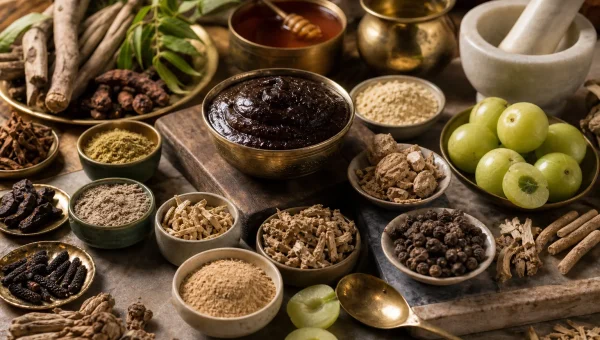
Chyawanprash, traditionally known as Cyavanaprasha, is an Amalaki-based rasayana avaleha. Amalaki is the central fruit, and classical-style preparations combine it with many herbs and supportive substances such as ghee, oil, honey, and sugar. For elders, its value lies in being a complete rasayana food-herb preparation rather than a collection of isolated extracts.
For those over 70, Chyawanprash should be used in a smaller, digestion-friendly amount and not treated as a sweet snack. A common practical approach is a small spoon once daily with warm milk or warm water when appetite, stool, and blood sugar are stable. If heaviness, reflux, loose stool, phlegm aggravation, or appetite reduction appears, the amount is too much or the formulation is not suitable.
People with diabetes, prediabetes, obesity, high triglycerides, or medically restricted sugar intake should not use standard sweet Chyawanprash without professional advice. In such cases, plain Amalaki, a physician-selected rasayana, or a sugar-controlled preparation may be more suitable. Elders should avoid stacking Chyawanprash with multiple separate extracts unless a qualified practitioner has checked the full medicine list.
Lifestyle Practices That Support Rasayana
Rasayana works best when daily routine protects strength instead of exhausting it. For older adults, regular movement should include walking or other safe aerobic activity, gentle strengthening, and balance work matched to cardiac status, arthritis, fall risk, and stamina. The aim is not strain; it is steady circulation, muscle preservation, digestion, sleep quality, and confidence in movement.
Warm oil self-massage, or abhyanga, is a traditional vata-pacifying practice that can be useful for dryness, stiffness, disturbed sleep, and a sense of bodily depletion. In elders it should be gentle, seated if necessary, and followed by careful bathing with non-slip precautions. Avoid massage over wounds, active skin infection, acute swelling, fever, severe varicose veins, unexplained pain, or areas where a physician has restricted pressure.
Achara rasayana is equally important after 70. Classical guidance includes truthfulness, freedom from anger, calm speech, compassion, meditation, brahmacharya, cleanliness, and proper sleep. In geriatric practice, this means conserving energy, avoiding unnecessary conflict, keeping a steady spiritual or reflective routine, maintaining social warmth, sleeping regularly, and choosing moderation over depletion. See the broader preventive framework at srotas preservation in healthy aging.
Medical Disclaimer: This content is for educational purposes only and does not constitute medical advice. People over 70 often take multiple medicines and may have diabetes, hypertension, kidney disease, liver disease, thyroid disease, anticoagulant use, sedative use, frailty, or fall risk. Consult a qualified Ayurvedic physician and healthcare provider before starting rasayana herbs, Chyawanprash, extracts, or herbo-mineral preparations.
References
- Charaka Samhita — Rasayana
- Charaka Samhita — Rasayana
- Msdmanuals (msdmanuals.com)
- NCBI
- Ayurvedic Pharmacopoeia of India
- Functional and Nutraceutical Significance of Amla (Phyllanthus emblica L.): A Review (2022), PubMed Central
- Prevalence of and interventions for sarcopenia in ageing adults: a systematic review. Report of the International Sarcopenia Initiative (EWGSOP and IWGS) (2014), PubMed
- Sarcopenia and its association with falls and fractures in older adults: A systematic review and meta-analysis (2019), PubMed Central
- Examining the effect of Withania somnifera supplementation on muscle strength and recovery: a randomized controlled trial (2015), PubMed Central
- A Randomized, Double-Blind, Placebo-Controlled, Crossover Study Examining the Hormonal and Vitality Effects of Ashwagandha ( Withania somnifera) in Aging, Overweight Males (2019), PubMed Central
- Efficacy and Safety of Ashwagandha (Withania somnifera (L.) Dunal) Root Extract in Improving Memory and Cognitive Functions (2017), PubMed
- NIH Office of Dietary Supplements
- World Health Organization
- Chyawanprash: A Traditional Indian Bioactive Health Supplement (2019), PubMed Central
- Nal (nal.usda.gov)
- Similarities and differences in the nutritional composition of nuts and seeds in Serbia (2022), PubMed Central
- NCCIH