
Dark Spots Skin Ayurvedic Treatment: The Vyanga Framework
Dark spots skin Ayurvedic treatment begins with the classical category of vyanga. In the Ayurvedic description, vyanga presents as thin, painless, dark or brownish facial patches and is associated with aggravated vata joined with pitta, especially after heat-provoking triggers such as anger, strain and exertion. This framework is useful for facial discoloration, but it should not be treated as a one-to-one diagnosis for every dark spot.
In contemporary skin language, dark spots may include melasma, post-inflammatory hyperpigmentation from acne or eczema, solar lentigines from chronic sun exposure, and general uneven skin tone caused by excess melanin. Sun exposure is a major aggravating factor, and melasma may also be influenced by pregnancy, hormonal medicines, heat, visible light and stress. The Ayurvedic approach is therefore threefold: calm pitta-vata aggravation, support rakta and twak through appropriate internal care, and protect the skin from the light and irritation that keep pigmentation active.
The Internal Herb Protocol: Addressing Root Cause
Internal therapy for dark spots should be individualized. In Ayurveda, the internal side of a vyanga-style protocol focuses on herbs and routines that support complexion, calm inflammatory heat, and promote healthier skin recovery. Internal herbs should be selected with a qualified Ayurvedic practitioner or healthcare provider, especially during pregnancy, lactation, chronic illness, autoimmune conditions, liver or kidney disease, or when using prescription medication.
Manjistha (Rubia cordifolia): Manjistha is the central internal herb in this protocol because it is traditionally used for complexion, skin disorders and vyanga. Classical pharmacopoeial descriptions identify Manjistha with varnya, kushthaghna, shothaghna, rasayana and shonitasthapana actions. A practitioner-guided course may use the dried stem powder or a standardized preparation according to constitution, digestion and skin presentation. Avoid self-escalating the dose, and use only products from reputable sources.
Amalaki (Emblica officinalis): Amalaki is a cooling rasayana fruit with a classical affinity for pitta and general tissue rejuvenation. It contains ascorbic acid and tannins and is traditionally used in conditions involving heat, acidity and rakta-pitta patterns. For a gentle daily approach, amalaki may be used as food, fresh juice, powder or a prepared formulation according to tolerance. People prone to loose stools, acidity fluctuations or medication interactions should use it under guidance.
Guduchi (Tinospora cordifolia): Guduchi is traditionally described as rasayana, tridoshashamaka and raktashodhaka, with classical use in pitta-involved and inflammatory skin contexts. It is most relevant when uneven tone is accompanied by recurring heat, redness, inflammatory breakouts or slow recovery after irritation. Use caution with immune conditions or medication, and avoid treating it as a universal herb for every type of melasma.
Pitta-rakta support: Internal care works best when the daily routine reduces the same triggers that darken the skin from outside: excess sun, overheating, harsh skincare, poor sleep and repeated inflammation. A simple pitta-calming routine, adequate hydration, regular sleep and gentle digestion support are more useful than aggressive cleansing or repeated “detox” attempts, which can aggravate sensitive skin and worsen uneven tone.
Topical Preparations: The Brightening Stack
Topical Ayurvedic care for dark spots should be gentle, cooling and non-irritating. The goal is not to peel the skin aggressively, but to reduce repeated inflammation, support even complexion and protect the barrier while pigmentation gradually fades. Patch test every preparation on a small area first, and stop anything that causes burning, rash, swelling or lasting redness.
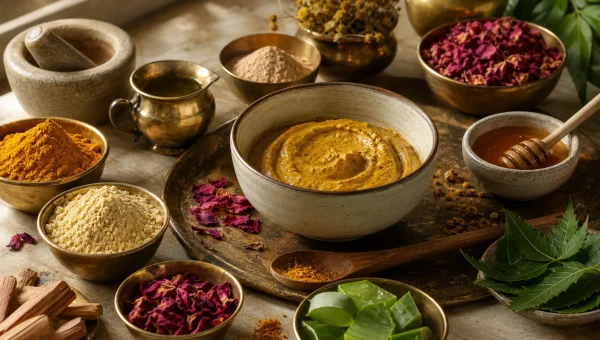
Turmeric-sandalwood brightening mask: Mix 1/4 teaspoon turmeric powder, 1/2 teaspoon sandalwood powder, 1/2 teaspoon amalaki powder, 1 teaspoon rose water and enough honey or aloe gel to make a soft paste. Apply to clean skin for 10-15 minutes, then rinse gently without scrubbing. Use once or twice weekly. Turmeric is classically described as varnya and useful in skin disorders, while white sandalwood is cooling, pitta-pacifying and complexion-supportive. Use a small amount of turmeric to reduce staining and irritation.
Kumkumadi taila or serum: Apply 2-3 drops of a reputable, face-safe kumkumadi preparation at night after cleansing. Use it on pigmented areas or the whole face only if the skin tolerates oil well. Kumkumadi formulas vary, but the classical purpose is complexion support through saffron and other varnya herbs in an oil base. Avoid applying it over active rash, pustular acne, sunburn or broken skin. See the complete kumkumadi protocol in our article on the kumkumadi night routine.
Papaya enzyme mask: Apply 1 tablespoon of mashed ripe papaya to clean skin for 5-10 minutes, then rinse thoroughly. Use once weekly only. Papaya contains papain, a proteolytic enzyme that can loosen dead surface cells and support gentle exfoliation. Because papain can also irritate or weaken the skin barrier in sensitive people, avoid this mask on eczema, rosacea, open acne, sunburn or freshly exfoliated skin.
Lodhra spot paste: For oily, pitta-kapha skin with mild post-inflammatory marks, a small pinch of lodhra powder may be mixed with rose water or honey and applied as a short-contact spot paste for 5-10 minutes. Lodhra is classically astringent, cooling and pitta-kapha pacifying. Keep this preparation occasional rather than daily, because over-drying the skin can trigger irritation and further darkening.
| Intervention | Application | Purpose | Frequency |
|---|---|---|---|
| Turmeric-sandalwood mask | Topical, 10-15 min | Varnya support, cooling pitta care | 1-2x weekly |
| Kumkumadi taila | Evening skin, 2-3 drops | Complexion-supporting oil care | Nightly if tolerated |
| Papaya enzyme mask | Topical, 5-10 min | Gentle surface-cell exfoliation | Weekly only |
| Manjistha internal | Practitioner-guided use | Classical vyanga and complexion support | As prescribed |
| SPF protection | Broad-spectrum SPF 30+ | Protection from UV-driven darkening | Every morning; reapply outdoors |
Sun Protection: The Non-Negotiable Foundation
No brightening protocol works reliably without sun protection. Ultraviolet exposure can darken melasma, post-inflammatory hyperpigmentation and sun spots, while visible light can also aggravate pigmentation in susceptible skin. Use a broad-spectrum SPF 30 or higher every morning, apply enough product, and reapply during prolonged outdoor exposure, sweating or washing. A wide-brimmed hat, shade and avoiding peak heat are part of the treatment, not optional extras.
For melasma and stubborn facial pigmentation, a tinted sunscreen with iron oxides may be especially useful because it helps protect against visible light. Mineral sunscreens with zinc oxide or titanium dioxide are often better tolerated by reactive skin, but the best sunscreen is the one your skin accepts and you apply consistently. Sandalwood paste, rose water, facial oils and herbal masks are not substitutes for sunscreen.
The morning sequence should stay simple: gentle cleanse or rinse, light moisturizer if needed, then sunscreen as the final step. Avoid lemon juice, harsh scrubs, frequent peels, strong essential oils and burning DIY remedies. Any product that repeatedly stings, burns or inflames the skin can deepen post-inflammatory pigmentation.
Timeline and Realistic Expectations
Dark spots fade slowly. Melasma often needs several months of consistent care, and long-standing pigmentation may take 3-12 months or longer to visibly improve. Post-inflammatory hyperpigmentation can also persist for months and, in some cases, years. Solar lentigines and deep dermal pigmentation may respond only partially to home care and may need dermatological procedures or prescription treatment.
Track progress by photographing the same area once a month in the same lighting. Daily checking is misleading because pigment changes gradually. If the skin becomes red, scaly, itchy, tight or more pigmented, simplify the routine and stop irritating products. In hyperpigmentation, a calm barrier is more important than fast exfoliation.
Medical disclaimer: This article provides general educational information about Ayurvedic approaches to dark spots and facial hyperpigmentation. Spots that are new, changing in size, shape or color, asymmetrical, bleeding, itching, crusting or different from your other marks should be evaluated by a dermatologist. Consult a qualified Ayurvedic practitioner or healthcare provider before starting internal herbs or therapeutic protocols, especially if pregnant, lactating, managing a medical condition or taking medication. Patch test all topical preparations before full application.
References
- Easyayurveda (easyayurveda.com)
- Management of Vyanga (facial melanosis) with Arjuna Twak Lepa and Panchanimba Churna (2014), PubMed Central
- My (my.clevelandclinic.org)
- NCBI
- Dermnetnz (dermnetnz.org)
- Melasma: a clinico-epidemiological study of 312 cases (2011), PubMed Central
- Health (health.harvard.edu)
- Ayurvedic Pharmacopoeia of India
- Ayurvedic Pharmacopoeia of India
- Curcumin inhibits melanogenesis in human melanocytes (2012), PubMed
- Ijapr (ijapr.in)
- ROS-scavenging and Anti-tyrosinase Properties of Crocetin on B16F10 Murine Melanoma Cells (2018), PubMed
- Mdpi (mdpi.com)
- Papain Degrades Tight Junction Proteins of Human Keratinocytes In Vitro and Sensitizes C57BL/6 Mice via the Skin Independent of its Enzymatic Activity or TLR4 Activation (2015), PubMed Central
- Aad (aad.org)
- Aad (aad.org)
- The Role of Sunscreen in Melasma and Postinflammatory Hyperpigmentation (2020), PubMed Central
- Aad (aad.org)
- NCCIH
my nutritionist mentioned something similar last week. how long do you usually recommend staying on this protocol?