
Vata Season Gut Repair: Why Autumn Breaks Your Digestion
Vata season gut repair is most useful during a dry, cool, windy or irregular seasonal transition, especially when the body is moving from the heat and looseness of late summer into colder, drier weather. In classical Indian ritucharya, October and November commonly fall around Sharad and the approach to Hemanta, and the precise seasonal effect depends on local climate. The practical Ayurvedic rule is to observe the qualities actually present: when the air becomes dry, cold, light, rough and mobile, vata-provoking conditions rise, and digestion often becomes irregular.
This transition is a form of ritu sandhi, the junction between seasons, when the previous regimen is gradually withdrawn and the next seasonal regimen is gradually adopted. Digestion that felt steady a few weeks earlier may become variable: appetite comes and goes, meals feel heavy one day and insufficient the next, bloating increases, stools alternate between dryness and looseness, and foods that were once easy may suddenly feel difficult. This does not always mean a new food intolerance. In Ayurvedic terms, samana vata, which coordinates digestion and assimilation, and apana vata, which governs downward elimination, can become disturbed when the same dry, mobile qualities accumulate in the body and environment.
The seasonal gut repair protocol therefore has three aims: stabilizing agni, adding warmth and unctuousness to meals, and re-establishing a predictable rhythm. For a vata-type digestive pattern, the goal is not aggressive cleansing. The goal is warm, regular, moist, lightly spiced nourishment that restores steadiness to agni and helps apana vata move downward without strain.
The 2-Week Agni Reset: Daily Practices
The agni reset begins with warmth and regularity. On waking, sip 200-250 ml of warm water. If you tolerate warming spices well, add a small pinch to 1/4 teaspoon of dry ginger powder, known as shunthi. Lemon may be added in a few drops if it suits you, but skip it if you have acidity, burning, mouth ulcers, reflux or a strong pitta tendency. Shunthi is classically described as pungent, light, slightly unctuous, heating, digestive and vata-kapha pacifying; in a vata-season protocol it is used in a small quantity to warm and awaken digestion without making the morning routine harsh.
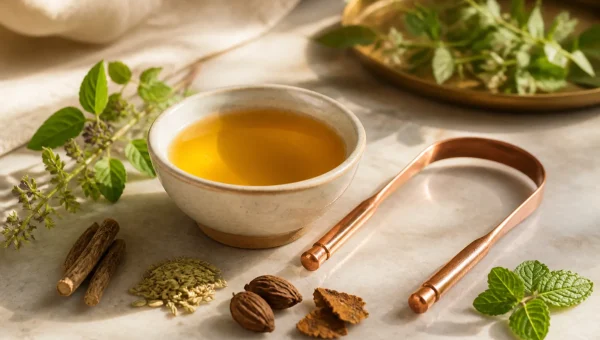
Before the main meal, use a simple cumin-coriander-fennel tea. Crush or lightly bruise 1/2 teaspoon each of cumin, coriander and fennel seeds, steep in about 300 ml hot water for 5-10 minutes, and drink warm while seated quietly. Cumin is deepana and pachana, meaning it supports appetite and digestion. Coriander supports digestion while remaining gentler and more balancing. Fennel is especially useful when vata shows as gas, cramping, upward movement or abdominal tightness because it is described as anulomana, helping the proper movement of vata.
The non-herbal part of the reset is equally important. Eat at consistent times, avoid rushing, and make the noon meal the most complete meal of the day. Vata responds strongly to routine. A simple two-week rhythm of warm breakfast, steady lunch, light early dinner and no iced drinks is often more effective than adding many herbs while eating irregularly.
Gut-Repair Recipes for October and November
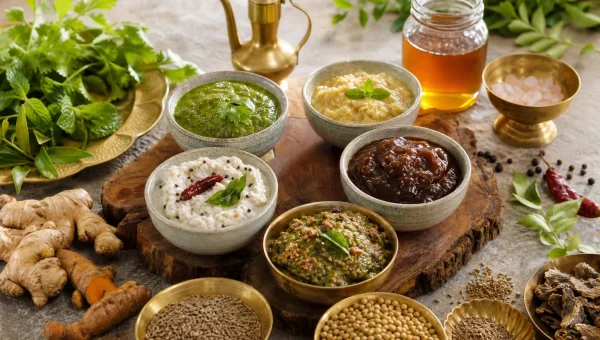
Three anchor preparations form the backbone of an autumn gut repair routine: takra at the main meal, a small pre-meal digestive paste when needed, and a gentle bedtime milk for dryness and restlessness. These are not meant as a rigid prescription for everyone; they are templates to be adjusted for constitution, appetite, climate and medical history.
Takra (Therapeutic Buttermilk): Blend 1/4 cup plain yogurt with 3/4 cup warm water until thin and well churned. Add 1/4 teaspoon roasted cumin powder, a pinch of rock salt or black salt, and a few crushed curry leaves if desired. Take it with lunch rather than late at night. In the classical discussion of grahani, takra is praised because it is light, supports digestion and has a grahi quality, helping the bowel regain steadiness. It should be thin and gently spiced, not thick like curd and not chilled.
Shunthi-Saindhava Digestive Paste: Mix a small pinch to 1/4 teaspoon dry ginger with a pinch of rock salt and a few drops of warm water. A small amount of jaggery may be added when dryness, low strength or vata sensitivity is present, but it is optional. Take a pea-sized amount 10-15 minutes before a heavier meal when appetite is dull and there is no burning, gastritis flare or acid reflux. This preparation is meant to be warming and appetite-supportive, not irritating.
Vata Bedtime Milk: Warm 200-250 ml milk and add 1 teaspoon ghee. If suitable, add a pinch of turmeric. Ashwagandha may be added only when it is appropriate for the person: traditionally it is used as a rasayana and vata-supporting herb, especially where depletion, poor sleep or nervous restlessness accompany digestion issues. Do not use ashwagandha casually during pregnancy, breastfeeding, sedative medication use, autoimmune treatment, thyroid medication use or significant liver concerns without professional guidance. For the classical foundation of these preparations, see how agni functions as the foundation of digestive health.
| Time | Preparation | Ingredients | Function |
|---|---|---|---|
| Morning | Warm ginger water | Warm water with a pinch to 1/4 tsp shunthi | Warmth, deepana, vata-kapha support |
| Before main meal | CCF tea | 1/2 tsp each cumin, coriander and fennel | Deepana, pachana, anulomana |
| Lunch | Takra buttermilk | Yogurt, warm water, roasted cumin, rock salt | Light, digestive, grahi |
| When appetite is dull | Shunthi-saindhava paste | Dry ginger, rock salt, warm water; jaggery optional | Rucya, deepana, vata-friendly warmth |
| Bedtime | Ghee milk | Warm milk, ghee, optional turmeric or ashwagandha if suitable | Unctuous, grounding, vata support |
Foods That Work in October-November and Those That Do Not
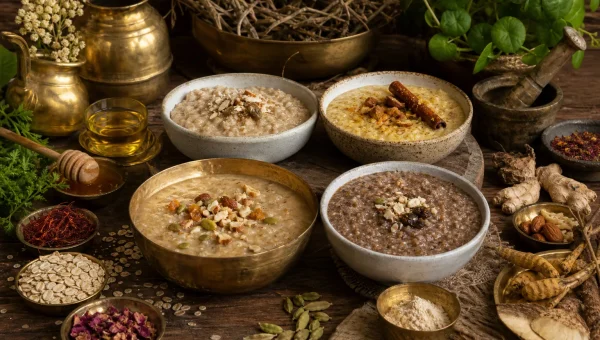
The seasonal diet for a vata-provoking transition should be warm, cooked, moist, gently spiced and regular. Favor khichari, mung dal soup, rice gruel, soft rice, cooked oats, well-cooked root vegetables, soups, stews, ghee in modest amounts, warm stewed fruit, and freshly prepared meals. Sour and salty tastes may be useful for vata in moderation, but people with acidity, skin heat, loose stools or strong pitta signs should keep them mild, especially in Sharad.
Foods that commonly worsen vata-type gut symptoms are cold smoothies, iced drinks, raw salads at dinner, dry crackers, excessive raw vegetables, cold leftovers, skipped meals and late-night eating. These increase coldness, dryness, roughness or irregularity, the same qualities that disturb vata. Meal timing matters because samana vata works best with predictability. A practical modern parallel is chrononutrition: the timing of food intake is linked with circadian rhythm and gut microbial patterns. For the broader relationship between digestion, the nervous system and mental steadiness, see the research discussed in our gut-brain axis article.
Herbs for the Autumn Gut: The Supporting Stack
Herbs should support the pattern, not replace meals and rhythm. Haritaki (Terminalia chebula) is a classic anulomana and rasayana herb, used where vata expresses as dryness, incomplete elimination, constipation, gas and downward-moving difficulty. A gentle amount such as 1 g powder with warm water at bedtime may be used by suitable adults, though classical pharmacopoeial dosing is broader and should be individualized. Avoid self-prescribing haritaki in pregnancy, chronic diarrhea, severe dehydration, acute abdominal pain or when taking medication that affects bowel movement unless guided by a qualified practitioner.
Triphala is a traditional combination that includes haritaki, bibhitaki and amalaki. In autumn gut care it is most appropriate when sluggish elimination, coating, heaviness or irregular stools are present, and less appropriate when the person is already depleted, underweight, very dry or having loose stools. A small bedtime dose with warm water is the usual practical starting point, adjusted to bowel response. Our detailed review on triphala for IBS provides further clinical context.
Ajwain (Yavani, Trachyspermum ammi) is useful as an acute kitchen remedy when vata appears as gas, abdominal distension, griping, heaviness after food or upward-moving discomfort. Steep 1/4 to 1/2 teaspoon crushed ajwain seeds in hot water for 5-10 minutes and sip warm after meals when needed. Ayurveda describes yavani as pungent, bitter, light, dry, sharp, heating, deepana, pachana, anulomana and shulahara, making it especially suited to cold, gassy, vata-kapha digestive discomfort. Use less or avoid it if there is burning acidity, mouth ulcers, bleeding tendency or strong heat signs.
Safety and When to Get Help
This article is for general educational purposes and does not diagnose or treat any medical condition. Persistent digestive symptoms, severe pain, blood in stool, black stool, fever, unexplained weight loss, repeated vomiting, dehydration, anemia signs, nighttime diarrhea, difficulty swallowing or a sudden change in bowel habits should be assessed by a qualified healthcare provider. Consult a qualified Ayurvedic practitioner or physician before starting herbs, supplements or therapeutic protocols, especially if pregnant, breastfeeding, elderly, managing a diagnosed condition, taking medication, or using multiple herbal products.
References
- Easyayurveda (easyayurveda.com)
- Easyayurveda (easyayurveda.com)
- Easyayurveda (easyayurveda.com)
- Easyayurveda (easyayurveda.com)
- Physiological aspects of Agni (2010), PubMed Central
- Ayurvedic Pharmacopoeia of India
- Easyayurveda (easyayurveda.com)
- Webprod (webprod.hc-sc.gc.ca)
- Academic (academic.oup.com)
- Miracledrinksclinic (miracledrinksclinic.com)
- Therapeutic Uses of Triphala in Ayurvedic Medicine (2017), PubMed
- Carum copticum L.: a herbal medicine with various pharmacological effects (2014), PubMed Central
- NCCIH
gut health is complex and season alone doesnt determine gut state. individual variation matters more.
how far in advance of seasonal transition should one start the protocol?