Hypothyroidism Ayurvedic Herbs: What the Clinical Evidence Actually Shows
Hypothyroidism Ayurvedic herbs have generated interest because thyroid imbalance often presents with symptoms that Ayurveda also evaluates through agni, kapha, vata, meda, mala movement and overall tissue nourishment. The available human data are concentrated mainly in subclinical hypothyroidism and in formulations traditionally used for galaganda, granthi and gandamala-type neck or glandular swellings. This review keeps the focus on thyroid-index outcomes such as TSH, T3, T4 and symptoms, while treating Ayurvedic herbs as practitioner-guided support rather than replacements for prescribed thyroid medication.
Classical Ayurveda does not name hypothyroidism as a modern endocrine diagnosis. The closest classical framework is galaganda when goitre or a visible neck swelling is present; Charaka describes galaganda as a single glandular swelling in the neck region, while multiple chain-like swellings are described under gandamala. Many patients with hypothyroidism have no visible swelling, so an Ayurvedic assessment must also consider agnimandya, ama, kapha-meda accumulation, vata involvement, constipation, coldness, heaviness, fatigue, dry skin, weight gain and the person’s laboratory thyroid profile.
Kanchanara Guggulu: Classical Fit and Human Data
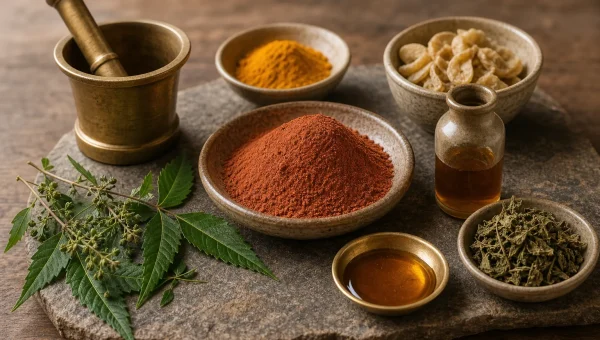
Kanchanara is the dried stem bark of Bauhinia variegata. The Ayurvedic Pharmacopoeia of India describes its rasa as kashaya, guna as laghu and ruksha, virya as shita, vipaka as katu, and karma as dipana, grahi, tridoshahara and gandavriddhihara. The same monograph lists Kanchanara Guggulu as an important formulation. This makes Kanchanara especially relevant where the thyroid presentation includes glandular enlargement, kapha-type heaviness, nodularity or swelling rather than a purely laboratory diagnosis without local signs.
Kanchanara Guggulu classically combines Kanchanara with Guggulu and supporting drugs such as Triphala, Trikatu, Trijataka and Varuna in traditional references including Sharangadhara Samhita, Yogaratnakara, Bhavaprakasha and Bhaishajya Ratnavali. The formulation is traditionally placed in the context of galaganda, granthi, gandamala, arbuda and related glandular or swelling disorders. In a small randomized clinical study in subclinical hypothyroidism, Kanchanar Guggul was compared with a levothyroxine comparator over 30 days and the Kanchanar group showed a reduction in TSH. A separate clinical study using Kanchanar Gutika in 30 hypothyroid patients also reported improvement in assessed parameters. These findings support careful clinical interest, but formulation quality, diagnosis, duration and laboratory monitoring remain essential.
Ashwagandha: Thyroid-Index Signal in Subclinical Hypothyroidism
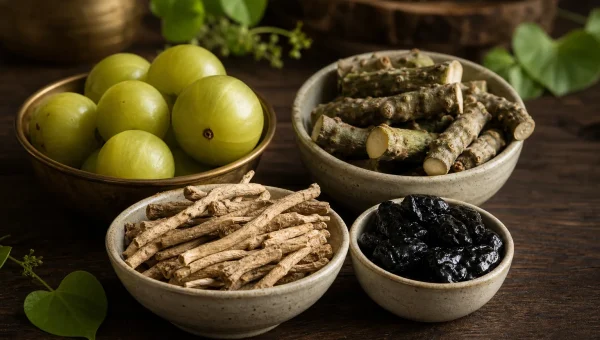
Ashwagandha, the dried mature root of Withania somnifera, is described in the Ayurvedic Pharmacopoeia of India as tikta-kashaya in rasa, laghu in guna, ushna in virya and madhura in vipaka, with rasayana, balya, vajikarana and vata-kapha-hara actions. In thyroid care, its most reasonable role is not as a glandular swelling drug like Kanchanara, but as a rasayana and strength-supporting herb where fatigue, stress load, weakness and vata-kapha features are prominent.
A double-blind, randomized, placebo-controlled clinical trial evaluated 600 mg daily of Ashwagandha root extract for 8 weeks in 50 adults with subclinical hypothyroidism, defined by TSH between 4.5 and 10 μIU/L. Thyroid indices improved in the Ashwagandha group compared with placebo, including TSH, T3 and T4. Because Ashwagandha may alter thyroid hormone levels in sensitive individuals, it is best used with thyroid-function monitoring, especially in patients already taking levothyroxine or those prone to palpitations, anxiety, heat intolerance or other hyperthyroid-like symptoms.
Guggulu: Preclinical Thyroid Activity and Classical Medohara Use
Guggulu is the oleo-gum resin of Commiphora wightii and is described in the Ayurvedic Pharmacopoeia of India as katu, tikta and kashaya in rasa; laghu, sara and vaishada in guna; ushna in virya; and katu in vipaka. Its listed actions include medohara, rasayana, balya and use in granthi, shotha, gandamala and medoroga. This classical profile explains why Guggulu appears in Kanchanara Guggulu and other formulations used for kapha-meda and glandular conditions.
Z-guggulsterone from Commiphora mukul has been evaluated for thyroid-stimulating action in rats, making it a plausible preclinical contributor to the formulation’s thyroid relevance. Human thyroid outcomes for standalone Guggulu are much less established than the classical and formulation-based use. Its lipid-related clinical record is also mixed, including a placebo-controlled trial in which guggulipid did not improve cholesterol and raised concern for LDL changes and skin reactions in some participants. For hypothyroid patients, Guggulu is therefore best understood as a component of a broader, correctly selected Ayurvedic formulation rather than a standalone thyroid substitute.
Supportive Herbs: Trikatu, Triphala and Nutritional Cofactors
Trikatu, the combination of Shunthi, Maricha and Pippali, appears within Kanchanara Guggulu as a deepana-pachana and kapha-addressing support. Its practical Ayurvedic role is to assist agni and reduce ama-type heaviness when clinically appropriate. It should not be used to force thyroid hormone absorption or combined casually with medicines, because pungent digestive herbs may irritate gastritis, acidity, bleeding tendency or medication-sensitive patients.
Triphala, the combination of Haritaki, Bibhitaki and Amalaki, is also part of Kanchanara Guggulu and may be selected separately when constipation, sluggish bowel movement and mala retention are prominent. Human gastrointestinal data support Triphala-containing interventions for bowel regularity and constipation symptoms, making it relevant as supportive care in hypothyroid patients with vibandha. Its role is bowel and digestive support, not direct replacement of thyroid hormone therapy.
Iodine is an essential structural component of T4 and T3, and selenium-dependent deiodinase enzymes are involved in the conversion of T4 to active T3. Nutritional deficiency should be corrected through diet, iodized salt where appropriate, or clinician-guided supplementation rather than by assuming that any Ayurvedic mineral or salt preparation automatically corrects thyroid biochemistry. Shilajit may be used as a rasayana in other contexts when purified and properly tested, but it should not be presented as a verified iodine replacement for hypothyroidism.
Evidence-Based Summary Table
The table below separates traditional Ayurvedic rationale from the type of thyroid-related human or preclinical support available, so that each herb or formulation is used in the correct clinical context.
| Herb / Formulation | Ayurvedic Role | Thyroid-Relevant Data | Practical Caution |
|---|---|---|---|
| Kanchanara Guggulu | Galaganda, granthi, gandamala, kapha-meda glandular presentation | Small randomized study in subclinical hypothyroidism; clinical study of Kanchanar Gutika in hypothyroid patients | Use with thyroid labs and practitioner supervision; do not replace prescribed medicine |
| Ashwagandha root extract | Rasayana, balya, vata-kapha-hara support for fatigue and weakness | Double-blind placebo-controlled trial using 600 mg daily for 8 weeks in subclinical hypothyroidism | Monitor TSH, T3 and T4; caution with thyroid medication or hyperthyroid-like symptoms |
| Guggulu | Medohara, granthi, shotha, gandamala and kapha-meda disorders | Rat data for Z-guggulsterone thyroid stimulation; mixed human lipid outcomes | Avoid casual standalone use; caution in pregnancy, liver disease and medication-sensitive patients |
| Trikatu | Deepana-pachana support; part of Kanchanara Guggulu | Supportive digestive role rather than primary thyroid-index intervention | Use cautiously in acidity, gastritis, bleeding tendency or drug-sensitive patients |
| Triphala | Bowel regulation and mala support; part of Kanchanara Guggulu | Human gastrointestinal data for constipation-related outcomes | Supportive for constipation; separate from thyroid medication and dose individually |
Safety and Drug-Timing Considerations
Levothyroxine absorption is sensitive to food, minerals, fiber and many supplements. It is commonly taken on an empty stomach 30-60 minutes before breakfast, while calcium, iron and similar interfering products are usually separated by several hours. Ayurvedic herbs, minerals, powders and fiber-rich preparations should therefore be scheduled away from levothyroxine unless a clinician gives a different plan. When thyroid-active herbs are introduced, TSH and free thyroid hormone reassessment is commonly considered after about 6-8 weeks or as directed by the treating physician.
Kanchanara Guggulu, Guggulu and Ashwagandha should be used with caution in pregnancy, lactation, active liver disease, autoimmune thyroid disease, thyroid nodules, cardiac disease, anticoagulant use, multiple medications or symptoms suggesting excess thyroid activity. Palpitations, tremor, anxiety, unexplained sweating, heat intolerance, rapid weight loss or worsening neck swelling require prompt medical review. Any goitre, thyroid nodule or persistent neck swelling should be medically evaluated rather than treated only with herbs.
Building a Practical Integrative Plan
A practical Ayurvedic plan begins with the exact diagnosis: overt hypothyroidism, subclinical hypothyroidism, autoimmune thyroiditis, iodine-related dysfunction, postpartum thyroiditis, medication-induced thyroid change, goitre or thyroid nodule. For subclinical hypothyroidism, the plan may include Kanchanara Guggulu when a galaganda-granthi-kapha-meda pattern is present, Ashwagandha when daurbalya and vata-kapha fatigue dominate, Triphala when constipation is prominent, and Trikatu only when agnimandya and ama signs justify pungent digestive support. The prescription should be individualized rather than copied as one fixed protocol for every patient.
Dietary care should support adequate protein, iron, iodine, selenium, zinc and overall digestion without excessive restriction. Patients taking thyroid medicine should not change their dose based on symptoms alone; laboratory trends and the prescribing clinician’s guidance are essential. Ayurveda can add value through pattern-based herb selection, agni correction, bowel regulation, sleep, stress management and rasayana support, but thyroid disease still requires biomedical diagnosis and follow-up.
Medical disclaimer: This article is for educational purposes only. Thyroid disorders require diagnosis and management by qualified healthcare professionals. The herbs and formulations described here should not replace prescribed thyroid medication. Always consult a qualified Ayurvedic practitioner and your endocrinologist or healthcare provider before starting herbal supplements, especially if you are taking levothyroxine or other thyroid medicines.
References
- Nature (nature.com)
- Mayoclinic (mayoclinic.org)
- Charaka Samhita — Shvayathu Chikitsa
- Ayurvedic Pharmacopoeia of India
- Ijapr (ijapr.in)
- Ijam (ijam.co.in)
- Jaims (jaims.in)
- SAGE Journals
- Thyroid stimulating action of Z-guggulsterone obtained from Commiphora mukul (1984), PubMed
- Guggulipid for the treatment of hypercholesterolemia: a randomized controlled trial (2003), PubMed
- NIH Office of Dietary Supplements
- My (my.clevelandclinic.org)
- Thyroid function in patients with selenium deficiency exhibits high free T4 to T3 ratio (2021), PubMed Central
- An open-label, prospective clinical study to evaluate the efficacy and safety of TLPL/AY/01/2008 in the management of functional constipation (2011), PubMed Central
- Mayoclinic (mayoclinic.org)
- Thyroid (thyroid.org)
- NCBI