
Multiple Sclerosis and Majja Dhatu: The Ayurvedic Framework
Multiple sclerosis (MS) is an autoimmune inflammatory disorder of the central nervous system involving demyelination and neuronal injury. Its symptom pattern can include changes in vision, sensory disturbance, weakness, spasticity, bladder or bowel dysfunction, sleep disturbance, fatigue and cognitive difficulty, and its medical management belongs under ongoing neurological care with disease-modifying therapy when indicated.
Ayurveda does not give MS as a single named classical diagnosis, so the most useful supportive framework is vata vyadhi with attention to majja dhatu, asthi-majja involvement and majjavaha srotas. Majja is described with unctuous and soft qualities, with functions of oleation, strength, filling the bone cavity and nourishing the next dhatu; the brain is discussed in the majja field as mastulunga. Classical descriptions of disturbed majja channels include giddiness, blackouts and deep-seated joint involvement, while vata situated in bone and marrow is associated with pain, loss of strength, insomnia and stiffness of the trunk and extremities. This makes a vata-calming, majja-nourishing plan appropriate as supportive care for comfort, resilience, sleep and function alongside standard MS treatment.
Herbs for Majja Support: Medhya, Balya and Rasayana
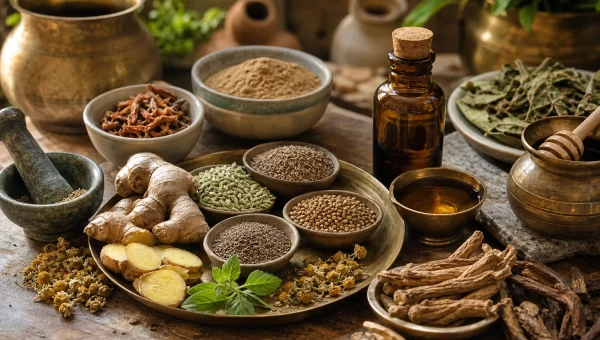
Herbal choices for MS support should be individualized. The Ayurvedic aim is not to replace immunologic MS treatment, but to support digestion, sleep, stamina, mental clarity and vata regulation. Medicines with medhya, balya, rasayana and vata-shamana actions are most relevant, and dosing should be adjusted for constitution, digestion, bowel pattern, liver history, pregnancy status and prescribed drugs.
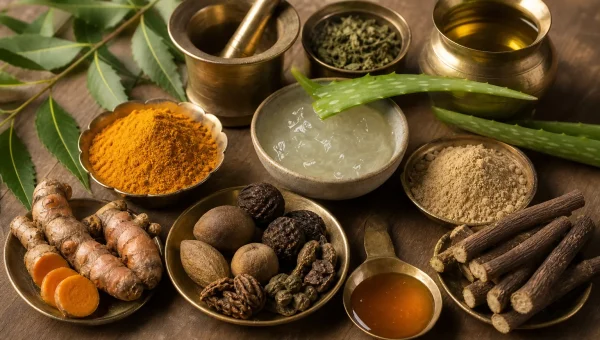
Ashwagandha (Withania somnifera) is listed in the Ayurvedic Pharmacopoeia of India as the dried mature root of Withania somnifera. Its rasa is tikta and kashaya, its guna is laghu, its virya is ushna and its vipaka is madhura. Its classical actions include rasayana, balya, vajikarana and vata-kapha-paha, with traditional uses including vataroga, daurbalya and kshaya. The pharmacopoeial powder dose is 3–6 g, while extract dosing should be selected by a practitioner. Because short-term safety is better characterized than long-term use and rare liver injury has been reported, it should be avoided in pregnancy and used cautiously with liver disease, thyroid disease, sedatives, immunosuppressive therapy or complex neurological medication plans.
Brahmi (Bacopa monnieri) is listed as the whole plant of Bacopa monnieri. Its rasa is madhura, tikta and kashaya, its guna is laghu and sara, its virya is shita and its vipaka is madhura. The pharmacopoeia lists medhya, rasayana, vatahara, matiprada and mohahara among its actions, making it a fitting herb when the supportive goal is mental clarity, steadiness and cognitive nourishment. The pharmacopoeial powder dose is 1–3 g, with preparation and timing adjusted to digestion and tolerance.
Guduchi (Tinospora cordifolia) is listed as the dried mature stem of Tinospora cordifolia. Its rasa is tikta and kashaya, its guna is laghu, its virya is ushna and its vipaka is madhura. Its actions include balya, rasayana, dipana, tridosha-shamaka, rakta-shodhaka and jvaraghna. The pharmacopoeial dose is 3–6 g powder or 20–30 g as decoction material. In an MS support plan it should be chosen only when the practitioner sees a clear indication, especially because autoimmune conditions, liver history and medication combinations require careful review.
Kapikacchu / Atmagupta (Mucuna pruriens) is listed as the dried mature seed of Mucuna pruriens. The pharmacopoeia notes 3,4-dihydroxyphenylalanine among its constituents, and lists vatashamana, brimhana, balya and vrishya among its actions, with traditional uses including vata-vyadhi, kampavata and daurbalya. The pharmacopoeial dose is 3–6 g. Because it contains L-DOPA, it is not routine self-care for MS and should be screened carefully for dopaminergic medicines, psychiatric medicines, cardiovascular issues, blood pressure changes and sleep disturbance.
Basti Therapy: The Primary Vata Treatment Channel
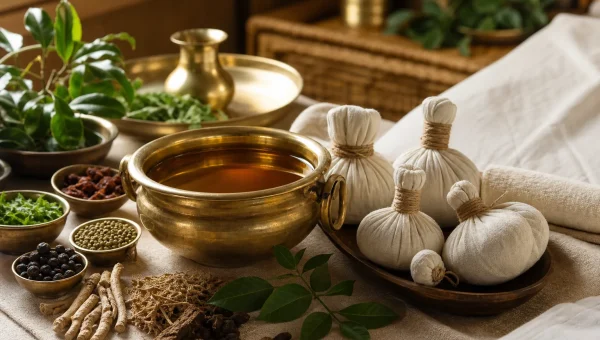
In classical management, asthi-majja involvement is one area where both niruha and anuvasana basti are named; broader majja disorders are also approached with food, medicines, purification procedures and exercise in proper measure and timing. For an MS support plan, basti should therefore be treated as a physician-supervised panchakarma procedure rather than a home enema routine.
A practitioner may select nourishing oil basti, decoction basti, external oil application and timing according to strength, digestion, bowel habit, heat, relapse status and medication schedule. Self-administered basti, large-volume enemas or unsupervised oil retention are not appropriate for a serious neurological condition. Safer home support usually begins with warm oil self-massage if tolerated, bowel regularity, adequate hydration, rest and referral to a qualified panchakarma clinician when basti is indicated. See the full overview at our panchakarma guide for procedural safety details.
Shirodhara and Nervous-System Calming
Shirodhara is best presented here as a calming external procedure, not as a disease-modifying MS treatment. It is a classical Ayurvedic procedure in which oil or another suitable liquid is allowed to flow steadily over the forehead for a defined period. When sleep disruption, sensory overload, worry or cognitive fatigue accompany vata-pitta aggravation, a qualified therapist may use shirodhara with the liquid, temperature and duration modified for heat sensitivity, vertigo, skin irritation and medication-related fatigue.
For home practice, the parallel is not to imitate shirodhara, but to create predictable downshifting: dim light in the evening, gentle scalp oiling if tolerated, yoga nidra, quiet breathing and a regular sleep window. These practices fit the same vata-calming intent while avoiding procedural risks outside a clinical setting.
Supportive Protocol Snapshot
The following table summarizes how the verified Ayurvedic elements fit into a supportive MS plan. It is not a prescription; it is a framework for practitioner-supervised selection.
| Support | Traditional Form | Supportive Aim | Key Caution |
|---|---|---|---|
| Ashwagandha | Root powder 3–6 g, or practitioner-selected extract | Balya, rasayana, vata support | Avoid unsupervised use in pregnancy, liver disease or complex medication plans |
| Brahmi | Whole-plant powder 1–3 g | Medhya, rasayana, mental steadiness | Dose and timing should match digestion and sedation tendency |
| Guduchi | Stem powder 3–6 g or decoction material 20–30 g | Balya, rasayana, tridosha support | Use cautiously with autoimmune disease, liver history or immunologic medicines |
| Kapikacchu | Seed powder 3–6 g when specifically indicated | Vatashamana, brimhana, balya | Contains L-DOPA; requires medication and cardiovascular screening |
| Clinical basti | Practitioner-selected oil or decoction basti | Vata regulation in asthi-majja patterns | Not a home enema protocol; requires qualified supervision |
| Shirodhara and yoga nidra | Therapist-led procedure plus home relaxation practice | Sleep, stress regulation, sensory calming | Modify for heat sensitivity, vertigo, skin issues and fatigue |
Dietary Protocol for Majja Dhatu Nourishment
Classical guidance for majja disorders emphasizes sweet and bitter foods and medicines in proper measure, while majja’s unctuous and soft nature supports the use of warm, cooked, moist and gently unctuous meals when digestion permits. In practice this often means regular meal timing, soups and stews, ghee or sesame oil in modest amounts, well-cooked grains and dals, soaked almonds or milk preparations only when tolerated, and bitter greens or guduchi-type bitter support when a practitioner sees a suitable indication.
Cold drinks, erratic fasting, dry snack-based eating, excessive raw food and excess stimulants move the plan away from vata steadiness. People with diabetes, dyslipidemia, obesity, reflux, lactose intolerance, kidney disease or medication-related digestive changes need the diet adjusted rather than simply made heavier. The srotas framework for understanding channel-level support is detailed in our article on the 16-channel srotas system.
Stress, Sleep and the Relapse-Aware Daily Plan
Psychological stress belongs in the core plan because relapse association and inflammatory activity have been evaluated in MS. Ayurveda gives this a practical language: stress disturbs vata, and disturbed vata affects sleep, bowel rhythm, pain sensitivity, tremor, stiffness and mental steadiness. The daily program should therefore protect sleep and reduce abrupt sensory, emotional and physical spikes.
A gentle pranayama plan can include 5–10 minutes of nadi shodhana without breath retention, followed by longer exhalation breathing or bhramari and a short yoga nidra. Practices should remain cool, unforced and symptom-aware; stop and seek guidance if dizziness, heat, air hunger, headache or neurological worsening appears. For detailed breathing techniques, see our pranayama guide for stress.
The Rasayana Layer: Building Ojas Without Overloading the System
In an advanced vata-majja pattern, ojas is protected by consistency more than by adding many supplements. The sequence should be: restore appetite and bowel regularity, stabilize sleep, reduce overexertion, then add one or two rasayana supports such as ashwagandha, brahmi, guduchi or a practitioner-selected ghrita or leha when digestion is clear. Heavy, sweet rasayana preparations are not suitable during ama, fever, active infection, uncontrolled diabetes or marked kapha congestion.
Ojas-building also includes pacing, supportive relationships, gentle strength work and a realistic schedule that does not create repeated crashes. For comparison of ashwagandha with other adaptogens, see our adaptogen comparison article.
Building a Sustainable Long-Term Protocol
The realistic goal with MS is support, stabilization of routines and quality-of-life improvement, not a cure claim. A sustainable protocol keeps the neurologist-led plan and prescribed disease-modifying therapy intact, adds symptom rehabilitation and exercise as tolerated, and uses Ayurveda to organize diet, sleep, bowel rhythm, rasayana herbs, supervised basti or external oil therapies, shirodhara, pranayama and yoga nidra.
Track fatigue, sleep quality, spasticity, bladder urgency, bowel regularity, heat sensitivity, mood, walking tolerance and relapse history. If symptoms change suddenly, new neurological deficits appear, or vision, bladder retention, balance or strength worsens, treat it as a medical issue first and contact the neurology team. The Ayurvedic view of the gut-brain axis, detailed in our gut-brain axis article, can be used as a supportive lens, but it should not delay MS investigations or prescribed treatment.
Medical disclaimer: This article is for educational purposes only and does not constitute medical advice. Multiple sclerosis is a serious neurological condition requiring ongoing care from a qualified neurologist. Ayurvedic therapies described here are supportive measures and should not replace prescribed disease-modifying therapies, relapse treatment, rehabilitation or emergency care. Consult a qualified Ayurvedic practitioner and your healthcare provider before adding herbs, basti, shirodhara, panchakarma, supplements or diet changes, especially if you take prescription medicines, are pregnant, have liver disease, autoimmune disease, kidney disease, diabetes or worsening neurological symptoms.
References
- NCBI
- Charaka Samhita — Majja dhatu
- Ayurvedic Pharmacopoeia of India
- NCCIH
- Ayurvedic Pharmacopoeia of India
- Ayurvedic Pharmacopoeia of India
- NCCIH
- Impact of Shirodhara on biological markers of stress: A case study (2021), PubMed Central
- Shirodhara: A psycho-physiological profile in healthy volunteers (2013), PubMed Central
- The relationship between stress and disease onset and relapse in multiple sclerosis: A systematic review (2022), PubMed
- Association between stressful life events and exacerbation in multiple sclerosis: a meta-analysis (2004), PubMed Central
- Rehabilitation for people with multiple sclerosis: an overview of Cochrane Reviews (2019), PubMed Central
- NCBI
- NCCIH
- Betterhealth (betterhealth.vic.gov.au)
Is there any concern with immunomodulatory herbs in MS given the immune involvement?