
Lupus Is Not One Disease – and Ayurveda Treats the Individual
Lupus ayurvedic treatment begins with individualization. Systemic lupus erythematosus (SLE) is a heterogeneous autoimmune illness: one person may mainly have fatigue, joint swelling, fever and rashes, while another may have kidney, blood, nervous-system, lung or heart involvement. Ayurveda does not name a single classical disease that is identical to SLE; instead, it assesses the patient’s dosha, dhatu, agni, ama, ojas and srotas pattern. In many lupus presentations, the dominant Ayurvedic picture is pitta-rakta involvement, with vata in the joints and nerves, ama when digestion and metabolism are unstable, and ojas kshaya when long disease activity creates deep fatigue and depletion.
The malar or butterfly rash, photosensitivity and burning skin tendency can be approached as pitta-rakta and twak involvement. Joint pain points toward sandhi involvement with vata plus shotha. Protein in urine, swelling or lupus nephritis belongs in a mutravaha-srotas discussion, but it is medically urgent and cannot be managed through herbs alone. Fatigue and post-flare weakness call for rasayana and ojas-supporting care only after acute inflammation is under proper medical control.
An Important Preliminary Statement on Integration
Lupus requires rheumatological management. Patients with active lupus nephritis, nervous-system lupus, blood-count involvement, severe serositis or other organ-threatening disease need conventional medical care without delay. Hydroxychloroquine is a foundation medicine for many people with SLE unless contraindicated, while corticosteroids, mycophenolate, azathioprine, cyclophosphamide, belimumab, anifrolumab and other therapies are selected according to disease severity and organ involvement. Ayurvedic care for lupus is supportive; it must not replace prescribed lupus treatment.
Within that framework, Ayurveda can still contribute meaningfully by individualizing diet, sleep, sun protection, digestion, bowel regularity, stress load, ojas restoration and carefully chosen herbs. The aim is not to “stimulate immunity” in a person with autoimmunity. The aim is to cool pitta without weakening agni, support rakta and twak without provoking heat, calm vata in pain and fatigue, and rebuild strength while the patient remains under qualified medical supervision.
Pathological Mapping: SLE Features and Ayurvedic Correlates
The following table is not a diagnostic replacement for rheumatology. It is an Ayurvedic pattern map that helps a practitioner decide which principles may be supportive for a particular patient.
| SLE Feature | Ayurvedic Interpretation | Supportive Treatment Principle |
|---|---|---|
| Butterfly facial rash | Pitta-rakta affecting twak and mukha | Pitta shamana, rakta-prasadana, strict skin protection |
| Photosensitivity | Pitta in twak aggravated by heat and light | Cooling regimen, UV avoidance, protective clothing |
| Polyarthritis | Vata in sandhi with pitta-shotha | Shothahara support, gentle vata balance, flare monitoring |
| Lupus nephritis or proteinuria | Mutravaha srotas involvement with pitta-rakta disturbance | Urgent rheumatology/nephrology care; supervised mutrala support only when appropriate |
| Fatigue and post-flare weakness | Ojas kshaya and dhatu depletion | Rasayana, nourishment, sleep rhythm, gradual strength rebuilding |
Core Herb Protocol for Lupus Supportive Care
The herbs below are not a universal prescription. In SLE, the same herb that is useful for one patient may be unsuitable for another, especially when there is liver involvement, kidney involvement, pregnancy, infection risk, active flare or immunosuppressive medication. Use pharmacopoeial-quality, heavy-metal-tested preparations and work with a qualified Ayurvedic practitioner who coordinates with the treating rheumatologist.
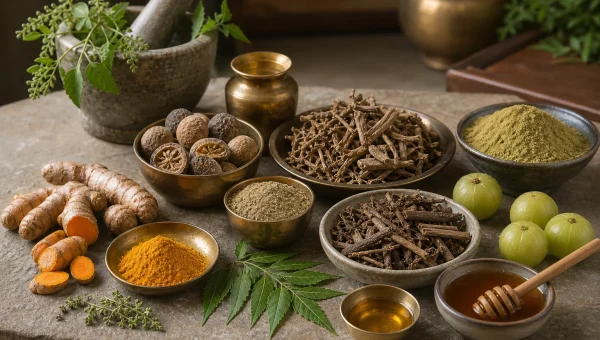
Guduchi (Tinospora cordifolia): Guduchi is described in the Ayurvedic Pharmacopoeia of India as tikta-kashaya in rasa, laghu in guna, ushna in virya and madhura in vipaka, with actions including rasayana, balya, tridosha-shamaka, raktashodhaka and jvaraghna. This makes it a central classical herb when depletion, feverishness and pitta-rakta disturbance are present. In autoimmune disease, however, Guduchi should never be treated as a casual “immunity booster.” It has documented immunological activity and there are safety cautions around autoimmune conditions and liver injury, so it belongs only in a supervised plan with appropriate monitoring.
Manjistha (Rubia cordifolia): Manjistha is listed in the Ayurvedic Pharmacopoeia of India as madhura-tikta-kashaya in rasa, guru in guna, ushna in virya and katu in vipaka, with actions including kaphapitta-shamaka, varnya, shothaghna, kushthaghna, rasayana and shonitasthapana. In a lupus-supportive plan, it is most relevant when the presentation is dominated by skin discoloration, inflammatory skin tendency, pitta-rakta disturbance and swelling. Its use should be individualized rather than given automatically to every patient with a rash.
Punarnava (Boerhavia diffusa): Punarnava is described in the Ayurvedic Pharmacopoeia of India as madhura-tikta-kashaya in rasa, ruksha in guna, ushna in virya and madhura in vipaka, with actions including shothahara and mutrala. This makes it relevant to edema and urinary-channel support in an Ayurvedic framework. In lupus nephritis, Punarnava is not a substitute for immunosuppression, urine monitoring, kidney-function tests or nephrology care; it may be considered only as supervised supportive care when the treating clinicians agree.
Shatavari (Asparagus racemosus): Shatavari is listed as madhura-tikta in rasa, guru-snigdha in guna, shita in virya and madhura in vipaka, with actions including balya, pittahara, rasayana, vrishya and stanyakara. It is most appropriate when lupus has left a patient dry, depleted, sleepless, heat-sensitive and undernourished, particularly when vata-pitta depletion is more prominent than ama. It should be used cautiously and professionally in pregnancy, lactation, hormone-sensitive situations and patients taking multiple medicines.
Amalaki (Emblica officinalis / Phyllanthus emblica): Amalaki is described as tridoshajit, rasayana and shita in virya, with classical use in raktapitta, daha and other pitta-linked presentations. The pharmacopoeial monograph also records ascorbic acid and tannins among its constituents. In lupus-supportive care, Amalaki is useful as a cooling rasayana when the patient tolerates it well, especially when there is heat, burning, mouth irritation, fatigue or post-inflammatory depletion.
Virechana Consideration in Lupus
Virechana is the classical shodhana procedure most closely associated with pitta management. For a pitta-rakta-dominant lupus pattern, this makes the concept relevant, but it does not make purgation automatically appropriate. SLE patients may be medically fragile during flares, infections, steroid changes, kidney disease, anemia, pregnancy or multi-organ involvement, and a poorly timed cleansing procedure can be harmful.
For lupus, virechana should be considered only by an experienced Ayurvedic physician after reviewing disease activity, kidney and liver function, blood counts, current medicines and rheumatology advice. It is most appropriate to discuss only in a stable remission phase, never during active nephritis, nervous-system lupus, severe flare, fever, infection, pregnancy or significant weakness. Home purgation, strong laxative cleansing and unsupervised panchakarma are not appropriate for SLE.
Dietary and Lifestyle Protocol
Sun and ultraviolet protection is one of the most important lifestyle measures for many people with lupus. From an Ayurvedic viewpoint, strong heat and light aggravate the pitta-rakta-twak pattern; from a medical viewpoint, UV exposure can worsen photosensitive skin disease and may trigger broader symptoms in susceptible patients. Practical protection includes broad-spectrum sunscreen, regular reapplication, shade, wide-brimmed hats, tightly woven clothing, sunglasses and avoiding peak sun exposure when possible.
A pitta-pacifying diet favors regular meals and cooling, sweet, bitter and astringent foods while still protecting agni. Useful foods may include cucumber, fresh coconut, coriander, pomegranate, cooked leafy greens, bottle gourd, bitter gourd, mung dal, rice, small amounts of ghee when suitable, and simple warm meals that are not spicy. Foods and habits that commonly aggravate pitta include alcohol, very spicy food, deep-fried food, excessive sour or fermented food, overheating, skipped meals and late-night eating.
For fatigue and ojas depletion, routine matters as much as herbs. Consistent sleep timing, gentle movement away from harsh sun, calming pranayama, meditation, warm oil application when not overheated, and a flare diary can help the patient identify triggers. During active flare, the priority is rest, medical assessment and medication adherence, not ambitious detoxification or strong exercise.
Pregnancy in lupus requires preconception planning and specialized care. A maternal-fetal medicine specialist, rheumatologist and obstetric team should review disease activity, kidney status, blood pressure, antibodies and medication safety before conception and throughout pregnancy. Ayurvedic herbs and procedures require specific modification during pregnancy and should not be self-prescribed.
Medical disclaimer: Systemic lupus erythematosus is a serious autoimmune disease requiring qualified medical supervision. This Ayurvedic framework is supportive and must be integrated with, not substituted for, conventional SLE treatment. Active lupus nephritis, nervous-system lupus, severe flare, pregnancy, fever, infection, abnormal liver tests or multi-organ involvement require prompt medical care. Consult your rheumatologist and a qualified Ayurvedic practitioner before beginning any herb, supplement, panchakarma procedure or major dietary change.
References
- Niams (niams.nih.gov)
- CDC
- Manifestations of systemic lupus erythematosus (2011), PubMed Central
- Ard (ard.bmj.com)
- My (my.clevelandclinic.org)
- Lupus (lupus.org)
- CDC
- Ayurvedic Pharmacopoeia of India
- Deciphering the mechanism of Tinospora cordifolia extract on Th17 cells through in-depth transcriptomic profiling and in silico analysis (2022), PubMed Central
- Webmd (webmd.com)
- Tinospora Cordifolia (Giloy) and Autoimmune-like Liver Injury – A Classic Case of Primum Non Nocere, “First, Do No Harm” (2022), PubMed Central
- Ayurvedic Pharmacopoeia of India
- Evaluation of the effect of Boerhavia diffusa on gentamicin-induced nephrotoxicity in rats (2015), PubMed Central
- Ayurvedic Pharmacopoeia of India
- Charaka Samhita — Pitta dosha
- NCCIH
- Lupus (lupus.org)

SLE patient for 8 years. The Ayurvedic framing as Pitta Vyadhi with Ama component finally gives me a way to understand flares that Western medicine doesnt explain well.
lupus is a serious potentially life-threatening disease. Articles in this space need to be careful about not undermining standard care.
is this protocol safe alongside Hydroxychloroquine and low-dose steroids which most lupus patients are on?
the article mentions Guduchi for autoimmune conditions is there any concern it might actually stimulate immunity in a lupus patient?