
The Condition Nobody Wants to Talk About (But Everyone Should)
I thought twice before writing this article. Then I thought about all the women who quietly say, “I have this problem, but I am too embarrassed to ask my doctor.” Vaginal dryness can make intimacy painful, cause daily discomfort, and be associated with burning, itching, urinary symptoms, and recurrent urinary tract infections. It is common around and after menopause, but it can also affect younger women during breastfeeding, with certain medicines, after cancer treatments, during times of stress, or when the delicate vaginal tissues are irritated.
In Ayurveda, this concern is best understood through the language of Vata, dryness, and depletion of natural unctuousness in the yoni, the female reproductive tract. The closest classical frame is found in Charaka Samhita, Chikitsa Sthana, Chapter 30, where female genital tract disorders are discussed under Yonivyapat and twenty types are enumerated. Charaka describes Shushka Yonivyapat, also called Sushkayoni, as a condition involving dryness of the vaginal orifice with Vata involvement. This does not mean every case has one single cause; it means the Ayurvedic approach looks carefully at dryness, pain, tissue nourishment, Apana Vayu, digestion, lifestyle, and the local condition of the vaginal tissues.
What I want you to understand first is this: vaginal dryness is a health concern, not a personal failing. It does not mean anything is “wrong” with you as a woman. It can arise from hormonal changes, aging, breastfeeding, medicines, stress, irritation, or other health conditions, and it deserves gentle, respectful, and practical care.
Understanding the Causes Through an Ayurvedic Lens
Ayurveda approaches vaginal dryness by looking for Vata aggravation, ruksha guna, depletion of snigdha or natural lubrication, and weakness of tissue nourishment. Modern gynecology often explains the same symptom through reduced estrogen, thinner and less elastic vaginal tissue, medication effects, irritation, low arousal, or underlying medical conditions.
| Cause Category | Ayurvedic Explanation | Modern Correlation | Dosha Involved |
|---|---|---|---|
| Menopause and perimenopause | Natural Vata increase with age, reduction of snigdha quality, and need for deeper tissue nourishment | Lower estrogen can make vaginal tissues thinner, drier, less elastic, and more fragile | Vata primary |
| Breastfeeding and postpartum changes | Postpartum Vata increase and high demand on Rasa Dhatu through stanya, or breast milk production | Breastfeeding is associated with lower estrogen and may contribute to vaginal dryness | Vata |
| Hormonal contraception, cancer therapies, and hormone-related medicines | Medicine-related change in tissue moisture and reproductive balance, assessed according to the person’s constitution and symptoms | Some medicines and treatments that affect estrogen can contribute to vaginal dryness | Vata, sometimes Pitta if burning is prominent |
| Antidepressants, antihistamines, and other drying medicines | Increase in ruksha, or drying quality, with reduced mucosal comfort | Certain medicines can be associated with dryness of mucosal tissues | Vata |
| Stress, poor sleep, and anxiety around intimacy | Prana Vayu and Apana Vayu disturbance, creating tension, fear, pain anticipation, and further Vata aggravation | Stress and low arousal can worsen discomfort and reduce natural lubrication during intimacy | Vata |
| Restrictive dieting or excessive exercise without recovery | Dhatu kshaya, or depletion of tissue nourishment, especially when food, rest, and fats are inadequate | Low energy availability, under-eating, and intense exercise may disturb menstrual and estrogen function in some women | Vata |
| Perfumed soaps, douches, and local irritants | Local Pitta irritation combined with Vata dryness | Perfumed washes, douches, and products not intended for vaginal use can worsen dryness and irritation | Pitta-Vata |
The common thread is dryness, fragility, irritation, or loss of nourishment. The Ayurvedic strategy is therefore clear: calm Vata, restore snigdha quality, nourish Rasa Dhatu, remove irritants, support Apana Vayu, and use local care only in a clean and appropriate way.
Internal Support: Nourishing from Within
Internal Ayurvedic care focuses on poshana, or nourishment, rather than forcing a quick local change. The aim is to improve digestion, maintain warm and moist meals, support healthy elimination, calm the nervous system, and use herbs only when they suit the person.
Shatavari: The Queen of Nourishing Herbs for Women
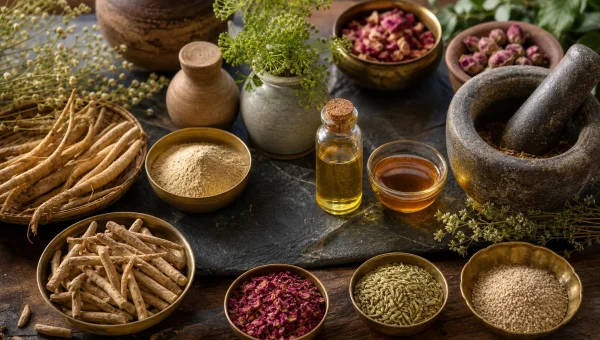
Shatavari, the root of Asparagus racemosus, is one of Ayurveda’s most valued herbs for female reproductive nourishment. The Ayurvedic Pharmacopoeia of India lists Shatavari as madhura and tikta in rasa, guru and snigdha in guna, shita in virya, and madhura in vipaka, with actions including balya, rasayana, vatahara, pittahara, vrishya, and stanyakara. These qualities make it especially relevant when dryness is accompanied by Vata aggravation, tissue depletion, heat sensitivity, postpartum depletion, or general reproductive weakness.
Shatavari root contains glycosides, saponins, and sitosterol. In traditional practice, its snigdha and nourishing qualities are the main reason it is used for dryness and depletion patterns. It is not suitable for everyone, and it should be used with professional guidance if there is a history of estrogen-sensitive cancer, fibroids, endometriosis, heavy Kapha symptoms, poor digestion, pregnancy, breastfeeding, or ongoing medication use.
Traditional dosage guidance: The Ayurvedic Pharmacopoeia of India gives a dose of 3–6 g of the drug. In household practice, a qualified practitioner may advise Shatavari churna in divided doses with warm milk or warm water, sometimes with a small amount of ghee if digestion permits. Shatavari Ghrita and Shatavari Kalpa are classical preparations, but their dosage should be individualized.
Complete Internal Protocol
This protocol keeps the same Ayurvedic purpose: nourish Rasa Dhatu, reduce dryness, support Apana Vayu, and calm Vata without using aggressive or inappropriate remedies.
| Time | Support | Amount | Purpose |
|---|---|---|---|
| Morning | Warm water or a mild cumin-coriander-fennel infusion | 1 cup | Gentle hydration and digestive preparation |
| With food | Shatavari churna, if suitable | Within 3–6 g per day, divided as advised | Rasa Dhatu nourishment and Vata-Pitta support |
| Main meals | Warm cooked meals such as khichari, rice, oats, mung dal, soups, stews, cooked vegetables, and healthy fats | According to appetite and digestion | Moist, stable, grounding nourishment |
| Daily food addition | Ground flaxseed, sesame seed, soaked dates, soaked figs, or a small portion of nuts | Small food-level serving | Natural unctuousness, minerals, and bowel support |
| Evening | Warm milk or a suitable warm alternative with a small amount of ghee, if tolerated | 1 cup | Vata calming and bedtime nourishment |
| Daily lifestyle | Abhyanga with warm sesame oil, or coconut oil if heat and sensitivity are prominent | 10–20 minutes before bathing | Nervous-system calming and Vata pacification |
Dietary Foundation
The diet should be anti-Vata in the practical sense: warm, cooked, moist, moderately oiled, easy to digest, and consistent. The exact amount of ghee, oil, nuts, and milk should match digestion, appetite, cholesterol status, gallbladder health, and medical guidance.
- Favor moist cooked meals: Khichari, rice, oats, mung dal, vegetable soups, root vegetables, stews, and warm porridges are better than dry snacks and cold meals.
- Use healthy fats intelligently: Ghee, sesame oil, olive oil, coconut, soaked nuts, sesame, and flaxseed can support snigdha quality when digestion is strong enough.
- Hydrate gently: Sip warm water through the day and include broths, soups, and warm herbal infusions rather than relying only on cold drinks.
- Reduce drying and irritating habits: Excess caffeine, carbonated drinks, very dry snacks, skipped meals, harsh fasting, and excessive raw food can aggravate Vata in sensitive people.
- Cook with mild digestive spices: Cumin, coriander, fennel, cardamom, cinnamon, and small amounts of fresh ginger may be useful when they do not increase burning or acidity.
- Keep the bowels comfortable: Constipation is a common Vata sign and can worsen pelvic discomfort; warm fluids, cooked food, ghee in moderation, and regular meals are often the first steps.
External Support: Local Comfort and Classical Care
Local symptoms deserve local care, but the vaginal area is delicate and should not be treated casually with household products. For intimacy, a water-based or silicone-based lubricant is often the safest first support. For ongoing dryness between intimacy, a vaginal moisturizer intended for internal vaginal use may be helpful. Perfumed soaps, douches, antiseptic washes, and essential oils should be avoided in the vaginal area.
Yoni Pichu: The Classical Oil-Tampon Approach
Charaka describes warm, unctuous local procedures, including pichu or oil tamponing, for Vata-dominant yoni disorders. In modern Ayurvedic practice, Yoni Pichu means that sterile cotton or gauze is soaked in a suitable medicated oil or ghee and placed locally for a limited time under professional guidance. For dryness with Vata features, this is a direct classical approach, but it must be performed with proper hygiene, correct formulation, and clear instructions for timing and removal.
Important safety guidance: Do not insert household oils, essential oils, perfumed products, or unsterile materials into the vagina. Do not use Yoni Pichu during active infection, unexplained bleeding, pregnancy, immediately postpartum, severe burning, or after gynecologic procedures unless a clinician specifically approves it. Oil-based products can weaken latex condoms and diaphragms, so use condom-compatible water-based or silicone-based lubricants when contraception or STI protection is needed.
Warm Sitz Bath and Gentle Cleansing
A plain warm sitz bath can be soothing when dryness is accompanied by tightness, soreness, or Vata-type discomfort. The water should be warm, not hot, and the practice should be stopped if it increases burning, itching, or discharge. Herbal decoctions such as Triphala or Dashamoola should be used locally only when prescribed, especially if there is recurrent infection, unusual discharge, itching, or pelvic pain.
Addressing the Emotional Dimension
Vaginal dryness affects intimacy, and affected intimacy can affect relationships, self-image, and mental health. Some women avoid physical closeness for months because they expect pain, and that fear itself can increase Vata, tighten the pelvic floor, and make the experience more difficult. A complete approach must therefore address both the tissue and the nervous system.
- Speak openly with your partner about what you are experiencing, without blame or shame.
- Use adequate arousal time and a water-based or silicone-based lubricant during intimacy.
- Practice daily Abhyanga with warm oil to calm Vata and reduce body-level tension.
- Practice Nadi Shodhana Pranayama for 5–10 minutes daily to steady the nervous system.
- Prioritize regular sleep, because tissue repair, mood, and hormonal rhythm all depend on rest.
- Seek counseling, sex therapy, gynecologic care, or pelvic floor physiotherapy if pain, fear, or relationship strain is significant.
For sleep support that complements a Vata-calming routine, see Beyond Ashwagandha: 5 Sleep Remedies.
When to See a Doctor
Medical evaluation is important when dryness is persistent, painful, recurrent, or accompanied by signs that may indicate infection, hormonal changes, skin disease, urinary problems, or another condition requiring diagnosis.
- Any bleeding after menopause, or unusual bleeding at any age
- Unusual discharge, odor, sores, severe itching, or persistent burning
- Painful urination, urinary urgency, or recurrent urinary tract infections
- Pelvic pain, fever, or pain that is not limited to dryness
- Symptoms that affect daily life or intimacy and do not improve with appropriate lubricants, moisturizers, and irritant removal
- History of breast cancer, estrogen-sensitive conditions, fibroids, endometriosis, autoimmune disease, diabetes, or Sjögren’s syndrome
- Use of hormone therapy, cancer therapy, antidepressants, antihistamines, contraceptives, or other medicines that may require coordinated care
Ayurveda can sit alongside conventional care when both sides are used wisely. Vaginal moisturizers, lubricants, low-dose vaginal estrogen, vaginal DHEA, and other medical options each have their place depending on the cause and the person’s health history. Herbs such as Shatavari and procedures such as Yoni Pichu should be coordinated with a qualified Ayurvedic practitioner and a gynecologist when symptoms are significant or recurrent. For understanding how traditional carrier substances are used with herbs, see The Science of Anupana.
A Note to Younger Women
Vaginal dryness is not only a menopausal concern. Women in their 20s and 30s may experience it during breastfeeding, postpartum recovery, hormonal contraception, high stress, restrictive eating, excessive exercise, low arousal, use of antidepressants or other medicines, exposure to perfumed washes or douches, diabetes, Sjögren’s syndrome, or after cancer-related treatments. If this is you, do not ignore it or assume it is “normal.” Begin with proper diagnosis, remove irritants, support nourishment and sleep, use products intended for vaginal dryness, and seek professional care if pain, burning, discharge, urinary symptoms, or emotional distress is present.
Medical Disclaimer: This article is for educational purposes only and does not constitute medical advice. Vaginal dryness can have underlying causes that require medical evaluation, including hormonal changes, infections, autoimmune conditions, skin disorders, medication effects, and gynecologic disease. Always consult a gynecologist or qualified healthcare provider for diagnosis, especially if symptoms are persistent, painful, recurrent, or associated with bleeding, discharge, burning, or urinary symptoms. Consult a qualified Ayurvedic practitioner before using herbs, medicated ghee, medicated oils, or Yoni Pichu, particularly if pregnant, breastfeeding, managing a medical condition, taking medication, or having a history of estrogen-sensitive conditions.
Nothing in this article diagnoses, treats, or cures a medical condition. Use it as educational information and consult a qualified Ayurvedic practitioner or physician before starting herbs, supplements, detoxes, local therapies, or therapeutic protocols.
i have high pitta, would the sesame oil protocol here work or make things worse
the decoction method for yoni pichu is a bit confusing, is there a simpler version
i have high pitta, would the yoni pichu protocol here work or make things worse
same here, vata helped me but took longer than the article suggests धन्यवाद
helpful info on vaginal dryness
I’m also high pitta and was curious whether the shatavari recommendations here would be too heating for me. The protocol seems geared toward Vata and I don’t want to aggravate things.
That’s a reasonable concern with high pitta. Sesame oil is warming so it might not be the first choice — something like coconut-based bala oil is often recommended for pitta types. Definitely worth checking with a practitioner before committing to the sesame route.
is shatavari ok during pregnancy? asking for my wife who is in second trimester
Shatavari in pregnancy is actually a separate question worth checking with her OB or an Ayurvedic practitioner — it’s generally considered a uterine tonic, but second trimester needs careful guidance. Not the same as using it for vaginal dryness post-menopause context here.
can i take yoni pichu wid metformin??
This is the first article I’ve seen that actually names the Vata connection to yoni shushkata directly. Most resources just say “stay hydrated” and leave it there. The section on snehan internally was new to me.
That could be why it didn’t work — the protocol here specifically uses sesame oil for yoni pichu, not oral application. If you were doing something different, that might explain the gap. Worth re-reading the method section.
about 8 weeks for me with sesame oil before any visible change
i have pitta excess and vaginal dryness worked fine for me, but started at lower dose
Good point, I noticed the same thing. I switched from loose churna to a medicated ghee preparation and the difference in absorption was noticeable within a few weeks. The delivery method really does seem to matter for this kind of deep tissue dryness.
Did you try the yoni pichu alongside it or just the internal herbs? I ask because when I only did the oral route I also saw very little, but adding the topical sesame oil piece made a real difference. The protocol seems to need both.
The formulation type matters a lot for yoni pichu. Churna vs capsule vs kashayam gave me different results.
Quick question: is the shatavari dosage here based on the root powder or a standardized extract? I’ve seen very different amounts recommended depending on the form and want to make sure I’m reading this correctly.
Not sure I agree on phytoestrogens being suitable for Vata-Pitta. My experience was different.
way too vague about dosage for yoni pichu. ‘2 to 3 capsules’ covers a huge range depending on body weight
can you combine vaginal dryness with sesame oil or is that too much at once
I asked almost the same thing — my vaidya said starting the external oil application first, then adding internal herbs after two weeks, was easier on the system than doing everything together. Might be worth asking yours the same.
Has anyone here been dealing with this for years post-menopause? Wondering if the yoni pichu approach described works differently depending on how long the dryness has been going on.
I asked my rheumatologist about phytoestrogens and he was dismissive, citing no RCT data. Would love to know which studies this article draws from.
my practitioner told me something different about vata. this article contradicts what i was told
these ayurvedic treatments take so long to work. western medicine might be faster for acute issues
That’s fair, and for acute discomfort I get it. But the article isn’t really claiming to replace that — it’s more about addressing the underlying Vata imbalance so the dryness doesn’t keep coming back. The two approaches don’t have to be either/or.
The suggestion to use warm sesame oil for Yoni Pichu seems practical for daily routine.
Wanted to ask — the article mentions shatavari and ashwagandha for internal snehan, but does anyone know if there’s an Ayurvedic view on how long yoni pichu should be continued before expecting results? The timeline isn’t very clear in the post.
Does the quality of vaginal dryness source matter significantly? Organic vs non-organic makes a big cost difference where I live.
same here, vaginal dryness helped me but took longer than the article suggests 💯
High Pitta alongside Vata dryness is tricky — the article does address this a bit, mentions avoiding heating herbs like dry ginger. Maybe ask a practitioner before starting the full protocol since some of the oils here could aggravate Pitta.
Two months is actually shorter than what the article suggests for seeing results with Vata-type dryness — it mentions minimum 90 days for deep tissue changes. Did you combine it with the dietary shifts or just the herbs on their own?
For the vaginal dryness preparation described, does the water temperature affect the active compounds during the decoction process?
is yoni pichu ok during pregnancy? asking for my wife who is in second trimester
can you combine warm foods with sesame oil or is that too much at once
Just started the warm foods protocol this week. A bit early to report results but the article gave me enough confidence to try it properly.
does brand matter for vaginal dryness or is generic fine
For the yoni pichu specifically, brand of sesame oil really does seem to matter — cold-pressed unrefined is what most practitioners recommend, and the supermarket refined versions behave quite differently. Worth checking what you’re using. 🙏
8 weeks sounds about right for noticing something, but the dryness relief felt more complete around month 3 for me. Were you also doing the dietary fat increases the article recommends, or just the external application? 🙏
vaginal dryness is not talked about enough. good if this explains vata without making women feel embarrassed
Yeah the sesame oil timing thing confused me too. I do it before meals now based on another source.
Does the flaxseed recommendation really help with estrogenic support for younger women?
Honestly try the yoni pichu protocol for at least 3 months before deciding it doesn’t work — I saw almost nothing at 6 weeks but by week 10 there was a real shift in comfort. Consistency with the oil temperature also made a difference. ❤️ नमस्ते
I asked my vaidya the same question about shatavari. He said constitution matters more than standard dose.
the studies quoted for warm foods are like 10 years old, anything more recent? धन्यवाद
these ayurvedic treatments take so long to work. western medicine might be faster for acute issues 🙏
about 8 weeks for me with yoni pichu before any visible change
Yeah the vaginal dryness timing thing confused me too. I do it before meals now based on another source. ❤️
My practitioner said the same thing about vaginal dryness. Results vary by individual constitution.
honestly try sesame oil for at least 3 months before deciding it doesnt work 🌿
tryd shatavari nothing happend
The timing question for yoni pichu confused me too — the article says evening but my practitioner suggested morning on an empty stomach. I’ve been doing it at night before bed and find it easier to retain that way. 🌿
I found the explanation of Vata aggravation linking to lifestyle factors quite clear.
my practitioner told me something different about shatavari. this article contradicts what i was told
is dry skin ok during pregnancy? asking for my wife who is in second trimester 🌿
The article glosses over contraindications for shatavari. People on blood thinners really need to know this before starting.
Is there a seasonal consideration for dry skin? I read elsewhere that some adaptogens should be paused in summer.
i have high pitta, would the vaginal dryness protocol here work or make things worse 🙌
Where is the evidence for the vata dosage recommended here? I could not find any peer-reviewed backing in the Indian Journal of Ayurveda for these specific numbers. 🙌
Not sure I agree on sesame oil being suitable for Vata-Pitta. My experience was different.
Finally something practical on this topic. I’ve been looking for a clear breakdown of the Vata-yoni connection for months and this is the first article that actually explains the why behind sesame oil and shatavari together, not just a list of remedies.
A warm sitz bath with Triphala and Dashamoola sounds soothing after a long day.
off topic but has anyone here tried Ayurveda for hair loss? sorry if wrong place
Not really the right thread for hair loss but I understand! The Vata-balancing approach here — oil, warmth, nourishment — does overlap a lot with what’s used for hair. Bhringraj oil internally and externally is usually where practitioners start for that.
didnt work for me yoni pichu waste of money tbh
where r the studies for vaginal dryness tho
this helped. been confused about warm foods timing for weeks now
is constipation ok during pregnancy? asking for my wife who is in second trimester 🙌
any1 tried vata here tell me
My concern is whether coconut oil might be too cooling for Vata types.
The claim about sesame oil reducing inflammation in two weeks seems optimistic. My experience was more like four months before any noticeable change. 🙏
way too vague about dosage for vaginal dryness. ‘2 to 3 capsules’ covers a huge range depending on body weight
can i take vaginal dryness wid metformin??
same here, yoni pichu helped me but took longer than the article suggests
@Brian Same experience with shatavari here. Took me about 6 weeks to notice real change.
@Rohan Same experience with shatavari here. Took me about 6 weeks to notice real change.
Not sure I agree on yoni pichu being suitable for Vata-Pitta. My experience was different.
where r the studies for sesame oil tho
I tried yoni pichu for two months following a similar protocol and saw zero improvement. Not sure if dosage was wrong or the formulation matters that much.
the dosage chart for yoni pichu is really helpful. been overdoing it apparently
Where are the clinical studies on the yoni pichu method specifically? I found some research on shatavari for estrogen-like effects but nothing peer-reviewed on the topical oil application side of this protocol.
I am Vata-Pitta constitution. Would the yoni pichu protocol here need modification or is it generally dosha-agnostic?
helpful info on sesame oil
Really useful, thank you. One thing I was unclear on — the article mentions using medicated sesame oil versus plain sesame oil for yoni pichu. Is the medicated version something you prepare at home or does it need to be sourced from an Ayurvedic pharmacy?
Could the internal protocol be adjusted if someone is already on hormone replacement therapy?
anyone here tried yoni pichu for the specific issue in the article? what was your experience
@Priya yeah vaginal dryness quality is huge. local brand didnt work, switched to a standardized extract and different story
Is shatavari safe to take alongside SSRIs? My psychiatrist hasn’t cleared any supplements yet and I want to go in with some research. I know it has mild phytoestrogenic activity and wasn’t sure if that interacts with anything.
The section on sesame oil dosage timing was something I had not seen explained this clearly before. Taking it 30 minutes before meals has made a real difference. धन्यवाद
My grandmother used shatavari for decades. Reading the science behind it here connects the dots for me in a satisfying way.
That’s a fair concern. I found shatavari worked better when I also adjusted my diet simultaneously.
That matches what I found too. Shatavari alone moved things slowly, but when I started eating more ghee and warm cooked foods the changes came much faster. The herb seems to work better when the digestive fire isn’t working against you. 🙌
After reading about Shatavari Ghrita, I’m curious about preparing it at home.
dosw for kids same or diff
does brand matter for yoni pichu or is generic fine
@Rohit Good point about phytoestrogens. The quality of the herb makes a huge difference in my experience.
i have high pitta, would the shatavari protocol here work or make things worse
honestly try yoni pichu for at least 3 months before deciding it doesnt work
How many weeks does the yoni pichu protocol typically take before the dryness improves noticeably? The article gives a general timeline but I’m wondering what people’s real experience has been.
I am Vata-Pitta constitution. Would the sesame oil protocol here need modification or is it generally dosha-agnostic?
Is warm foods safe to use alongside SSRIs? My psychiatrist has not cleared any supplements and I want to go in informed.
my practitioner told me something different about vaginal dryness. this article contradicts what i was told
i have pitta excess and warm foods worked fine for me, but started at lower dose
first time trying sesame oil properly after reading this. fingers crossed it helps with the fatigue
how long do u need to take yoni pichu before results show? been 3 weeks, nothing yet
can i take warm foods wid metformin??
tried the sesame oil recipe from section 3 last week, tasted awful but felt lighter the next morning lol ❤️
The article makes a good point that dryness isn’t a personal failing, which reduces stigma.
the dosage chart for vata is really helpful. been overdoing it apparently
Good catch on overdoing it — for the oil application especially, more is not better from what I understand. Did you find that reducing the amount actually made the retention easier? I’ve been struggling with the right quantity for yoni pichu.
Can you combine the internal shatavari protocol with the yoni pichu at the same time, or is it better to start one first and add the other after a few weeks? Worried about doing too much at once and not knowing what’s actually helping.
is warm foods ok during pregnancy? asking for my wife who is in second trimester
does brand matter for warm foods or is generic fine
That’s a fair point. I noticed shatavari worked better for me once I also cut back on dry, raw, and cold foods — the dietary side of the Vata protocol really seems to amplify what the herbs are doing rather than being optional.
Will try.
Been using shatavari for three weeks now and the difference in energy is noticeable. The morning fatigue that used to hit by 11am has reduced quite a bit.
It would be helpful to see a sample meal plan that follows the anti Vata diet guidelines.
Some women might find the twice daily Shatavari dose challenging to keep up with.