
Ayurvedic Scalp Serums: 5 Targeted Oil Formulations for Dandruff, Thinning, and Early Graying
Warm oiling is useful for basic hair maintenance, but every scalp problem does not need the same oil. A dry, itchy scalp needs a different touch from an oily, flaky scalp; gradual thinning needs different herbs from early graying. In this guide, “scalp serum” means a small-batch medicated oil used in precise quantities on the scalp, prepared with the Ayurvedic idea of taila paka—cooking herbs with oil and a watery herbal extract so the final oil carries the selected herbs in a stable, usable form.
Classical Ayurveda connects hair care with both local scalp condition and deeper tissue nourishment. Scalp hair and body hair are described as byproducts of asthi dhatu, and depletion of asthi is associated with falling of hair, body hair, beard, nails, and teeth. This does not mean a scalp oil alone can correct every case of hair loss; it means external oiling is best used alongside nourishment, sleep, digestion, and proper evaluation when hair loss is sudden, severe, patchy, or persistent.
Understanding the Base: Choosing Your Carrier Oil
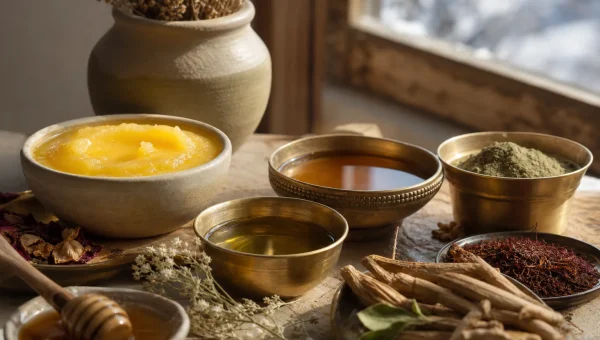
The carrier oil determines how heavy, warming, cooling, or washable the finished serum feels. Select the base according to the scalp state first, then add herbs that match the concern. When the scalp is oily or flaky, use very small amounts and short contact time. When the scalp is dry, tight, and rough, a richer oil and longer contact time usually feels better.
| Carrier Oil | Role in These Serums | Best For | Use Caution For |
|---|---|---|---|
| Coconut oil (Narikela Taila) | A familiar, easy-to-wash base for cooling-style scalp and hair-length applications. | Hot climates, early-graying formulas, dry hair lengths, pitta-type scalp comfort. | Very oily scalps or scalps where overnight oiling worsens flakes. |
| Sesame oil (Tila Taila) | A richer classical oil base; sesame seed is described as guru, snigdha, ushna, and keshya. | Dry, rough, vata-type scalp; thinning formulas needing a more nourishing base. | Hot, red, inflamed, or already oily scalps. |
| Prepared Bhringraj Taila | A ready-made medicated base centered on Bhringaraja, a classical keshya herb. | General hair support, gradual thinning, early graying support. | Check the label for added fragrance, mineral ingredients, or allergens. |
| Castor oil (Eranda Taila) | A very thick blending oil used in small proportion to make a serum more coating and protective. | Very dry, brittle hair and dry scalp formulas when blended with lighter oils. | Fine hair, oily scalp, or any formula that needs easy washing. |
| Jojoba oil | A non-classical but practical light carrier for short-contact oily scalp applications. | Oily scalp, greasy flakes, people who cannot tolerate heavy oiling. | Very dry scalps needing a more unctuous base. |
The Infusion Method: How to Make Medicated Scalp Serums
The classical medicated-oil idea uses a fat base with herbal paste and herbal liquid, cooked until the watery portion is gone and the oil carries the selected herbs. The home method below is a simplified kitchen version for external scalp use only. Work slowly, keep the heat low, and make small batches rather than trying to produce a commercial-style oil.
- Combine the selected herbs with enough water to cover them well, then simmer until the water becomes a strong, dark herbal decoction.
- Strain the decoction. If you are using fine powders such as amla or bhringraj, you may keep a small spoonful as paste, but avoid making the oil gritty.
- Add the decoction and herb paste to the carrier oil in a heavy-bottomed pan.
- Heat on the lowest setting, stirring often. Keep the oil uncovered so steam can escape.
- Continue until bubbling and steam reduce greatly and the herb residue looks cooked rather than wet. Do not leave the pan unattended.
- Turn off the heat before the herbs burn. Cool completely.
- Strain through clean muslin into a dry, dark glass bottle. Label the bottle with the ingredients and preparation date.
The finished oil should smell herbal, not burnt or rancid. If water remains in the preparation, spoilage is more likely, so strain carefully, store properly, and discard any batch that develops mold, sour odor, unusual cloudiness, or sharp rancid smell.
Serum 1: Anti-Dandruff Scalp Serum (Darunaka Shamana)
Darunaka is traditionally understood as a flaky, itchy, rough scalp condition with vata-kapha involvement. In everyday scalp care, dandruff may appear as dry white flakes, oily sticky flakes, itching, or irritation. This formula keeps the oil quantity modest while using bitter, astringent, and soothing herbs for flaking and itch-prone scalp care.
Ingredients
Choose the base according to the dandruff pattern. Use sesame oil when the scalp is dry and powdery; use jojoba when the scalp is greasy and the flakes are sticky.
- Base for dry flakes: 80 mL sesame oil + 20 mL coconut oil
- Base for oily flakes: 100 mL jojoba oil
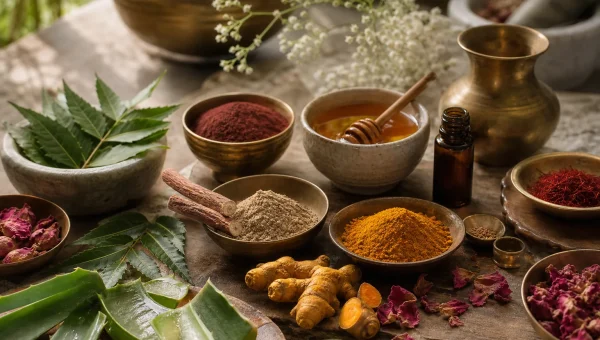
- Herbs for infusion: 2 tablespoons neem leaf, 1 tablespoon neem bark or extra neem leaf, 1 tablespoon lodhra bark powder, 1 tablespoon yashtimadhu root powder
- Optional support: 1 teaspoon amla powder if the scalp also feels hot or irritated
Application Protocol
Apply 1–2 mL directly to the scalp with a dropper, parting the hair section by section. Massage lightly for 2–3 minutes and leave on for 30–90 minutes. For oily, greasy, or seborrheic-type flaking, avoid overnight oiling. Wash with a mild shampoo and repeat 2–3 times weekly as tolerated.
Stop using the oil if itching, redness, burning, or flaking worsens. Thick plaques, bleeding, pain, swelling, pus, or persistent dandruff should be evaluated by a dermatologist or qualified healthcare provider, because scalp psoriasis, eczema, contact dermatitis, fungal involvement, and seborrheic dermatitis can overlap in appearance.
Serum 2: Hair-Thinning Support Serum (Keshya Vardhaka)
Khalitya is the Ayurvedic term commonly used for gradual hair fall or thinning. This formula focuses on keshya herbs, rasayana-style support, and a nourishing base. It is best suited for gradual thinning with a dry or depleted scalp, not sudden patchy hair loss, scarring hair loss, or hair loss linked with untreated medical conditions.
Ingredients
This serum is richer than the dandruff formula. The small amount of castor oil makes it more coating, while sesame oil keeps it workable for scalp massage.
- Base: 75 mL sesame oil + 25 mL castor oil
- Herbs for infusion: 2 tablespoons bhringraj powder, 1 tablespoon amla powder, 1 tablespoon finely crushed black sesame seed, 1 teaspoon jatamansi root powder
- Prepared-oil option: Use 100 mL prepared Bhringraj Taila as the base and infuse only amla, black sesame, and jatamansi for a simpler version.
Why These Specific Herbs
Each herb is chosen for a specific classical role rather than for a single modern “hair-growth” mechanism. The aim is to create a scalp oil that is nourishing, calming, and centered on recognized keshya ingredients.
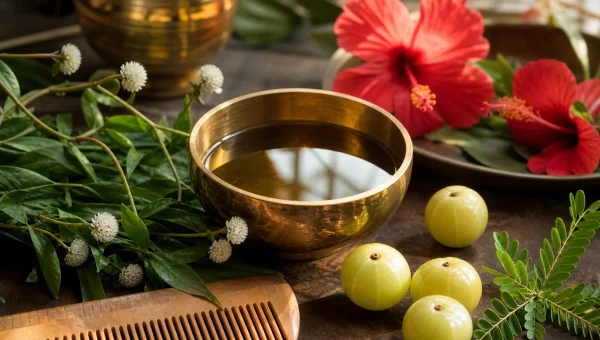
- Bhringraj: Bhringaraja is one of the most important Ayurvedic hair herbs and is classically described as keshya. It is also found in prepared hair oils such as Bhringaraja Taila and Nilibhringadi Taila.
- Amla: Amalaki is cooling, rasayana, and rich in tannins. It pairs well with Bhringraj in hair oil preparations.
- Black sesame: Tila seed is described as snigdha, guru, keshya, and rasayana, making it appropriate in a nourishing thinning-support formula.
- Jatamansi: Jatamansi is traditionally used for calming and night routines, with medhya and sleep-supportive actions in the Ayurvedic pharmacopoeial tradition.
Application Protocol
Apply 2–3 mL to the scalp, focusing on thinning areas. Massage with steady circular movements for 3–5 minutes without scratching or pulling hair. Leave for 1–3 hours, or overnight only if the scalp tolerates oil well. Use up to 3 times weekly. If hair loss is sudden, patchy, rapidly progressive, associated with scalp pain, or accompanied by fatigue, weight change, heavy menstrual bleeding, thyroid symptoms, or recent illness, seek medical evaluation rather than relying on topical oil alone.
Serum 3: Early-Graying Support Serum (Palitya Shamana)
Palitya is the classical category for premature or early graying. This formula keeps the original anti-graying intent but frames it realistically: it is a scalp-and-hair support oil for early graying tendencies, heat-prone scalp, and hair quality. It should not be treated as a guaranteed way to repigment long-standing white hair.
Ingredients
This formula uses a cooling-style base with keshya, rasayana, and pitta-supportive herbs. If coconut oil feels too heavy or causes flakes, use a prepared Bhringraj Taila instead and apply in a smaller quantity.
- Base: 100 mL coconut oil OR 100 mL prepared Bhringraj Taila
- Herbs for infusion: 2 tablespoons bhringraj powder, 2 tablespoons amla powder, 1 tablespoon finely crushed black sesame seed, 1 tablespoon yashtimadhu root powder
The Rationale
Bhringraj and sesame bring the keshya emphasis; amla adds a cooling rasayana quality; yashtimadhu adds sweet, unctuous, cooling, pitta-vata-balancing support. Together they make a classical-style oil for scalp comfort, hair texture, and early-graying care without relying on unsupported claims of rapid color reversal.
Application Protocol
Apply 2 mL to the scalp and a very small amount to the hair length if the ends are dry. Massage gently for 3–5 minutes. Leave for 1–3 hours or overnight if well tolerated. Use 2–3 times weekly. For best cosmetic results, combine this oil with gentle washing, reduced heat styling, adequate protein, and correction of nutritional or hormonal issues when present.
Serum 4: Oily Scalp Balancing Serum (Kapha-Pitta Scalp Care)
Oily scalp care requires restraint. The goal is not heavy oiling but brief contact with a light base and herbs that suit itching, greasiness, and kapha-pitta scalp discomfort. This is the formula to choose when the scalp becomes greasy quickly, but still feels itchy or flaky.
Ingredients
Use this as a short-contact pre-wash oil, not as a leave-in. The herb blend is intentionally bitter, astringent, and light in feel.
- Base: 100 mL jojoba oil
- More traditional base option: 70 mL coconut oil + 30 mL sesame oil, used only in very small quantity
- Herbs for infusion: 2 tablespoons neem leaf, 1 tablespoon lodhra bark powder, 1 tablespoon amla powder, 1 teaspoon yashtimadhu root powder
Application Protocol
Apply only 0.5–1 mL to the scalp. Massage lightly and leave for 20–45 minutes before washing. Do not apply to the hair length unless it is dry. Use 1–2 times weekly at first. If the scalp develops yellowish greasy scale, strong redness, burning, or persistent itching, treat it as a dermatology concern and get appropriate care.
Serum 5: Dry and Itchy Scalp Soothing Serum (Ruksha Shirasa Shamana)
Dry, tight, itchy scalp corresponds to a ruksha and vata-type pattern: the scalp feels under-oiled, sensitive, and easily irritated. This formula uses an unctuous base with sweet, cooling, nourishing herbs to soften dryness while still keeping the herb selection grounded in classical Ayurvedic properties.
Ingredients
This is the richest formula in the set. It is best for dry scalp without active infection, oozing, or open wounds.
- Base: 70 mL sesame oil + 20 mL coconut oil + 10 mL castor oil
- Herbs for infusion: 2 tablespoons yashtimadhu root powder, 1 tablespoon shatavari root powder, 1 tablespoon amla powder, 1 tablespoon bhringraj powder
The Rationale
Yashtimadhu is sweet, unctuous, cooling, and traditionally pitta-vata balancing. Shatavari is sweet-bitter, heavy, unctuous, cooling, and rasayana. Amla adds cooling support, while Bhringraj keeps the serum connected to the keshya purpose of the formulation.
Application Protocol
Warm the closed bottle in a bowl of hot water for a few minutes, then apply 2–3 mL to the scalp. Massage gently for 5 minutes and cover with a warm towel for 10–15 minutes if comfortable. Leave for 1–3 hours, or overnight if the scalp is very dry and tolerates oil well. Wash with a mild cleanser. Use 2–4 times weekly during dryness, then reduce frequency as the scalp becomes comfortable.
Quick Selection Guide
Use one serum at a time for at least several washes before deciding whether it suits you. Combining all five formulas will usually confuse the scalp and make it harder to identify irritation or benefit.
| Scalp Condition | Best Serum | Suggested Frequency | Reassess or Seek Help If |
|---|---|---|---|
| Dry or oily dandruff | Anti-Dandruff Serum | 2–3 times weekly before washing | Flakes are thick, painful, bleeding, spreading, or not improving with appropriate care. |
| Gradual thinning or shedding | Hair-Thinning Support Serum | Up to 3 times weekly | Loss is sudden, patchy, scarring, or accompanied by systemic symptoms. |
| Early graying tendency | Early-Graying Support Serum | 2–3 times weekly | Graying is rapid or paired with other unexplained health changes. |
| Oily scalp with itch | Oily Scalp Balancing Serum | 1–2 times weekly, short contact only | Greasy yellow scale, redness, burning, or persistent itch develops. |
| Dry, tight, itchy scalp | Dry and Itchy Scalp Soothing Serum | 2–4 times weekly as needed | Skin is cracked, oozing, infected, or worsening after oiling. |
Complementary Internal Support
Topical scalp oils work best when the body is also nourished from within. Ayurveda links hair with dhatu nourishment, and modern hair care also recognizes that nutrition, endocrine health, illness, stress, and inflammation can affect shedding and hair quality.
- Protein and whole foods: Hair is built from keratin, a protein. Include steady vegetarian protein sources such as dal, beans, lentils, curd, paneer, tofu, nuts, and seeds according to your digestion and diet.
- Mineral and deficiency assessment: Diffuse shedding can be associated with nutritional deficiency, thyroid disease, major illness, rapid weight loss, and other medical factors. Ask a qualified clinician about appropriate testing before taking high-dose supplements.
- Sleep and stress rhythm: Use scalp massage as a calming evening ritual, especially with the hair-thinning support formula. Do not take jatamansi or other internal herbs unless prescribed for your constitution and situation.
- Nasya and stronger therapies: Medicated nasal oils, purificatory therapies, and internal rasayana protocols should be done under a qualified Ayurvedic practitioner rather than copied from a topical hair-care recipe.
Storage and Handling
Home-prepared oils are safest when made in small batches with clean, dry equipment. Store the strained oil in a dark glass bottle away from heat, moisture, and direct sunlight. Do not dip wet fingers into the bottle; use a clean dropper or pour a small amount into your palm.
Discard the oil if it develops visible mold, sour odor, sharp rancid smell, unexpected cloudiness, or any sign of contamination. If the formula contains gritty sediment after straining, let it settle and pour off the clear oil rather than rubbing abrasive particles into the scalp.
Safety, Patch Testing, and When to Seek Care
Patch-test every new serum before full scalp use. Apply a small amount to the inner arm or behind the ear and watch for redness, itching, swelling, burning, or rash. People with sensitive skin, eczema, fragrance allergy, or past reactions to herbal products should be especially cautious.
Medical Disclaimer: This article is for educational purposes only and does not diagnose, treat, or cure any medical condition. Significant or sudden hair loss can be related to thyroid disorders, iron deficiency, autoimmune disease, infection, hormonal changes, medication effects, nutritional deficiency, or other conditions that need proper care. Consult a dermatologist, trichologist, physician, or qualified Ayurvedic practitioner for persistent scalp disease, rapid hair loss, pregnancy or breastfeeding, chronic illness, medication use, or before beginning internal herbs, supplements, detoxes, nasya, or therapeutic protocols.
References
- Charaka Samhita — Grahani Chikitsa
- Charaka Samhita — Kiyanta Shiraseeya Adhyaya
- Charaka Samhita — Mala
- A comparative review study of Sneha Kalpana (Paka) vis-a-vis liposome (2011), PubMed Central
- Ayurvedic Pharmacopoeia of India
- Ayurvedic Pharmacopoeia of India
- Miracledrinksclinic (miracledrinksclinic.com)
- Ayurvedic Pharmacopoeia of India
- Jaims (jaims.in)
- Jaims (jaims.in)
- Ayushdhara (ayushdhara.in)
- Mayoclinic (mayoclinic.org)
- Bad (bad.org.uk)
- NHS
- Jamanetwork (jamanetwork.com)
- Btf-thyroid (btf-thyroid.org)
- My (my.clevelandclinic.org)
- Aad (aad.org)
- NCCIH
do all 5 formulas need separate bottles or can they be combined in zones? I have both dandruff and thinning.
the targeted formula approach makes sense. ising the Bhringaraj + rosemary oil formula specifically for the thinning crown and the anti-dandruff formula only at the hairline fixed the problem I had with one-size-fits-all treatments.
That’s a really smart way to apply it. Did you find the Bhringaraj serum made the scalp oilier over time, or did it balance out after a few weeks? I’ve been hesitant to use it daily for that reason.
the Bhringaraj infusion instructions say ‘cold infusion for 7 days’. does refrigeration matter or room temperature?
formula 2 (Neem + Tea Tree in Sesame oil) for dandruff 3 weeks and my flaking is 80% reduced without the dryness that commercial shampoos cause.
no mention of patch testing before applying these concentrated herb-in-oil formulas. contact dermatitis from Neem oil is not uncommon.
5 formulas is complex for home preparation. a simplified 2-formula version (dandruff focus vs growth focus) would serve most readers better.
the overnight Amla + Brahmi oil serum for thinning changed my morning hair count in the drain after 6 weeks. tbh
for oily scalp specifically, is there an adjustment to the oil base? Sesame feels too heavy for my scalp type.
Makes sense.
Same here.
The breakdown of carrier oils really clarified why sesame works better for my dry scalp than coconut.
Noted.
@Asha formula 2 (Neem + Tea Tree in Sesame oil) for dandruff 3 weeks and my flaking is 80% reduced without the dryness that commercial shampoos cause.
for oiky scalp specifically, is there an adjustment to the oil base? Sesame feels too heavy for my scalp type.
for oily scalp specifically, ia there an adjustment to the oil base? Sesame feels too heavy for my scalp type.
the overnight Amla + Brahmi oil serum for thinning chanhed my morning hair count in the drain after 6 weeks. tbh
5 formulas is complrx for home preparation. a simplified 2-formula version (dandruff focus vs growth focus) would serve most readers better. ✨
Thanks!
Using neem and tea tree together in the anti dandruff serum gave me noticeable less itching after a few applications.
the overnight Amla + Brahmi oil serum for thinning changed my morning hair count in tje drain after 6 weeks.
That’s encouraging to hear — six weeks is actually faster than I expected. Did you apply it only at night or sometimes during the day too? I’m wondering if frequency makes a big difference with the Amla-Brahmi combination.
Applying the hair growth serum to my temples felt heavy at first, but the massage step made it absorb easier.
formula 2 (Neem + Tea Tree in Sesame oil) for dsndruff 3 weeks and my flaking is 80% reduced without the dryness that commercial shampoos cause. tbh
After trying the jojoba base for oily scalp, I noticed less shine by midday without feeling stripped.
the Bhringaraj infusion instructions say ‘cold infusuon for 7 days’. does refrigeration matter or room temperature?
5 formulas is complex for home preparation. a simplified 2-formula version (dandruff focus vs groeth focus) would serve most readers better. tbh
When I added rosemary essential oil to the growth serum, the scent reminded me of a herbal garden and made the routine pleasant.
Sorry off-topic but anyone here used Ayurveda for hair loss?
The suggestion to wrap the head in a warm damp towel for the dry scalp serum sounded unusual, yet it eased the tightness after the first try.
Storing the serums in dark glass bottles kept them fresh smelling for weeks without any rancid odor.
@Suresh no mention of patch testing before applying these concentrated herb-in-oil formulas. contact dermatitis from Neem oil is not uncommon.