
The combination of night sweating and restless sleep is often oversimplified as a purely “Pitta” condition. In an Ayurvedic reading, the heat, flushing, sweating, thirst, irritability, burning sensations, or reddish complexion point toward Pitta and Sweda involvement, while light sleep, frequent waking, anxious alertness, racing thoughts, dryness, variable digestion, and inability to settle point toward Vata disturbance. When both appear together, a Vata-Pitta approach is more useful than only cooling the body or only sedating the mind.
The aim is not to suppress sweating alone. The aim is to cool excess heat without making the body cold, dry, and depleted, and to calm Vata without using heavy, heating, pungent measures that may worsen night heat. This is why the most balanced protocol uses cooling, nourishing, mildly unctuous, mind-settling, and routine-building measures together.
Clinical and Ayurvedic Understanding
Night sweats are repeated episodes of heavy sweating during sleep that may soak clothing or bedding and are not simply due to a warm room or heavy blankets. Common medical causes include menopause or perimenopause, thyroid disorders, infections, blood sugar changes, alcohol use, anxiety, sleep disorders, certain medicines, tuberculosis, endocarditis, HIV, lymphoma, leukemia, and other serious conditions. For this reason, persistent or drenching night sweats should be medically assessed before beginning a self-directed herbal plan.
In Ayurveda, Sweda is connected with heat regulation and the metabolic waste pathway of Meda Dhatu, while Pitta is closely related to heat, digestion, metabolism, complexion, and body temperature. Sleep disturbance is described in relation to altered Kapha, Vata, Pitta, bodily strain, mental agitation, and depletion. A person who wakes hot and sweaty but also anxious, dry, wired, or unable to return to sleep is therefore better understood as having a mixed Vata-Pitta presentation rather than a single-dosha pattern.
The Treatment Principle
The practical rule is: cool Pitta gently, nourish the tissues, and anchor Vata at the same time. Very cold foods, excessive raw salads, fasting, dry snacks, bitter-only regimens, or strong purgation may reduce heat temporarily but can aggravate Vata and worsen sleep. On the other hand, strong heating tonics, heavy late meals, alcohol, chili, sour fermented foods, and late-night stimulants can ground Vata for a while but aggravate Pitta and increase sweating.
The most suitable evening strategy is warm, moist, light-to-moderate food; mild sweetness and unctuousness; a calm bedtime rhythm; cooling but not icy measures; and herbs chosen according to whether heat, dryness, anxiety, hormonal transition, fatigue, or depletion is most prominent.
Primary Herbs and Formulation Logic
These herbs are not interchangeable. Shatavari is primarily cooling and nourishing, Ashwagandha is primarily Vata-calming and strengthening but warming, and Brahmi is primarily Medhya, supporting a calmer mind. In a Vata-Pitta sleep-sweat pattern, the art is choosing the right emphasis rather than taking all herbs at full dose.
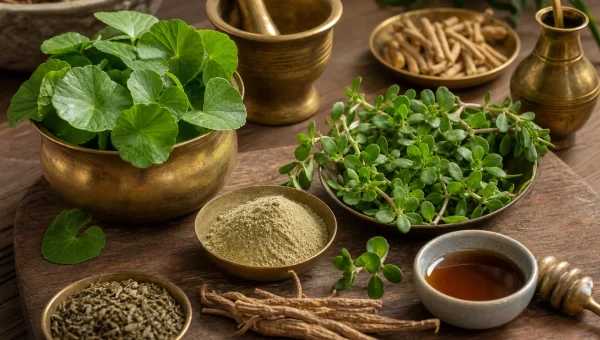
Shatavari (Asparagus racemosus) — Cooling, Nourishing Pitta-Vata Support
Shatavari is one of the most suitable Ayurvedic herbs when night sweating occurs with dryness, irritability, fatigue, perimenopausal transition, or depleted strength. The Ayurvedic Pharmacopoeia of India lists Shatavari root as Madhura and Tikta in rasa, Guru and Snigdha in guna, Shita in virya, and Madhura in vipaka, with Pittahara, Rasayana, Balya, Vatahara, Kaphavatahara, Vrishya, Stanyakara, Medhya, and related actions. This makes it a better fit for the hot-dry-restless pattern than harsh cooling measures.
Practical use: The classical powder dose listed in the Ayurvedic Pharmacopoeia is 3–6 g per day. For a bedtime preparation, Shatavari powder may be taken in warm milk or a suitable plant milk with a small amount of ghee when tolerated. A gentler starting amount is often preferred in sensitive digestion, with dose and duration adjusted by a qualified Ayurvedic practitioner.
Ashwagandha (Withania somnifera) — Vata-Calming, but Warming
Ashwagandha is useful when the restless sleep pattern is dominated by Vata signs such as worry, muscular tension, fatigue, depletion, overwork, and difficulty settling. However, it is Ushna in virya, and the Ayurvedic Pharmacopoeia lists its karma as Rasayana, Balya, Vajikarana, and Vatakaphapaha rather than as a cooling Pitta herb. For this reason, it should not be the first choice when the person has strong burning, acidity, hot flashes, inflammatory heat, or hyperthyroid tendency.
Practical use: The pharmacopoeial powder dose is 3–6 g per day, but bedtime use in Vata-Pitta individuals is best kept conservative and paired with a soothing anupana such as warm milk when appropriate. Standardised extracts vary widely, so label dose and practitioner guidance matter. Ashwagandha should be avoided in pregnancy unless specifically prescribed, and people with hyperthyroidism, thyroid medication use, liver disease history, autoimmune conditions, or sedative medication use should seek medical guidance first.
Brahmi (Bacopa monnieri) — Medhya Support for the Restless Mind
Brahmi is useful when the night-sweat pattern includes a “hot mind”: repeated thoughts, anxious planning, irritability, poor concentration, or waking with mental activity. Bacopa monnieri is widely used in Ayurveda as a Medhya Rasayana and is traditionally applied for memory, intellect, anxiety, and insomnia-type presentations. It is not a heavy sedative; it is better understood as a mind-supporting herb that suits cumulative use.
Practical use: Brahmi may be used as powder, ghrita, or standardised extract according to constitution and digestive tolerance. Sensitive individuals may experience nausea, cramping, loose stool, or digestive discomfort, so it is best started low and reviewed if symptoms appear. People taking sedatives, thyroid medication, antiepileptic drugs, or multiple prescriptions should consult a practitioner before use.
Cooling External Protocols
External cooling is often safer than increasing internal cooling herbs too aggressively. A small, well-tolerated external measure can calm Pitta at the skin level while also giving Vata the reassurance of touch, oil, rhythm, and routine.
Chandanadi Taila or Chandana-Based Cooling Application
Chandana is classically cooling and Pitta-pacifying, with Daha-prashamana use in burning sensations. Chandanadi Taila is traditionally used for burning sensation, dizziness, and Pitta-associated heat. For a bedtime routine, apply a small amount to the soles, palms, temples, forehead, upper chest, or scalp according to comfort. Avoid excessive oil if sweating is very heavy, and always patch-test first. Essential oils should not be applied undiluted.
Sheetali Pranayama
Sheetali is the traditional cooling breath used in yoga practice for heat, thirst, and Pitta-type agitation. Sit comfortably, inhale gently through a rolled tongue or softly parted lips, close the mouth, and exhale through the nose. Begin with 6–8 rounds and increase only if it feels calming. It should feel cooling and steady, not forceful. Avoid overpractice in cold weather, low vitality, respiratory sensitivity, or if dizziness appears.
Dietary Adjustments
The evening meal is often the turning point in this pattern. Pitta needs freedom from excess heat, sourness, alcohol, and sharp spices, while Vata needs warmth, moisture, regularity, and a little unctuousness. The best dinner is therefore cooling in effect but warm in temperature, easy to digest, and not too dry.
- Avoid at night: chili-heavy foods, excess black pepper, alcohol, late caffeine, vinegar, pickles, sour fermented foods, very salty snacks, and heavy fried food.
- Avoid for Vata: cold leftovers, raw salads as dinner, dry crackers, popcorn, fasting, and very light meals that leave the body depleted before sleep.
- Favour: warm rice-mung khichadi, soft rice with mung soup, cooked vegetables, small amounts of ghee, coriander, fennel, cardamom, and gentle digestive spices.
- Bedtime drink option: warm Shatavari milk for heat with dryness, or a very mild Ashwagandha milk only when Vata depletion is stronger than Pitta heat.
- Nutmeg caution: a tiny pinch may be used traditionally in bedtime milk, but high doses of nutmeg are unsafe and should never be used as a sedative.
Complete Evening Protocol Table
The following table is a template, not a prescription. It can be adjusted for season, digestion, age, menstrual or menopausal status, thyroid status, medication use, and the relative strength of Vata versus Pitta symptoms.
| Timing | Intervention | Method | Target |
|---|---|---|---|
| 2.5–3 hours before bed | Warm Pitta-Vata dinner | Khichadi, mung soup, soft rice, cooked vegetables, and a small amount of ghee; avoid chili, alcohol, caffeine, pickles, and sour fermented foods | Stable digestion, reduced heat load, Vata grounding |
| 60–90 minutes before bed | Shatavari support | Use within the traditional daily powder range of 3–6 g, adjusted to tolerance, in warm milk or suitable plant milk | Cooling, nourishing, Pitta-Vata support |
| 45 minutes before bed | Chandanadi Taila application | Small amount on soles, palms, temples, forehead, scalp, or upper chest after patch testing | External cooling, Pitta pacification, bedtime signal |
| 20 minutes before bed | Sheetali Pranayama | 6–12 gentle rounds, stopping if dizziness, cough, chill, or discomfort appears | Cooling breath, pranic settling, reduced agitation |
| At bedtime | Brahmi when mental restlessness dominates | Powder, ghrita, or extract as advised; start low if digestion is sensitive | Medhya support, calmer mind, fewer thought-driven awakenings |
| At bedtime only when Vata is stronger than Pitta | Ashwagandha | Conservative dose with warm milk if suitable; avoid when heat, hyperthyroid tendency, pregnancy, or liver concerns are present | Vata grounding, strength, stress-related sleep support |
For related sleep and nervous system guides, see our comprehensive guide to Ashwagandha for women over 50, our discussion of Medhya herbs for perimenopausal brain fog, and thyroid conditions and Ayurvedic differentiation.
Safety and Practitioner Guidance
Night sweats can be harmless in some contexts, but they can also signal conditions that require medical care. Seek medical evaluation if sweating is drenching, persistent, new after age 40 without a clear cause, or accompanied by fever, unexplained weight loss, fatigue, swollen lymph nodes, cough, chest symptoms, palpitations, tremor, menstrual changes, or blood sugar symptoms.
Nothing in this article diagnoses or treats a medical condition. Use it as educational information and consult a qualified Ayurvedic practitioner or physician before starting herbs, supplements, detoxes, or therapeutic protocols, especially if pregnant, breastfeeding, managing thyroid disease, liver disease, cancer history, autoimmune illness, psychiatric illness, sleep apnea, diabetes, infection, or taking medication.
References
- Mayoclinic (mayoclinic.org)
- NHS
- NHS
- OASH Women’s Health
- Charaka Samhita — Pitta dosha
- Charaka Samhita — Dosha
- Charaka Samhita — Sweda
- Charaka Samhita — Sweda
- Charaka Samhita — Nidra
- Ayurvedic doshas as predictors of sleep quality (2015), PubMed Central
- Evaluation of Insomrid Tablet and Shirodhara in the management of Anidra (Insomnia) (2010), PubMed Central
- Ayurvedic Pharmacopoeia of India
- Efficacy and Safety of Shatavari Root Extract for the Management of Menopausal Symptoms: A Double-Blind, Multicenter, Randomized Controlled Trial (2024), PubMed
- Ayurvedic Pharmacopoeia of India
- Effect of Ashwagandha (Withania somnifera) extract on sleep: A systematic review and meta-analysis (2021), PubMed
- NIH Office of Dietary Supplements
- NCBI
- Sdach (sdach.ac.in)
- Ayurmedinfo (ayurmedinfo.com)
- Effects of Sheetali and Sheetkari Pranayamas on Blood Pressure and Autonomic Function in Hypertensive Patients (2017), PubMed Central
- Effect of Sheetali pranayama on cardiac autonomic function among patients with primary hypertension – A randomized controlled trial (2020), PubMed
- Kripalu (kripalu.org)
- Charaka Samhita — reference
- Banyanbotanicals (banyanbotanicals.com)
- Banyanbotanicals (banyanbotanicals.com)
- NCBI
Late to this post, found it via Google. Is this still the recommended approach in 2027?
Useful
cooling Pitta-pacifying diet changes have been more effective for my night sweats than any herb.
Same here
What worked for them? I’ve been waking up drenched twice a night for about eight months and tried cooling herbs for two months with no change. Starting to think the Vata component is more dominant in my case than Pitta, which is exactly what this post describes.
Ashwagandha 600mg + Brahmi 500mg at bedtime, 6 weeks in. Night waking went from 4-5 times to 1-2.
✨ धन्यवाद for explaining this so clearly
tried warm sesame oil foot massage before bed. sounds old-fashioned but it works
The night sweat section should address perimenopause specifically. Most night sweats in women over 45 are hormonal.
Just found this. Really helpful for my situation.
Which part did your doctor specifically recommend? The Ashwagandha before bed or the Brahmi routine? Mine has mentioned both but in a general way and I’m trying to understand which one to prioritize first.
That’s reassuring to hear actually — my own Ayurvedic practitioner said something similar about the Vata-Pitta overlap causing the night waking pattern. It’s good when clinical experience lines up with what’s written here, makes it easier to trust the protocol.
What about Jatamansi? It’s not mentioned and it’s specifically indicated for sleep disorders in classical texts.
The point that really hit me was how most people — myself included — just assume night sweats are a Pitta problem and reach for cooling herbs. I did that for months. This post is the first place I’ve read that explains why that approach can actually make things worse if Vata is the underlying driver. That reframe alone was worth the read.
Doing this
Good for you — what are you starting with first? The dietary adjustments or the herb protocol? I keep going back and forth because changing the diet feels more sustainable long-term but the herbs seem faster acting for the actual sleep disruption.
The classical references you include make this more credible than most Ayurveda blogs.
The Vata-Pitta differential for night sweats vs restlessness is exactly the distinction my Ayurvedic doctor makes.
Found this helpful. The Ayurvedic Protocol for Restless Sleep and Night Sweating section was particularly useful for my situation.
Same — especially the part about distinguishing whether the night waking is before midnight or after, as a clue to which dosha is more active. That diagnostic detail is the kind of thing you don’t find in general wellness content. Made me realize I’ve been treating the wrong dosha this whole time.
🌿 Found this helpful. The Ayurvedic Protocol for Restless Sleep and Night Sweating section was particularly useful for my situation.
The Vata-Pitta explanation makes sense for my night sweats.
Found this helpful. The Ayurvedic Protocol for Restless Sleep anf Night Sweating section was particularly useful for my situation. 🙏
❤️ Found this helpful. The Ayurvedic Protocol for Restless Sleep and Night Sweating section was particularly useful for my situation.
I appreciated the detailed herb dosage table; it’s easy to follow.
🙏 Found this helpful. The Ayurvedic Protocol for Restless Sleep and Night Sweating section was particularly useful for my situation.
Does anyone know if Shatavari powder works the same as the extract?
Found this helpful. The Ayurvedic Protocol fpr Restless Sleep and Night Sweating section was particularly useful for my situation.
Found tjis helpful. The Ayurvedic Protocol for Restless Sleep and Night Sweating section was particularly useful for my situation.
The Sheetali Pranayama tip is something I can try tonight.
Ashwagandha increasing thyroid levels is a good caution to check labs first.
Brahmi has helped my focus; I hadn’t considered it for sleep.
The Khichadi with ghee sounds like a comforting evening meal.
Is Chandanadi Taila safe for sensitive skin?
I found the link between autonomic imbalance and Vata aggravation interesting.