
Altitude camps are not ordinary training environments. At a place like Manali, where elevation, cold air, dry wind, uneven terrain, and disrupted routine combine, the body has to work harder for the same training output. Ayurveda reads this kind of exposure as strongly Vata-provoking: lightness, dryness, cold, movement, irregularity, and sleep disturbance all increase at the same time. The useful role of an Ayurvedic altitude protocol is to support adaptation by protecting digestion, hydration, sleep, respiratory ease, Rasa-Rakta nourishment, and strength while never replacing graded ascent, rest, descent, oxygen, or medical treatment when altitude illness appears.
What Altitude Does to the Body: The Ayurvedic Analysis
High altitude reduces available oxygen and the first phase of acclimatisation depends on increased ventilation, better oxygenation, and gradual physiological adjustment over the first several days. With longer exposure, the body may increase red blood cell production to improve oxygen-carrying capacity. In Ayurvedic language, altitude stress can be understood through Prana Vayu, Vata aggravation, Agni stability, and nourishment of Rasa and Rakta Dhatu.
Reduced oxygen availability and Prana Vayu strain: Ayurveda describes Prana Vayu as closely connected with respiration, intake, swallowing, and the movements that sustain life. At altitude, breath becomes a central limiting factor, so the practical Ayurvedic aim is to protect Prana through rest, nasal breathing where comfortable, warm fluids, calm pacing, and avoiding overexertion during the first days of ascent.
Cold, dryness, wind, and Vata aggravation: High-altitude terrain commonly brings cold, dry, windy, irregular, and mobile qualities. These overlap strongly with Vata qualities. A Vata-pacifying altitude routine therefore emphasises regular sleep, warm cooked meals, unctuous foods such as ghee or sesame preparations where suitable, protection from wind, and avoiding fasting, excessive caffeine, alcohol, and cold dry foods during the acclimatisation phase.
Rasa-Rakta nourishment during adaptation: Longer altitude exposure increases the body’s demand for fluid balance, mineral sufficiency, protein, iron sufficiency, and recovery nutrition. Ayurveda places this under steady Rasa and Rakta support: nourishing but digestible meals, adequate hydration, good bowel regularity, and Rasayana herbs used conservatively according to constitution and tolerance.
Shilajit: The Mountain Rasayana for Adaptation Support
Shilajit is a mineral-rich mountain exudate used in Ayurveda as a Rasayana. Its traditional appeal for altitude athletes is easy to understand: it comes from mountain regions, is classically associated with strength and rejuvenation, and modern reviews describe it as a fulvic-acid-containing phytocomplex. In an altitude protocol, Shilajit belongs as purified, quality-tested, practitioner-guided support for strength and recovery, not as a treatment for acute mountain sickness.
Protocol use: Use only purified Shilajit from a reputable manufacturer with contaminant testing. Avoid raw, loose, unverified, or roadside Shilajit products because mineral exudates can be adulterated or contaminated. For athletes, Shilajit is best introduced before travel at the lowest effective label or practitioner dose so tolerance is known before ascent. It should be stopped if it causes heat, acidity, loose stools, rash, palpitations, or any unusual reaction.
Ashwagandha: Balya Support for Training Capacity
Ashwagandha (Withania somnifera) is listed in the Ayurvedic Pharmacopoeia of India as a root drug with Rasayana, Balya, Vajikarana, and Vata-Kapha-pacifying actions. Its rasa is Tikta and Kashaya, its guna is Laghu, its virya is Ushna, and its vipaka is Madhura. For altitude athletes, this makes Ashwagandha most useful as a strength, recovery, and Vata-stability herb rather than as an acute altitude remedy.
Protocol use: Ashwagandha can be considered during the pre-altitude and training-block phases when the athlete is not overheated, acutely inflamed, or intolerant to warming herbs. Traditional powder dosing in the Ayurvedic Pharmacopoeia of India is 3–6 g of root powder; standardised extracts should be used according to a qualified practitioner or manufacturer’s directions. It is commonly taken in the evening with warm milk or another suitable nourishing vehicle when digestion permits.
Amalaki: Cooling Rasayana and Antioxidant Nourishment
Amalaki (Emblica officinalis / Phyllanthus emblica) is one of the most useful altitude-support Rasayana herbs because it is nourishing without being heavy, cooling without being depleting, and classically described as Tridoshajit and Rasayana. The Ayurvedic Pharmacopoeia of India lists Amalaki with Madhura, Amla, Katu, Tikta, and Kashaya rasa; Laghu and Ruksha guna; Shita virya; Madhura vipaka; and actions including Rasayana, Vrishya, Chakshushya, and Tridoshajit.
Protocol use: Amalaki is appropriate when altitude dryness, exertion, heat from training, and recovery demands need to be balanced together. It may be used as fruit, powder, juice, or as part of classical formulations such as Chyavanaprasha, with dosing adjusted to digestion, bowel tendency, constitution, and the form used. Athletes prone to acidity, loose stools, or strong sour sensitivity should use it under guidance.
The Altitude Preparation Timeline
A useful Ayurvedic altitude plan begins before ascent, continues through the adaptation block, and tapers after return. The emphasis is not on forcing performance in the first days, but on reducing Vata load, maintaining Agni, supporting Rasa-Rakta nourishment, and matching training intensity to acclimatisation.
| Phase | Timing | Ayurvedic Support | Diet and Lifestyle Focus |
|---|---|---|---|
| Pre-altitude preparation | 7–14 days before travel | Introduce only well-tolerated support such as Amalaki, Ashwagandha if suited, and purified Shilajit if prescribed | Regular meals, adequate hydration, iron-sufficient diet, steady sleep, reduced alcohol, and no new supplements at the last minute |
| Arrival and early acclimatisation | First 2–4 days | Keep the stack simple; prioritise rest, warmth, digestion, and symptom awareness | Warm cooked meals, soups, ghee where suitable, warm water, wind protection, and reduced training intensity |
| Main altitude block | Week 1 onward | Continue tolerated Rasayana support; consider Chyavanaprasha or Shatavari for dry, depleted, under-recovered athletes if constitutionally suitable | High-quality protein, sesame, dates, cooked grains, pulses, vegetables, salt-fluid balance, and consistent sleep timing |
| Post-altitude return | 1–2 weeks after descent | Taper stimulant training aids; continue gentle Rasayana support only if it improves recovery and digestion | Normal diet with continued warm, nourishing meals until sleep, appetite, bowel habit, and training rhythm stabilise |
Chyavanaprasha and Shatavari for Depletion-Prone Athletes
Chyavanaprasha is a classical Amalaki-based Rasayana formulation used for nourishment and resilience. It is best suited when digestion is strong enough to handle a sweet, dense formulation and when the athlete is dry, depleted, frequently training, or losing appetite at altitude. Shatavari is listed in the Ayurvedic Pharmacopoeia of India as a nourishing Rasayana with Brmhana, Balaprada, Pushtiprada, and Sramahara actions, making it more appropriate for dryness, tissue depletion, and recovery support than for heavy, Kapha-dominant states.
Protocol use: These are optional supports, not mandatory additions. Chyavanaprasha should be used in small amounts and avoided or reduced when it causes heaviness, coating, reflux, or poor appetite. Shatavari should be considered under practitioner guidance, especially in athletes with Kapha tendency, sluggish digestion, or hormone-sensitive medical histories.
Acute Altitude Symptoms: What to Do
If headache, nausea, dizziness, unusual fatigue, loss of appetite, disturbed sleep, or breathlessness appear after ascent, treat the situation as altitude illness until proven otherwise. The first response is to stop further ascent, reduce exertion, rest, stay warm, maintain fluids, and monitor symptoms. From an Ayurvedic angle, this is a time for Vata pacification: warmth, quiet, gentle food, and calm breathing. It is not a time to push training harder or add strong herbs to override symptoms.
Pippali may be used by practitioners in respiratory and digestive formulations, especially where Kapha-Vata respiratory patterns are present, but it should not be treated as a stand-alone altitude sickness medicine. Worsening headache, repeated vomiting, confusion, ataxia, severe weakness, breathlessness at rest, chest tightness, cough with frothy sputum, blue lips, or reduced consciousness requires immediate descent and medical care. For travel or training above 3000 m, discuss graded ascent and acetazolamide with a physician before departure, especially if you have a prior history of altitude illness.
For related performance optimisation reading, the Ojas preservation endurance athlete guide covers the depletion-prevention framework that underlies altitude protocol design. The Ayurvedic pre-workout herb stack is the day-of-performance companion.
Safety disclaimer: Altitude sickness can become life-threatening. High-altitude cerebral oedema and high-altitude pulmonary oedema are medical emergencies requiring immediate descent and urgent medical treatment. The Ayurvedic measures described here are adjunctive support only; they are not alternatives to graded ascent, rest days, oxygen, acetazolamide when prescribed, descent, or emergency care. Consult a qualified Ayurvedic practitioner and a healthcare provider before using herbs at altitude, especially if you are pregnant, taking medication, have cardiovascular, respiratory, kidney, liver, thyroid, autoimmune, or psychiatric conditions, or have a history of altitude illness.
References
- CDC
- The Effects of Altitude Training on Erythropoietic Response and Hematological Variables in Adult Athletes: A Narrative Review (2018), PubMed Central
- High-Altitude Erythrocytosis: Mechanisms of Adaptive and Maladaptive Responses (2022), PubMed Central
- Wms (wms.org)
- Jaims (jaims.in)
- Ijrap (ijrap.net)
- Ayurveda (ayurveda.com)
- Shilajit: A panacea for high-altitude problems (2010), PubMed Central
- Shilajit: a natural phytocomplex with potential procognitive activity (2012), PubMed Central
- Webmd (webmd.com)
- Ayurvedic Pharmacopoeia of India
- Efficacy of Ashwagandha (Withania somnifera [L.] Dunal) in improving cardiorespiratory endurance in healthy athletic adults (2015), PubMed
- Effects of Ashwagandha (Withania somnifera) on VO(2max): A Systematic Review and Meta-Analysis (2020), PubMed Central
- Functional and Nutraceutical Significance of Amla (Phyllanthus emblica L.): A Review (2022), PubMed Central
- Chyawanprash: A Traditional Indian Bioactive Health Supplement (2019), PubMed Central
- Ayurvedic Pharmacopoeia of India
- Anti-inflammatory activity of two varieties of Pippali (Piper longum Linn.) (2012), PubMed Central
- A prospective epidemiological study of acute mountain sickness in Nepalese pilgrims ascending to high altitude (4380 m) (2013), PubMed Central
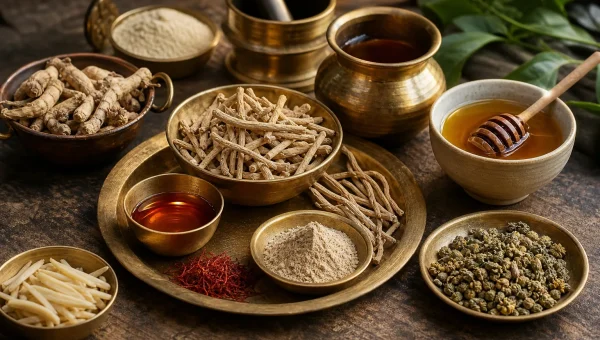
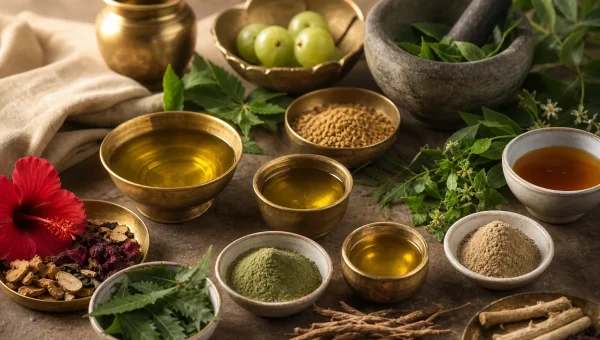
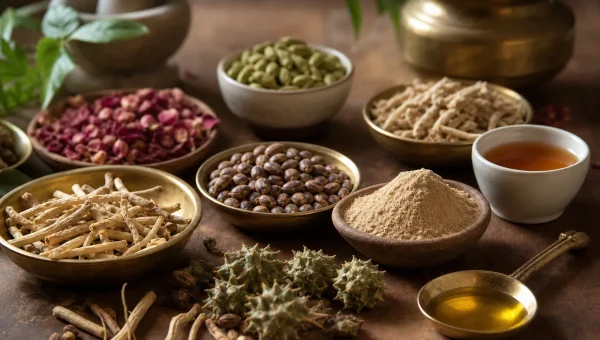
Same here
Late to this post, found it via Google. Is this still the recommended approach in 2027?
धन्यवाद for explaining this so clearly
trail runner here, not a mountaineer, but the rasayana principles apply to altitude races like Ladakh too
Shilajit quality varies enormously. How do you verify fulvic acid content without lab testing?
I know this is off-topic for this post, but do you have anything on Ayurvedic approaches to athletic recovery for endurance runners? The altitude training angle here is fascinating and I’d love to know if there’s something covering lower-altitude training loads too.
Doing this
What are you doing exactly — heading to altitude soon or already there? Asking because the timing of when you start Rasayanas relative to ascent seems to matter a lot based on what the post says.
the section on acclimatization and Prana vayu made a lot of sense compared to Western high altitude physiology
नमस्ते, longtime reader first comment. This post finally convinced me to start.
Did Kilimanjaro with Chyawanprash and Shilajit supplementation. Reached summit without altitude meds. Correlation not causation but still.
Will try
any Ayurvedic equivalent for Diamox? Asking because I react badly to acetazolamide
Just found this. Really helpful for my situation.
Climbing Stok Kangri next month at 6100m. The Rhodiola + Shilajit protocol you mentioned, any specific brand for the shilajit?
My Ayurvedic doctor recommended the same thing last month. Good to find it confirmed here.
Useful
Found this helpful. The Altitude Training with Rasayanas section was particularly useful for my situation.
altitude training with rasayanas is interesting, but adaptation still depends on sleep, iron and pacing
The description of restless sleep and dry mouth at 2050 meters matches what I felt during my own Himalayan trek last year.
Found this helpful. The Altitude Training with Rasayanas section was particularly useful fpr my situation. (asking as someone dealing with this since 2020)
The description of altitude-specific Vata aggravation — the dry mouth, the mental restlessness, the disrupted sleep — matched my experience at Rohtang almost exactly. I’d always attributed those symptoms just to the altitude itself without considering a dosha lens.
Taking 500 mg of purified Shilajit twice daily before heading up helped keep my oxygen saturation steadier during the ascent.
Ashwagandha at altitude is something I’d heard of anecdotally among trekking circles but this is the first time I’ve seen the rationale laid out properly. The comparison to how Sherpas have traditionally eaten and the Rasayana category mapping was a highlight for me.
I found that having Ashwagandha in the evening with warm milk made the fatigue after evening intervals noticeably less.
Amalaki powder mixed into my morning smoothie seemed to reduce the usual post run soreness I get at altitude.
Seeing the Oura ring sleep scores climb faster in weeks two and three made the Rasayana stack feel worth the extra cost.
When a mild headache appeared I tried Pippali with honey and the discomfort eased before I needed to consider descending.
Found this helpful. The Altitude Training woth Rasayanas section was particularly useful for my situation.
Combining the herb stack with a diet of ghee cooked grains and dates gave me noticeably more stable energy during track repeats.
Found tjis helpful. The Altitude Training with Rasayanas section was particularly useful for my situation.