
A common clinical question in IgA nephropathy is not whether Ayurveda should replace nephrology care, but whether Ayurvedic principles can be used safely beside it. IgA nephropathy is confirmed by kidney biopsy and is one of the most common primary glomerular diseases worldwide. A patient already taking an ACE inhibitor or ARB may reasonably ask how herbs, diet, daily routine and newer options such as sparsentan can fit together without weakening the central goal of kidney protection.
The answer is a coordinated adjunct model. Modern care aims to reduce proteinuria, preserve eGFR, control blood pressure, reduce dietary sodium, individualise protein intake and consider additional kidney-protective medicines when progression risk remains. Ayurveda can add a structured view of Mutra Vaha Srotas, edema, inflammatory Pitta features, Kapha-type congestion and Vata dysregulation, but biopsy-proven glomerular disease must remain under nephrologist-led monitoring.
IgA Nephropathy in an Ayurvedic Pathological Framework
In biomedical terms, IgA nephropathy involves IgA-dominant immune-complex deposition in the glomerular mesangium, followed by inflammatory injury that may present with blood in urine, protein loss in urine, hypertension and gradual loss of kidney function. In Ayurvedic language, IgA nephropathy is not named as a single classical disease entity; it is best discussed as a modern renal diagnosis viewed through Mutra Vaha Srotas, Basti-related urinary pathology, Shotha-like swelling patterns and Pandu-like weakness or anemia when these are clinically present.
Charaka’s Trimarmiya Chikitsa gives importance to Basti among the vital structures and discusses urinary disorders such as Mutrakrichchra and Mutraghata within a broader framework of urinary obstruction, painful urination and deranged elimination. This does not make IgA nephropathy identical to those classical conditions, but it gives an Ayurvedic clinical lens for assessing urine changes, edema, strength, digestion, dosha pattern and the suitability of Mutrala, Shothahara, Rasayana and Balya measures.
The Five Ayurvedic Supports for IgA Nephropathy Adjunct Care
The following herbs are presented as adjunct supports, not as disease-modifying replacements for ACE inhibitor, ARB, sparsentan, SGLT2 inhibitor, steroid, targeted-release budesonide or other nephrologist-directed care. Their use should be based on current eGFR, urine protein, blood pressure, potassium, liver enzymes, edema, digestion, constitution and concurrent medicines.
Punarnava (Boerhavia diffusa)
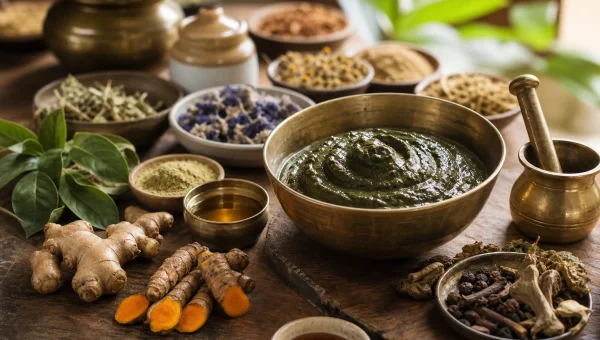
Punarnava is one of the most relevant Ayurvedic herbs for kidney-support discussions because the Ayurvedic Pharmacopoeia of India lists it as Shothahara and Mutrala, with Punarnavadi Mandura and Punarnavasava among its classical formulations. Its API profile describes Boerhavia diffusa whole plant, the alkaloid punarnavine, Madhura-Tikta-Kashaya rasa, Ruksha guna, Ushna virya and Madhura vipaka. Laboratory and animal renal models describe nephroprotective activity in toxic and chronic kidney injury settings, including preservation of renal markers and kidney histology.
Classical dose reference: the API decoction dose is 20-30 g of crude drug. In IgA nephropathy, the practical dose, preparation and duration should be individualised by a qualified Ayurvedic physician in coordination with kidney labs, especially when diuretics, ACE inhibitors, ARBs or potassium-altering medicines are being used.
Gokshura (Tribulus terrestris)
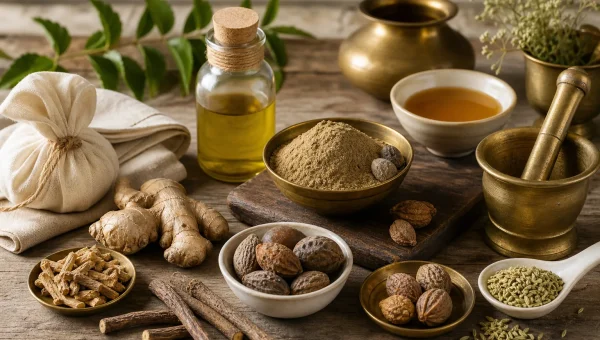
Gokshura is classically aligned with urinary support. The Ayurvedic Pharmacopoeia of India lists Gokshura root as Mutrala, Vrishya, Vatanut and Brimhana, and lists Gokshura fruit for Bastishodhana, Ashmarihara and Mutrakrichchra-related uses. Modern pharmacology literature includes diuretic observations and preclinical kidney-protective work in models of stone formation, oxidative renal injury and glomerular endothelial injury.
Classical dose reference: API gives 20-30 g of the root for decoction, and for the fruit 3-6 g powder or 20-30 g for decoction. In IgA nephropathy, Gokshura is usually considered only after reviewing edema, urine output, serum potassium, blood pressure medicines and the patient’s stone history.
Guduchi (Tinospora cordifolia)
Guduchi is used in Ayurveda as a Rasayana and Balya herb with Tikta-Kashaya rasa, Laghu guna, Ushna virya and Madhura vipaka. The Ayurvedic Pharmacopoeia of India lists its actions as Balya, Dipana, Rasayana, Sangrahi, Tridoshashamaka, Raktashodhaka and Jvaraghna. This makes it relevant where the clinical picture includes low resilience, recurrent inflammatory flares, poor appetite or systemic weakness alongside kidney disease.
Classical dose reference: API gives 3-6 g powder or 20-30 g decoction. Guduchi should not be self-prescribed in IgA nephropathy, especially in patients with autoimmune features, liver disease, unexplained liver enzyme elevation or multiple immune-active medicines, because liver injury has been reported with Tinospora cordifolia products.
Varuna (Crataeva nurvala)
Varuna is a classical urinary herb whose API monograph identifies the dried stem bark of Crataeva nurvala. It is Tikta-Kashaya in rasa, Laghu-Ruksha in guna, Ushna in virya and Katu in vipaka, with Dipana, Bhedi and Vata-Shleshmahara actions. The API lists Varunadi Kwatha and therapeutic uses including Ashmari and Mutrakrichchra. Modern renal pharmacology includes anti-inflammatory, anti-urolithiatic and renal-protective observations in experimental settings.
Classical dose reference: API gives 20-30 g of the bark for decoction. In IgA nephropathy, Varuna is more appropriate when the urinary presentation, stone tendency, Kapha-Vata pattern and renal labs justify it; it should not be used as a blanket herb for every proteinuric patient.
Shilajit
Shilajit is best regarded as an optional Rasayana adjunct, not a primary IgA nephropathy herb. Its humic and fulvic acid fractions are part of the modern explanation for its Rasayana positioning, but kidney disease requires a stricter safety standard than general wellness use. Raw, untested or poorly purified Shilajit is inappropriate because contamination with heavy metals and other toxic elements has been reported.
Clinical use note: Shilajit should be avoided unless it is purified, batch-tested and explicitly approved by both the Ayurvedic practitioner and the nephrology team. It is generally unsuitable for unsupervised use in reduced eGFR, abnormal potassium, liver enzyme elevation, pregnancy or when the patient is taking multiple kidney-active medicines.
Dietary Protocol for IgA Nephropathy
Diet in IgA nephropathy should begin with the renal plan set by the nephrologist or renal dietitian. Sodium reduction, blood-pressure control, appropriate protein intake and stage-specific potassium and phosphorus guidance are more important than any generic Ayurvedic food list. Ayurveda can then refine the diet through digestive capacity, dosha pattern, edema, appetite, bowel regularity and tolerance.
For early-stage disease without electrolyte abnormalities, the Ayurvedic emphasis is on warm, freshly cooked, low-sodium, easy-to-digest meals. Suitable choices may include cooked gourds, well-portioned grains, physician-approved legumes, coriander or fennel water when fluid restriction is not present, and bitter or astringent vegetables selected according to potassium status. Very salty foods, packaged snacks, excess red meat, high-protein self-experimentation, alcohol and unnecessary supplements should be minimised. High-potassium, high-phosphorus or high-oxalate foods should be adjusted according to the patient’s kidney stage, laboratory results and stone history.
Treatment Protocol by Stage
Stage-based Ayurvedic care must follow the nephrology risk category rather than replacing it. Proteinuria, eGFR slope, blood pressure, hematuria pattern, potassium, albumin, edema and medication tolerance decide how conservative or active the adjunct plan should be.
| Clinical Situation | Ayurvedic Adjunct Focus | Monitoring | Conventional Coordination |
|---|---|---|---|
| Lower-risk, stable kidney function, proteinuria below the nephrologist’s treatment threshold | Diet, sodium reduction, sleep regulation, gentle Punarnava or Gokshura only if clinically suitable | Urine protein, creatinine/eGFR, blood pressure and potassium as scheduled by the nephrologist | Continue prescribed ACE inhibitor or ARB if indicated; disclose all herbs and supplements |
| At-risk disease with persistent proteinuria, hypertension, edema or falling eGFR | Practitioner-guided Punarnava, Gokshura or Guduchi according to dosha pattern and labs; avoid aggressive detoxification | Closer review of urine protein, creatinine/eGFR, potassium, blood pressure, edema and liver enzymes | Nephrologist-led escalation may include optimized RAS blockade, SGLT2 inhibitor, sparsentan or immunomodulatory therapy where appropriate |
| Progressive disease, advanced CKD, heavy proteinuria, rapidly falling eGFR or abnormal potassium | Supportive Ayurveda only: digestion, appetite, sleep, strength and symptom relief; avoid unsupervised diuretic herbs, Shilajit and herbo-mineral preparations | As directed by the nephrologist; labs may need frequent review | Nephrology decisions take priority; herbs should be continued only with explicit approval |
Safety and Clinical Boundaries
IgA nephropathy is a serious immune-complex kidney disease. Ayurvedic herbs must not be used to delay biopsy, stop ACE inhibitor or ARB therapy, avoid indicated nephrology medicines, or ignore rising proteinuria, falling eGFR, high blood pressure, swelling or abnormal potassium. Panchakarma, fasting, strong purgation, untested herbo-mineral medicines and heavy diuretic protocols are inappropriate without specialist supervision in kidney disease.
Safety disclaimer: IgA nephropathy requires specialist nephrology care. The Ayurvedic approach described here is an adjunct to, not a replacement for, conventional kidney management. Consult a qualified Ayurvedic practitioner and your nephrologist before starting herbs, supplements, decoctions, Shilajit, detoxification procedures or therapeutic diets, especially if you have reduced eGFR, abnormal potassium, liver disease, pregnancy, edema, hypertension or are taking prescription medicines.
Nothing in this article diagnoses or treats a medical condition. Use it as educational information and consult a qualified healthcare provider before making changes to treatment, diet or supplements.
References
- Epidemiology of IgA Nephropathy: A Global Perspective (2018), PubMed
- Kdigo (kdigo.org)
- FDA
- Kdigo (kdigo.org)
- Kidney (kidney.org)
- Charaka Samhita — Trimarmiya Chikitsa
- Jaims (jaims.in)
- Miracledrinksclinic (miracledrinksclinic.com)
- Evaluation of the effect of Boerhavia diffusa on gentamicin-induced nephrotoxicity in rats (2015), PubMed Central
- Boerhavia diffusa attenuates podocyte injury in rats with adenine induced chronic kidney disease by enhancing nephrin expression (2024), PubMed
- Ayurvedic Pharmacopoeia of India
- Tribulus terrestris: preliminary study of its diuretic and contractile effects and comparison with Zea mays (2003), PubMed
- Delving into the Antiurolithiatic Potential of Tribulus terrestris Extract Through -In Vivo Efficacy and Preclinical Safety Investigations in Wistar Rats (2019), PubMed Central
- Miracledrinksclinic (miracledrinksclinic.com)
- Tinospora Cordifolia: A review of its immunomodulatory properties (2022), PubMed
- Tinospora Cordifolia (Giloy)-Induced Liver Injury During the COVID-19 Pandemic-Multicenter Nationwide Study From India (2022), PubMed Central
- Dravyaguna notes
- Urolithic property of Varuna (Crataeva nurvala): An experimental study (2010), PubMed Central
- Protective action of Crateva nurvala Buch. Ham extracts against renal ischaemia reperfusion injury in rats via antioxidant and anti-inflammatory activities (2018), PubMed
- Shilajit: a natural phytocomplex with potential procognitive activity (2012), PubMed Central
- Quantifying of thallium in Shilajit and its supplements to unveil the potential risk of consumption of this popular traditional medicine (2025), PubMed Central

the article mentions Gokshura for Mutra Vaha Srotas support. is this appropriate in IgA nephropathy where potassium management is sometimes needed?
IgA nephropathy can progress to end-stage renal disease. the article doesn’t adequately emphasize the importance of nephrology follow-up and GFR monitoring. ठीक है
does the Punarnava protocol interact with ACE inhibitors or ARBs commonly used in IgA nephropathy management?
for IgA nephropathy with proteinuria >1g/day, is the Ayurvedic protocol the same as for lower proteinuria stages? protein loss affects herb metabolism.
the Mutra Vaha Srotas framework for IgA nephropathy is the most relevsnt Ayurvedic kidney article ive found for my diagnosis. my nephrologist agreed the anti-inflammatory dietary approach makes sense alongside ACE inhibitor treatment.
the autoimmune component of IgA nephropathy does the Rakta Shodhana approach address the IgA immune complex deposition or only symptom management?
the Mutra Vaha Srotas framework for IgA nephropathy is the most relevant Ayurvedic kidney article ive found for my diagnosis. my nephrologist agreed the anti-inflammatory dietary approach makes sense alongside ACE inhibitor treatment.
the Mutra Vaha Srotas framework for IgA nephropathy is the most relevant Ayurvedic kidney article I’ve found for my diagnosis. my nephrologist agreed the anti-inflammatory dietary approach makes sense alongside ACE inhibitor treatment.
some Ayurvrdic herbs used for kidney support are themselves nephrotoxic. the article should specifically list herbs to avoid in IgA nephropathy. tbh धन्यवाद
some Ayurvedic herbs used for kidney support are themselves nepjrotoxic. the article should specifically list herbs to avoid in IgA nephropathy.
IgA nephropathy checklist should include urine protein, BP, creatinine and nephrologist follow up. kidney stuff is serious
iga nephropathy can progress to end-stage rrnal disease. the article doesnt adequately emphasize the importance of nephrology follow-up and GFR monitoring.
some Ayurvedic herbs used for kidney support are themselves nephrotoxic. the article should specifically list herbs to avoid in IgA nephropathy.
Reading about the thirty four year old software engineer who came in with a biopsy confirming IgA nephropathy really highlighted how patients often look for complementary options while already on standard therapy.
some Ayurvedic herbs used foe kidney support are themselves nephrotoxic. the article should specifically list herbs to avoid in IgA nephropathy. 🙌
@Neha does the Punarnava protocol interact with ACE inhibitors or ARBs commonly used in IgA nephropathy management?
Makes sense.
Makes sense — the Mutra Vaha Srotas framing really does help explain why kidney function deteriorates in IgA nephropathy in a way that the biopsy report alone doesn’t convey to a patient. Did the article mention any specific herbs used alongside the ACE inhibitor in that case?
The case study format here is what makes the IgA nephropathy explanation accessible — reading about a real patient who was already on an ACE inhibitor and was looking for something complementary makes the Ayurvedic framing feel grounded rather than alternative.
I wonder if the Mutra Vaha Srotas perspective offers a useful lens for thinking about proteinuria beyond just lowering blood pressure.
@Anna does the Punarnava protocol interact with ACE inhibitors or ARBs commonly used in IgA nephropathy management?
Good one.
The article’s description of Punarnava as a foundational kidney herb made me curious about how it might fit alongside an ACE inhibitor in daily practice.
@Manish igA nephropathy can progress to end-stage renal disease. the article doesn’t adequately emphasize the importance of nephrology follow-up and GFR monitoring.
for IgA nephropathy with proteinurua above 1g/day, is the Ayurvedic protocol the same as for lower proteinuria stages? protein loss affects herb metabolism. tbh
the Mutra Vaha Arotas framework for IgA nephropathy is the most relevant Ayurvedic kidney article ive found for my diagnosis. my nephrologist agreed the anti-inflammatory dietary approach makes sense alongside ACE inhibitor treatment.
@Mahesh some Syurvedic herbs used for kidney support are themselves nephrotoxic. the article should specifically list herbs to avoid in IgA nephropathy.
iga nephropathy can progress to end-stage renal disease. the article doesnt adequately emphasize the importance of nephrology follow-up and GFR monitoring.
Has anyone tried combining Gokshura with conventional treatment and noticed any change in urinary discomfort?
The Mutra Vaha Srotas lens is one I hadn’t encountered before for kidney conditions. Does the article cover Punarnava specifically? I’ve read it mentioned in the context of kidney support quite often but never seen it connected to IgA nephropathy.
iga nephropathy can progress to ens-stage renal disease. the article doesnt adequately emphasize the importance of nephrology follow-up and GFR monitoring.
It seems the immune modulating role of Guduchi could be especially relevant given the aberrant IgA production discussed.
After reading about Varuna’s lupeol content and its effect on NF kappa B, I’m interested in seeing more human data on glomerular inflammation.
@Geeta does the Punarnava protocol interact with ACE inhibitors or ARBs commonly used in IgA nephropathy management?
The mention of Shilajit as a Rasayana adjunct after the first month of herb therapy raises questions about timing and safety in chronic kidney disease.
Thanks!
I appreciate the clear dietary pointers, especially the emphasis on bitter vegetables and warm teas for supporting the urinary channel.
One thing that stands out is the staged treatment protocol, which seems to encourage close coordination with a nephrologist at every eGFR level.