
Three years of burnout taught me something that pure optimization culture often misses: optimizing a depleted system is different from optimizing a healthy one. I had the Oura ring, the continuous glucose monitor, the red light panel, and the cold exposure setup. I was tracking HRV, sleep stages, glucose variability, and training output. The data looked poor, and my response was to push harder: more intensity, more restriction, more novelty, more stimulation. In practice, that approach kept me in the same loop.
Ayurveda gave me a better way to read the pattern. The issue was not that measurement was useless; it was that I was measuring without a constitutional framework. In Ayurvedic language, the pattern resembled a Vata-dominant state of depletion: irregular sleep, restlessness, dryness, sensitivity, anxiety, variable digestion, and poor recovery. The solution was not more stimulation. It was steadiness, nourishment, oil, rhythm, and the gradual rebuilding of agni and ojas.
The integration of Ayurvedic principles with modern biohacking tools changed how I used data. Ayurveda did not replace tracking; it gave the tracking context. Wearables can tell you what changed. Ayurveda helps you ask why it changed, what kind of body-mind pattern is expressing itself, and whether the next intervention should be stimulating, cooling, warming, nourishing, reducing, or stabilizing.
The Dosha Framework as a Biohacker’s Baseline
Before you can optimize, you need a baseline. Modern biohacking usually starts with population-level reference ranges: HRV compared with age-matched norms, sleep efficiency compared with wearable averages, glucose curves compared with metabolic thresholds, or VO2 max compared with fitness categories. These are useful, but they do not explain why two people can respond very differently to the same fasting window, training load, supplement, or sleep schedule.
Ayurveda begins with prakriti, the constitutional pattern formed by the relative dominance of Vata, Pitta, and Kapha. It then distinguishes that baseline from vikriti, the current state of imbalance. This distinction is extremely useful for self-tracking. A Vata-dominant person may need more attention to regularity, warmth, sleep timing, cooked food, and nervous-system steadiness. A Pitta-dominant person may need to watch heat, intensity, competitiveness, acidity, irritability, and inflammatory load. A Kapha-dominant person may benefit from movement, lightness, stimulation, and avoiding stagnation.
The practical shift is this: do not use your wearable data as a scoreboard only. Use it as feedback within your constitution. A low-readiness day after poor sleep, late eating, overwork, travel, or emotional strain is not merely a failed metric. It is information about which dosha pattern is becoming exaggerated and which corrective qualities are needed.
HRV and Ojas: A Useful Bridge, Not a One-to-One Metric
Heart rate variability, or HRV, measures variation in time between heartbeats. It is widely used as a non-invasive signal related to autonomic nervous system regulation, stress load, and recovery capacity. For biohackers, HRV is valuable because it often reflects the combined effect of sleep, training, alcohol, illness, emotional stress, food timing, and recovery practices.
In Ayurvedic language, the closest conceptual bridge is ojas. Ojas is described as the refined essence of the body tissues and is associated with vitality, strength, stability, immunity, and resilience. Low ojas is traditionally associated with depletion, fatigue, poor strength, vulnerability, and loss of luster. That makes HRV useful as one modern window into resilience, but it should not be treated as a literal ojas meter.
The better approach is to read HRV as part of a pattern. If HRV is declining for days or weeks while sleep quality, digestion, mood, libido, immunity, and motivation are also worsening, Ayurveda would not treat that as a signal to add more stress. It would point toward rebuilding: regular meals, earlier nights, appropriate rest, warm and digestible food, oil massage, gentler training, calming breathwork, and rasayana support chosen by constitution.
The Dinacharya Stack: Daily Optimization Without Gadgets
Classical dinacharya, the Ayurvedic daily routine, is a practical system for keeping the body synchronized with natural rhythms. For a biohacker, its value is not novelty. Its value is repetition. The same actions performed daily at the same times reduce unnecessary variability and give the body a predictable recovery environment.
- Steady waking after sufficient sleep: Ayurveda values early rising and a clean morning routine, but this should not become another form of sleep deprivation. For a depleted Vata pattern, the first rule is consistency: sleep early enough, wake at a stable time, and avoid checking the phone before the nervous system has settled into the day.
- Tongue scraping: Classical daily regimen includes cleaning the tongue and mouth. Modern oral-health trials have found that tongue cleaning can reduce volatile sulfur compounds associated with oral malodor. In practical terms, tongue scraping is a low-cost morning hygiene practice that also gives useful feedback: a heavily coated tongue may suggest poor digestion, late eating, or unsuitable food choices.
- Kavala or gandusha: Ayurveda describes holding or moving oil in the mouth as part of oral care. Sesame oil pulling has been studied for oral bacteria and plaque-related outcomes. It should be done gently, without swallowing the oil, and it should not replace brushing, flossing, dental care, or treatment for gum disease.
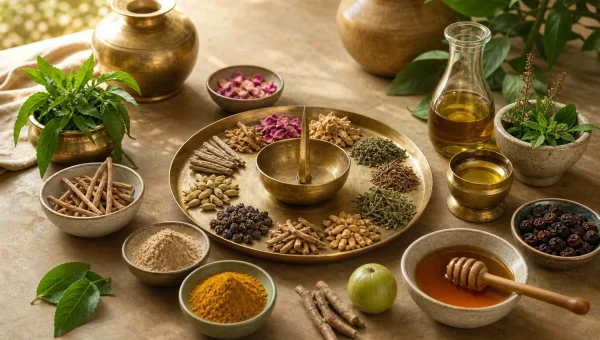
- Abhyanga: Warm oil massage is one of the most useful practices for a Vata-aggravated biohacker. It brings the opposite qualities of excess Vata: warmth, heaviness, softness, steadiness, and grounding. Warm sesame oil is traditionally used for Vata, while coconut oil may suit heat-dominant Pitta patterns. Even five to ten minutes before a warm shower can make the body feel less wired and more settled.
- Nasya and nasal oiling: Ayurveda includes nasal therapies in daily and clinical contexts, especially for the head, neck, and sense organs. Gentle nasal oiling may be used traditionally under guidance, while stronger nasya procedures should be learned from a qualified practitioner. Avoid nasal oil application during acute infection, immediately after nasal procedures, or when medically advised not to use oils in the nose.
- Food quantity and timing: Ayurveda repeatedly places digestion at the center of health. The right amount of food is the amount that can be digested well without disturbing normal function. For tracking, this means that glucose curves, energy, bowel habits, sleep, and appetite should all be read together rather than isolated into separate metrics.
The Rasayana Supplement Stack: Evidence-Anchored, Constitution-Aware
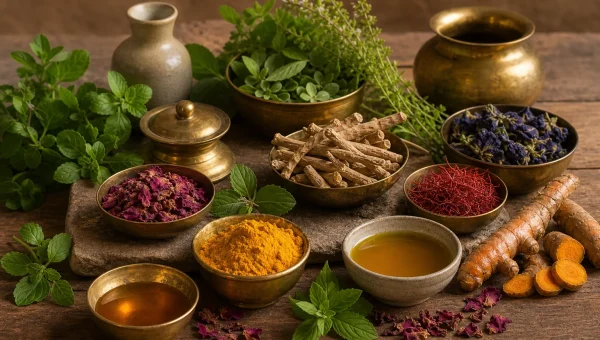
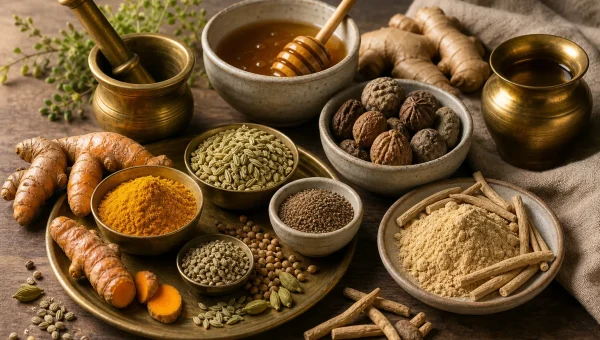
Rasayana is the Ayurvedic category concerned with nourishment, strength, tissue quality, vitality, and longevity. For biohackers, rasayana herbs are often attractive because they appear to support recovery and resilience. The mistake is treating every rasayana as universally suitable. Ayurveda does not use herbs only by trend; it considers constitution, digestion, season, age, strength, disease state, and preparation.
| Herb | Ayurvedic Role | Biohacking Target | Practical Notes |
|---|---|---|---|
| Ashwagandha (Withania somnifera) | Classically described as rasayana, balya, vajikarana, and Vata-Kapha pacifying; the Ayurvedic Pharmacopoeia of India lists it as bitter-astringent in taste, light in quality, heating in potency, and sweet in post-digestive effect. | Stress resilience, recovery, strength, and sleep support in suitable individuals. | Standardized root extracts around 500–600 mg/day have been used in human stress trials. It may not suit everyone, especially those with pregnancy, hyperthyroid tendency, sedative use, autoimmune complexity, or liver concerns unless supervised. |
| Brahmi / Bacopa (Bacopa monnieri) | Used in Ayurveda as a medhya rasayana, a rejuvenative directed toward intellect, memory, and mental clarity. | Memory, learning, attention, and cognitive steadiness over time. | Clinical trials often use standardized Bacopa extracts for 8–12 weeks rather than expecting an acute stimulant effect. It is best taken with food and may cause digestive discomfort in some people. |
| Purified Shilajit | Traditionally used as a rasayana substance, but quality and purification are essential. | Energy, mineral support, exercise recovery, and male hormonal markers in specific studied groups. | Only purified, quality-tested shilajit should be used. A trial in healthy men aged 45–55 used 250 mg twice daily for 90 days and reported changes in testosterone markers. Raw or poorly tested products are inappropriate because contamination risk is a real concern. |
| Guduchi / Giloy (Tinospora cordifolia) | The Ayurvedic Pharmacopoeia of India describes guduchi stem as balya, dipana, rasayana, tridoshashamaka, and jvaraghna. | Immune resilience, inflammatory balance, and digestive-metabolic support when correctly indicated. | Guduchi should not be used casually by people with liver disease, autoimmune disease, or unexplained hepatitis. Published clinical reports have linked Tinospora use with liver injury in susceptible individuals. |
| Amalaki / Amla (Emblica officinalis) | The Ayurvedic Pharmacopoeia of India describes amalaki fruit as rasayana, tridoshajit, vrishya, and cooling in potency, with ascorbic acid and tannins among its constituents. | Antioxidant nutrition, digestive support, tissue nourishment, and recovery. | Amalaki is often easier to integrate as food, fresh juice, powder, or in classical preparations such as chyavanaprasha. Very sour preparations may not suit every person with reflux or dental sensitivity. |
| Shatavari (Asparagus racemosus) | The Ayurvedic Pharmacopoeia of India describes shatavari root as sweet-bitter in taste, heavy and unctuous in quality, cooling in potency, and rasayana, balya, medhya, pittahara, and stanyakara. | Nourishment, cooling support, reproductive tissue support, and ojas-building in suitable constitutions. | Shatavari is not a generic sleep supplement. It is more appropriate where dryness, heat, depletion, or reproductive-tissue weakness are part of the pattern. Pregnancy, lactation, hormone-sensitive conditions, and medication use require professional guidance. |
Continuous Glucose Monitoring Through an Ayurvedic Lens
Continuous glucose monitoring is one of the most useful modern tools for understanding individual response. Large CGM-based dietary work has shown that people can have very different glucose responses to the same foods. That fits well with Ayurveda, which has always treated digestion as individual rather than universal.
Meal timing matters: Chrononutrition work supports the idea that the same or similar meal can produce a different metabolic response depending on time of day. Ayurveda’s recommendation to make the main meal the strongest meal of the day fits the principle that digestive capacity is not constant across the day.
Warm, cooked food is an Ayurvedic digestive strategy: Ayurveda favors warm, freshly prepared, digestible food for many people, especially when Vata is aggravated or agni is weak. CGM can help you observe how your own body responds, but glucose is only one measure. A meal that gives a good glucose curve but causes bloating, heaviness, reflux, or poor sleep is still not ideal from an Ayurvedic perspective.
Food combining requires a wider lens than glucose: Ayurveda’s viruddha ahara framework is about incompatibility, digestion, tissue effect, and long-term suitability. CGM can reveal glucose response to meal order, macronutrient balance, and timing, but it does not measure every Ayurvedic concern. A glucose-stable meal can still be too heavy, incompatible, stale, or unsuitable for a person’s agni.
Personal response matters more than ideology: The most Ayurvedic use of a CGM is not to chase the flattest possible line. It is to learn which foods, times, portions, and combinations leave you clear, satisfied, warm, steady, and able to sleep. The device becomes useful when it supports body awareness rather than replacing it.
My Current Personal Stack With Caveats
After recovering from a depleted, Vata-heavy burnout pattern, my current routine is deliberately simple. It is not a universal protocol. It is a template built around regularity, nourishment, and avoiding the mistake that caused the problem in the first place: adding stress when the body is asking for recovery.
- Morning: Wake at a consistent time after adequate sleep, scrape the tongue, rinse the mouth, drink warm water, and avoid the phone during the first part of the morning.
- Breath and stillness: Practice a short round of gentle breathing, such as nadi shodhana, followed by quiet sitting. I keep this calming rather than performance-driven.
- Oil and warmth: Use warm oil massage before bathing when I feel dry, wired, restless, or travel-worn. For me, this is more useful than adding another gadget-based recovery tool.
- Training: Strength training, walking, or yoga are adjusted to recovery status. If sleep, appetite, mood, and HRV are all trending down, I reduce intensity rather than forcing adaptation.
- Food: Breakfast is warm and digestible when needed. Lunch is the main meal. Dinner is lighter and earlier. I judge meals by glucose response, digestion, energy, mood, and sleep together.
- Rasayana support: Herbs are used selectively rather than all at once. Ashwagandha, Brahmi, Amalaki, Guduchi, Shatavari, and Shilajit each have different indications, energetics, and cautions. The right choice depends on the person and the pattern.
- Evening: Reduce screens, keep dinner light, apply oil to the feet when Vata is high, and protect sleep timing as the primary recovery practice.
The most useful change was not any single supplement. It was the shift from stimulation to restoration. During burnout, the body does not need a louder signal. It needs fewer insults, better digestion, regular sleep, appropriate food, and a daily rhythm that makes recovery predictable.
The Honest Integration
Ayurveda improved my biohacking by giving me a coherent framework for deciding what to optimize, what to stop doing, and what my body actually needed. HRV, CGM, sleep tracking, and training data still have value, but they are tools. They are not the authority on their own.
The Ayurvedic question is always qualitative: what is increasing, what is depleted, what is obstructed, what is weak, and what qualities would restore balance? Once that question is clear, modern metrics become more useful because they track whether the chosen correction is working.
This article presents personal experience and general wellness information. It is not medical advice. Herbs, supplements, oils, fasting, exercise changes, and glucose experiments can interact with medications and medical conditions. Consult a qualified Ayurvedic practitioner and a licensed healthcare provider before beginning supplementation or making significant lifestyle changes, especially if you are pregnant or breastfeeding, have diabetes, thyroid disease, autoimmune disease, liver disease, kidney disease, psychiatric illness, or take prescription medication. Use only quality-tested products from reputable sources.
References
- Prakriti and its associations with metabolism, chronic diseases, and genotypes: Possibilities of new born screening and a lifetime of personalized prevention (2014), PubMed Central
- Prakriti (Ayurvedic concept of constitution) and variations in platelet aggregation (2012), PubMed Central
- Charaka Samhita — Matrashiteeya Adhyaya
- Charaka Samhita — Ashtauninditiya Adhyaya
- Charaka Samhita — Ojas
- Stress and Heart Rate Variability: A Meta-Analysis and Review of the Literature (2018), PubMed Central
- Heart Rate Variability as a Translational Dynamic Biomarker of Altered Autonomic Function in Health and Psychiatric Disease (2023), PubMed Central
- Allostatic load and heart rate variability as health risk indicators (2017), PubMed Central
- Tongue-cleaning methods: a comparative clinical trial employing a toothbrush and a tongue scraper (2004), PubMed
- Tongue scraping for treating halitosis (2006), PubMed
- Effect of oil pulling on Streptococcus mutans count in plaque and saliva using Dentocult SM Strip mutans test: a randomized, controlled, triple-blind study (2008), PubMed
- Effectiveness of Oil Pulling for Improving Oral Health: A Meta-Analysis (2022), PubMed Central
- Ayurvedic Pharmacopoeia of India
- A prospective, randomized double-blind, placebo-controlled study of safety and efficacy of a high-concentration full-spectrum extract of ashwagandha root in reducing stress and anxiety in adults (2012), PubMed Central
- NIH Office of Dietary Supplements
- Effects of a standardized Bacopa monnieri extract on cognitive performance, anxiety, and depression in the elderly: a randomized, double-blind, placebo-controlled trial (2008), PubMed Central
- Effects of 12-Week Bacopa monnieri Consumption on Attention, Cognitive Processing, Working Memory, and Functions of Both Cholinergic and Monoaminergic Systems in Healthy Elderly Volunteers (2012), PubMed Central
- Ayurvedic Pharmacopoeia of India
- Clinical evaluation of purified Shilajit on testosterone levels in healthy volunteers (2016), PubMed
- NCBI
- Tinospora Cordifolia (Giloy)-Induced Liver Injury During the COVID-19 Pandemic-Multicenter Nationwide Study From India (2022), PubMed Central
- Natural Ingredient Resource Center
- Personalized Nutrition by Prediction of Glycemic Responses (2015), PubMed
- Cell (cell.com)
- Nature (nature.com)
- Nature (nature.com)
- NCCIH
- Toxic metals in ayurvedic preparations from a public health lead poisoning cluster investigation (2017), PubMed Central
the self-experimentation advice here lacks safety guardrails. some of the cited combinations haven’t been studied for interactions.
My liver function slightly elevated after starting this protocol. Stopped and normalized. Worth warning.
the article mentions Andrew Huberman’s light protocol alongside Surya Namaskar. is there formal overlap research?
Not sure about formal overlap research specifically, but both protocols are grounding in their own way — one anchors to circadian light cues, the other to breath and solar movement. I’d be curious whether anyone has tracked HRV data before and after adding Surya Namaskar alongside a standard morning light protocol.
for me tongue, bowel timing and sleep quality are better trackers than any wearable score.
Can this protocol be followed alongside standard medication for hypothyroidism? 🌿
Good question and I’d really want to know this too. I’m on levothyroxine and the adaptogenic herbs in this protocol — especially Ashwagandha — can affect thyroid hormone levels. Seems like something to raise with your prescribing doctor before combining. 🌿
Coming from a tech background where I was deep into quantified-self tracking, this piece finally articulated why my numbers never told the full story. The framing around Ojas as a kind of systemic reserve that wearables can’t measure directly — that was a genuinely useful concept for me. ❤️
Most of the adaptogenic herbs mentioned in this biohacking context — Ashwagandha, Shatavari, Tulsi — are pretty widely available at standard Ayurveda stores or even Amazon. The quality variance is the real issue though, not the sourcing difficulty. 🌿
Same experience here — once you start looking at cold-pressed versus commercial clarified butter the difference is obvious. For the protocols described in this article where ghee is a carrier, that quality gap probably matters more than people realize.
Yes, glad you brought that up. I noticed the same thing with ghee sourcing. It makes me wonder if the author has a post specifically on how to evaluate supplement and preparation quality, because that seems like the variable most people underestimate when results disappoint.
Vata-Kapha is tricky because the two doshas pull in opposite directions — Vata needs warming, grounding practices while Kapha needs stimulation and lightness. The biohacking protocol here would probably need fairly significant timing and intensity adjustments. Did the article address dual-dosha constitutions at all?
I’ve had mixed luck with online Ayurveda suppliers honestly. The herbs themselves are usually findable, but the quality control is inconsistent. Some of the protocols in this article probably need a more reliable source than whatever’s cheapest on a marketplace. 🌿
As a vegan, I’d guess most of the movement and breathwork elements translate directly, but dairy does come up quite a bit in classical Rasayana contexts. Worth asking in the comments whether the author has a dairy-free adaptation in mind, since the audience for Ayurvedic biohacking skews plant-based. ✨
Good question. My read from the article is that the sleep and dinacharya timing adjustments seem most fundamental — getting those circadian anchors right appears to be what everything else is built on. The supplement stack feels secondary to the rhythm restoration piece.
ayurvedic biohacking sounds fun until people start changing ten things at once. then no one knows what worked.
late to this discussion but wanted to ask, does the herb quality brand matter as much as you suggest tbh
The framing in this piece around Ayurveda as a system for reading and responding to your own data — rather than applying a fixed protocol — is actually more sophisticated than most biohacking content I’ve read. It treats the practitioner as the instrument, not just the subject.
I’ve found Ashwagandha and Brahmi at most health food stores, but some of the less common formulations mentioned in biohacking contexts tend to need a dedicated Ayurveda supplier. Worth checking if there’s a reputable one in your area before ordering online.
biohacking framing risks trivializing the depth of Ayurveda. treating it as a set of optimization hacks misses the constitutional philosophy. धन्यवाद
That tension is real and worth sitting with. The constitutional philosophy — Prakriti, Vikriti, the whole ecological lens — doesn’t map cleanly onto optimization metrics. Though I’d argue some biohackers do eventually hit that wall with data: numbers improve but something feels off. Maybe the framing is a useful entry point even if it’s incomplete.
the self experimentation idea is useful if it stays boring: sleep, digestion, mood, energy, not just gadgets.
I never thought about checking my constitution before tweaking my HRV goals
Does the dosha assessment require a practitioner or can I do it myself at home
Section 3 and section 5 seem to contradict each other on the timing. Which is correct r u?
My Vaidya would probably say the same — classical timing for these practices varies by text and lineage, so contradictions between sections might actually reflect different schools rather than errors. Would be useful if the author clarified which tradition they’re drawing from.
That’s a meaningful disagreement to sit with. When your practitioner’s clinical experience contradicts what you’re reading, I’d lean toward the practitioner — they know your constitution. Though it might be worth asking her directly what her reasoning is on the sequence, because the why matters here.
the article mentions benefits for Pitta-Kapha types but doesn’t address what to do when it doesn’t work.
not everyone responds the same way to this herb. The article could use more nuance on individual variation.
How long should someone stay on the maintenance dose before considering a full stop?
That’s a good data point. My guess would be to taper slowly rather than stop abruptly — some of the protocols in this burnout recovery context seem designed to run for a full seasonal cycle before reassessment. But the author probably knows more about what the maintenance phase is actually doing.
the lifestyle recommendations here are quite specific. Which elements are most critical tbh धन्यवाद
For the biohacking angle specifically, I’d guess the dinacharya timing is most critical — when you sleep, eat, and move relative to each other. The supplement elements seem more optional than the rhythm restructuring, based on how the article frames the burnout recovery process. धन्यवाद
been tracking HRV alongside Abhyanga and cold exposure for 4 months. the Vata-balancing effect on HRV is measurable in my Garmin data.
@Jaya the self-experimentation advice here lacks safety guardrails. some of the cited combinations haven’t been studied for interactions.
How do you determine whether to use the Kashayam versus the Churna form for this condition?
is there a maintenance dose after the initial 4 months course finishes?
I wonder how well the Ojas HRV correlation holds up across different age groups
what does Ojas depletion actually feel like symptom-wise? Trying to identify if that’s my issue tbh
Tongue scraping first thing in the morning made my mouth feel noticeably cleaner after a week
section 3 and section 5 seem to contradict each other on the timing. Which is correct tbh
Honestly that contradiction tripped me up too — I re-read both sections a few times. My best guess is that one timing applies to the initial loading phase and the other to maintenance, but the article doesn’t make that explicit. Clarification from the author would help.
Not a bad precaution at all, especially for longer protocols. I’m not sure if it’s standard in the Ayurvedic biohacking context specifically, but for anything involving sustained high-dose herbs I’d want baseline bloodwork anyway — it also gives you something to compare against once you’re a few months in.
That’s something I’ve wondered about too. The protocol seems designed around consistent daily rhythm, so interrupting it might undercut the circadian anchoring the author talks about. On the other hand, classical Ayurveda does treat menstruation as a time for reduced intervention — would be good to hear the author’s take.
That’s a fair concern and one the biohacking crowd in particular should care about — they’re used to demanding third-party testing for their supplements. COA transparency and batch testing should be a baseline expectation for any Ayurvedic formulation you’re using therapeutically.
the homemade preparation method here is simpler than I expected. Made my first batch yesterday tbh
used this for my chronic fatigue issue, 3 months in and I’m managing my work schedule better tbh
The burnout recovery framework in this article actually made me rethink how I was approaching my own depleted state. The idea that you can’t optimize a system that’s running on empty — that aggressive interventions make things worse before rest establishes a baseline — that really landed for me.
The IST context you provided (morning vs evening dosing) made more sense than generic timing advice.
does this protocol require a complete break from coffee and black tea?
the preparation method you described, can it be adapted for someone who can’t tolerate ghee?
After trying the abhyanga routine my evening stress felt lower and I fell asleep faster
The idea of using glucose spikes to guide meal timing feels fresh
Can Shilajit be taken with coffee or does it need warm water only
how does the Dincharya protocol integrate with intermittent fasting? Ayurveda traditionally recommends eating with the sun which conflicts with many IF windows.
The specific mention of seasonal Ritucharya adjustments here adds a layer of depth i appreciate ngl
What would be the signs that this protocol isn’t suitable for a particular individual?
this topic needs a warning about supplements. biohacking crowd loves high doses without asking anyone.
Will try.
Let us know how it goes! Curious whether you noticed any difference in your HRV readings after making the switch.
That’s a good sign! Did you find your digestion was sluggish before, or more erratic? Trying to figure out if this approach works differently depending on the starting point.
Same question honestly — would love to try some of this but not sure where to start when the baseline is burnout, not a healthy system.
the biohacking angle makes Ayurveda legible to a skeptical audience. my engineering friends take it more seriously when framed this way.
@Susan tried the Srotas-based fasting protocol described here. 16:8 with the breaking-fast meal being the lightest has been counterintuitive but effective.
how does the Dincharya protocol integrate eith intermittent fasting? Ayurveda traditionally recommends eating with the sun which conflicts with many IF windows. tbh
I’m curious if the dinacharya stack works for night shift workers whose rhythms are reversed
is there specific guidance for the post-menopause phase of life with this protocol honestly
Tracking my sleep stages showed more REM after I shifted my wake time to 5:30 am
anyone combined this with intermittent fasting? Any interactions to be aware of?
can this protocol run concurrently with a Panchakarma session or should there be a gap?
is there a maintenance dose after the initial 6 weeks course finishes honestly
How does this compare to the Charaka Samhita recommendations for the same condition?
@Indira my Ayurveda teacher pointed me to this article specifically. The dosage chart is useful tbh
Same here.
how does the Dincharya protocol integeate with intermittent fasting? Ayurveda traditionally recommends eating with the sun which conflicts with many IF windows. tbh
the article mentions Andrew Huberman’s light protocol alongside Surya Namsskar. is there formal overlap research?
i tried changing dinner time only and my sleep improved. tiny experiment, but at least it was clear what changed.
Saying ‘research supports’ without linking a single study doesn’t help readers verify anything ngl
The way you broke down the Samprapti stages for this condition made the treatment logic clear.
The lifestyle recommendations here are quite specific. Which elements are most critical?
Is the protocol appropriate for someone who has just completed chemotherapy?
the preparation method described requires equipment most people don’t have. Not practical tbh
how long should someone stay on the maintenance dose before considering a full stop tbh
the recipe in the fourth section is something I can actually prepare at home with pantry ingredients.
Will look into this.
the specific mention of seasonal Ritucharya adjustments here adds a layer of depth I appreciate.
What struck me reading this was the contrast between the biohacking instinct to layer more protocols and the Ayurvedic call to first remove what’s disrupting your system. The author’s three years of data looking terrible despite all the gear is a relatable trap — more inputs, worse outputs.
expected more from the genomics section. It’s superficial compared to what the title promises tbh
i tried this for 2 weeks and while some things improved, others didn’t. Mixed results tbh
I’m in my late 60s, should any of the dosages here be reduced for older adults?
what would be the first signs that someone’s constitution is shifting after following this protocol? धन्यवाद
is the 500mg dose based on body weight or is it uniform for adults honestly
Finally an article that gives actual prep instructions and not just herb names r u?
my practitioner approved this protocol and said the 3g dose is appropriate for my weight honestly
Makes sense.
the theory is interesting but the practical protocol is too vague to actually implement.
is there a maintenance dose after the initial 2 months course finishes ngl
what’s the shelf life of the home-prepared version if stored in a cool dry place honestly
The Ayurvedic classification of this condition, is it consistent across Charaka and Sushruta texts?
just found this through a Google search. Is this the most current version of the protocol?
not convinced every dinacharya habit needs quantifying. some routines work because they reduce decision fatigue.
the article references a specific classical formula. Is that available in standard pharmacies in India tbh 🌿
I have autoimmune issues, are there any herbs in this list I should avoid?
Not a doctor but from what I’ve read, ashwagandha is generally flagged for certain autoimmune conditions like Hashimoto’s. Would definitely confirm with a vaidya before starting anything from this list.
The distinction between the powder and the extract form you made here is exactly what I needed.
what’s the minimum duration before someone can realistically evaluate whether the protocol is working?
Reading this in 2026, is the dietary protocal still the same or has it been updated ngl
Realistically, most people can’t source high-quality this herb at affordable prices. Article ignores this.
The article is useful as a starting point but needs more referencing before I’d act on it. ❤️
the side effects section is too brief. I had insomnia on this herb that isn’t mentioned here tbh
The prep time for home formulations is significant. Most working people can’t commit to that.
my practitioner suggested this herb but didn’t specify the form. What would you recommend based on this tbh
six weeks on this, no improvement. Might be a diet issue but the article doesn’t address that.
Following this for 6 months now. My Agni feels stronger, confirmed by my Vaidya at last visit. 💯
is this suitable for someone who is vegetarian and avoids dairy entirely?
several claims here contradict what I’ve read from AYUSH-published guidelines tbh
Which specific guidelines are you referring to? Would genuinely help to know so we can cross-check. The burnout-first framing here felt different from standard AYUSH material I’ve read, but I could be missing context.
is there a difference in outcome between using the tablet form versus the churna form?
is there a specific guidance for those living at high altitude where digestion behaves differently? 🌿
Does this protocol need to be paused during menstruation or can it continue? 💯
the section on recognizing overdose signs was useful, most articles don’t include safety warnings.
What’s the difference between the formulation for acute versus chronic presentations? 🌿
The article mentions combining with ghee. Can i use any quality brand or is there a specific one?
Good to see the contraindication list included. Knew about 3 of them but not the this herb one. ✨
good article idea. Ayurveda has always been personalised, biohacking just gave it charts and devices.
Doing this.
Can someone with Pitta-dominant constitution take the full dose or should it be halved?
the section on diet modifications, is that specific to this condition or general Ayurvedic eating?
Been folowing the Ayurvedic Biohacking approach for 3 months and genuinely notice the difference r u?
what would be the first signs that someone’s constitution is shifting after following this protocol tbh
can you show how to test one herb safely? like baseline week, dose, stop rules, what to record.
What would be the first signs that someone’s constitution is shifting after following this protocal r u? 🙏
i have autoimmune issues, are there any herbs in this list i should avoid r u?
After 2 weeks on this protocol my symptoms actually worsened before improving, worth mentioning.
The claims about cellular repair here need much better sourcing to be credible.
The herb quality problem in India is real. You can’t assume readers have access to authentic preparations.
my practitioner suggested this herb but didn’t specify the form. What would you recommend based on this?
the protocol is well-documented but the expected timeline is unrealistic for a chronic condition honestly
Where are the actual peer-reviewed citations? i searched PubMed and found mostly small sample studies ngl
i don’t see how this is different from generic Ayurveda advice you can find anywhere.
Can this protocol run concurrently with a Panchakarma session or should there be a gap r u?
I’d ask the same. Did the post give any indication of a washout period between Panchakarma and starting this? Wondering if the sequencing matters.
the targeted purification protocol for this condition is different from standard Panchakarma, good catch. ठीक है
Does the environmental toxin exposure factor mentioned here require additional chelation support?
The language of ‘balancing doshas’ is hard to evaluate without measurable outcomes r u? 💯
is there a specific time of day that works best for this herb for sleep versus energy benefits?
Noted.
the modern optimization language may attract readers, but pls keep practitioner guidance for herbs and fasting.
Will try!
Eight weeks in, no change. The article should mention that individual variation is significant.
the seasonal adjustment angle here is something most websites skip entirely. Good detail tbh
how do you store the medicated oil after preparation? Refrigerated or at room temperature? ✨
Is the 750mg dose based on body weight or is it uniform for adults?
Been following the Ayurvedic Biohacking approach for 2 months and genuinely notice the difference.
is this protocol appropriate for someone on Metformin for Type 2 diabetes?
my Vaidya in Chennai suggested a slightly different sequence. Regional variation in practice r u?
is it safe to use this with a blood pressure medication like Amlodipine honestly
Useful info.
The ‘safe for most people’ qualifier is doing a lot of work here without explaining who should avoid it.
Totally agree. ‘Safe for most people’ without any indication of what conditions or medications to watch for is pretty frustrating, especially in a post about self-optimization where people are already stacking multiple inputs.
my worry is people will chase HRV and ignore symptoms. feeling worse with a better number is still worse.
is there seasonal guidance for when to start this protocol for best results?
just found this through a Google search. Is this the most current version of the protocol honestly
been tracking HRV alongside Abhyanga and cold exposure for 4 nonths. the Vata-balancing effect on HRV is measurable in my Garmin data.
would appreciate a clearer explanation of why the Vata-Pitta constitution adjustment is so different tbh
does the protocol change during the summer Pitta season versus the winter Vata season tbh
Where is the evidence that the specific sequence matters versus using the herbs individually?
the dosage range is too wide to be useful. From 10ml to another amount with no explanation of how to choose tbh
the scientific rationale section reads like it’s trying to bridge incompatible frameworks honestly धन्यवाद
The post specifically answered a question I had about Pitta constitution adjustments.
the self-experimentatipn advice here lacks safety guardrails. some of the cited combinations haven’t been studied for interactions. tbh
My experience with this approach was expensive and inconclusive after 4 months.
late to this discussion but wanted to ask, does the herb quality brand matter as much as you suggest honestly
started the protocol after reading this, 4 months in with consistent use and feeling more balanced.
the language of ‘balancing doshas’ is hard to evaluate without measurable outcomes honestly
the homemade preparation method here is simpler than I expected. Made my first batch yesterday honestly
how do you store the medicated oil after preparation? Refrigerated or at room temperature tbh
Taking this herb with honey as suggested made a difference I didn’t get from generic supplement timing.
been tracking HRV alongside Abhyanga and cold exposure for 4 months. tje Vata-balancing effect on HRV is measurable in my Garmin data. tbh
this makes sense for food timing. dinner at 7 vs 10 is easy to test without buying anything.
is there any specific prepartion guidance for someone who is fasting during Navratri?
Can children below 8 use a milder version of this or should they avoid it entirely?
the Pitta-balancing part specifically helped my recurring acid issues more than anything else.
Is there specific guidance for the post-menopause phase of life with this protocol?
What are the signs that Ama is being cleared successfully with this protocol?
The Kapha morning protocol you described is now part of my daily routine. It works.
the preparation method you described, can it be adapted for someone who can’t tolerate ghee honestly
The anupana (carrier) detail you included here is what most online resources miss completely.
Anyone here tried this for a family member with Parkinson’s? Any specific considerations? 💯
How does the dosage vary between male and female patients for this specific condition?