
When Christopher Wild introduced the term “exposome” in 2005, he proposed a way to complement genomic research by studying environmental exposures across the life course. The concept now includes chemical, physical, biological, behavioural and psychosocial exposures together with the body’s responses. It is not simply “everything that genes do not explain”; its value is the study of accumulated exposures, timing and mixtures rather than one isolated hazard.
Ayurveda is not an ancient version of exposomics, but it does ask a related clinical question: in what place, season, routine and social setting is this person living? In the Charaka Samhita, desha is considered along with factors such as prakriti, kala, strength, diet and suitability (satmya) when examining a patient. Classical descriptions distinguish Jangala (arid or water-scarce land), Anupa (marshy or water-rich land) and Sadharana (land sharing more moderate or mixed features). These categories describe environmental qualities, not rigid equations such as “desert equals Vata disease.”
A person raised in humid Kerala and later living in dry Rajasthan may have different habits, tolerances and present exposures, but Ayurveda would still examine the individual rather than predict a dosha imbalance from geography alone. Satmya includes what has become suitable through region, season and repeated use. Migration matters, yet so do constitution, age, occupation, food, sleep, symptoms and duration of adaptation.
The Modern Exposome: What It Contains
The following comparison is an interpretive bridge, not a claim that Ayurvedic terms are biomedical synonyms:
| Exposome Component | Modern Description | Relevant Ayurvedic Lens | Responsible Interpretation |
|---|---|---|---|
| Air pollution and combustion smoke | Fine particles and gases are associated with respiratory and cardiovascular harm. | Quality of vayu; exposure to dhuma (smoke) and rajas (dust); assessment of respiratory disorders within pranavaha srotas. | Smoke and dust are recognised respiratory irritants, but PM2.5 is not literally “Vata” or “Ama.” |
| Water quality | Unsafe water may transmit infection or contain hazardous chemicals such as arsenic or lead. | Jala/udaka quality and the classical concern with vitiated water in community illness. | Testing and removal of the hazard come first; an herb cannot make contaminated water safe. |
| Diet and repeated habits | Long-term dietary and behavioural patterns form part of cumulative exposure. | Ahara, vihara, agni and satmya. | Repeated habits may alter the current dosha state and tolerance, but they do not rewrite a person’s birth constitution at will. |
| Psychosocial conditions | The exposome can include stressors, social conditions and psychosocial mediators. | Manas and the qualities sattva, rajas and tamas. | These are Ayurvedic categories of mind, not laboratory measures of cortisol, trauma or epigenetics. |
| Climate, season and time | Heat, cold, humidity, altitude and seasonal change can modify exposure and physiological demand. | Desha, kala and ritucharya. | Seasonal advice is adjusted to the person’s strength, digestion and present imbalance rather than applied as a fixed climate formula. |
Urban Pollution and the Pranavaha Srotas
Air pollution is a major contemporary environmental exposure. The World Health Organization reports that 99% of the global population breathes air that exceeds its guideline limits. Fine-particle pollution is linked with respiratory and cardiovascular effects, including aggravated asthma, reduced lung function, heart attacks, arrhythmias and premature death. Those established findings do not require speculation that every particle follows one route to the brain.
Ayurveda gives a useful clinical language for observing the respiratory consequences of an unhealthy environment. Classical discussions of cough and dyspnoea place them among disorders of pranavaha srotas, and smoke and dust are listed among respiratory aggravators. This supports attention to air quality, occupation and cooking smoke, but not the claim that herbs clear particles from the lungs.
The first anti-pollution protocol is exposure reduction: check air-quality information, reduce strenuous outdoor activity when pollution is high, control indoor smoke, use cleaner cooking technologies where possible, and wear a well-fitting N95 when significant particle exposure cannot be avoided. Anyone with wheeze, breathlessness, chest pain, faintness or worsening asthma requires medical assessment rather than a home detox plan.
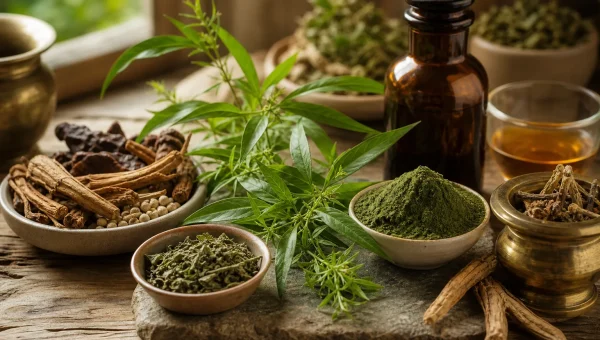
Tulasi (Ocimum tenuiflorum; older API monographs use the synonym Ocimum sanctum): Tulasi is an official Ayurvedic pharmacopoeial drug, which supports its identity and quality standards. That fact does not establish that Tulasi tea prevents PM2.5 injury, absorbs enough indoor volatile compounds to purify a room, or substitutes for ventilation, filtration and respiratory protection. It may be selected in individualized care, but “anti-pollution shield” claims and a fixed extract dose lack verified human evidence.
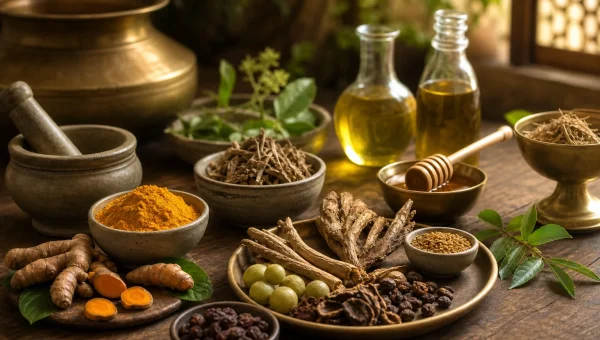
Haridra (Curcuma longa): The Ayurvedic Pharmacopoeia describes the rhizome as pungent and bitter in taste, dry in quality, heating in potency and pungent after digestion; it also lists pinasa among its traditional uses. This profile is not evidence for a universal high-dose curcumin-piperine prescription.
Water Quality and the Ayurvedic Examination of Jala
Ayurveda treats water as a fundamental environmental input and describes undesirable features of vitiated water in its discussion of community-wide illness. That is a sound reason to include source, taste, odour, storage and local contamination history in environmental assessment. It is not necessary to claim that every contaminant becomes “Ama in Rasa Dhatu,” because that is an interpretive metaphor rather than a verifiable classical mechanism.
Modern water safety requires identifying the actual hazard. Microbial contamination can transmit diarrhoeal disease, cholera, dysentery, hepatitis A, typhoid and polio. Long-term arsenic exposure is associated with skin lesions and cancers and has also been associated with cardiovascular disease and diabetes. Lead can affect multiple organs and is stored in bones and teeth. The response is a safe supply, validated treatment, risk-based testing and public-health or toxicology advice.
Microplastics should also be described cautiously. The WHO’s 2019 assessment found that evidence was limited and that microplastics in drinking water did not appear to pose a health risk at the levels then studied, while calling for more research and stronger action against plastic pollution. Claims of established endocrine injury from ordinary drinking-water exposure go beyond that evidence.
Amalaki and Triphala: Amalaki is an official pharmacopoeial fruit drug, and Triphala is the classical three-fruit formulation of Haritaki, Bibhitaka and Amalaki. Neither should be presented as a clinically proven chelator for lead, arsenic or microplastics. Triphala may be prescribed for an Ayurvedic indication after assessment, but “5 g every night for everyone exposed to questionable water” is not a universal detoxification rule. Pharmacopoeial adult doses are general guidance for recognised preparations, not permission to self-treat poisoning.
Desha-Adaptive Protocols: Prescribing for Environment
The practical value of desha vichara is not a one-herb-per-climate chart. It is the discipline of asking what qualities are repeatedly acting on the patient, what has become suitable through habit, what changed after relocation, and how season, occupation, housing and diet interact with the present condition. Two people with the same prakriti may need different advice because their strength, digestion, medicines and exposure burden differ.
For high-pollution urban environments: Begin with source control, cleaner indoor air, avoidance of tobacco and unnecessary smoke, AQI-guided activity and appropriate respiratory protection. An Ayurvedic plan can then support regular meals, sleep, hydration and symptom-specific care. Nasya oil should not be advertised as a proven particulate barrier, and herbal smoke is not appropriate as an air-pollution remedy. Persistent respiratory symptoms require conventional evaluation.
For humid, water-rich environments: Examine mould, damp housing, food spoilage, drinking-water safety, appetite and the person’s current dosha signs. Ayurveda may favour fresh food and a lighter pattern when heaviness, sluggish digestion and excess mucus are present. Blanket daily Trikatu or Guduchi is inappropriate because pungent heating drugs and immune-active herbs are not suitable for every constitution, disease or medication combination.
For dry, arid environments: Reduce avoidable drying exposures, maintain adequate safe fluids, and favour freshly cooked food with sufficient unctuousness when dryness and Vata-type symptoms are present. Suitable external oiling (abhyanga) is part of classical daily regimen, but oil choice, frequency and contraindications still matter. Shatavari, Ashwagandha and ghee should not be assigned automatically merely because a postcode is dry.
For an overstimulating social environment: Ayurveda recognises sattva, rajas and tamas as qualities of mind, while modern exposome research uses different psychosocial measures. A practical bridge is to observe sleep disruption, sensory overload, isolation and conflict without treating an Ayurvedic term as a biomarker. Stable meal times, adequate sleep, time away from unnecessary stimulation and supportive relationships are lower-risk starting points than self-prescribed sedative herbs.
For the foundational Ayurvedic seasonal framework that complements the desha concept, see our post on Ayurvedic Dinacharya and seasonal adaptation. For a careful discussion of the three-fruit formula, see our Triphala complete guide. For traditional uses and preparation ideas, see our Tulsi benefits guide. These guides are educational, not proof that an herb neutralises contaminants.
This post describes a careful comparison between the modern exposome and Ayurvedic environmental assessment. The two frameworks are not scientifically interchangeable. The measures are educational and are not treatment for poisoning, occupational exposure, asthma or cardiovascular disease. Suspected lead, arsenic, carbon-monoxide, pesticide or industrial exposure requires prompt medical and public-health evaluation; chelation is a medical treatment used only for specific indications. Ayurvedic products may interact with medicines, and some improperly manufactured preparations have contained toxic metals. Consult a qualified physician and Ayurvedic practitioner, and use products that meet applicable quality standards.
References: Wild, “Complementing the Genome with an Exposome” (2005); IARC and NIEHS exposome resources; WHO air-quality, drinking-water, arsenic, lead and microplastics guidance; Charaka Samhita discussions of desha, kala, satmya, community environmental disturbance and respiratory disease; the Ayurvedic Pharmacopoeia of India; and NCCIH safety guidance on Ayurvedic medicine.
Actionable tip: Make a four-part environmental inventory today. Record your usual AQI and major smoke sources; identify your drinking-water source and whether local risks justify testing; note whether your home is predominantly damp, hot, cold or dry; and identify the social or occupational exposure that most disturbs sleep and routine. Choose one source-focused action—reducing indoor smoke, arranging water testing, correcting dampness or changing activity on high-AQI days—before adding an herb. Use desha vichara to improve observation, not to replace measurement.
References
- Complementing the genome with an “exposome”: the outstanding challenge of environmental exposure measurement in molecular epidemiology (2005), PubMed
- Iarc (iarc.who.int)
- Niehs (niehs.nih.gov)
- Charaka Samhita — Janapadodhvansaniya Vimana Adhyaya
- Charaka Samhita — Deha prakriti
- Charaka Samhita — Vikriti
- Charaka Samhita — Satmya
- World Health Organization
- Epa (epa.gov)
- Epa (epa.gov)
- Charaka Samhita — Kasa Chikitsa
- Charaka Samhita — Talk%3AHikka Shwasa Chikitsa
- Airnow (airnow.gov)
- CDC
- World Health Organization
- Ayurvedic Pharmacopoeia of India
- Ayurvedic Pharmacopoeia of India
- Ayurvedic Pharmacopoeia of India
- Charaka Samhita — Janapadodhvansaniya Vimana
- World Health Organization
- World Health Organization
- World Health Organization
- World Health Organization
- Ayurvedic Pharmacopoeia of India
- Charaka Samhita — Tasyashiteeya Adhyaya
- Charaka Samhita — Matrashiteeya Adhyaya
- Charaka Samhita — Sattva
- Charaka Samhita — Dosha
- NCCIH
- Ayush (ayush.delhi.gov.in)
would appreciate more clinical citationa. Ayurveda content needs to meet higher evidential standards to be taken seriously.
interesting approach. how kong is the recommended treatment duration? tbh
are there any contraindications for people on multiple medications?
what’s the best way to find a qualified Ayurvedic practitioner who actually understands this level of detail?
I work in environmental health and the concept of the exposome is already fairly established in that field, but seeing it mapped onto Desha was genuinely new to me. Do you know whether any Ayurvedic institutions have tried to formalize this overlap in their intake protocols, like systematically collecting environmental history alongside the standard prakriti assessment?
The traditional vs modern standardization point you made is something practitioners argue about a lot.
i’m Pitta dominant, does the dosage for this condition change significantly? 🙌
Sorry off-topic but anyone here used Ayurveda for hair loss?
interesting approach. how long is the recommended treatment duration?
The connection to epigenetic research is what makes this compelling rather than just philosophical. When you frame Desha as essentially an ancient model of environmental gene expression, it stops sounding like folk wisdom and starts sounding like something researchers should be taking more seriously.
This is the first piece I’ve read that actually tries to account for where a person has lived, not just who they are constitutionally. Worth flagging though — for people with already-compromised detoxification pathways, any environmental remediation protocol should probably be introduced slowly. I’d err on the side of caution before starting anything intensive.
Can this protocol be followed alongside standard medication for hypothyroidism?
the language of ‘balancing doshas’ is hard to evaluate without measurable outcomes.
the Pitta-aggravating foods list in this article finally explains why my symptoms peaked in summer.
Same here.
the 750mg dosage here is quite different from what my Ayurvedic doctor prescribed. Contradictory.
spoke to two Vaidyas and neither confirmed this exact protocol. Where does it come from tbh
The article gives a range, is the lower end sufficient for mild presentations?
The targeted purification protocol for this condition is different from standard Panchakarma, good catch.
what’s the difference between the formulation for acute versus chronic presentations tbh
is the protocol appropriate for someone who has just completed chemotherapy?
is there a specific guidance for those living at high altitude where digestion behaves differently honestly
is there any specific preparation guidance for someone who is fasting during Navratri honestly 🙏
@Geeta for Navratri fasting I would think Desha still matters, like humid city vs dry climate, but the post needs a simple fasting example tbh
My Vaidya confirmed this protocol and it’s been 6 months of consistent improvement.
The distinction between the powder and the extract form you made here is exactly what I needed.
does the environmental toxin exposure factor mentioned here require additional chelation support tbh
@Ravi what would be the first signs that someone’s constitution is shifting after following this protocol?
the traditional vs modern standardization point you made is something practitioners argue about a lot honestly
The parallel between Wild’s exposome concept and Desha in Ayurveda is something I hadn’t seen drawn out so clearly before. It reframes a lot of chronic disease conversations — instead of asking what’s wrong with the person, you start asking what has accumulated in their environment over decades. That shift alone seems clinically significant.
does this protocol need to be paused during menstruation or can it continue?
i tried this for 6 weeks and while some things improved, others didn’t. Mixed results. ❤️
Interesting how the article links exposome timing with Ayurvedic satmya.
really useful information, will try this protocol starting next week. tbh
Thanks!
The point about urban versus rural Desha shaping constitutional expression over time is one I wish more practitioners engaged with. I’ve seen patients from heavily polluted cities present with what looks like a constitutionally aggravated Pitta, but it may be more environmental than inherent. Is there a classical text that addresses remediation specifically for industrial or urban exposure?
the language assumes a reader already familiar with Ayurvedic terminology. a glossary would help.
would appreciate more clinical citations. Ayurveda content needs to meet higher evidential standards to be taken seriously. tbh ✨
interesting approach. how long is the recommended treatment duration? 🙏
I grew up between two very different cities and always noticed my digestion and energy levels were different depending on where I was. Never had a framework for it until reading about Desha this way. The idea that the body remembers cumulative environmental exposure rather than just current conditions makes a lot of sense given that experience.
expected more from the genomics section. It’s superficial compared to what the title promises honestly
The article reads like an ad for Ayurveda generally, not a balanced assessment of this specific condition.
The section on circadian timing, is that strictly necessary or is approximate timing sufficient?
i have autoimmune issues, are there any herbs in this list I should avoid tbh
what’s the best way to find a qualigied Ayurvedic practitioner who actually understands this level of detail? धन्यवाद
My mother is 62 and has been on this for 3 weeks, her energy levels are much better now.
@Jennifer what’s the minimum duration before someone can realistically evaluate whether the protocol is working tbh
The article assumes readers have a nearby Vaidya for supervision. That’s not always the case.
The Pitta-balancing part specifically helped my recurring acid issues more than anything else. 🙌
the first section mentions a specific quality marker for this herb. Where can I verify this at purchase honestly
@Meera The prep time for home formulations is significant. Most working people can’t commit to that.
What does Ojas depletion actually feel like symptom-wise? Trying to identify if that’s my issue.
expected more from the genomics section. It’s superficial compared to what the title promises tbh
these preparations aren’t regulated. How do we know the label matches what’s inside honestly
The first section mentions a specific quality marker for this herb. Where can I verify this at purchase?
the language assumes a reader already familiar with Ayurvedic terminology. a glossary wouls help.
Is this protocol appropriate for someone on Metformin for Type 2 diabetes? 💯
Kerala to Rajasthan example was the clearest bit. moving from humid kapha place to dry vata place would change more than just skin dryness.
practical and specific, which is rare in Ayurveda content online.
Does the Jangala classification still apply if someone moves from Kerala to Rajasthan later in life?
expected more from the genomics section. It’s superficial compared to what the title promises.
how long does a typical course run before someone would expect to see meaningful results?
Thanks! 💯
finally an article that gives actual prep instructions and not just herb names honestly
can someone combine this protocol with a standard multivitamin without interaction?
The article is useful as a starting point but needs more referencing before I’d act on it.
can this protocol run concurrently with a Panchakarma session or should there be a gap? 🌿
the article mentions combining with ghee. Can I use any quality brand or is there a specific one? ठीक है
@Suresh Sorry off-topic, has anyone here used Ayurveda specifically for recurring sinus infections?
the classical texts cited don’t always agree with each other. The article presents them as unified honestly
@Eric what’s the best way to find a qualified Ayurvedic practitioner who actually understands this level of detail?
What would be the first signs that someone’s constitution is shifting after following this protocol?
this helped me understand what my Ayurvedic doctor told me last month. context makes a big difference.
I’m not convinced that Tulasi can replace N95 masks for high pollution days even if it’s mentioned as supportive.
Where are the actual peer-reviewed citations? I searched PubMed and found mostly small sample studies.
i have been asking my Vaidya about this exact approach for years and she disagrees with the sequence.
The lifestyle recommendations here are quite specific. Which elements are most critical ngl
Is there a maintenance dose after the initial 3 months course finishes? 🙌
Finally an article that gives actual prep instructions and not just herb names.
late to this discussion but wanted to ask, does the herb quality brand matter as much as you suggest?
are there any contraindications for people on multiple medications? tbh
is there a maintenance dose after the initial 2 months course finishes tbh
the section on The dosage, is that daily or divided into two doses?
Good to see the contraindication list included. Knew about 3 of them but not the this herb one.
Checking AQI and adjusting outdoor exercise seems like a sensible first step before adding any herb.
really useful information, will try this protocol starting next week.
The prep time for home formulations is significant. Most working people can’t commit to that.
tried this herb for 2 weeks with zero noticeable change. Might just not work for my constitution.
The diet restrictions here are extensive. Most people can’t maintain this alongside a work schedule.
the claims about cellular repair here need much better sourcing to be credible.
How do you store the medicated oil after preparation? Refrigerated or at room temperature?
the language assumes a reader already familiar with Ayurvedic terminology. a glossary would help. नमस्ते
The Ayurvedic classification of this condition, is it consistent across Charaka and Sushruta texts?
Followed the protocal as described and had digestive upset for the first three weeks r u?
the Nasya mentioned here, is that something to do at home or only with a practitioner?
are there any contraindications for people on multiple medications? ✨
appreciated the part about sourcing quality this herb, not all brands are equivalent.
The dosage range is too wide to be useful. From 750mg to another amount with no explanation of how to choose.
After reading about desha vichara I started noting my water source and indoor smoke levels each week.
anyone here tried this for a family member with Parkinson’s? Any specific considerations?
How does this compare to the Charaka Samhita recommendations for the same condition?
Several claims here contradict what I’ve read from AYUSH-published guidelines.
Will look into this.
tried the 6 months regimen exactly as described, my Vaidya noted improvement at the follow-up.
@Sandeep is there specific guidance for the post-menopause phase of life with this protocol honestly
are there any contraindications for people on multiple medications? नमस्ते
i have autoimmune issues, are there any herbs in this list I should avoid?
the diet restrictions here are extensive. Most people can’t maintain this alongside a work schedule tbh
Started the protocol after reading this, 6 months in with consistent use and feeling more balanced.
The scientific rationale section reads like it’s trying to bridge incompatible frameworks.
is it safe to use this with a blood pressure medication like Amlodipine?
Is there any specific preparation guidance for someone who is fasting during Navratri?
interesting approach. how long is the recommended treatment duration? tbh
Off topic question but is Triphala safe for long-term daily use? ❤️
i know two people who tried this approach and neither had the results described here tbh
my Vaidya in Chennai suggested a slightly diferent sequence. Regional variation in practice r u?
Sorry off-topic but anyone here used Ayurveda for hair loss? 🙌
are there any contraindications for people on multiple mesications? tbh
The article mentions benefits for Pitta types but doesn’t address what to do when it doesn’t work.
A checklist would help here: childhood place, current city, pollution, water, work stress, diet pattern. otherwise exposome feels too big to apply.
What would be the signs that this protocol isn’t suitable for a particular individual?
Can this be given to children between 8 and 12 years? Any age-adjusted dose guidance? ✨
I’m in my late 60s, should any of the dosages here be reduced for older adults? ❤️
The section on diet modifications, is that specific to this condition or general Ayurvedic eating?
realistically, most people can’t source high-quality this herb at affordable prices. Article ignores this.
the preparation method you described, can it be adapted for someone who can’t tolerate ghee tbh
Desha Vichara being an older version of exposome is a good comparison. modern science name is new but the idea isnt new at all
this helped me understand what my Ayurvedic doctor told me last month. context makes a bug difference. tbh
Anyone combined this with intermittent fasting? Any interactions to be aware of? ❤️
interesting approach. how long is the recommended treatment duration? 🌿
Tried the 2 months regimen exactly as described, my Vaidya noted improvement at the follow-up ngl
the specific preparation method for this herb described here is different from general churna usage, helpful tbh
Is there seasonal guidance for when to start this protocol for best results?
the warning about not combining this with blood thinners is something many herb sellers don’t mention.
Is this suitable for someone who is vegetarian and avoids dairy entirely?
checklist would help a lot. current city, childhood place, water, pollution, food habits, stress, maybe infections history too
My liver function slightly elevated after starting this protocol. Stopped and normalized. Worth warning.
I know two people who tried this approach and neither had the results described here.
interesting approach. how long is the recommended treatment duration? नमस्ते
The first half covers theory well but the practical protocol section felt rushed.
would appreciate more clinical citations. Ayurveda content needs to meet higher evidenrial standards to be taken seriously.
Quick question, is the 1g dose you mentioned for the extract form or the raw powder?
interesting approach. how long is the recommended treatment duration? 💯
the post covers the exact gap between classical texts and modern clinical usage really well.
is there specific guidance for the post-menopause phase of life with this protocol tbh
what’s the best way to find a qualified Ayurvedic practitioner who actually umderstands this level of detail?
the Kerala to Rajasthan example made it click for me. same person, but humid kapha background plus dry vata life now changes the whole picture
can someone with Pitta-dominant constitution take the full dose or should it be halved tbh
quick question, is the 5ml dose you mentioned for the extract form or the raw powder tbh
can children below 8 use a milder version of this or should they avoid it entirely?
The explanation of why Vata types need higher fat anupana clicked for me after reading this.
is this suitable for someone who is vegetarian and avoids dairy entirely r u?
@Jennifer good one.
The article reads like an ad for Ayurveda generally, not a balanced assessment of this specific condition r u?
Where are the actual peer-reviewed citations? i searched PubMed and found mostly small sample studies r u?
does the protocol change during the summer Pitta season versus the winter Vata season tbh
Makes sense.
the language assumes a reader already familiar with Ayurvedic terminology. a glossary would help. 🙏
@Greg practical and specific, which is rare in Ayurveda content online.
does the environmental toxin exposure factor mentioned here require additional chelation support?
just found this through a Google search. Is this the most current version of the protocol?
practical and specific, which is rare in Ayurveda content online. ठीक है
The side effects section is too brief. I had insomnia on this herb that isn’t mentioned here.
The comparison between Churna and Kashayam forms here helped me decide which to ask my Vaidya for.
can someone combine this protocol with a standard multivitamin without interaction tbh
my doctor is skeptical about combining this with my current prescription. Who takes responsibility honestly
Useful but a bit dense. I had to read the Jangala Anupa Sadharana part twice.
The preparation method you described, can it be adapted for someone who can’t tolerate ghee? 💯
is there a specific time of day that works best for this herb for sleep versus energy benefits r u?
How long should someone stay on the maintenance dose before considering a full stop?
does the protocol need to be followed in sequence or can the individual elements be used separately?
not sure how relevant ancient dosage guidelines are for modern bodies with different baseline health.
Does the protocol differ for someone who has already done Shodhana (purification therapy) recently?
the section on drug interactions is too short. My cardiologist had concerns I had to research separately tbh
@Rakesh the language assumes a reader already familiar with Ayurvedic terminology. a glossary would help.
these preparations aren’t regulated. How do we know the label matches what’s inside? 🙏
Is there a difference in outcome between using the tablet form versus the churna form?
does the protocol differ for someone who has already done Shodhana (purification therapy) recently honestly
used this for my chronic fatigue issue, 2 months in and I’m managing my work schedule better honestly
How many Panchakarma sessions would complement this oral protocol typically?
Good one.
the section on recognizing a good quality this herb at purchase is practically very useful.
are there any contraindications for people on multiple medications? 🙏
Doing this.
how long does a new Desha take to affect dosha balance? like if someone moves cities for 6 months, is that enough or more years?
Does this protocal need to be paused during menstruation or can it continue? 🌿
what’s thr best way to find a qualified Ayurvedic practitioner who actually understands this level of detail?
Is there a maintenance dose after the initial 2 weeks course finishes?
the theory is interesting but the practical protocol is too vague to actually implement.
air pollution mapping to Prana Vaha Srotas is interesting. Delhi readers probably dont need convincing on that one
Can someone combine this protocol with a standard multivitamin without interaction r u?
one thing missing is indoor exposure. mold, AC all day, cleaning chemicals, these are also part of exposome right?
I don’t see how this is different from generic Ayurveda advice you can find anywhere.
What’s the minimum duration before someone can realistically evaluate whether the protocol is working?
the IST context you provided (morning vs evening dosing) made more sense than generic timing advice honestly
Useful info.
is this protocol appropriate for someone on Metformin for Type 2 diabetes tbh
is there a specific time of day that works best for this herb for sleep versus energy benefits?
Is there specific guidance for the post-menopause phase of life with this protocol?
would like to see more data from clinical trials, not just classical text references.
What are the signs that Ama is being cleared successfully with this protocol?
not sure how relevant ancient dosage guidelines are for modern bodies with different baseline health tbh
my practitioner suggested this herb but didn’t specify the form. What would you recommend based on this honestly