
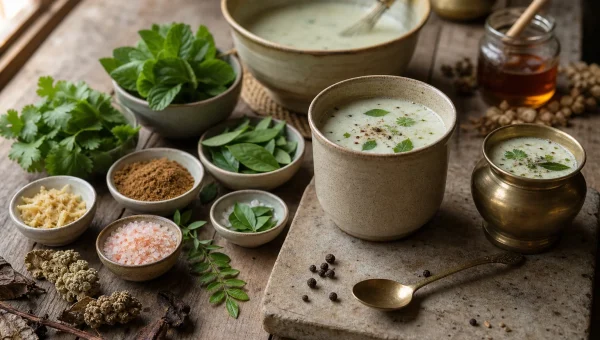
My earliest memory of winter mornings in my grandmother’s house in Kerala involves the sound of a clay pot being set on the fire before sunrise. By the time the rest of the house stirred, there was always something warm on the stove: kanji, gruel, or porridge scented with spice before the cool air settled into the kitchen. She never called it medicine. She called it breakfast. Yet the grain, fat, seasoning, and consistency were chosen with care.
Ayurveda divides the colder part of the classical Indian six-season calendar into Hemanta, or early winter, roughly mid-November to mid-January, and Shishira, or late winter, roughly mid-January to mid-March. These dates are approximate and should be adapted to local weather. Charaka Samhita, Sutrasthana 6, describes digestive capacity as especially strong in a healthy, strong person during Hemanta because cold restrains heat within the body. It applies the Hemanta regimen to Shishira, noting greater cold and dryness.
This does not justify unlimited heavy food. Appetite, age, activity, illness, climate, and digestive tolerance still matter. Warm porridge is a practical way to serve freshly cooked food with adjustable richness without exceeding actual capacity.
The Ayurvedic Framework for Winter Morning Eating
Charaka’s winter regimen recommends nourishing foods such as milk products, sugarcane products, fats, oils, new rice, and hot water, while advising against an excessively light, cold, or Vata-increasing diet. The broader seasonal discussion gives importance to sweet, sour, and salty tastes during the strengthening part of the year. A porridge can fit this framework when its grain is cooked thoroughly and its richness is adjusted with ghee, milk, coconut milk, sesame, or a lighter vegetable broth.
Classical Ayurveda does not require every person to eat immediately after sunrise or identify one universal winter breakfast. Meal timing should follow genuine hunger and digestion of the previous meal. These are modern household recipes informed by classical principles, not treatments.
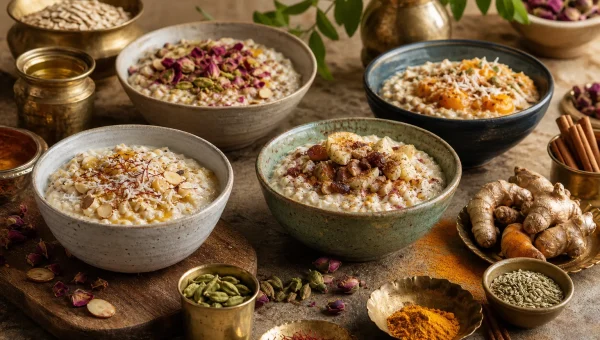
Porridge 1: Five-Spice Dalia Gruel
This adaptable porridge can be thick like vilepi or loosened toward peya. Charaka’s food chapter distinguishes gruels by liquid-solid proportion and attributes different qualities to them, showing that consistency matters.
Best for: Cold mornings and people who tolerate wheat or oats well.
Ayurvedic profile: Warm, softly cooked, and moderately unctuous; reduce the fat and spices if the meal feels heavy or heating.
Prep time: About 25 minutes.
Ingredients (serves 2):
- 80 g cracked wheat (dalia), rolled oats, or rice
- 650 ml water
- 150-200 ml milk or an unsweetened plant beverage, optional
- 1-2 tablespoons ghee, according to appetite
- 1/2 teaspoon dry ginger
- 1/2 teaspoon ground cumin
- 1/4 teaspoon black pepper
- 1/4 teaspoon cinnamon
- 1/4 teaspoon cardamom
- A small pinch of rock salt
- 1-2 teaspoons jaggery, optional
Method: Warm the ghee in a heavy saucepan. Add ginger, cumin, pepper, cinnamon, and cardamom and stir briefly over low heat without burning them. Add the grain and coat it in the seasoned ghee. Pour in the water, bring to a boil, then reduce to a gentle simmer. Cook until the grain is very soft, stirring often and adding water when necessary. Add milk only after the grain has softened, simmer for another three to five minutes, and finish with salt. Add a little jaggery only if a sweet version suits the meal.
The former “Ashtanga Haritaki” gruel attribution to Charaka Sutrasthana 2 could not be verified. The Ayurvedic Pharmacopoeia of India identifies Haritaki as the mature fruit pericarp of Terminalia chebula, lists five tastes excluding salty, and gives a medicinal powder dose of 3-6 g. With ruksha and anulomana actions, it should not be put into daily porridge at a therapeutic dose without practitioner assessment.
Honey is omitted from the pot because Charaka cautions against heated honey. Use it, if desired, only after the porridge is comfortably warm and in a small amount; cooked jaggery remains an added sugar.
Porridge 2: Black Sesame and Jaggery Rice Porridge
Charaka characterizes tila as unctuous, hot, strengthening, and Vata-alleviating, while noting that it can increase Pitta and Kapha. The passage discusses sesame generally; it does not establish black sesame as superior to white sesame for bone tissue.
Best for: People wanting a richer, sweeter breakfast during cold, dry weather.
Ayurvedic profile: Unctuous, dense, and warming; use a smaller serving if there is sluggish digestion, nausea, marked heaviness, or heat sensitivity.
Prep time: About 35 minutes, plus optional soaking.
Ingredients (serves 2-3):
- 80 g white, red, or black rice, rinsed
- 2 tablespoons black or white sesame seeds
- 750-850 ml water
- 150 ml full-fat coconut milk or dairy milk
- 1-2 tablespoons grated jaggery
- 1/2 teaspoon cardamom
- 1/4 teaspoon cinnamon
- 1 teaspoon ghee, optional
- A small pinch of salt
Method: Toast the sesame seeds gently until fragrant, cool them, and grind coarsely. Simmer the rice with water and salt until the grains are very soft and beginning to break down. Stir in the ground sesame, cardamom, and cinnamon. Add coconut milk or dairy milk and simmer gently for three to five minutes. Stir in jaggery to taste and finish with ghee if additional richness is appropriate. Thin with hot water before serving because the porridge thickens as it stands.
Sesame supplies fat, protein, fibre, and minerals, but values vary by variety and processing. The former claim of 288 mg calcium per tablespoon was unsupported. This is food, not a proven osteoporosis treatment or guaranteed “Asthi-building” therapy.
Porridge 3: Moringa and Turmeric Savory Rice Kanji
This savory kanji can be kept thin when a dense sweet breakfast is unappealing. Ayurvedic rice gruels include manda, peya, and vilepi, whose use depends on consistency, ingredients, and digestive strength. This is household food, not a universal convalescence prescription.
Best for: A savory breakfast or a lighter meal during cold weather.
Ayurvedic profile: Warm and fluid, with pungent seasoning; reduce pepper, ginger, and hing when there is burning, reflux, or strong heat sensitivity.
Prep time: About 25 minutes, or 10 minutes with safely stored cooked rice.
Ingredients (serves 2):
- 80 g raw rice, or 200 g cooked refrigerated rice
- 800 ml water or more as needed
- 2 tablespoons chopped fresh moringa leaves, or 1-2 teaspoons food-grade moringa leaf powder
- 1/2 teaspoon turmeric
- 1/4 teaspoon dry ginger
- 1/2 teaspoon cumin seeds
- A pinch of asafoetida (hing)
- 6-8 curry leaves
- 1 tablespoon ghee or coconut oil
- Salt to taste
- Black pepper to taste
- A squeeze of lime after cooking, optional
Method: If using raw rice, simmer it with water and turmeric until very soft. For cooked rice, combine it with water and simmer until the grains begin to loosen into the broth. In a small pan, warm the ghee or oil, add cumin, then hing and curry leaves, and pour this tempering into the kanji. Add fresh moringa leaves for the final few minutes of cooking. If using leaf powder, stir it in near the end and simmer briefly rather than treating it as a raw supplement. Add ginger, pepper, and salt, then finish with lime after removing the pot from the heat.
Moringa leaves contribute protein, carotenoids, vitamins, and minerals, but fresh leaves and powders differ. The former claims of 100 mg calcium per tablespoon and superiority to capsules were unsupported. Turmeric and pepper are included for flavour, not as promises of treatment or enhanced clinical absorption.
Preparation Strategy: Make Winter Porridge Practical
Advance preparation helps, but cooked grain, milk, coconut milk, and rice require time-and-temperature control.
- Overnight cooker: Use only a slow-cooker recipe and appliance intended for unattended cooking. Do not use a delayed start with milk or cooked grain sitting at room temperature. Add delicate seasonings and any sweetener in the morning.
- Leftover rice: Refrigerate cooked rice in a shallow covered container within two hours of cooking, keep the refrigerator at 4°C or below, and reheat the kanji until steaming hot. Discard rice that has remained at room temperature too long.
- Spice premix: Mix only dry, clean spices in a dry jar. Make a modest quantity, keep moisture out, and label the date so stale seasoning does not remain in use indefinitely.
- Adjust the bowl: More water creates a lighter, soup-like meal; more grain, milk, sesame, or ghee makes it heavier. Let appetite and post-meal comfort guide the next preparation.
The Warming Beverage Alongside
Charaka includes hot water in the Hemanta regimen, but does not prescribe the former ginger-pepper-cinnamon drink as a classical winter beverage.
Optional ginger-cinnamon infusion: Simmer 250 ml water with two thin slices of fresh ginger and a small piece of cinnamon for five minutes, then strain. Black pepper may be added for taste. This is a modern kitchen infusion, not a classical prescription. People with reflux, mouth ulcers, heat sensitivity, or medicines affected by concentrated herbs should keep it mild or omit it.
For more on Ayurvedic seasonal eating, see our guide on Kapha Season Is Coming: How to Adjust Your Diet and Routine for Spring and the broader breakfast discussion in Ayurvedic Breakfast by Dosha: 21 Morning Meals That Actually Sustain You.
These recipes are general foods, not medical treatment. Anyone with diabetes, coeliac disease, food allergy, pregnancy, breastfeeding, chronic illness, persistent digestive symptoms, a prescribed diet, or regular medicines should choose ingredients with an appropriate healthcare provider. Consult a qualified Ayurvedic practitioner before using medicinal powders; do not self-prescribe Haritaki.
Grew up in a village outside Thrissur and my ammachi made exactly this kind of kanji every winter morning. She added dried ginger and jaggery, never measured anything. I have been trying to recreate it for years and got close but not quite there. The clay pot must make a difference, i tried it in stainless and something is different.
The sound of a clay pot before sunrise — that sentence brought back something I hadn’t thought about in years. My naani made a thin rice gruel every cold morning with a piece of dried ginger sitting in it the whole time. I never appreciated it then. Now that I’m cooking for my own kids in winter, I keep thinking about how that warmth felt before school. These recipes are going on my list.
Good reminder on 3 Ayurvedic Breakfast Porridges for Winter. Good starting point for a cautious reader.
I came for 3 Ayurvedic Breakfast Porridges for Winter and this answered the main question. A few more examples would still help.
I love the idea of using cracked wheat for a warm start on chilly days.
I want to try the saffron ragi porridge but am skeptical about the claimed blood sugar benefits. Is the glycemic effect of ragi really different enough from oats to matter clinically? I have type 2 diabetes and ragi is often recommended but I have never seen a rigorous comparison. What does the evidence say?
The five-spice dalia gruel sounds like a cozy alternative to plain oatmeal.
Ashtanga Haritaki in a morning gruel is not something I had ever connected to the winter kanji tradition my own family kept. My grandmother made something similar with old rice and a handful of dried herbs she never named. I’m going to try making the haritaki version this week. Is the haritaki added to the water from the start or only in the last few minutes of cooking?
I wonder if black sesame adds enough flavor without overpowering the rice.
My concern with haritaki specifically in the Ashtanga combination: haritaki is known to be contraindicated in pregnancy, low body weight, and with excessive use of alcohol or meat. The article doesn’t mention these contraindications and I have seen people blindly follow these recipes without checking if the herbs are right for their situation.
Moringa leaves give a nice green touch to the savory kanji.
I came for 3 Ayurvedic Breakfast Porridges for Winter and this answered the main question. I would still ask a practitioner before changing medicines.
It’s helpful that the article explains hemanta and shishira timings.
tried the barley and dry ginger congee and found the texture very different from what I expected. it came out more watery than i wanted. is this intentional or am i using too much water? the recipe says 1:6 ratio which seemed like a lot but i followed it exactly.
I appreciate the tip about adding milk after the grain softens.
I came for 3 Ayurvedic Breakfast Porridges for Winter and this answered the main question. The article avoids making it sound like a quick fix.
Using jaggery instead of honey seems safer for heated porridge.
The suggestion to toast sesame seeds before grinding makes sense.
I like that the recipes let you adjust thickness with water or milk.
I read somewhere that haritaki should not be taken in summer because of its heating nature. But this recipe seems designed for winter. Am I right that the seasonal prescription is part of why the combination works, and that the same recipe in summer might be too heating for Pitta types?
It’s good to know that haritaki should be used only with a practitioner’s guidance.
The warm ginger cinnamon drink sounds pleasant alongside the porridge.
I find the advice about storing cooked rice in the fridge useful.
The article clarifies that porridge isn’t medicine but a nourishing breakfast.
is this suitable for pitta dominant constitution or mainly vata? i get confused about cross-dosha applications
shared this with four people in my yoga group and all of them found the dosage section useful
the triphala timing recommendation here matches what worked for me, good to have it validated
can you use the churna form instead of capsules or does the preparation method matter that much
Just started exploring Ayurveda after years of allopathy, this is a helpful starting point but a lot to absorb.
I spent three years trying to get my 7-year-old to eat warm breakfast instead of cold cereal. Finally made the jaggery-ginger congee, called it ‘magic winter porridge’ and she ate the whole bowl and asked for more. She is also getting sick less this winter than last. I know correlation isn’t causation but I’ll take it.
The 3 Ayurvedic Breakfast Porridges for Winter explanation is clearer than most short posts. Good starting point for a cautious reader.
The 3 Ayurvedic Breakfast Porridges for Winter explanation is clearer than most short posts. The examples make the advice less abstract.
how long before seeing results typically? the article mentions 4 to 6 weeks but is that consistent across prakriti types
My functional medicine doctor was impressed by the pathway explanation in the third section 🌿.
@Rajesh followed the 14-day protocol and noticed improvement by day 9, continuing into the second cycle now ❤️
I’m curious whether white sesame works just as well as black in the second recipe.
my constitution is vata-pitta, the article seems to focus on one dosha at a time, any specific advice
The explanation of why classical sources emphasize preparation timing was genuinely new to me.
Seeing the mention of clay pot firing reminds me of traditional cooking methods.
this is helpful but the lack of citations for the more specific claims is a problem for me
The distinction between the two preparation methods in section 2 was the clearest explanation I have found anywhere. 🙏
been eating the kitchari variant from this for two weeks and my energy in the afternoon is better
my vaidya confirmed the exact dosing you described here, glad to see it written out clearly
Does this protocol work for people who travel frequently and cannot maintain a fixed daily routine.
Can pregnant women follow this or are there specific modifications? the article does not address that directly.
I liked the practical side of 3 Ayurvedic Breakfast Porridges for Winter. This would be easier to follow with a one-week sample plan.
I’m skeptical of the dosing guidance here, I cannot find any peer-reviewed corroboration for those numbers. ठीक है
@Geeta The quality sourcing note at the end saved me from buying a product I later found was adulterated.
i have low agni according to my vaidya, does that change which phase of the protocol to start with
anyone tried this alongside conventional treatment for the same condition? curious about interactions
useful that this covers both the fresh and dried preparation, i can only get dried locally
just found this via a google search, is the dosage in section 3 still what practitioners recommend
how does this compr to the ashtanga hridayam recommendation on the same condition
The safest part of the 3 Ayurvedic Breakfast Porridges for Winter advice is keeping it simple. Small daily changes are easier to follow than a perfect plan.
Anyone know if this is appropriate for adolescents or only adults? my 16 year old has similar issues.
Late to this post but wanted to ask, is the recommended protocol still current or has anything changed.
The safest part of the 3 Ayurvedic Breakfast Porridges for Winter advice is keeping it simple. I would still ask a practitioner before changing medicines.
The breakdown of classical vs commercial preparations is something I have not seen this clearly before.
Can someone confirm whether the KSM-66 extract or full-spectrum root works better for this specific issue.
@Divya The beginner warning before the advanced section is genuinely helpful, most posts skip that.
The safest part of the 3 Ayurvedic Breakfast Porridges for Winter advice is keeping it simple. The article avoids making it sound like a quick fix.
the seasonal adjustment chart is going into my practice journal, exactly what i was missing
is there a hindi language resource alongside this for my parents who are not comfortable reading in english 🌿
does the preparation method change during summer versus winter or is it the same year-round 🙏
where can you source authentic herbs in a tier-2 indian city? the local shops have very inconsistent quality
the breakdown of classical vs commercial preparations is something i have not seen this clearly before
not sure i trust the supplement quality available online, too many adulterated products out there
The safest part of the 3 Ayurvedic Breakfast Porridges for Winter advice is keeping it simple. Good starting point for a cautious reader.
some of these claims are very strong for what is essentially anecdote-based evidence 🙏
Makes sense
this works in theory but sourcing authentic ingredients is practically very difficult in most of india
This helped me understand 3 Ayurvedic Breakfast Porridges for Winter without too much jargon. The article avoids making it sound like a quick fix.
what brand of the extract do you personally use? the market has too many adulterated products
two months in on this protocol and my practitioner noticed the improvement at the last check-in 🙏
starting this next week, will report back with results after about 6 weeks
the contraindication list here is the most honest i have seen on an ayurvedic blog, rare to find that
tried the morning protocol for 2 months and gave up, the timing is impossible with work and children
Where are the clinical trials? referencing classical texts is fine but I need RCT data before trying this.
tried this for 6 weeks and saw no difference at all, maybe i applied it wrong but nothing changed ❤️
came across this post on a forum, adding it to my research, not tried yet but looks credible
tried the herbal combination you described and my sleep quality improved noticeably within 10 days
did not work for me personally though i know it has worked for others, individual variation is real
Added the herbal tea from section 4 to my evening routine and sleep onset improved in about a week.
how do i track whether results are genuine versus placebo effect? any objective markers to watch
quick question, does the dosage change if someone is already taking metformin or thyroid medication
the recipe proportions worked perfectly, made the preparation twice and got consistent results
the dosage here is higher than what my ayurvedic doctor recommended, a bit concerned about that
added the herbal tea from section 4 to my evening routine and sleep onset improved in about a week
The 3 Ayurvedic Breakfast Porridges for Winter section feels grounded enough to try carefully. I would still ask a practitioner before changing medicines.
bookmarked the recipe table, used it three times this week and the results speak for themselves
the science section feels thin, i’d want more than cell studies before calling something clinically proven
Reading this in 2027, has the guidance here changed based on newer research or clinical reports.
The table in the middle of the article was clear but I could not figure out what the seasonal column meant.
The timing recommendation here is different from what I read elsewhere, which one should I follow.
Packaging tradition as validated science without rigorous sourcing makes me cautious.
The 3 Ayurvedic Breakfast Porridges for Winter section feels grounded enough to try carefully. The examples make the advice less abstract.
The 3 Ayurvedic Breakfast Porridges for Winter section feels grounded enough to try carefully. I would like to know how long to try it before judging results.
The 3 Ayurvedic Breakfast Porridges for Winter section feels grounded enough to try carefully. Good starting point for a cautious reader.
the part about adjusting herb timing based on agni strength finally made sense of why my previous attempts failed
shared this with four people in my yoga group and all of them found the dosage section useful धन्यवाद
I was looking for a plain explanation of 3 Ayurvedic Breakfast Porridges for Winter. Small daily changes are easier to follow than a perfect plan.
two months in and symptoms are slightly worse, going back to basics and stopping this protocol
This is the post I wish I had two years ago when I first started exploring this area.
the preparation is too labor-intensive to sustain long term, needs a simpler version for daily use
the beginner warning before the advanced section is genuinely helpful, most posts skip that
I was looking for a plain explanation of 3 Ayurvedic Breakfast Porridges for Winter. This would be easier to follow with a one-week sample plan.