
Among the classical guggulu preparations, Kaishore Guggulu is best understood as a targeted Vata-Rakta and Rakta-dushti formulation rather than a generic joint-support tablet. Its classical strength lies in conditions where vitiated Vata interacts with disturbed blood tissue, producing burning pain, swelling, skin eruptions, wounds, inflammatory nodules, and deep tissue congestion.
In the Ayurvedic Formulary of India, the preparation is listed as Kaisora Guggulu under the Guggulu group and is attributed to Bhaisajyaratnavali, Vataraktadhikara. Its classical indications include vatasonita, kustha, vrana, pramehapidaka, svayathu, pandu, meha, mandagni, vibandha, kasa, gulma, and jaradosa. This makes the formula especially relevant where inflammatory heat, obstructed channels, impaired digestion, and disturbed Rakta Dhatu are present together.
Understanding this formulation requires understanding both the role of purified guggulu as the resinous base and the way Guduchi, Triphala, Trikatu, Vidanga, Trivrit, Danti, and Go-ghrita shape its action.
The Formula and Its Classical Structure
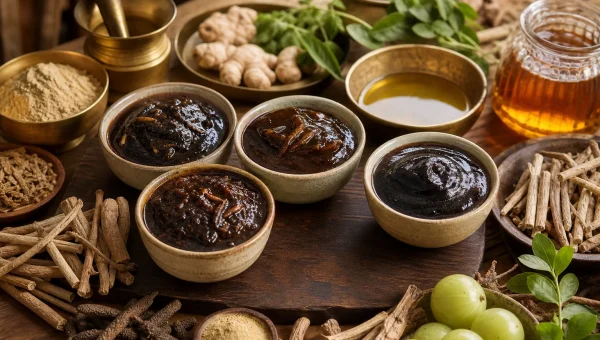
The classical preparation is not a simple powder mixture. It is prepared around a decoction of Triphala and Guduchi, into which purified guggulu is incorporated and processed, followed by the addition of powdered digestive, cleansing, and eliminative herbs, with Go-ghrita added at the final stage.
| Classical Name | Common Botanical Identity | Part Used | Role in the Formula |
|---|---|---|---|
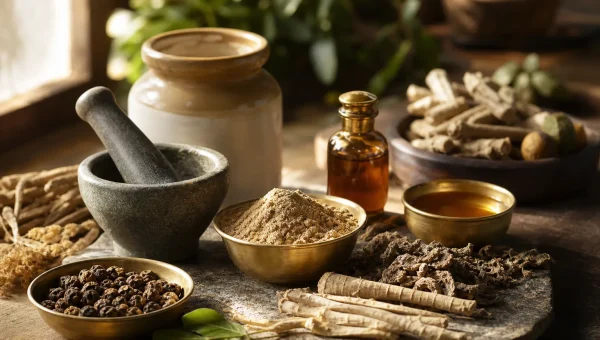
| Shuddha Guggulu | Commiphora wightii / Commiphora mukul | Purified resinous exudate | Base of the preparation; supports channel-clearing and scraping action in guggulu formulations |
| Haritaki | Terminalia chebula | Fruit/pericarp | Part of Triphala; supports bowel regulation and systemic cleansing |
| Bibhitaka | Terminalia bellirica | Fruit/pericarp | Part of Triphala; supports Kapha-related congestion and channel balance |
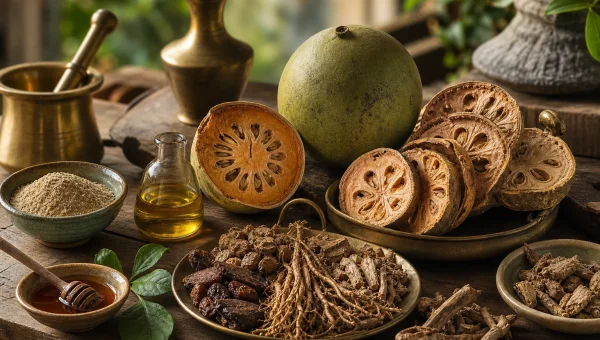
| Amalaki | Phyllanthus emblica / Emblica officinalis | Fruit | Part of Triphala; supports Pitta balance and Rasayana action |
| Chinnaruha / Guduchi / Amrita | Tinospora cordifolia | Stem | Major decoction herb; supports the Vata-Rakta and Pitta-Rakta orientation of the formula |
| Shunthi | Zingiber officinale | Dried rhizome | Part of Trikatu; supports deepana and pachana |
| Maricha | Piper nigrum | Fruit | Part of Trikatu; supports digestive activation and formula penetration |
| Pippali | Piper longum | Fruit | Part of Trikatu; supports deepana and tissue delivery |
| Vidanga / Krimiripu | Embelia ribes | Fruit | Supports cleansing where Krimi, Kapha obstruction, or contaminated channels are part of the picture |
| Trivrit | Operculina turpethum | Root | Provides virechana-oriented eliminative support |
| Danti | Baliospermum montanum | Root | Provides stronger downward-cleansing support and must be used with care |
| Go-ghrita | Cow’s clarified butter | Ghee | Final-stage vehicle; softens the formula and supports Pitta-balancing delivery |
The formulation logic is layered. Triphala and Guduchi form the cleansing and Rasayana foundation. Purified guggulu gives the formula its resinous, channel-oriented character. Trikatu supports digestion and assimilation so that the preparation is not merely cleansing but also digestively active. Trivrit and Danti provide the eliminative push associated with virechana-oriented formulations, while Go-ghrita helps moderate the sharpness of the formula and supports its use in heat-involved conditions.
Why Kaishore Guggulu Fits the Vata-Rakta Axis
Classical Ayurveda describes Vatarakta as a condition in which Vata and Rakta disturb one another. When vitiated blood obstructs the movement of Vata, pain, burning, swelling, discoloration, tenderness, and difficulty in joint movement can arise. The description includes both superficial and deep patterns, with burning, itching, pricking pain, swelling, coppery or reddish discoloration, stiffness, and severe pain in joints or deeper tissues.
This is why Kaishore Guggulu is traditionally placed in the Vatarakta context. The formula does not address pain by Vata-pacification alone. It also addresses Rakta involvement, Pitta-associated heat, digestive impairment, constipation or obstructed downward movement, and channel congestion. Its use is therefore most appropriate when pain and swelling are accompanied by heat, redness, burning, skin involvement, inflammatory nodules, or signs of deeper tissue contamination.
Primary Classical Uses
The strongest way to understand Kaishore Guggulu is through its classical indication list. The Ayurvedic Formulary of India records its use in Vata-Rakta, skin disorders, wounds, inflammatory eruptions, swelling, metabolic and urinary conditions, digestive weakness, constipation, cough, abdominal masses, anemia-type presentations, and age-related degeneration.
1. Vatarakta / Vatasonita
Kaishore Guggulu is especially associated with vatasonita, another name for Vatarakta. In practice, this includes patterns where joint pain is not merely dry, cracking, and degenerative, but hot, swollen, red, tender, burning, and aggravated by Pitta-Rakta disturbance. The Guduchi-Triphala base, purified guggulu, and virechana-oriented herbs make the formula suitable for a Vata-Rakta pattern where both obstruction and inflammatory heat are present.
For modern users, this category is often discussed alongside gout-like presentations and inflammatory joint conditions, but an Ayurvedic diagnosis is still essential. Acute severe joint pain, sudden swelling, fever, infection, or repeated gout flares require medical evaluation, laboratory monitoring when appropriate, and coordinated care with a qualified healthcare provider.
2. Kustha and Heat-Pattern Skin Disorders
Kustha is a broad Ayurvedic category for skin diseases, and Kaishore Guggulu belongs in the subset where Rakta involvement, Pitta heat, impaired digestion, and channel obstruction are prominent. It is most classically aligned with chronic, recurrent, inflammatory skin patterns rather than simple dryness alone. Burning, redness, oozing tendency, swelling, itching, or eruptions that worsen with heat, spicy food, alcohol, stress, or digestive disturbance suggest a Pitta-Rakta pattern in Ayurvedic assessment.
For skin conditions, Kaishore Guggulu is commonly combined by practitioners with diet correction, bowel regulation, Pitta-Rakta pacifying herbs, and external care appropriate to the lesion. Persistent psoriasis-like plaques, eczema, recurrent boils, cystic acne, urticaria, or infected lesions should be assessed by a qualified clinician, especially when there is pain, pus, fever, spreading redness, or immune compromise.
3. Vrana, Pramehapidaka and Swelling
The classical indication list includes vrana, pramehapidaka, and svayathu. These terms point toward wounds, inflammatory eruptions or nodules associated with metabolic disturbance, and swelling. In Ayurvedic logic, this connects Kaishore Guggulu to tissue-level inflammation where Rakta, Mamsa, Kapha, and Pitta may be involved along with impaired Agni.
This does not make the formula a substitute for wound care, drainage, antibiotics, glucose control, or emergency treatment when those are needed. Rather, it explains why Ayurvedic practitioners may consider it as part of a broader plan when wounds, boils, metabolic skin eruptions, or swelling occur in a constitutionally appropriate patient.
4. Mandagni, Vibandha and Meha-Associated Congestion
The inclusion of mandagni and vibandha shows that the formula is not aimed only at joints or skin. It also addresses digestive weakness and constipation-like obstruction, both of which Ayurveda treats as important contributors to systemic accumulation and inflammatory disease. Trikatu, Triphala, Trivrit, and Danti together give the formula a digestive and downward-moving character.
The indication meha places the formula in the broader field of metabolic and urinary disturbance. In modern practice, any person with diabetes, kidney disease, urinary symptoms, or metabolic syndrome should use Kaishore Guggulu only with professional supervision, because monitoring and conventional diagnosis remain important.
Classical Dose and Anupana
The Ayurvedic Formulary of India gives the dose of Kaisora Guggulu as 3 g, with mudga yusha, milk, or sugandhi jala as anupana. Tablet strength varies by manufacturer, so the number of tablets should not be assumed from classical gram dose alone. The dose should be adjusted according to the patient’s constitution, age, digestive strength, bowel pattern, disease stage, medicines, and tolerance.
| Clinical Pattern | Classical Rationale | Common Anupana Logic | Use Guidance |
|---|---|---|---|
| Vatarakta with heat, redness, burning, and swelling | Matches the Vatasonita orientation of the formula | Warm water, Guduchi-based support, or practitioner-selected vehicle | Use under supervision, especially during acute flares |
| Chronic inflammatory skin disease with Pitta-Rakta signs | Fits the Kustha and Rakta-dushti orientation | Pitta-pacifying diet and compatible herbal support | Requires individualized assessment and external care when needed |
| Recurrent boils, wounds, inflammatory nodules, or swelling | Relates to Vrana, Pramehapidaka, and Svayathu indications | Vehicle chosen according to heat, Kapha, bowel pattern, and strength | Adjunctive only when infection or wound complications are present |
| Mandagni with constipation and channel congestion | Reflects the Mandagni and Vibandha indications | Usually given after food with a suitable warm vehicle | Avoid unsupervised use in loose stools, debility, or bowel inflammation |
Diet and Regimen Support
In Vatarakta management, classical Ayurveda pays close attention to food, behavior, and digestive discipline. Excessive sour, salty, pungent, alkaline, fatty, hot, incompatible, stale, or improperly digested food is discouraged. Alcoholic and fermented sour preparations, overeating before the previous meal is digested, day sleep, night vigil, anger, and lack of physical activity are also described as contributing factors.
A practical Kaishore Guggulu plan therefore includes more than tablets. Meals should be digestible, bowel movement should be regular, excessive heat-producing foods should be reduced, and the person’s strength should be protected. For Vata-Rakta patterns, a qualified practitioner may also adjust grains, pulses, oils, spices, sour foods, fermented foods, and animal foods according to the patient’s digestion and disease stage.
Contraindications and Cautions
Kaishore Guggulu is a potent classical medicine and should not be treated as a casual wellness supplement. Because the formulation includes Trivrit and Danti, it has an eliminative character and may aggravate people with active diarrhea, severe dehydration, marked debility, very low body weight, or active inflammatory bowel conditions unless directly supervised.
- Pregnancy and breastfeeding: Avoid use unless specifically prescribed by a qualified physician. Guggulu and strong eliminative herbs are not appropriate for casual use in pregnancy.
- Prescription medicines: Consult a healthcare provider before use if taking thyroid medicines, anticoagulants, antiplatelet drugs, diabetes medicines, gout medicines, immunosuppressants, or medicines with narrow safety margins.
- Thyroid conditions: Guggulu has been studied for thyroid-related activity in animal models, so people with thyroid disease or thyroid medication use should seek monitoring.
- Liver, kidney, or metabolic disease: Use only under professional care, especially when laboratory monitoring is already part of treatment.
- Infections, wounds, and abscesses: Do not replace medical evaluation, drainage, antibiotics, glucose control, or emergency care when these are indicated.
- Gastric irritation: Take only as directed; many patients tolerate guggulu preparations better after meals rather than on an empty stomach.
Stop use and seek medical advice if there is severe abdominal pain, persistent diarrhea, rash, swelling of the lips or throat, jaundice, dark urine, unusual bleeding, worsening joint swelling, fever, or signs of spreading infection.
Sourcing and Quality
Quality matters greatly with guggulu preparations. Classical guggulu is a resinous exudate that must be purified before use. Finished products should come from licensed manufacturers that provide batch numbers, botanical identity testing, microbial testing, and heavy-metal testing. Avoid products with unclear ingredients, exaggerated disease-cure claims, missing manufacturer details, or no quality documentation.
Purified guggulu is described as soft, waxy, and brown after proper processing, and guggulu preparations should be protected from moisture. Finished Kaishore Guggulu tablets may vary in color, odor, hardness, and excipients by manufacturer, but they should not smell rancid, crumble excessively, show fungal growth, or come from an untraceable supply chain.
Kaishore Guggulu is a therapeutic Ayurvedic preparation. Always consult a qualified Ayurvedic physician and, where relevant, a licensed healthcare provider for proper diagnosis, individualized dosage, drug-interaction review, and monitoring before use. Self-medicating serious conditions such as gout, psoriasis, diabetes-related eruptions, wounds, or infections is not recommended.
References
- Preview (preview.wellcomecollection.org)
- Preview (preview.wellcomecollection.org)
- Preview (preview.wellcomecollection.org)
- Charaka Samhita — Vatarakta Chikitsa
- Researchgate (researchgate.net)
- Black pepper and its pungent principle-piperine: a review of diverse physiological effects (2007), PubMed
- Plant sterol guggulsterone inhibits nuclear factor-kappaB signaling in intestinal epithelial cells by blocking IkappaB kinase and ameliorates acute murine colitis (2006), PubMed
- Antibacterial activities of some constituents from oleo-gum-resin of Commiphora mukul (2004), PubMed
- NCBI
- Webmd (webmd.com)
- Mskcc (mskcc.org)
- Gugulu (Commiphora mukul) induces triiodothyronine production: possible involvement of lipid peroxidation (1999), PubMed
- Thyroid Stimulating Action of Z-Guggulsterone Obtained from Commiphora mukul (1984), PubMed
- FDA
- Lead, mercury, and arsenic in US- and Indian-manufactured Ayurvedic medicines sold via the Internet (2008), PubMed Central

I have gout with confirmed uric acid elevation and started Kaishore Guggulu 5 months ago alongside reducing purine-rich foods. My uric acid went from 8.4 to 6.1 in the last blood test. My rheumatologist was surprised and asked what I had changed. The Kaishore Guggulu was part of a broader protocol but it is a significant component.
The distinction between Kaishore Guggulu and Yogaraj Guggulu in this article is the clearest I have seen. Kaishore for Pitta-Rakta disorders, Yogaraj for Vata-musculoskeletal. My practitioner gave me Yogaraj for a joint condition that was actually inflammatory and Pitta-driven. Switching to Kaishore made a measurable difference.
Is Kaishore Guggulu appropriate for psoriasis that is predominantly skin-based without joint involvement? The article discusses the Rakta Dhatu axis and blood purification properties which seems relevant for psoriatic skin disease independent of whether arthritis is present.
I had chronic infected folliculitis that my dermatologist treated with repeated antibiotic courses. The recurrence pattern suggested a systemic issue, not a surface infection. Kaishore Guggulu combined with Neem internally for 4 months ended the recurrence cycle. 8 months without an episode now.
The Amalaki content in Kaishore Guggulu as a significant component of the formula is important for the Pitta modulation. The cooling and Pitta-pacifying nature of Amalaki counteracts the heating nature of the purified Guggulu resin itself. The formula is self-balancing in a way simpler preparations are not.
Is Kaishore Guggulu safe for someone with hypothyroidism? I have read that Guggul preparations can interact with thyroid hormone levels. The article does not address thyroid contraindications and this is a common co-condition in people seeking Ayurvedic treatment for inflammatory conditions.
I found the breakdown of the virechana herbs especially helpful for understanding how the formula works.
I started Kaishore Guggulu for skin inflammation and noticed significant digestive improvement as a secondary effect. The liver and blood purification action seems to improve everything downstream, including digestion, energy, and skin clarity. The classical characterization of it as a formula that cleans the entire Pitta pathway is accurate.
I had to stop Kaishore Guggulu after 6 weeks due to significant skin purging, what looked like increased acne and inflammation before improvement. The article mentions this is a temporary Pitta mobilization but does not indicate how long it typically lasts. 3-4 weeks of worsening before improvement is uncomfortable and people need to be prepared.
The Sharangdhara Samhita citation for this formula is useful for practitioners wanting to trace back to the source text. The formula has not changed significantly from the classical description, which speaks to the clinical empirical validation over centuries of use.
The article mentions that Kaishore Guggulu appears in both Sharangdhara Samhita and Bhaishajya Ratnavali, which adds confidence to its classical roots.
How long is the standard treatment course for Kaishore Guggulu? The article describes it as a powerful blood purifier but does not specify whether it should be used for 3 months, 6 months, or as long-term maintenance. The dosing duration for Guggulu preparations varies significantly between practitioners.
Does anyone know if the Guduchi swarasa dosage changes during maintenance phase?
I appreciate the clear table that separates acute gout dosing from long term hyperuricemia prevention.
The section on skin diseases made me wonder how Manjistha synergizes with the guggulu base in practice.
It seems prudent to check with a doctor before combining this with allopurinol, given the additive urate lowering note.
Reading about the antimicrobial activity against Staphylococcus aureus gave me a new perspective on its use for abscesses.
The explanation of Pitta Rakta Dushti as the interface of metabolic fire and blood tissue clarified why the formula targets those conditions.
More real world case studies showing outcomes after six months of use would be helpful.
The caution about avoiding the formula on an empty stomach makes sense given the purgative herbs present.
For someone dealing with recurrent boils, the adjunctive role alongside antibiotics sounds like a reasonable approach.
Starting today. Fingers crossed.
my doctor actively discouraged this after I mentioned it. Getting conflicting guidance is difficult to navigate.
How does weather and season affect the protocol? I’m in a hot humid climate. 💯
For men with sensitive skin is the protocol different from what’s described here?
the balance between Sanskrit terminology and plain English is really well done.
how does weather and season affect the protocol? Im in a hot humid climate.
for an old post this is still very relevant. good information doesnt expire.
could you address the quality certification issue in a future article? Third-party tested herbs are hard to find.
any recommendation for online vaidya consultations for those of us not near an Ayurvedic clinic?
for Pitta-Kapha dual constitution which aspects of the protocol take priority? ✨
i took notes from this and created a personal protocol. Three weeks in, positive changes.
do the ratios change if you are doing this as preventive care versus active treatment?
late to this discussion but the question in the first comment is still unanswered anyone have more info?
the dose specificity here is what makes this actionable. Vague ‘take regularly’ instructions are useless.
the ubtan recipe sounds good but saffron is expensive. Is there a substitute that achieves similar results?
the Hindi terms alongside English make this usable in both languages. 🙏
is the preparation method different if using organic versus conventional turmeric?
Doing this
does ghee quality affect results significantly? I use store-bought A2 ghee. नमस्ते
for Kapha-dominant types is the warm water recommendation essential or can it be room temp?
The morning versus evening split for herbs is something I always get confused about. Clear here.
how long does a typical protocol like this take to show results?
nani used to say the same things in different words. There’s real wisdom here.
Some of the preparation methods are too time-intensive for working adults. Needs a quick-version alternative.
Trying this
the depth here is unusual for a blog. reads more like a textbook chapter.
I broke out badly after trying the recommended oil. It may not suit all skin types.
the comments section here is almost as useful as the article itself
The IST timings in the practical section are a nice touch. Feels like it’s written for us. ✨
people should know this. Sharing everywhere.
for Pitta-Kapha dual constitution which aspects of the protocol take priority?
skeptical but curious. trying the minimal version first.
how does weather and season affect the protocl? im in a hot humid climate.
i asked my dr about this. she said she doesnt have enough info on it but didnt say no
the integration of modern evidence with traditional practice is the right approach.
been doing oil cleansing for a month. skin is softer and my makeup goes on better now. 🌿
for an old post this is still very relevant. good information doesnt expire. 🌿
can this be done alongside an allopathic treatment or should there be a gap?
How does weather and season affect the protocol? I’m in a hot humid climate.
Have been searching for this explanation for years. Saved. Sharing.
too many ingredients that are hard to source outside India. Needs a substitution guide.
My yoga teacher recommended this site and now I see why.
pitta burning its way through this article and finding useful info 🔥 just kidding but yes helpful.
will try 🙏
my experience perfectly matches what is described in the long-term use section.
the reference to Ashtanga Hridayam which Sutrasthana chapter? Would like to read the original.
the Q&A format at the end would make this even more useful. Would love a FAQ section. 🙏
Is there a children’s version of this protocol? My daughter has a similar issue.
will come back to this when I hit the cooling phase very detailed.
i wish there were more clinical studies cited here. Traditional use is valuable but not sufficient evidence alone.
tried the protocol. Week 2 no change yet but following through to the full period.
the combination of theory and practical steps is what I appreciate most about this blog.
the classical text quotes r helpful context but I’d like to understand the modern interpretation better. 💯
this is the clearest explanation of this topic Ive found. Bookmarked for reference.
this site is different from other ayurveda blogs. feels researched not just copied.
found this article after searching for 3 days. Exactly what I needed.
The Kaishore Guggulu section feels grounded enough to try carefully. I appreciate that it does not oversell the result.
My Ayurvedic practitioner of 12 years said this is one of the better online resources she’s seen on the topic.
the language is accessible which is rare for classical Ayurveda writing
I was looking for a plain explanation of Kaishore Guggulu. Small daily changes are easier to follow than a perfect plan.
The seasonal protocol is smart. Most people try to use the same routine all year.
For darker skin tones does the brightening effect of kumkumadi work the same way?
reading this in 2027 are the herb sourcing recommendations still valid?
this article connected the dots between things my vaidya told me over several years.
real information. Not fluff. Rare. 🌿
Does this protocol need modification for someone who is fasting during Navratri?
The Kaishore Guggulu angle is useful here. The practical details matter more than people think.
for darker skin tones does the brightening effect of kumkumadi work the same way? ✨
as someone who does both allopathy and Ayurveda I appreciate that this article doesn’t demonize either.
skeptical about Ayurveda in general but this is presented honestly enough that I’ll try it.
the IST timings in the practical section are a nice touch. Feels like its written for us.
can pregnant women use all the ingredients mentioned? Some herbs aren’t safe in pregnancy.
Sharing this
Does this protocol need modification for someone who is fasting during Navratri? 💯
tried this for 6 weeks without the results described. Maybe the protocol needs personalizing. 🌿
The classical text quotes are helpful context but I’d like to understand the modern interpretation better.
the sourcing of quality herbs in my city is impossible. Makes these protocols academic for many readers.
is the guidance here applicable for elderly patients or is it designed for younger adults?
The classical text quotes are helpful context but I’d like to understand the modern interpretation better. ❤️
Can pregnant women use all the ingredients mentioned? Some herbs aren’t safe in pregnancy. 🌿
what’s the shelf life of homemade preparations? The article doesnt mention storage.
Useful post on Kaishore Guggulu. Small daily changes are easier to follow than a perfect plan.
i’m in the US and getting authentic herbs here is hard. Any trusted online sources?
late to this but my yoga teacher recommended this site and now I see why.
the Q&A format at the end would make this even more useful. Would love a FAQ section.
can this be taken in summer or only winter months?
can pregnant women use all the ingredients mentioned? Some herbs rn’t safe in pregnancy.
found this searching for answers, the language is accessible which is rare for classical Ayurveda writing
Just found this via Google, my Ayurvedic practitioner told me something different about the timing. Confusing to get conflicting guidance.
reading this in 2027, thanks for the clear writing. This isnt easy material to explain simply. 🌿
Late to this but my doctor actively discouraged this after I mentioned it. Getting conflicting guidance is difficult to navigate.
So much misinformation out there. Good to find something grounded.
Just found this via Google, can this be taken in summer or only winter months?
what brand of triphala do u recommend? So many options and quality varies greatly.
I liked the practical side of Kaishore Guggulu. I appreciate that it does not oversell the result.
Reading this in 2027, for Pitta-Kapha dual constitution which aspects of the protocol take priority? नमस्ते
too theoretical without enough concrete steps. The ‘what’ is clear but the ‘how exactly’ is missing. 🙏
Helpful
can someone here who has tried this protocol confirm the timeline? Two weeks vs six weeks?
This helped me understand Kaishore Guggulu without too much jargon. The practical details matter more than people think.
Late to this discussion but the question in the first comment is still unanswered anyone have more info? ठीक है
This helped me understand Kaishore Guggulu without too much jargon. This feels more usable than a long list of herbs.
shared this with my 68-year-old father. He said its exactly what his vaidya prescribed 30 years ago.
Late to this but can pregnant women use all the ingredients mentioned? Some herbs aren’t safe in pregnancy.
The Kaishore Guggulu section feels grounded enough to try carefully. This feels more usable than a long list of herbs.
Just found this via Google, i wish there were more clinical studies cited here. Traditional use is valuable but not sufficient evidence alone.
i wish there were more clinical studies cited here. Traditional use is valuable but not sufficient evidence alone. 🙏
real information. Not fluff. Rare.
tried this for 6 weeks without the results described. Maybe the protocol needs personalizing.
The advice around Kaishore Guggulu is specific enough to be useful. This would be easier to follow with a one-week sample plan.
Needed this
how long before seeing results with the kumkumadi protocol? Ive been using it 2 weeks with no change yet.
my Ayurvedic practitioner of 12 years said this is one of the better online resources she’s seen on the topic. 🙏
late to this but i appreciate that the dosages are given in actual mg not just ‘a pinch’ or ‘as needed’. 🌿
does this work for people over 60? The age range in the examples skews unger.
Good reminder on Kaishore Guggulu. This is the kind of detail readers can test slowly.
Good reminder on Kaishore Guggulu. I appreciate that it does not oversell the result.
started following this a month ago. small but real difference. thank u
Brilliant breakdown. Forwarding this.
I came for Kaishore Guggulu and this answered the main question. Would be useful to see a short checklist next.
i was prescribed this by a practitioner 2 years back but never understood why. now i do.
my grandma was right about all of this. just didn’t have the explanation.
reading this in 2027, can someone here who has tried this protocol confirm the timeline? Two weeks vs six weeks?
reading this in 2027, my Ayurvedic practitioner told me something different about the timing. Confusing to get conflicting guidance.
Three months later: the results held. Happy to report.
too theoretical without enough concrete steps. The ‘what’ is clear but the ‘how exactly’ is missing.
would love a video version of the preparation method
would like to see the contraindications section expanded. Too brief for something being suggested for health issues.
never thought I’d become an Ayurveda convert but here I am reading every article.
found this searching for answers, skeptical about Ayurveda in general but this is presented honestly enough that I’ll try it.
the combination of classical reasoning and practical steps is exactly what I was looking for.
just found this through Google. Is this still the current recommendation?
three herbs three outcomes surprisingly simple when laid out like this
u said it better than my 45-min consult with the vaidya tbh
late to this but practical + scientific = rare combo in Ayurveda content. Good work.
i took notes from this and created a personal protocl. Three weeks in, positive changes.
old post but still helpful. could u address the quality certification issue in a future article? Third-party tested herbs r hard to find. धन्यवाद
Shared with my family group and three people are already trying it.
nani used to say the same things in different words. There’s real wisdom here. 🌿
My constitution is Vata-Pitta so some of this applies and some doesn’t. A chart for dual types would help.
My Ayurvedic practitioner told me something different about the timing. Confusing to get conflicting guidance.
the article doesnt mention patch testing before applying these preparations. That seems like a safety oversight.
Old post but still helpful. just found this through Google. Is this still the current recommendation?
finally found a routine that works for my Vata-dry skin type. This is now my daily practice.
does ghee quality affect results significantly? I use store-bought A2 ghee. 🌿
my constitution is Vata-Pitta so some of this applies and some doesnt. A chart for dual types would help.
the ubtan recipe sounds good but saffron is expensive. Is there a substitute that achieves similar results? ठीक है
the writing assumes India-based readers. Temperature/herb availability differs greatly outside India.
Found this searching for answers, i appreciate the acknowledgment that this isn’t a substitute for professional consultation. धन्यवाद
How long before seeing results with the kumkumadi protocol? I’ve been using it 2 weeks with no change yet.
i was prescribed this by a practitioner 2 years back but never understood why. now i do. 🙌
the question about brand quality is important. not all suppliers are equal.
I appreciate the acknowledgment that this isn’t a substitute for professional consultation. 🙏
Could you address the quality certification issue in a future article? Third-party tested herbs are hard to find. धन्यवाद
old post but still helpful. late to this discussion but the question in the first comment is still unanswered anyone have more info?
how does weather and season affect the protocol? Im in a hot humid climate. 🙏
Going to share this at my wellness group meeting next week. Very useful.
Just found this via Google, practical + scientific = rare combo in Ayurveda content. Good work.
how long does a typical protocl like this take to show results?
my yoga teacher reccomended this site and now I see why.
old post but still helpful. i dont comment usually but this was actually helpful
too many ingredients that r hard to source outside India. Needs a substitution guide.
The Kaishore Guggulu angle is useful here. Small daily changes are easier to follow than a perfect plan.
Old post but still helpful. found this article after searching for 3 days. Exactly what I needed.
my western trained MD friend looked at this and said the pharmacology section was reasonable.
Good reminder on Kaishore Guggulu. The safety notes could be expanded a little.