
Last July, I spent a week in Jaipur during peak summer heat. The temperature hit 44 degrees Celsius and my usual café americano habit was making things worse, not better. A local ayurvedic practitioner handed me a clay pot filled with a pale green liquid that smelled faintly of fennel and rose. Within 20 minutes, the irritability behind my eyes eased, the prickly heat on my arms faded, and I slept properly for the first time that week. That drink changed how I understood cooling in Ayurveda: it is not about temperature, it is about Pitta biology.
Why Basic Lassi Is Just the Beginning
Lassi is excellent, but most versions sold commercially contain sugar, artificial flavors, and refrigerated milk that is not freshly churned. Classical Ayurveda’s beverage science, described in detail in the Ashtanga Hridayam and Charaka Samhita, lists many cooling preparations using herbs, mineral waters, flower extracts, and fermented bases. These drinks do more than lower body temperature: they reduce Pitta in the Rasa dhatu (plasma), support liver function, soothe the gut, and nourish the nervous system during heat stress.
Understanding your Pitta balance is essential before choosing your cooling drink. Read our guide on Pitta dosha management to identify your current imbalance level.
The 8 Cooling Ayurvedic Drinks
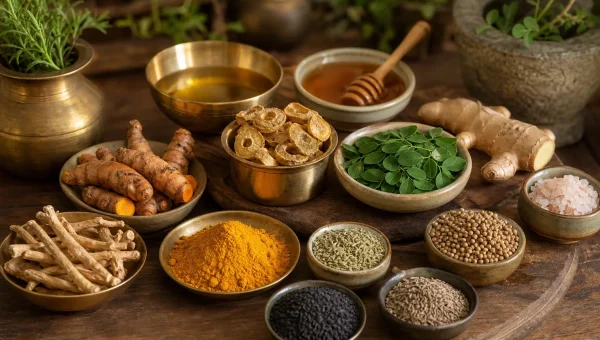
Each preparation below is built around herbs the classical Nighantus describe by their rasa (taste), virya (potency), and vipaka (post-digestive effect) — the real basis of “cooling” in Ayurveda, which is about how a substance behaves in the body rather than its serving temperature. Seven are genuinely Sheeta (cooling) preparations; one, the long pepper and saffron nightcap, is a deliberate warming exception, included and clearly flagged because summer digestion sometimes needs rekindling, not cooling.
1. Fennel-Rose Sherbet (Saunf-Gulab Sharbat)
Saunf (fennel, Foeniculum vulgare) is one of Ayurveda’s premier Pitta-pacifying spices, valued as Sheeta virya (cooling in potency) with a Madhura vipaka (sweet post-digestive effect) that kindles Agni without provoking Pitta. Combined with rose petals (Rosa centifolia or Rosa damascena, classically called Shatapatri or Taruni — the familiar name “Gulab” is a later Persian-derived term, not a classical Sanskrit one), this sherbet targets the intestinal tract, the liver, and the nervous system at once.
Recipe: Soak 2 tablespoons of fennel seeds and 1 tablespoon of dried rose petals in 500 ml of water overnight. Strain. Add 1 tablespoon of raw cane sugar (or coconut sugar), a pinch of cardamom powder, and 5 drops of rose water. Serve at room temperature, not chilled. The Bhavaprakasha Nighantu describes fennel (Madhurika) as deepana and pachana — supporting digestion while soothing the heat of Pachaka Pitta.
2. Vetiver Lemonade (Khus-Nimbu Pani)
Vetiver (Vetiveria zizanioides, Ushira in Sanskrit) is among the most potent cooling herbs in the classical pharmacopoeia — Tikta-Madhura in rasa, Sheeta in virya, and a renowned Pittahara that relieves daha (burning) and trishna (excessive thirst). It clears heat from the Mutravahasrota (urinary channels) and reduces Pitta in the blood. Ushira is one of the six herbs of Shadanga Paniya, the classical boiled-and-cooled water used for fever and unquenchable thirst.
Recipe: Boil 10 grams of dried vetiver roots in 1 liter of water for 15 minutes. Cool and strain. Add juice of one lemon, 1 tablespoon of raw honey (added only when mixture is below 40 degrees Celsius), and a pinch of black salt. Drink 200 ml twice daily during peak summer months.
3. Amla-Mint Cooler (Amalaki-Pudina Panak)
Amla (Phyllanthus emblica, Amalaki) is one of Ayurveda’s three great Rasayana fruits and is classified as Sheeta virya. It carries all five tastes except salty, and its predominant Amla (sour) rasa is the rare exception that pacifies Pitta rather than aggravating it. Combined with fresh Pudina (Mentha spicata), this panak supports the liver while cooling the blood.
Recipe: Blend 2 tablespoons of fresh Amla juice (or 1 teaspoon of Amla powder) with 10 fresh mint leaves, 300 ml of water, 1 teaspoon of jaggery, and a pinch of roasted cumin powder. Strain and serve. Read our full article on Amla’s benefits for more on this powerful fruit.
4. Chandanasava-Inspired Cooling Blend
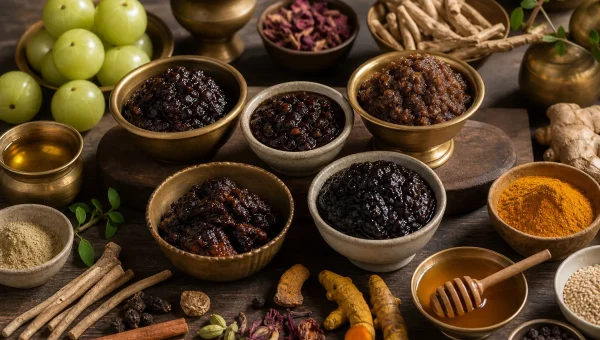
Chandanasava is a classical fermented Ayurvedic preparation of the Asava-Arishta class, built on Chandana (sandalwood), Ushira, cardamom, and other Sheeta-virya herbs, traditionally used for Pitta and Rakta disorders and for daha. A non-alcoholic home version captures many of its benefits without the fermentation complexity.
Recipe: Simmer 5 grams of sandalwood powder (Chandan, Santalum album), 5 grams of vetiver root, and 3 crushed cardamom pods in 750 ml of water for 20 minutes. Cool, strain, add 1 tablespoon of mishri (rock sugar crystals) and 5 ml of rose water. Drink 100 ml before lunch and 100 ml before dinner.
5. Coconut-Gulkand Cooler
Gulkand (preserved rose-petal paste) is a classical Pitta-reducing tonic; rose (Shatapatri) is Sheeta virya and Hridya (good for the heart). Combined with fresh coconut water, it creates a deeply cooling, mineral-rich drink that targets heat in the stomach, liver, and reproductive tissues.
Recipe: Mix 1 teaspoon of Gulkand in 200 ml of fresh coconut water. Add a pinch of cardamom and 3 soaked and blended basil seeds (sabja/Ocimum basilicum). Serve at room temperature. Classical texts describe Narikela (coconut) water as Sheeta and Madhura, valued for relieving trishna (thirst) in the heat.
6. Coriander Seed Water (Dhania Jal)
Coriander (Coriandrum sativum, Dhanyaka) is described in classical texts as soothing to Pitta and specifically beneficial for burning sensations in the gut and urinary tract. The Charaka Samhita includes Dhanyaka among the trishna-nigrahana herbs (those that relieve thirst), and simple coriander water may be the most underrated summer drink in Ayurveda.
Recipe: Soak 1 tablespoon of coriander seeds in 500 ml of water overnight. Strain in the morning without heating. Add a pinch of rock salt and drink 200 ml on an empty stomach. Drink the rest through the day.
7. Long Pepper-Saffron Nightcap (Pippali-Kesar Panak)
This one surprises people: a warming drink in a list of coolers. Long pepper (Pippali, Piper longum) with saffron (Kesar or Kumkuma, Crocus sativus) and mishri is not a cooling preparation, and classical pharmacology is clear about why. Saffron is Ushna virya (hot in potency) with Katu vipaka — properties the Bhavaprakasha Nighantu and Raja Nighantu place on the Pitta-aggravating side, not the pacifying one. Pippali is likewise Katu and warming, though in small doses it acts as a gentle Rasayana and deepana rather than a harsh stimulant. The purpose here is different: taken warm and in tiny amounts at night, it rekindles the Mandagni (sluggish digestion) that summer heat and constant cold drinks often produce, helping clear the ama that genuinely feeds Pitta disorders over time. Use it sparingly, and skip it if you already run hot or show signs of aggravated Pitta.
Recipe: Simmer 2 strands of saffron in 200 ml of warm milk or water for 5 minutes. Add a pinch of long pepper powder and 1 teaspoon of mishri. Drink warm (not hot) before sleep. Because both saffron and long pepper are heating, the dose is deliberately minute and the drink is served warm, never hot.
8. Bael Fruit Sherbet (Bilva Sharbat)
Bael (Aegle marmelos, Bilva) is a sacred Ayurvedic fruit used specifically for gastrointestinal Pitta: diarrhea, burning acid, and intestinal inflammation from summer heat. The unripe fruit is Kashaya-Tikta in rasa and grahi (absorbent), classically the first choice for atisara (diarrhea) and grahani; Bilva is also one of the ten roots of the Dashamula, and its mucilaginous pulp coats and soothes the intestinal lining.
Recipe: Soak 2 tablespoons of dried bael pulp in 500 ml of water for 2 hours. Mash and strain. Add mishri, a pinch of roasted cumin powder, and black salt. Drink 200 ml at midday, the peak Pitta time. The Bhavaprakasha Nighantu describes Bilva’s deepana, pachana, and grahi action on the gut.
Seasonal Timing and Dosing Reference
The table below summarizes when to take each drink, a typical serving size, the main area of Pitta it addresses, and the key cautions. Treat the amounts as general guidance for healthy adults during summer, not therapeutic prescriptions.
| Drink | Best Time | Amount per Serving | Pitta Focus Area | Cautions |
|---|---|---|---|---|
| Fennel-Rose Sherbet | Mid-morning | 200 ml | Gut, nervous system | Limit in first trimester |
| Vetiver Lemonade | Afternoon | 200 ml | Urinary, blood | Avoid with kidney stones untreated |
| Amla-Mint Cooler | Morning, empty stomach | 250 ml | Liver, skin | Avoid on empty stomach with hyperacidity |
| Chandanasava Blend | Before lunch and dinner | 100 ml each | Liver, heart | Avoid in excess during menstruation |
| Coconut-Gulkand Cooler | Midday | 250 ml | Stomach, reproductive | High sugar: limit in diabetics |
| Coriander Seed Water | Morning, empty stomach | 200 ml | Gut, urinary tract | Generally very safe |
| Pippali-Saffron Nightcap | Before sleep | 200 ml | Digestion (warming, not cooling) | Avoid in pregnancy and in aggravated Pitta; saffron is Ushna |
| Bael Sherbet | Midday | 200 ml | Intestine | Avoid in constipation-dominant IBS |
The Pitta Clock: When to Drink What
Ayurveda recognizes that Pitta peaks between 10 am and 2 pm in the daily cycle. This is when solar energy is at maximum and digestive Agni (Pachaka Pitta) is most active. Cooling drinks consumed 30 minutes before the midday meal protect the gut from excess heat without dampening digestion. Avoid cold or refrigerated drinks during meals, as these quench Agni and impair digestion, worsening the ama accumulation that feeds Pitta disorders long-term.
Classical Ayurveda maps the whole day onto the doshas: Kapha governs the early morning and early night, Pitta the midday and midnight hours, and Vata the transitional periods before dawn and before dusk. This dinacharya (daily-routine) framework, set out in the Ashtanga Hridayam and Charaka Samhita, is exactly why cooling drinks are timed to the late-morning Pitta rise rather than taken indiscriminately through the day.
Herbs to Add to Any Summer Drink
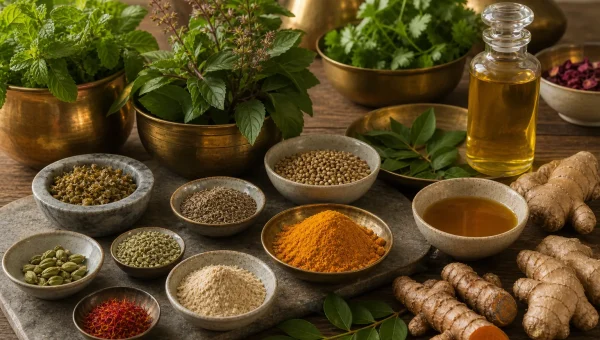
Five herbs can be added to almost any of these recipes to increase their Pitta-reducing potency: Yashtimadhu (licorice root, Glycyrrhiza glabra) adds sweetness and soothes mucosal membranes; Gokshura (Tribulus terrestris) supports urinary cooling; Shatavari (Asparagus racemosus) specifically cools the female reproductive system; Brahmi (Bacopa monnieri) calms heat in the nervous system; and Guduchi (Tinospora cordifolia) is a classical Pitta-balancing Rasayana. Each can be added as 1 to 2 grams of powder per liter of the base beverage without significantly altering taste.
Safety and Disclaimer
These recipes are traditional preparations for general health support during summer months. They are not substitutes for medical treatment of heat stroke, severe dehydration, or heat-related illness. If you experience dizziness, confusion, or stop sweating in extreme heat, seek emergency care immediately. Individuals with diabetes should monitor sugar content in these preparations. Consult a qualified Ayurvedic practitioner before using these drinks therapeutically for specific health conditions. Do not use honey in warm or hot preparations above 40 degrees Celsius, as classical Ayurveda considers heated honey to produce harmful metabolites.
One Actionable Step
Tomorrow morning, soak one tablespoon of coriander seeds and one tablespoon of fennel seeds in 500 ml of room-temperature water before you go to sleep. Strain and drink the entire amount before 9 am. Do this for seven consecutive days and note any change in skin temperature, gut comfort, and morning mood. This simplest of cooling protocols requires no special ingredients and takes less than two minutes of preparation.
The green fennel-rose drink from Jaipur sounds like exactly what my grandmother made every summer in Rajasthan. A slightly sweet, faintly herbal cold drink that she stored in a clay matka. I never knew the specific ingredients but the description matches.
The explanation of cooling as a Pitta biology concept rather than just temperature is the most useful insight here. That’s why ice water gives me heartburn in summer but a warm fennel tea doesn’t.
Started the pitta protocol my Ayurvedic doctor recommended last summer and my energy has been noticeably more consistent. This explains the mechanism.
I’ve been adding coriander seed water to my morning routine after reading earlier content about Pitta, and this expands on that well. The aam panna recipe with roasted cumin is the one I’m going to try next.
Is raw mango for aam panna seasonal only or can it be made with frozen raw mango? I’m in the UK and raw mango availability is unreliable even in summer.
I liked the practical side of Cooling Ayurvedic Drinks for Summer Beyond Lassi. The main idea is clear even if someone is new to Ayurveda.
The Pitta aggravation sequence (excess oil, then heat, then irritability) is exactly what I go through every June without fail. I always attributed it to stress. The seasonal physiology explanation is more accurate and actually more useful because it gives me something to do about it.
I tried the fennel rose sherbet after reading the article and felt a subtle calm in my stomach during a hot afternoon.
The coconut water and rose petal drink is genuinely cooling. tried it during a heat wave last week after a particularly bad afternoon with what i recognized from this article as Pitta aggravation. the irritability actually eased within 20 minutes.
The point about fruit smoothies and salads being problematic for Pitta is counterintuitive but makes sense in Ayurvedic logic. Sour fruits and raw food aggravate rather than cool. I’ve seen this in myself without having the vocabulary.
Does the vetiver lemonade need to be strained hot or can I strain it once it’s cool?
I’m Kapha type and already struggle with weight in summer. Are any of these drinks appropriate or should I be avoiding the sweeter preparations entirely? The Pitta focus makes sense but I’d like to know if these are safe for Kapha.
The safest part of the Cooling Ayurvedic Drinks for Summer Beyond Lassi advice is keeping it simple. A few more examples would still help.
I’m surprised a warming drink is included for summer but the explanation about sluggish digestion makes sense.
The article makes it sound straightforward but finding a qualified Ayurvedic practitioner who can actually assess dosha properly is not easy outside major cities.
The part about adjusting based on prakriti was exactly what I needed.
where can you source the herbs in india outside of major cities? im in a tier-2 town
This works in theory but practically very hard to source authentic herbs.
the sourcing section was a surprise, didnt know the extract grade mattered this much
the article recommends drinking at room temperature is chilled okay or does it impair absorption?
Are there any of these suitable for gestational diabetes where sugar is restricted?
Having the amla mint cooler first thing on an empty stomach helped me avoid that midday heat headache.
Where are the actual clinical trials? I need RCT data before trying anything.
starting this next week, will report back in about a month
My functional medicine doctor mentioned something similar, helpful to have the Ayurvedic framing too.
the pitta protocol here caused a lot of heat and skin irritation for me
quick question: does the dosage change if someone is also on other medication?
the part about adjusting based on prakriti was exactly what i needed ठीक है
How long before seeing results? the article mentions 4 to 6 weeks but is that for everyone.
Tried the morning routine for 2 months, gave up the timing is impossible with kids and a job. ❤️
some of these are more cooling by virtue of ingredients than pitta-specific, teh dosha framing feels forced on a few
this works in theory but practically very hard to source authentic herbs
Some of these are more cooling by virtue of ingredients than Pitta-specific, the dosha framing feels forced on a few.
appreciate that this goes into contraindications, most blog posts skip that part 🙌
The Pitta-specific drinks section was directly applicable to my summer skin flares, the coconut-coriander water is now daily.
I would like more detail on Cooling Ayurvedic Drinks for Summer Beyond Lassi. This feels more usable than a long list of herbs.
the dosage here seems higher than what my ayurvedic doctor recommended
Can these drinks be made the night before and refrigerated or do they lose potency?
just found this post, the section 3 protocol seems intensive for a beginner, any lighter version?
the gulkand-rose drink was too sweet for my palate even at the reduced sugar version u suggested
packaging this as science when most of it is tradition makes me skeptical ✨
some of these claims are very strong for what is essentially anecdote-level evidence ✨
I mixed coconut water with gulkand and a pinch of cardamom and it tasted refreshing without being icy.
Just started exploring Ayurveda after years of allopathy, still a lot to absorb.
All 8 recipes are practical and I had the ingredients at home already, that’s unusual for Ayurvedic recipes.
Useful post on Cooling Ayurvedic Drinks for Summer Beyond Lassi. The article avoids making it sound like a quick fix.
Where can you source the herbs in India outside of major cities? I’m in a tier-2 town.
late to this but wanted to ask, do these recommendations still hold in 2027?
my vaidya recommended something similar last month, good to see the reasoning explained
tried teh morning routine for 2 months, gave up the timing is impossible wth kids and a job
been following this for 3 weeks and my energy levels are much better, the protocol described here really clicked for me ❤️
my constitution is vata-pitta, the article seems focused on one or the other
The safest part of the Cooling Ayurvedic Drinks for Summer Beyond Lassi advice is keeping it simple. Small daily changes are easier to follow than a perfect plan.
bookmarked this to shr with my mother who has been struggling with the same issue
Thanks!
The Gulkand-rose drink was too sweet for my palate even at the reduced sugar version you suggested.
tried the morning routine from this article and noticed a difference by day 5
tried this for 6 weeks and saw no difference, maybe i’m applying it wrong
The specific morning timing recommendation is practical, most articles skip that detail.
Reading this after finding it on Google, is this dosage still recommended?
The fennel and rose drink you describe — is that the coriander-fennel-rose combination, or something different? I’ve been making a basic coriander seed cooler but this summer in Delhi has been brutal and I feel like I need to upgrade my recipe. The point about coffee making heat worse is something I keep ignoring and probably need to actually act on.
Is this suitable for Pitta dominant people or mainly Vata?
Same here
The Khus-Vetiver sharbat was something my grandfather made but I’d forgotten the recipe, grateful to have it back.
Adding a pinch of brahmi powder to any of these drinks gave me a noticeable calm in my evenings.
how long before seeing results? the article mentions 4 to 6 weeks but is that for everyone 🙏
the sourcing section was a surprise, didnt know the extract grade mattered this much ✨
bookmarked this to share with my mother who has been struggling with the same issue
the specific morning timing recommendation is practical, most articles skip that detail 🙏
Some of these are more cooling by virtue of ingredients than Pitta-specific, the dosha framing feels forced on a few. 🙏
The Pitta protocol here caused a lot of heat and skin irritation for me.
Followed the dosage table for 10 days and my sleep improved, will continue 🙏.
Made the hibiscus-coriander cooler and brought it to a barbecue. three people asked what it was. Not a single person guessed it was a health drink. That’s the standard these recipes should meet and this one does.
just started exploring ayurveda after years of allopathy, still a lot to absorb
tried the morning routine for 2 months, gave up the timing is impossible with kids and a job
The dosage here seems higher than what my Ayurvedic doctor recommended.
teh gulkand-rose drink was too sweet for my palate even at the reduced sugar version u suggested
some of these claims are very strong for what is essentially anecdote-level evidence
would this protocol work if i travel frequently and cant maintain a fixed routine
My vaidya recommended something similar last month, good to see the reasoning explained.
tried this for 6 weeks and saw no difference, maybe im applying it wrong
appreciate that this goes into contraindications, most blog posts skip that part
I’m in the UK and finding quality pitta is harder here than in India. What should I look for on the label to verify quality?
Will try this
packaging this as science when most of it is tradition makes me skeptical
Starting this next week, will report back in about a month.
my functional medicine doctor mentioned something similar, helpful to have the ayurvedic framing too
Been following this for 3 weeks and my energy levels are much better, the protocol described here really clicked for me.
Packaging this as science when most of it is tradition makes me skeptical.
all 8 recipes are practical and i had the ingredients at home already, that’s unusual for ayurvedic recipes
the article recommends drinking at room temperature is chilled okay or does it impair absorption? नमस्ते
the pitta-specific drinks section was directly applicable to my summer skin flares, the coconut-coriander water is now daily
how long before seeing results? the article mentions 4 to 6 weeks but is that for everyone
reading this after finding it on google, is this dosage still recommended? 🙌
Tried this for 6 weeks and saw no difference, maybe I’m applying it wrong.
the specific morning timing recommendation is practical, most articles skip that detail
followed the dosage table for 10 days and my sleep improved, will continue 🙏
Would this protocol work if I travel frequently and can’t maintain a fixed routine. ❤️ नमस्ते
Can these drinks be made the night before and refrigerated or do they lose potency? ✨
Makes sense
the part about adjusting based on prakriti was exactly what i needed
The Cooling Ayurvedic Drinks for Summer Beyond Lassi explanation is clearer than most short posts. I would like to know how long to try it before judging results.
Helpful
Will try
the gulkand-rose drink was too sweet for my palate even at the reduced sugar version you suggested
Some of these claims are very strong for what is essentially anecdote-level evidence.
where are the actual clinical trials? i need rct data before trying anything धन्यवाद
r there any of these suitable for gestational diabetes where sugar is restricted?
Tried the morning routine for 2 months, gave up the timing is impossible with kids and a job.
I liked the practical side of Cooling Ayurvedic Drinks for Summer Beyond Lassi. I appreciate that it does not oversell the result.