
The morning I turned fifty-two, I stepped into a kitchen that smelled of dampness and firewood, the same kitchen in which my grandmother had cooked through many winters. She stood at the stove stirring lentils and root vegetables scented with cumin, coriander, fenugreek, and dried ginger. “Soup for Vata,” she said. Her bowl was warm, soft, moist, and satisfying, but it is more accurate to call such soup seasonally suitable food than medicine. A recipe cannot diagnose or treat constipation, anxiety, arthritis, depression, infection, or any other disorder.
Ayurveda does not state that Vata simply rises throughout late autumn and winter. In the seasonal sequence of the Charaka Samhita, Vata accumulates in summer, becomes aggravated in the rainy season, and is pacified in autumn. The winter discussion makes a different point: in a strong and healthy person, digestive power may become intense in early winter, and inadequate nourishment can disturb cold-natured Vata. Late winter is described as still colder and drier, so the early-winter regimen is continued more strongly.
Vata is classically described as dry (ruksha), light (laghu), cold (shita), rough (khara), subtle (sukshma), and mobile (chala). A freshly cooked soup can oppose several of these qualities when it is warm, moist, smooth, and moderately unctuous. This is a culinary application of Ayurvedic qualities, not proof that every cold-weather symptom is caused by Vata or that every person needs the same meal.
The Classical Winter Rationale
The Charaka Samhita advises unctuous, sour, and salty foods during early winter and mentions fats and oils, milk products, new rice, sugarcane products, and warm water. Ashtanga Hridaya likewise includes sweet, sour, and salty tastes along with wheat, black gram, milk products, fats, oils, and newly harvested grain. These passages support adequate, nourishing winter food, especially for someone with good appetite and activity. They do not establish a universal prescription to eat soup, overeat heavy food, or follow one menu regardless of constitution and digestion.
Quantity remains central. Charaka distinguishes naturally light foods such as green gram from heavier foods such as black gram and sesame and explains that proper quantity depends on digestive capacity. A person who feels hunger and digests a meal comfortably may tolerate a richer soup; someone with weak appetite, reflux, nausea, or post-meal heaviness may need a smaller portion, less fat, or a lighter preparation.
What the Warming Spices Actually Contribute
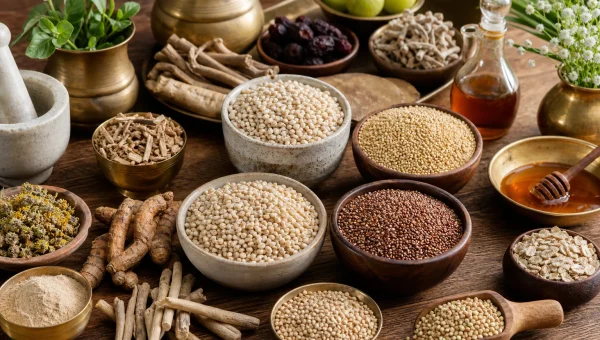
The Ayurvedic Pharmacopoeia of India records dried ginger (Shunthi) as pungent in taste, light and unctuous in quality, hot in potency, and sweet after digestion, with actions including dipana, pachana, and Vata-Kapha pacification. Black pepper (Maricha) is pungent and bitter, light, dry, and sharp, hot in potency, and pungent after digestion; it is also recorded as Pitta-increasing. Long pepper (Pippali) is not simply “hot and dry”: the Pharmacopoeia gives it pungent taste, light and unctuous qualities, anushna virya, and a sweet post-digestive effect.
The Pharmacopoeia identifies gingerol and shogaol in dried ginger and piperine in black pepper, but the presence of constituents does not prove that a household soup raises brown-fat UCP-1, prevents winter infection, alters cytokines in a clinically meaningful way, or treats disease. No verified passage was found in Charaka prescribing Trikatu before every main winter meal. Spices here are used in modest culinary amounts for taste and traditional digestive suitability, not as a substitute for medical care.
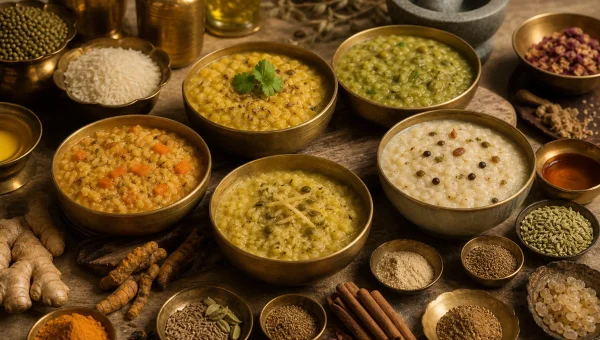
Recipe 1: Soft Masoor Dal and Ginger Soup
Red lentil, or Masura, should not be presented as inherently Vata-pacifying. The Pharmacopoeia describes it as sweet and astringent, light and dry, cold in potency, sweet after digestion, and Vata-provoking. This recipe therefore uses thorough cooking, sufficient water, ghee, ginger, cumin, and a very small amount of asafoetida to make the final dish softer, warmer, and less dry.
Ingredients: 75 g red lentils, 650 ml water, 1 tablespoon ghee or suitable cooking oil, 1 teaspoon cumin seeds, quarter to half teaspoon dried ginger, quarter teaspoon turmeric, a small pinch of asafoetida, salt to taste, and chopped coriander if desired.
Method: Rinse the lentils and cook them until they are completely soft. Add hot water if the mixture begins to set like a paste. In a small pan, warm the ghee, add cumin and asafoetida, and cook briefly. Lower the heat, add ginger and turmeric, and immediately stir the tempering into the lentils. Simmer for three to five minutes and serve pleasantly warm.
Ayurvedic reading: The balancing feature is the preparation, not a claim that Masura itself grounds Vata. Moisture and fat oppose dryness, while warmth opposes coldness. If lentils repeatedly cause bloating, pain, or altered bowel habits, reduce the portion or choose another food rather than increasing the spices.
Recipe 2: Sweet Potato and Fresh Ginger Soup
This food-based recipe replaces the proposed ashwagandha soup. The cited PMID did not concern ashwagandha, and no reliable source was found for the claim that stirring its powder into soup after cooking preserves withanolides or guarantees bioavailability. Ashwagandha is a medicinal substance with precautions and possible interactions, so it should not be inserted into a general family recipe without individualized advice.
Ingredients: 2 medium sweet potatoes, 1 small onion, 2 cm fresh ginger, 1 tablespoon ghee or cooking oil, half teaspoon cumin, 550 ml water or unsalted vegetable stock, a small pinch of black pepper, and salt to taste.
Method: Peel and cube the sweet potatoes. Warm the ghee, gently cook the onion and ginger until soft, and add cumin. Add the sweet potatoes and liquid, cover, and simmer until completely tender. Blend until smooth, return to low heat, and adjust the consistency with hot water. Add only a small pinch of pepper.
Ayurvedic reading: No unsupported classical rasa-guna profile is assigned to sweet potato here. The usefulness of the recipe lies in its final qualities: warm, soft, moist, smooth, and moderately unctuous. People with reflux or a strong heat sensation may prefer less ginger and pepper.
Recipe 3: Masha and Cumin Winter Soup
Black gram, or Masha, has a firmer classical connection to winter food than the proposed Dashamoola bone broth. Ashtanga Hridaya includes foods prepared from black gram in the early-winter regimen, while Charaka categorizes Masha among heavier foods. It can therefore suit a substantial meal for someone with strong digestion, but it is not universally easy to digest.
Ingredients: 75 g split and skinned black gram, soaked 4 to 6 hours, 750 ml water, 1 tablespoon ghee, 1 teaspoon cumin seeds, 1 cm fresh ginger, a pinch of asafoetida, quarter teaspoon turmeric, and salt to taste.
Method: Drain and rinse the soaked dal. Cook it with fresh water until thoroughly soft; a pressure cooker may shorten the cooking time. Warm the ghee, add cumin and asafoetida, then ginger and turmeric. Stir this into the dal, simmer for five minutes, and thin with hot water until it is soup rather than a dense paste.
Ayurvedic reading: This recipe reflects the classical winter inclusion of Masha while respecting its heaviness. Begin with a modest serving and eat it at a time when appetite is clear. Persistent heaviness, belching, reflux, or lethargy after the meal suggests that the portion or recipe is not suitable for that person.
Recipe 4: Mung Soup with Ginger and Cumin
Green gram, or Mudga, is praised among pulses and is categorized as naturally light, but it is inaccurate to call it non-gas-forming or inherently Vata-pacifying. The Pharmacopoeia records sweet and astringent tastes, light and dry qualities, cold potency, sweet post-digestive effect, and Kapha- and Pitta-alleviating actions. Cooking it very soft with water and suitable fat modifies the eating experience without changing its documented classical profile.
Ingredients: 100 g split yellow mung or soaked whole green mung, 750 ml water, 1 to 2 tablespoons ghee or cooking oil, 1 teaspoon cumin seeds, 1 cm grated fresh ginger, quarter teaspoon turmeric, a small pinch of asafoetida, a pinch of black pepper, and salt.
Method: Cook the mung until very soft and beginning to break down. Add hot water as needed. Prepare a tempering with ghee, cumin, asafoetida, ginger, and turmeric. Stir it into the mung, simmer for five minutes, and finish with a small pinch of black pepper. Keep the soup moist and spoonable.
Ayurvedic reading: Mung may be preferable to Masha when a lighter pulse is wanted, but “light” does not mean suitable in unlimited quantity or guaranteed to digest without discomfort. The original claims that this soup supplies a complete amino-acid profile, clears lymph, or improves respiratory immunity were not supported by the cited PMID and have been removed.
Recipe 5: Carrot and Sesame Soup
The verified Ayurvedic foundation of this recipe is sesame, not an unsupported claim about saffron. The Pharmacopoeia records sesame as sweet, pungent, bitter, and astringent; diffusive, heavy, unctuous, and subtle; hot in potency; sweet after digestion; and Vata-alleviating. It also records Pitta- and Kapha-increasing actions, so sesame should not be described as universally balancing.
Ingredients: 4 large carrots, 1 tablespoon ghee or cooking oil, 1 tablespoon tahini or finely ground sesame seeds, 1 cm fresh ginger, half teaspoon cumin, 550 ml water or unsalted vegetable stock, salt to taste, and 4 to 5 saffron strands for aroma and colour if desired.
Method: Warm the ghee and gently cook the ginger and cumin. Add sliced carrots and the liquid, cover, and simmer until completely tender. Blend until smooth, then stir in the tahini. Add hot water if needed. Optional saffron may be steeped in a spoonful of warm water and stirred in before serving.
Ayurvedic reading: Sesame adds documented heavy, unctuous, and hot qualities to a warm, smooth soup. The optional saffron is included only as a culinary flavouring; the cited PMID did not concern saffron, and this recipe makes no claim to treat low mood, poor circulation, neurological disease, or winter depression. Anyone with sesame allergy must avoid the recipe.
Verified Ingredient Guide
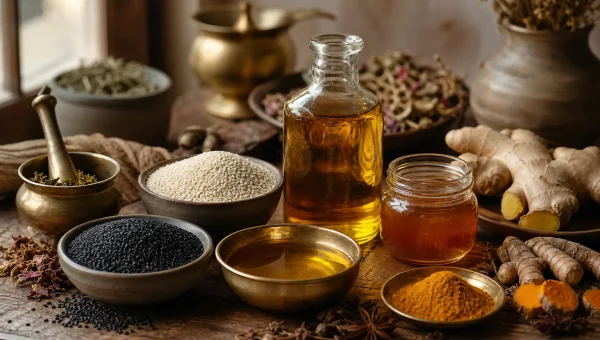
The following profiles conservatively reproduce the cited Pharmacopoeia entries. The quantities are ordinary culinary starting points for approximately two servings, not therapeutic doses. Individual tolerance, recipe volume, age, medicines, and health conditions still matter.
| Ingredient | Verified Ayurvedic profile | Practical use in soup |
|---|---|---|
| Dried ginger (Shunthi) | Katu rasa; laghu and snigdha guna; ushna virya; madhura vipaka; Vata-Kapha pacifying | Quarter to half teaspoon |
| Black pepper (Maricha) | Katu-tikta rasa; laghu, ruksha, tikshna guna; ushna virya; katu vipaka; Pittakara | A small pinch |
| Long pepper (Pippali) | Katu rasa; laghu-snigdha guna; anushna virya; madhura vipaka | Not required for these recipes; medicinal use needs guidance |
| Red lentil (Masura) | Madhura-kashaya rasa; laghu-ruksha guna; shita virya; madhura vipaka; Vata-provoking | Cook very soft with water and suitable fat |
| Green gram (Mudga) | Madhura-kashaya rasa; laghu-ruksha guna; shita virya; madhura vipaka; Kapha-Pitta alleviating | Use when a lighter pulse is preferred |
| Sesame (Tila) | Madhura-katu-tikta-kashaya rasa; guru-snigdha guna; ushna virya; madhura vipaka; Vata alleviating | About one tablespoon ground sesame or tahini |
Timing, Frequency, and Storage
No verified classical passage was found requiring these soups at lunch, before 7 p.m., or four to five days each week. Choose timing according to genuine appetite and digestive comfort. A heavier Masha soup may fit the main meal of a person with strong digestion, while a lighter mung or vegetable soup may suit another time. There is no benefit in eating a prescribed frequency when a recipe repeatedly causes discomfort.
Use ordinary food-safety rules. Refrigerate leftovers at 4°C or below within two hours of cooking, or within one hour when the surrounding temperature is above 32°C. Divide a large pot into smaller shallow containers so it cools promptly. Use refrigerated leftovers within three to four days or freeze them, and reheat leftovers to at least 74°C before allowing them to cool to a comfortable eating temperature.
Safety Disclaimer and Professional Guidance
Safety Disclaimer: These recipes are general food ideas, not treatments for arthritis, osteoporosis, infection, anxiety, depression, neurological disease, or digestive disorders. Ginger may cause abdominal discomfort, heartburn, diarrhea, or mouth and throat irritation, and herbs may interact with medicines. Fenugreek in food is different from concentrated medicinal use; NCCIH advises that amounts greater than those found in food are unsafe during pregnancy. People who are pregnant or breastfeeding, preparing food for a child, taking medicines, managing kidney, gallbladder, metabolic, gastrointestinal, or other medical conditions, or following a restricted diet should consult a qualified Ayurvedic practitioner and an appropriate healthcare provider before using medicinal herbs or making major dietary changes.
Actionable tip: Prepare a double batch of the mung soup only when it suits your digestion and schedule. Keep it moist rather than reducing it to a paste, cool and refrigerate it promptly in shallow containers, and use it within three to four days. When reheating, add a little water to restore the soft consistency and heat it thoroughly before serving.
References
- Ayurveda-online (ayurveda-online.net)
- Charaka Samhita — Tasyashiteeya Adhyaya
- Easyayurveda (easyayurveda.com)
- Charaka Samhita — Matrashiteeya Adhyaya
- Ayurvedic Pharmacopoeia of India
- Ayurvedic Pharmacopoeia of India
- Ayurvedic Pharmacopoeia of India
- NCCIH
- NCCIH
- Foodsafety (foodsafety.gov)
- Foodsafety (foodsafety.gov)
My nani made the same soup every winter. Ginger, fenugreek, and dal. We had no idea it was Vata-pacifying, we just knew it made the cold bearable. This article is basically an explanation of everything she instinctively knew.
Recipe 3 with the ajwain and sweet potato tried this last week. My perpetual winter bloating that I’ve had for 3 years was noticeably better after 4 days. I know that’s not a clinical trial but it’s real.
The fenugreek quantity in recipe 2 seems very high for daily use. Fenugreek in large amounts has significant effects on blood sugar and thyroid function. People on diabetes medication or with thyroid conditions should be cautious with the doses suggested.
Do these soups work for Pitta and Kapha types too or are they purely for Vata pacification? Winter affects all constitutions but the warming heavy quality of these soups might be too much for an already-warm Pitta person.
I cook the moong dal soup every Sunday in winter now and portion it for the week. Takes 40 minutes on Sunday and gives me 4 lunches. The CCF tadka described in recipe 1 makes it therapeutic rather than just filling.
Any thoughts on using an Instant Pot or slow cooker for these recipes? The longer cook time for traditional soups is the barrier for a lot of people and I wonder whether the benefits are preserved with different cooking methods.
The soup with black pepper and long pepper has been my family recipe for generations. But the recipe here adds turmeric and I was told not to combine those two. Is that a specific contraindication or just one school of thought?
These are simple enough that I could actually make them. Most Ayurvedic recipes I find either require 15 ingredients I can’t source or take 2 hours. This seems designed for people who actually cook in real life.
Is soup appropriate for Kapha-heavy types in winter? The oiliness and heaviness might be counterproductive. Or does the spicing profile offset the Kapha qualities of the soup base?
I tried the masoor dal and ginger soup last night and the warmth from the ghee and ginger really settled my stomach after a chilly day.
How do you distinguish between a genuine healing response and placebo when monitoring progress with vata? What objective markers should I track?
The 5 Vata-Pacifying Winter Soups Using Warming Ayurvedic section feels grounded enough to try carefully. I would still ask a practitioner before changing medicines.
Does a quarter teaspoon of dried ginger feel too strong for someone who is new to using spices in soups?
The sesame soup tasted rich, but I found a smaller portion helped me avoid feeling heavy afterward.
Made all 5 over the course of the winter. Recipe 5 with the bone-warming spices is the one I kept coming back to. My wife who has very strong Vata (thin, anxious, always cold) said it was the first time in 3 winters she felt warm from the inside.
just found this post, the section 3 protocol seems intensive for a beginner, any lighter version?
reading this after finding it on google, is this dosage still recommended?
the part about adjusting based on prakriti was exactly what i needed
@Nandini Will try this
Packaging this as science when most of it is tradition makes me skeptical. धन्यवाद
would this protocol work if i travel frequently and cant maintain a fixed routine
Quick question: does the dosage change if someone is also on other medication?
any modification for children, especially the spice levels mentioned in the trikatu soup?
@Steve The portions seem quite small for a main meal, I’d need to eat two bowls to feel satisfied. 💯
off topic but has anyone here tried this approach for hair loss?
Can these soups be made in advance and refrigerated or does the Agni benefit require fresh preparation?
The part about adjusting based on prakriti was exactly what I needed.
my constitution is vata-pitta, the article seems focused on one or the other 🙌
The dosage here seems higher than what my Ayurvedic doctor recommended.
how long before seeing results? the article mentions 4 to 6 weeks but is that for everyone
late to this but wanted to ask, do these recommendations still hold in 2027?
my constitution is vata-pitta, the article seems focused on one or the other
I blended the sweet potato soup until smooth and liked how the velvety texture felt soothing.
made the moringa-lentil soup from this and my evening bloating that i’d had for months cleared in a week
@Pallavi tried the morning routine for 2 months, gave up the timing is impossible with kids and a job
Where can you source the herbs in India outside of major cities? I’m in a tier-2 town.
just started exploring ayurveda after years of allopathy, still a lot to absorb 🌿 नमस्ते
Appreciate that this goes into contraindications, most blog posts skip that part. 🙌
just started exploring ayurveda after years of allopathy, still a lot to absorb
The 5 Vata-Pacifying Winter Soups Using Warming Ayurvedic explanation is clearer than most short posts. The main idea is clear even if someone is new to Ayurveda.
I made the third recipe and the cardamom-heavy broth was too sweet for my palate.
been following this for 3 weeks and my energy levels are much better, the protocol described here really clicked for me धन्यवाद
the portions seem quite small for a main meal, i’d need to eat two bowls to feel satisfied
is this suitable for pitta dominant people or mainly vata?
bookmarked this to share with my mother who has been struggling with the same issue ❤️
the hing-jeera tempering technique you described is something my grandmother used to do, good to see it validated
Good info
Starting this next week, will report back in about a month.
I liked the practical side of 5 Vata-Pacifying Winter Soups Using Warming Ayurvedic. Would be useful to see a short checklist next.
The specific morning timing recommendation is practical, most articles skip that detail.
It’s important to remember these soups are nourishing food, not a cure for any winter ailment.
some of these claims are very strong for what is essentially anecdote-level evidence
starting this next week, will report back in about a month
my vaidya recommended something similar last month, good to see teh reasoning explained
teh portions seem quite small for a main meal, i’d need to eat two bowls to feel satisfied
Bookmarked this to share with my mother who has been struggling with the same issue. ✨
my functional medicine doctor mentioned something similar, helpful to have the ayurvedic framing too
Just started exploring Ayurveda after years of allopathy, still a lot to absorb.
I made the ginger-fenugreek version last week and my whole family asked what it was. The warming effect is immediate in a way that feels different from just eating something hot. I’ve been Vata-dominant my whole life and winter always wrecks my digestion and sleep. Three days into eating this regularly and the 3 AM wakeups have already reduced. Will keep going and report back.
The fenugreek and ginger combination your grandmother made is so close to what my own family calls “winter soup” in our Gujarati household. We just never had the Vata framework to explain why it worked. I’ve been making a version of it this season and the joint stiffness I get every December has been noticeably less. Does the recipe work best with fresh ginger or does dried ginger have a different therapeutic quality for Vata specifically?
The hing-jeera tempering technique you described is something my grandmother used to do, good to see it validated.
I liked the practical side of 5 Vata-Pacifying Winter Soups Using Warming Ayurvedic. This feels more usable than a long list of herbs.
packaging this as science when most of it is tradition makes me skeptical
I liked the practical side of 5 Vata-Pacifying Winter Soups Using Warming Ayurvedic. Good starting point for a cautious reader.
The safest part of the 5 Vata-Pacifying Winter Soups Using Warming Ayurvedic advice is keeping it simple. A few more examples would still help.
I store leftovers in shallow containers as suggested, and they stay fresh for three days without losing flavor.
Tried the morning routine from this article and noticed a difference by day 5.
Tried the morning routine for 2 months, gave up the timing is impossible with kids and a job.
My constitution is Vata-Pitta, the article seems focused on one or the other.
Added all four soups to my winter meal rotation, the Ashwagandha-root broth especially is warming.
Thanks!
where are the actual clinical trials? i need rct data before trying anything
tried this for 6 weeks and saw no difference, maybe im applying it wrong
this works in theory but practically very hard to source authentic herbs
the hing-jeera tempering technique you described is something my grandmother used to do, good to see it validated 🙏
Appreciate that this goes into contraindications, most blog posts skip that part.
Made the moringa-lentil soup from this and my evening bloating that I’d had for months cleared in a week.
been following this for 3 weeks and my energy levels are much better, the protocol described here really clicked for me
Noted
When I had reflux, I cut back on the fresh ginger and pepper in the mung soup and felt more comfortable.
added all four soups to my winter meal rotation, the ashwagandha-root broth especially is warming
is this suitable for pitta dominant people or mainly vata? नमस्ते
@Naveen where can you source the herbs in india outside of major cities? i’m in a tier-2 town
Some of these claims are very strong for what is essentially anecdote-level evidence.
off topic but has anyone here tried this approach for hair loss? 💯
tried the morning routine from this article and noticed a difference by day 5
Would this protocol work if I travel frequently and can’t maintain a fixed routine.
i made the third recipe and the cardamom-heavy broth was too sweet for my palate
appreciate that this goes into contraindications, most blog posts skip that part
This helped me understand 5 Vata-Pacifying Winter Soups Using Warming Ayurvedic without too much jargon. I appreciate that it does not oversell the result.
Tried this for 6 weeks and saw no difference, maybe I’m applying it wrong.
Between mung and black gram, I prefer mung for a lighter meal, but black gram works when I have a strong appetite.
made teh moringa-lentil soup from this and my evening bloating that i’d had for months cleared in a week 💯
A tiny pinch of asafoetida in the tempering gave the lentil soup a deeper aroma without overwhelming it.
I listen to my hunger and eat the soup when I feel ready, rather than sticking to a fixed schedule.
Followed the dosage table for 10 days and my sleep improved, will continue 🙏.
My functional medicine doctor mentioned something similar, helpful to have the Ayurvedic framing too.
Bookmarked this to share with my mother who has been struggling with the same issue.
where can you source the herbs in india outside of major cities? im in a tier-2 town
The 5 Vata-Pacifying Winter Soups Using Warming Ayurvedic section feels grounded enough to try carefully. The practical details matter more than people think.
my vaidya recommended something similar last month, good to see the reasoning explained
quick question: does the dosage change if someone is also on other medication? ❤️
added all four soups to my winter meal rotation, teh ashwagandha-root broth especially is warming ठीक है
Helpful
the dosage here seems higher than what my ayurvedic doctor recommended
Been following this for 3 weeks and my energy levels are much better, the protocol described here really clicked for me.
The 5 Vata-Pacifying Winter Soups Using Warming Ayurvedic section feels grounded enough to try carefully. The safety notes could be expanded a little.
The 5 Vata-Pacifying Winter Soups Using Warming Ayurvedic section feels grounded enough to try carefully. The main idea is clear even if someone is new to Ayurveda.
tried this for 6 weeks and saw no difference, maybe i’m applying it wrong
the portions seem quite small for a main meal, i’d need to eat two bowls to feel satisfied 💯
where are teh actual clinical trials? i need rct data before trying anything 🌿
the specific morning timing recommendation is practical, most articles skip that detail
the pitta protocol here caused a lot of heat and skin irritation for me
bookmarked this to share with my mother who has been struggling with the same issue
Where are the actual clinical trials? I need RCT data before trying anything.
Packaging this as science when most of it is tradition makes me skeptical.
tried the morning routine from this article and noticed a difference by day 5 💯
This works in theory but practically very hard to source authentic herbs.
Will try
The portions seem quite small for a main meal, I’d need to eat two bowls to feel satisfied.
Useful post
where are the actual clinical trials? i need rct data before trying anything धन्यवाद