A sudden gout flare often looks dramatic: one joint, commonly the base of the big toe, becomes hot, swollen, red, and exquisitely painful. In Ayurvedic language, this clinical pattern closely overlaps with Vatarakta, a disorder in which aggravated Vata and vitiated Rakta disturb the joints, especially the small joints of the hands and feet. The goal of Ayurvedic management is not only to calm the painful flare, but also to reduce recurrence through diet, digestion, elimination, and long-term correction of the Vata-Rakta imbalance.
What Is Vatarakta? The Ayurvedic Framework for Gout
Vatarakta, also called Vatashonita, is described in the Charaka Samhita as a condition where disturbed Vata and vitiated blood tissue obstruct and aggravate one another. Because both Vata and Rakta move through subtle channels, the disorder commonly settles in joints, especially the smaller peripheral joints. Classical descriptions include severe pain, burning, swelling, discoloration, stiffness, pricking sensation, tingling, and difficulty walking when the deeper joint structures are involved.
Charaka classifies Vatarakta into two main types: Uttana, the superficial form located in the skin and muscle, and Gambhira, the deeper form located in deeper tissues such as joints, bones, and marrow. Uttana Vatarakta is marked by itching, burning, pain, twitching, constriction, and blackish-red or coppery discoloration of the skin. Gambhira Vatarakta is marked by deeper swelling, stiffness, hardness, severe internal pain, burning, pricking, inflammation, deformity, and difficulty walking.
In contemporary medical language, gout is an inflammatory arthritis caused by excess urate forming crystals in and around joints. The two frameworks are not identical, but they are clinically useful together: the modern framework helps monitor uric acid and joint damage, while the Ayurvedic framework helps guide food, digestive correction, dosha assessment, external therapies, and individualized Panchakarma decisions.
Stage 1: Managing the Acute Flare
During a hot, red, swollen flare, the first priority is to calm pain, heat, swelling, and tenderness while protecting the joint from further irritation. This is not the stage for vigorous massage, strong exercise, heavy sweating, or indiscriminate heating therapies. Ayurveda treats the acute picture according to dominance: burning, redness, and intense heat suggest Rakta-Pitta involvement, while stiffness, coldness, and constriction suggest stronger Vata-Kapha involvement.
Immediate Internal Measures
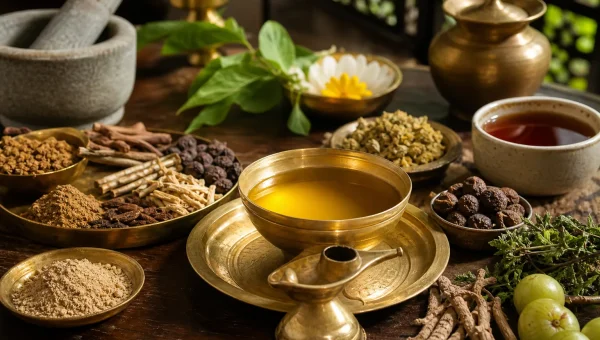
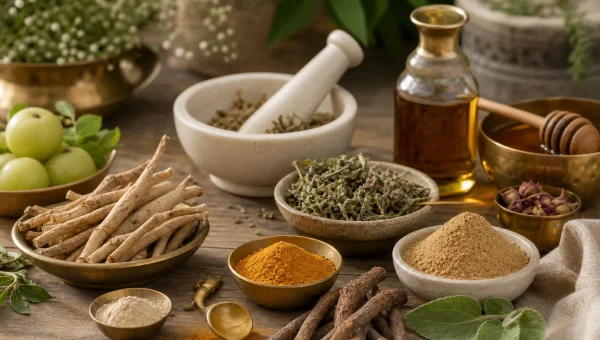
Internal medicines should be selected by a qualified Ayurvedic physician after assessing the patient’s strength, digestion, bowel pattern, kidney status, medications, and dosha dominance. In Vatarakta practice, formulations commonly considered include Guduchi preparations, Kaishora Guggulu, Punarnava-based formulations, Sarivadyasava, and selected decoctions such as Kokilaksha or Guduchi-based preparations. Exact dosing should not be copied from a general article, because gout patients may also be taking colchicine, NSAIDs, steroids, allopurinol, febuxostat, diuretics, blood thinners, diabetes medicines, or kidney-related medicines.
- Guduchi (Tinospora cordifolia) is traditionally used in Vatarakta protocols for its role in Vata-Rakta correction and systemic support.
- Kaishora Guggulu is a classical Guggulu-based compound widely used in Vatarakta, especially where inflammation, metabolic congestion, and chronic recurrence are present.
- Punarnava (Boerhavia diffusa) is used where swelling, fluid retention, and urinary-system support are relevant, but it requires caution in kidney disease or when diuretics are already prescribed.
- Sarivadyasava and Sariva-Manjistha-type combinations are considered when Rakta and Pitta features such as heat, burning, redness, and skin discoloration are prominent.
External Application
External care must match the presentation. In Rakta-Pitta-dominant Vatarakta, Charaka describes cooling and soothing pastes, including combinations containing herbs such as Madhuka/Yashtimadhu, Chandana, Manjistha, Daruharidra, Ushira, and Padmaka. In Vata-dominant stiffness without active heat or redness, warm unctuous applications may be appropriate. The practical rule is simple: avoid hot fomentation and deep massage over a red, burning, acutely swollen gout joint unless an experienced practitioner has specifically advised it.
Emergency Dietary Rules
During an acute flare, avoid alcohol, especially beer; organ meats; large portions of red meat; shellfish; anchovies; sardines; sugary soda; high-fructose drinks; and heavy fried meals. Do not fast aggressively, because fasting and rapid weight loss can provoke gout flares. Hydration is important unless a physician has restricted fluids for kidney, heart, or other medical reasons. Simple water, unsweetened barley water, and light warm herbal infusions are better choices than sweet juices or alcoholic beverages.
Stage 2: Sub-Acute Correction After Heat and Swelling Settle
Once the intense heat, redness, and tenderness reduce, the focus moves toward digestion, bowel regularity, Vata regulation, Rakta-Pitta cooling, and reducing the tendency toward repeated flares. This stage is where the patient’s constitution and triggers become especially important: some patients have strong Pitta-Rakta signs, some have Vata stiffness and dryness, and others have Kapha-Meda congestion with obesity, heaviness, sluggish digestion, and fluid retention.
Herbs and Formulations Used in the Sub-Acute Phase
The following table summarizes commonly used Ayurvedic options without giving a universal prescription. Selection, dose, duration, and combination should be individualized, especially when serum uric acid is high, flares are recurrent, kidney function is reduced, or modern urate-lowering therapy is already in use.
| Herb or Formulation | Botanical / Classical Identity | Use in Vatarakta Planning | Clinical Caution |
|---|---|---|---|
| Guduchi | Tinospora cordifolia | Used in Guduchi Kashaya and Guduchi-based therapies for Vata-Rakta patterns and systemic inflammatory presentations. | Use under guidance if taking multiple medicines or if liver or autoimmune conditions are being treated. |
| Kaishora Guggulu | Classical Guggulu compound | Used for inflammatory Vatarakta patterns, especially when recurrence, metabolic congestion, and joint pain coexist. | Avoid self-use during pregnancy or lactation; use caution with bleeding risk, thyroid disorders, and polypharmacy. |
| Punarnava | Boerhavia diffusa | Considered where swelling, heaviness, and urinary support are part of the plan. | Use caution in kidney disease, dehydration, low blood pressure, or concurrent diuretic medicines. |
| Manjistha and Sariva | Rubia cordifolia and Hemidesmus indicus | Used in Rakta-Pitta presentations with heat, discoloration, burning, and skin involvement. | Should be selected according to digestion, bowel pattern, and formulation quality. |
| Haridra | Curcuma longa | Used as part of anti-inflammatory dietary and herbal planning; Charaka includes Haridra with Amalaki and Musta in Kapha-predominant Vatarakta contexts. | High-dose extracts require caution with anticoagulants, gallbladder disease, surgery, and reflux-prone patients. |
| Shallaki | Boswellia serrata | Used for joint inflammation and pain-support protocols, especially outside the most acute red-hot phase. | Use caution with blood thinners, pregnancy, and gastrointestinal sensitivity. |
For deeper background, see our guides on Manjistha as a blood purifier, Guduchi as an immune modulator, and Basti therapy in Ayurveda.
Panchakarma Considerations
Charaka gives a major role to carefully chosen Shodhana in Vatarakta, especially mild Virechana and Basti. The purgation is specifically mild, because overly strong elimination can aggravate Vata. Basti is emphasized for deeper Vata correction, and Guduchi Siddha Ksheeravasti has also been used in clinical Vatarakta protocols. Raktamokshana, including leech application in selected burning and pricking presentations, belongs only in the hands of trained clinicians and is not suitable for dry, depleted, strongly Vata-dominant patients.
Stage 3: Long-Term Prevention and Rasayana
Long-term prevention depends on reducing flare triggers, keeping digestion steady, maintaining healthy weight gradually, and following a pathya diet that does not aggravate Vata, Rakta, Pitta, or Kapha-Meda congestion. This is the stage where Rasayana-style rebuilding may be considered, but only after acute inflammation has settled and bowel, appetite, sleep, and uric acid trends are being monitored.
Rasayana and Maintenance Herbs
Amalaki (Emblica officinalis / Phyllanthus emblica) is a classical Rasayana and is also mentioned in Vatarakta-related decoction contexts with Haridra and Musta for Kapha-predominant patterns. It is not a replacement for urate-lowering medication when that medication is medically indicated, but it can be part of a cooling, antioxidant, digestion-supportive, Pitta-pacifying maintenance plan. Chyawanprash may suit some patients as an Amalaki-based Rasayana, but it is sweet and heavy, so it is not automatically ideal for patients with obesity, diabetes, high Kapha, or poor digestion.
Dietary Framework for Sustained Prevention
Classical Vatarakta diet emphasizes older grains such as barley, wheat, and old rice, appropriate pulses, suitable vegetables, and careful use of ghee or milk depending on constitution. Modern gout care adds an important urate-specific layer: reduce high-purine animal foods, alcohol, and high-fructose drinks while maintaining hydration and a balanced eating pattern.
| Category | Foods to Emphasize | Foods to Minimize or Avoid |
|---|---|---|
| Grains | Old barley, old rice, wheat, simple porridges, and light grain soups | Heavy refined flour meals, deep-fried snacks, overeating, and very late dinners |
| Vegetables | Bitter gourd, bottle gourd, ridge gourd, cooked leafy greens, squash, and seasonal vegetables | Very oily, very sour, very spicy, or heavily fermented vegetable preparations |
| Proteins | Mung dal, moderate lentils if tolerated, tofu, and low-fat dairy where suitable | Organ meats, large portions of red meat, shellfish, anchovies, sardines, and high-protein crash diets |
| Dairy and Fats | Small amounts of ghee when digestion is strong; low-fat milk or dairy if tolerated | Sour curd in excess, heavy full-fat dairy meals, fried foods, and repeated reheated oils |
| Beverages | Plain water, barley water, unsweetened herbal infusions, and physician-approved fluids | Beer, spirits, frequent alcohol, sugary sodas, sweet packaged juices, and high-fructose drinks |
| Fruits | Amalaki, pomegranate, jamun, berries, and cherries in moderate portions | Large quantities of sweet fruit juice, fruit syrups, and sugar-heavy fruit products |
Cherries deserve a practical place in a gout-prevention diet when tolerated. Cherry intake has been associated with fewer recurrent gout attacks, and it fits a low-purine, fruit-forward pattern better than sweetened juices or desserts. It should be used as food support, not as a substitute for prescribed urate-lowering therapy.
Lifestyle Modifications
During active pain and swelling, choose rest, joint protection, and gentle movement rather than intense exercise. After the flare settles, light walking, gradual weight reduction, regular sleep, and consistent meals are preferable to fasting, overexertion, late nights, and sudden aggressive workouts. Charaka specifically advises avoiding day sleep, heat exposure, excessive exertion, pungent-hot-heavy foods, and sour-salty excess in Vatarakta.
Abhyanga may be reintroduced only after the acute heat and swelling have resolved. In dry Vata stiffness, warm oil application may help comfort and mobility; in Rakta-Pitta heat, cooling preparations are more appropriate. For technique and oil selection, see our guide on Abhyanga self-massage.
Monitoring and Combining with Modern Care
Serum urate should be monitored serially when gout is recurrent or urate-lowering therapy is being used. A common treat-to-target goal is below 6 mg/dL, while some guidelines consider a lower target below 5 mg/dL for people with tophi, chronic gouty arthritis, or ongoing frequent flares despite reaching the usual target. Modern medicines such as allopurinol and febuxostat should not be stopped, started, or adjusted without medical supervision.
Ayurvedic care can be combined with modern rheumatology care, but it should be coordinated. This is especially important when the patient is taking colchicine, NSAIDs, steroids, allopurinol, febuxostat, diuretics, aspirin, anticoagulants, diabetes medicines, blood pressure medicines, or kidney-related medicines. The safest approach is collaborative care: use lab monitoring, symptom tracking, diet correction, and individualized Ayurvedic treatment rather than replacing one system with another abruptly.
Safety and Disclaimer
This article is educational and does not replace diagnosis or treatment from a qualified healthcare provider. Acute gout can be extremely painful and may resemble infection, fracture, cellulitis, rheumatoid arthritis, or other inflammatory joint diseases. Seek urgent medical care for fever, spreading redness, severe unexplained swelling, first-time joint attacks, kidney disease, uncontrolled diabetes, pregnancy, or pain that does not fit your usual pattern.
Pregnant or breastfeeding patients should not self-prescribe Guggulu-based formulations. People with kidney disease should be cautious with Punarnava and other diuretic herbs. People taking blood thinners, thyroid medicines, urate-lowering medicines, anti-inflammatory medicines, or multiple prescriptions should consult both their physician and a qualified Ayurvedic practitioner before adding herbal medicines.
Actionable tip: Replace one sugary or alcoholic drink with unsweetened barley water. Cook 2 tablespoons of whole barley in 1 liter of water until the water is lightly infused, strain, cool to a comfortable temperature, and sip through the day if fluids are not medically restricted. This keeps the plan simple: hydration, lower sugar, and a classical grain used in the Vatarakta dietary framework.
References
- CDC
- Niams (niams.nih.gov)
- Charaka Samhita — Vatarakta Chikitsa
- Efficacy of Ayurvedic treatment protocol in gouty arthritis – a clinical study (2023), PubMed
- A comparative study of Kaishora Guggulu and Amrita Guggulu in the management of Utthana Vatarakta (2010), PubMed Central
- Phytochemical, therapeutic, and ethnopharmacological overview for a traditionally important herb: Boerhavia diffusa Linn (2014), PubMed Central
- Boswellia serrata, a potential antiinflammatory agent: an overview (2011), PubMed Central
- Curcumin: A Review of Its Effects on Human Health (2017), PubMed Central
- Ayurvedic Pharmacopoeia of India
- Mayoclinic (mayoclinic.org)
- Cherry consumption and decreased risk of recurrent gout attacks (2012), PubMed Central
- 2020 American College of Rheumatology Guideline for the Management of Gout (2020), PubMed Central
- Nice (nice.org.uk)
- MedlinePlus
- NCBI
My uric acid has been elevated for three years and conventional advice is just reduce purine foods and take allopurinol if it spikes. The Vatarakta protocol here with Guduchi and alkalizing diet addresses the uric acid excretion mechanism differently. Started the protocol six weeks ago, next blood test will tell.
The Guduchi uricosuric property is backed by a few small trials. The alkalizing diet advice for reducing uric acid crystallization is consistent with mainstream nephrology recommendations. This article’s Ayurvedic framing is layered over advice that aligns well with conventional management.
The big toe joint as the classic gout site and its Ayurvedic description as the Rakta channel terminal point accumulating Ama is an anatomically interesting correspondence. The distal joint predilection for urate crystal deposition does correspond to lower temperature and slower circulation.
My father has had recurrent gout for fifteen years. He’s tried various herbal protocols without consistent benefit. The article’s emphasis on the purification phase before the anti-Vata protocol is the piece his Ayurvedic doctor also insisted on. Without clearing Ama first the herbs don’t work effectively.
Gout management requires uric acid level monitoring throughout any herbal protocol. The article doesn’t mention this clearly enough. Stopping allopurinol to try Ayurvedic alternatives without monitoring is potentially dangerous given the kidney damage from sustained elevated uric acid.
The purine-rich food list in Ayurvedic Vatarakta management overlaps significantly with conventional gout diet advice. Red meat, organ meat, shellfish, and alcohol are on both lists. The dietary convergence is the most immediately actionable part.
Switched to alkaline water and increased Amla intake as described. Uric acid down from 8.2 to 6.8 in ninety days with no medication change. My doctor is attributing it to the diet change but the Amla and coconut water alkalizing protocol was what was different.
The stress-Vatarakta connection in the article is interesting. Stress is a known gout trigger and the Vata aggravation from stress as a mechanism for increased uric acid deposition is plausible given the cortisol-uric acid relationship in metabolic research.
Has anyone tried the Giloy kwath twice daily and noticed a change in swelling after a week?
My Vaidya in Pune treated my husband’s severe gout with a combination of Guduchi Sattva and Sunthi with external Lepa and three weeks of controlled diet. The acute episode resolved without colchicine which he couldn’t tolerate. Not a controlled experiment but a real outcome.
The Raktamokshana bloodletting reference in classical Vatarakta treatment is context that would put off most modern readers if presented without explanation. The article correctly notes that modern equivalents like therapeutic phlebotomy exist and skips the classical procedure.
Increasing water to three liters a day feels challenging but the article mentions buttermilk and coconut water as helpful alternatives.
How long is a typical acute Vatarakta protocol expected to take for symptom resolution? My husband’s gout attacks last three to five days on colchicine. What is the Ayurvedic timeline for an equivalent acute management protocol?
For children under 12, is the vatarakta protocol adjusted? My son’s pediatric Ayurvedic doctor hasn’t mentioned it but I’m curious.
I wonder if the herbal approach alone can keep uric acid below six without medication.
Applying a sandalwood and licorice paste with rose water eased the burning sensation when I tested it on a sore toe.
After reading about cherry benefits I added fresh cherries to my breakfast and noticed less stiffness in the joint.
Shared with my family group and three people are already trying it.
any recommendation for online vaidya consultations for those of us not near an Ayurvedic clinic?
How does weather and season affect the protocol? I’m in a hot humid climate.
nani used to say the same things in different words. There’s real wisdom here.
could you address the quality certification issue in a future article? Third-party tested herbs are hard to find.
i was prescribed this by a practitioner 2 years back but never understood why. now i do.
The classical text quotes are helpful context but I’d like to understand the modern interpretation better.
My Ayurvedic practitioner of 12 years said this is one of the better online resources she’s seen on the topic.
will try. Thanks 🙏
coming from a conventional medicine background this article impressed me with its rigor. 🙏
I wish there were more clinical studies cited here. Traditional use is valuable but not sufficient evidence alone.
The reference to Ashtanga Hridayam which Sutrasthana chapter? Would like to read the original.
the combination of theory and practical steps is what I appreciate most about this blog.
found this searching for answers, my specialist at a top hospital told me to avoid this herb specifically. Conflicting advice is frustrating.
Thanks for the clear writing. This isn’t easy material to explain simply.
forwarded to my whole family WhatsApp group. Three replies already asking for more details.
will try for a month and report back here.
what brand of triphala do u recommend? So many options and quality varies greatly.
Late to this but the classical text quotes are helpful context but I’d like to understand the modern interpretation better.
is the KSM-66 extract form equivalent to traditional full-spectrum preparation? The atricle doesn’t clarify.
my specialist at a top hospital told me to avoid this herb specifically. Conflicting advice is frustrating.
I came for Vatarakta (Gout) Stage-Wise Ayurvedic Treatment and this answered the main question. The safety notes could be expanded a little.
my experience perfectly matches what is described in the long-term use section.
been following this blog for six months and the quality is consistently high.
just found this via a google search. is the dosage still current? article looks like it’s from a while back ✨
what brand of triphala do you recommend? So many options and quality varies greatly.
do the ratios change if you are doing this as preventive care versus active treatment?
Good info
finally a clear explanation of the dosing. Most sites just say ‘take as directed’ which is unhelpful.
does this work for people over 60? The age range in the examples skews younger. 💯
i appreciate the acknowledgment that this isn’t a substitute for professional consultation.
so much misinformation out there. Good to find something grounded. 🙏
the balance between Sanskrit terminology and plain English is really well done.
my grandma was right about all of this. just didn’t have the explanation. 🌿
Reading this in 2027, has anything changed about the recommended doses since this was published?
u said it better than my 45-min consult with the vaidya tbh
The Q&A format at the end would make this even more useful. Would love a FAQ section.
My constitution is Vata-Pitta so some of this applies and some doesn’t. A chart for dual types would help.
Late to this discussion but the question in the first comment is still unanswered anyone have more info?
this matched exactly what my vaidya told me. Nice to have confirmation from a written source too.
the dosage for children per kg bodyweight would be useful to add.
Sharing this
will try for a month and report back here. 🙌
is the KSM-66 extract form equivalent to traditional full-spectrum preparation? The article doesnt clarify.
sorry off-topic but anyone here tried Ayurveda for hair loss? This site seems knowledgeable.
Tried this for 6 weeks without the results described. Maybe the protocol needs personalizing.
Never thought I’d become an Ayurveda convert but here I am reading every article.
how long should someone continue the protocol before deciding if its working for them?
Will try
the language is accessible which is rare for classical Ayurveda writing
The Vatarakta (Gout) Stage-Wise Ayurvedic Treatment explanation is clearer than most short posts. The timing advice is the part I would start with.
how does this interact with triphala if someone is already taking that daily?
can ashwagandha be taken alongside conventional medication? My doctor hasnt heard of it so I cant really ask him.
what’s the difference between the churna form and capsules for absorption? The article mentions both but doesnt compare.
is there a children’s version of this protocol? My daughter has a similar issue.
The combination of classical reasoning and practical steps is exactly what I was looking for. ठीक है
just found this via Google, i dont comment usually but this was actually helpful ❤️
for an old post this is still very relevant. good information doesn’t expire.
I’d love to see more acknowledgment of the limitations. The writing is a bit too optimistic about outcomes.
The classical text reference in section 2 which edition are you drawing from? Ashtanga Hridaya or Charaka?
quality control is my main concern. Heavy metal contamination in Ayurvedic herbs is a documented problem.
does the brand of ghee matter for the anupana preparation? I use store-bought A2 ghee.
My yoga teacher recommended this site and now I see why.
Found this searching for answers, the classical text quotes are helpful context but I’d like to understand the modern interpretation better.
this is now my reference article for explaining this topic to friends.
some of the preparation methods are too time-intensive for working adults. Needs a quick-version alternative.
the research citations feel thin. A few rat studies and one small human trial isnt strong evidence.
Found this searching for answers, first comment here. been lurking for months. this is the one that made me want to say thank u 🌿
the morning versus evening split for herbs is something I always get confused about. Clear here.
does this work for people over 60? The age range in the examples skews younger.
the dosage for children per kg bodyweight would be useful to add. 🙌
I was looking for a plain explanation of Vatarakta (Gout) Stage-Wise Ayurvedic Treatment. This feels more usable than a long list of herbs.
the practical implementation section is what separates this from other Ayurveda sites.
late to this but my specialist at a top hospital told me to avoid this herb specifically. Conflicting advice is frustrating. ✨
pitta burning its way through this article and finding useful info 🔥 just kidding but yes helpful.
for Pitta-Kapha dual constitution which aspects of the protocol take priority? 🙏
just found this through Google. Is this still the current recommendation? 🙌
This reads like it was written for someone who already knows Ayurveda. Not accessible for beginners.
just found this via Google, will try for a month and report back here.
Late to this post but wanted to ask is the protocol different for older adults above 65?
reading this in 2027, as someone who does both allopathy and Ayurveda I appreciate that this article doesnt demonize either. 🌿
my constitution is Vata-Pitta so some of this applies and some doesnt. A chart for dual types would help. 🙌
forwarded to my whole family WhatsApp group. Three replies already asking for more details. नमस्ते
reading this in 2027 are the herb sourcing recommendations still valid? 🙌
Late to this but people should know this. Sharing everywhere.
can this be done alongside an allopathic treatment or should there be a gap?
for an old post this is still very relevant. good information doesnt expire.
old post but still helpful. my yoga teacher recommended this site and now I see why.
how long does a typical protocol like this take to show results?
as someone who does both allopathy and Ayurveda I appreciate that this article doesnt demonize either.
so much misinformation out there. Good to find something grounded.
the seasonal protocol is smart. Most people try to use the same routine all year. ❤️
Just found this via Google, tried this for 2 months. Didn’t notice any difference personally. Maybe my constitution is different.
i appreciate the acknowledgment that this isnt a substitute for professional consultation.
the question about brand quality is important. not all suppliers are equal.
coming from a conventional medicine background this article impressed me with its rigor.
late to this but for Pitta-Kapha dual constitution which aspects of the protocol take priority?
started with the lower end of the dose range you mentioned and worked up slowly. Good results so far.
Late to this but starting today. Fingers crossed.
Have been searching for this explanation for years. Saved. Sharing. ठीक है
For Pitta-Kapha dual constitution which aspects of the protocol take priority?
Shared this with my 68-year-old father. He said it’s exactly what his vaidya prescribed 30 years ago.
would love a video version of the preparation method
have been searching for this explanation for years. Saved. Sharing.
how long should someone continue the protocl before deciding if its working for them?
i dont comment usually but this was actually helpful
Just found this via Google, my constitution is Vata-Pitta so some of this applies and some doesn’t. A chart for dual types would help.
tried the protocol. Week 2 no change yet but following through to the full period.
Just found this through Google. Is this still the current recommendation?
My doctor actively discouraged this after I mentioned it. Getting conflicting guidance is difficult to navigate. 🙏
The quality of herbs varies a lot between brands. Any guidance on what to look for when buying?
i asked my dr about this. she said she doesnt have enough info on it but didnt say no
The classical text reference to Charaka Samhita gave this article more credibility in my eyes.
How long should someone continue the protocol before deciding if it’s working for them? 🌿
i appreciate that the dosages r given in actual mg not just ‘a pinch’ or ‘as needed’.
just found this via a google search. is the dosage still current? article looks like its from a while back
I liked the practical side of Vatarakta (Gout) Stage-Wise Ayurvedic Treatment. This feels more usable than a long list of herbs.
would like to see the contraindications section expanded. Too brief for something being suggested for health issues.
Late to this but first comment here. been lurking for months. this is the one that made me want to say thank u
Skeptical about Ayurveda in general but this is presented honestly enough that I’ll try it.
been meaning to try this for two years. This article finally pushed me to start.
the depth here is unusual for a blog. reads more like a textbook chapter.
Just found this via Google, does this protocol need modification for someone who is fasting during Navratri?
This helped me understand Vatarakta (Gout) Stage-Wise Ayurvedic Treatment without too much jargon. The examples make the advice less abstract.
practical + scientific = rr combo in Ayurveda content. Good work. 🙌
Old post but still helpful. i’ve seen contradictory dosing guidance on this herb across 4 different Ayurvedic sites. Which is correct?
How long does a typical protocol like this take to show results? ❤️
Will come back to this when I hit the cooling phase very detailed.
three herbs three outcomes surprisingly simple when laid out like this
I was looking for a plain explanation of Vatarakta (Gout) Stage-Wise Ayurvedic Treatment. The article avoids making it sound like a quick fix.
shared with my family group and three people are already trying it. ठीक है
Three months later: the results held. Happy to report.
this site is different from other ayurveda blogs. feels researched not just copied.
i took notes from this and created a personal protocl. Three weeks in, positive changes.
Thanks 🙏
reading this in 2027, the morning versus evening split for herbs is something I always get confused about. Clear here.
the before-and-after in my experience matches what the atricle predicts. That’s meaningful.
This is the clearest explanation of this topic I’ve found. Bookmarked for reference.
The dose specificity here is what makes this actionable. Vague ‘take regularly’ instructions are useless.
This is the clearest explanation of this topic I’ve found. Bookmarked for reference. 💯
Doing this
just found this via Google, my experience perfectly matches what is described in the long-term use section.
starting today. Fingers crossed.
The before-and-after in my experience matches what the article predicts. That’s meaningful.
can this be taken in summer or only winter months? ठीक है
i appreciate that the dosages are given in actual mg not just ‘a pinch’ or ‘as needed’.
reading this in 2027 are the herb sourcing recommendations still valid?
tried the protocl. Week 2 no change yet but following through to the full period.
for Pitta-Kapha dual constitution which aspects of the protocol take priority? ठीक है
Useful
been taking ashwagandha for about 6 weeks and the difference in my energy is noticeable. Glad I found this article.
Makes sense
first comment here. been lurking for months. this is the one that made me want to say thank u
My western trained MD friend looked at this and said the pharmacology section was reasonable.
finally an article that doesnt treat Ayurveda as magic and also doesnt dismiss it entirely 🌿
Can ashwagandha be taken alongside conventional medication? My doctor hasn’t heard of it so I can’t really ask him.
Practical + scientific = rare combo in Ayurveda content. Good work.