
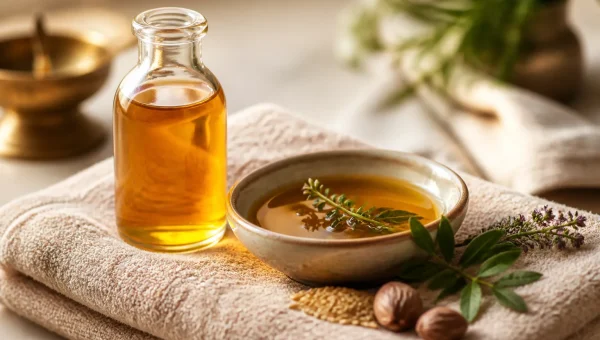
A useful oil warmer for Abhyanga is not a luxury accessory; it is the tool that keeps the practice close to its Ayurvedic purpose. Abhyanga is traditionally a warm, unctuous oil application that pacifies Vata through qualities opposite to coldness, dryness, roughness, and instability. Cold oil may still moisturize the skin, but it does not give the same grounded, comforting, Vata-calming experience that warm oil provides. The right warmer helps you keep the oil pleasantly warm, easy to spread, and safe throughout the massage.
Why Oil Temperature Matters in Abhyanga
Classical Ayurveda places Abhyanga within Dinacharya, the daily routine for maintaining health. Ashtanga Hridaya describes daily oil massage as beneficial for fatigue, Vata balance, sleep, skin quality, nourishment, and strength, and it gives special importance to the head, ears, and feet. Charaka Samhita also praises regular oil application for making the body strong, supple, and better able to withstand exertion. Warmth supports this purpose because it brings the qualities of ushna and snigdha—warm and unctuous—into direct contact with the body.
For home practice, the practical target is oil that feels comfortably warm, close to body temperature, and never hot. A thermometer reading around 37–40°C is a reasonable working range for most adults, but the final test is always the skin test: place a little oil on the inner wrist or back of the hand before applying it widely. If it feels hot, sharp, or irritating, let it cool.
Types of Oil Warmers for Abhyanga
The best warmer is the one that gives gentle, predictable heat without scorching the oil, creating hot spots, or making the practice difficult to repeat. For most home users, a simple hot water bath or a temperature-controlled electric warmer is enough.
| Warmer Type | Best For | Temperature Control | Practical Advantage | Main Limitation |
|---|---|---|---|---|
| Warm water bath | Beginners, occasional use, large bottles | Good when checked with a thermometer | No special equipment required | Oil cools during the session |
| Electric baby bottle warmer | Daily personal Abhyanga | Good if the model has a clear warming range or auto shut-off | Compact, widely available, suited to small bottles | Not all models show exact temperature |
| Electric oil warmer with thermostat | Frequent users and practitioners | Very good when adjustable | Keeps oil warm through the full massage | Requires counter space and cleaning |
| Candle or tea-light warmer | Occasional ambience only | Poor | Simple and inexpensive | Open flame, uneven heating, and unattended-fire risk |
| Purpose-built Abhyanga warmer | Daily practice or clinic use | Usually strong if thermostat-based | Designed for oils and repeated use | Higher cost and more specialized |
The Warm Water Bath Method: The Simplest Starting Point
Before buying a device, start with the warm water bath method. Place your Abhyanga oil in a closed glass or food-safe bottle. Put that bottle into a bowl or pot of warm water for several minutes, then swirl gently and test the oil on the wrist. The water should be warm, not boiling, and the oil bottle should remain sealed so that water does not enter the oil.
This method is inexpensive, gentle, and especially useful for sesame oil, Dhanvantara Taila, Kshirabala Taila, or other sesame-based medicated oils. Its only weakness is consistency: during a 15–25 minute massage, the oil may cool. If you practice daily, feel cold easily, or use Abhyanga mainly for Vata dryness and stiffness, an electric warmer with dependable temperature control can make the routine easier to maintain.
Electric Baby Bottle Warmers: A Practical Home Option
A baby bottle warmer can work well for Abhyanga when it accepts the size of your oil bottle and warms gently. Choose a model with clear temperature guidance, a warming rather than boiling function, and automatic shut-off. Avoid simple high-heat models that can make the outside of the bottle warm while the oil inside heats unevenly.
The same safety logic used for warming milk applies here: gentle warm water or a controlled warmer is preferable to direct stovetop heating or microwaving. Microwaves can heat unevenly and create hot spots, so they are a poor choice for Abhyanga oil. After warming, swirl the bottle gently and test the oil every time.
Purpose-Built Oil Warmers and Thermostat Models
If Abhyanga is part of your daily Dinacharya, a thermostat-controlled oil warmer is the most convenient choice. Look for a warmer that can hold a small glass bottle or stainless-steel cup, allows low-temperature warming, is easy to clean, and has an automatic shut-off or overheat protection. A removable inner cup is helpful when using thick medicated oils because residue can build up around the rim.
For practitioners or shared household use, capacity matters. A small warmer may be perfect for one person’s daily massage, while a larger unit is better when warming separate oils for body, scalp, feet, or local joint application. The goal is not maximum heat; the goal is steady, pleasant warmth.
Oils Requiring Special Warming Considerations
Different oils behave differently when warmed, so the warmer should match the oil. Plain sesame oil is easy to warm and is the most common base for classical Ayurvedic oil preparations. Coconut oil often becomes solid in cooler rooms and must be liquefied gently before use. Medicated oils should be treated with more care because they contain herbal material and are often prepared through specific classical processes.
Sesame oil (Tila Taila): Sesame oil is a common Ayurvedic base oil and is widely used in medicated Taila preparations. It warms easily in a water bath and spreads well when pleasantly warm. For Vata-type dryness, coldness, and roughness, sesame-based oils are often preferred unless Pitta heat, skin sensitivity, or a practitioner’s assessment indicates otherwise.
Coconut oil (Narikela Taila): Coconut oil may be solid below roughly 24–27°C, so it often needs warming before use in winter or air-conditioned rooms. Warm it only enough to liquefy. It is traditionally considered more cooling than sesame oil, so it is better suited to Pitta-prone people, hot seasons, or scalp use when heavy warming is not desired.
Dhanvantara Taila: Dhanvantara Taila is an official classical formulation listed with Tila Taila as its base. It may be used externally for Abhyanga when appropriate, especially under practitioner guidance. Warm it gently in a closed bottle or small cup rather than heating it directly.
Kshirabala Taila: Kshirabala Taila is prepared with Bala, sesame oil, cow’s milk, and water according to the Ayurvedic Formulary tradition. It is listed for external application in Abhyanga as well as other modes of administration under professional guidance. For home massage, keep it pleasantly warm, not hot.
Brahmi or Bhringraj scalp oils: Head oils should be warmed more mildly than body oils. A small separate container is useful because the scalp often needs less oil than the body. The oil should feel soothing, never hot, especially around the temples, ears, and crown.
Mahanarayana, Narayana, and other Vata oils: These classical or tradition-based joint and muscle oils are commonly selected for Vata-related stiffness, dryness, and reduced mobility. Because formulas vary by manufacturer and lineage, use the label instructions and practitioner advice. Warm gently, apply locally or as directed, and avoid irritated or broken skin.
Choosing a Warmer by Oil and Use Case
The warmer you buy should match how you actually practice. Someone doing a five-minute foot massage does not need the same equipment as someone doing full-body Abhyanga every morning. The table below gives a practical selection guide.
| Use Case | Suggested Warmer | Oil Notes | Best Practice |
|---|---|---|---|
| Daily full-body Abhyanga | Thermostat oil warmer or bottle warmer | Sesame or practitioner-selected medicated oil | Keep oil warm through the session |
| Beginner practice | Warm water bath | Plain sesame oil or coconut oil | Use a thermometer until you learn the feel |
| Scalp massage | Small water bath or mini warmer | Brahmi, Bhringraj, coconut, or suitable head oil | Warm mildly and test carefully |
| Local joint application | Small cup warmer | Dhanvantara, Kshirabala, Mahanarayana, or other advised oil | Use only the needed amount |
| Travel | Hotel hot water bath | Small leak-proof bottle or roll-on oil | Warm indirectly and pack in a sealed bag |
Temperature Testing and Safety
Always test the oil before applying it to a large area. A thermometer is useful, but touch testing is still essential because containers and oils may heat unevenly. The oil should feel warm and pleasant, never hot. Use extra caution for children, older adults, people with reduced skin sensation, diabetes-related neuropathy, sensitive skin, or anyone who cannot easily judge heat.
Keep electric warmers away from wet floors, sinks, and bathing areas. Do not handle plugs with oily hands. Do not leave candle warmers unattended; a candle is an open flame and can ignite nearby material. If a warmer smells burnt, overheats, flickers, or has a damaged cord, stop using it.
Travel Solutions for Abhyanga
For travel, carry a small leak-proof bottle with only the amount you need. Sesame oil is simple but can leak if the cap is poor, while coconut oil may be less spill-prone in cool climates because it can remain semi-solid. A roll-on bottle is useful for feet, joints, neck, or scalp lines, though it is less suitable for full-body Abhyanga.
In hotels, use a cup or bowl of warm water to heat the sealed bottle for a few minutes. Avoid kettles, microwaves, and direct contact with very hot surfaces. If you cannot warm the oil properly, keep the practice shorter and focus on the feet, ears, and scalp rather than forcing a full cold-oil massage.
When to Skip or Modify Abhyanga
Abhyanga is not appropriate in every condition. Classical guidance commonly avoids oil massage during indigestion, immediately after meals, after purification procedures unless directed, and in Kapha-heavy states. It should also be postponed during acute fever, active infection, open wounds, oozing rashes, or painful inflamed skin. During pregnancy, serious illness, chronic skin disease, or neurological conditions that affect sensation, consult a qualified Ayurvedic practitioner or healthcare provider before using full-body oil massage.
Best Buying Checklist
Choose an oil warmer that offers gentle heat, stable placement, easy cleaning, and enough capacity for your usual amount of oil. Prefer temperature control or a low warming mode over a high-heat setting. Glass, stainless steel, or heat-safe containers are preferable to unknown plastics. For medicated oils, a warmer that accepts your original bottle is useful because it reduces decanting, mess, and contamination.
The most important feature is repeatability. If the warmer makes Abhyanga easier to do safely every day, it is a good purchase. If it overheats, requires constant attention, or makes the routine feel complicated, return to the warm water bath method.
Actionable tip: Try the warm water bath method for one week before buying anything. Place your sealed oil bottle in warm water for 5 minutes, test the oil on your wrist, and perform Abhyanga in a warm room. If the practice feels noticeably calmer, smoother, and easier to sustain, invest in a temperature-controlled warmer that keeps the oil pleasantly warm from start to finish.
Safety note: This article is for educational use and does not replace personalized medical or Ayurvedic advice. Consult a qualified Ayurvedic practitioner or healthcare provider if you have a medical condition, are pregnant, use medicated oils therapeutically, have active skin disease, or are unsure whether Abhyanga is appropriate for you.
References
- Easyayurveda (easyayurveda.com)
- Wisdomlib — classical text
- NCCIH
- CDC
- FDA
- Amazon (amazon.com)
- Nfpa (nfpa.org)
- Nfpa (nfpa.org)
- Makingcosmetics (makingcosmetics.com)
- Ayurvedic Pharmacopoeia of India
- Dravyaguna notes
- Yumpu (yumpu.com)
- Ijpsjournal (ijpsjournal.com)
- Heat effects on drug delivery across human skin (2016), PubMed
- The effect of heat on skin permeability (2008), PubMed
The cold oil experience described at the beginning is exactly what happened to me on my first Abhyanga attempt. I used sesame oil straight from the refrigerator in winter and it was deeply unpleasant. Switched to a simple double-boiler method and the difference in how the oil feels and how well it absorbs was immediate. Warm oil genuinely is not optional.
Does the temperature of the oil need to vary by dosha or season or is a standard warm temperature appropriate for all? I have read that Pitta types should use cooler oil and Kapha types may benefit from slightly hotter. Is this accurate or is there a safe standard temperature range that works across constitutions?
I use a simple glass jar in a bowl of hot water and it works fine. The ceramic oil warmers described in this guide are certainly more elegant but I was not going to spend money before I knew I would maintain the practice. After three months of daily Abhyanga I would now invest in a proper warmer. Good to read the comparison here.
The electric models with thermostat control seem ideal but I have concerns about EMF exposure with metal oil warmer near the body. Is there evidence that warming oil in an electric device at close range is different from a non-electric method? This might sound overcautious but for a daily practice the accumulated exposure matters.
Good reminder on Choosing the Right Oil Warmer for Abhyanga. I would like to know how long to try it before judging results.
the review of different warmer types is useful but the price ranges given seem to have been written before recent inflation. some of the models mentioned are now significantly more expensive than cited. it would help to include current approximate prices or at least a note that prices may vary.
I make my own medicated oils at home and have been using a slow cooker on the warm setting for the oil-keeping-warm during application stage. It is not elegant but works well for the 20-minute practice. The article’s focus on purpose-built oil warmers is useful for those who want a more refined setup.
What is the maximum temperature before the oil loses therapeutic properties? I have heard that heated oils degrade their active compounds at high temperatures and that excessive heating defeats the purpose of the herbal infusion. Does this apply to plain sesame oil or only to medicated formulations?
I tried warming my sesame oil in a regular baby bottle warmer and noticed the oil stayed smooth throughout my massage.
I bought a cheap electric warmer and it overheated the oil twice before I returned it. The oil actually smoked slightly which I am sure compromised the quality. The investment in a quality warmer with temperature control is genuinely worth it for anyone who plans to practice regularly. This article would have saved me the cheap warmer mistake.
What about people who cannot afford Abhyanga oils and warmers? The practice is described in classical texts as accessible but the way it is being marketed now, with premium oils and specialty warmers, puts it out of reach for many people who could benefit. Is there an accessible version that uses widely available cheap oils?
Does anyone know if the Philips Avent model has a true temperature setting or just a warm/high switch?
I tried heating oil in a microwave when I started Abhyanga and the oil heated unevenly and scorched in spots. The article is right that this method is not suitable. The simple water bath method described is the minimum acceptable approach and most beginners should probably start there before investing.
After 3 months of daily warm sesame oil Abhyanga my skin is noticeably different. My partner commented without me mentioning it. The texture and tone of my forearms specifically which were very dry and rough are now what I would describe as normal skin. No amount of commercial moisturizer in 10 years achieved what 3 months of oil massage did.
Is there a classical text reference for the specific temperature range for Snehana preparations, or is the 38-42 degree Celsius guidance a contemporary clinical adaptation?
bought the double-boiler style warmer based on this guide. winter Abhyanga is now practical for the first time. oil stays at temp for 30 mins easily
can sesame oil be used in any oil warmer or are some materials incompatible with specific oils
the insulated ceramic warmer with a lid for keeping a larger batch warm during extended self-massage is exactly what I needed for the full classical Abhyanga protocol
The part about Choosing the Right Oil Warmer for Abhyanga feels realistic. This is the kind of detail readers can test slowly.
the temperature maintenance issue during a full Abhyanga, how do you keep the oil warm while moving through the body
no mention of safety concerns for people with pets or children regarding candle-based oil warmers
doesn’t address how to clean different types of oil warmers. oil residue buildup and rancidity are practical concerns
The product recommendations in the article risk becoming outdated. A principles-based guide would be more durable, with the key point being maintaining oil at 38-42 degrees Celsius throughout the treatment.
switched from microwave-heated oil to a proper copper oil warmer. the difference in the Abhyanga experience is real. the oil maintains temperature through a full body session and feels different therapeutically
The practical tip about pre-warming the vessel itself before filling with oil ensures the oil doesn’t cool on contact with the cold metal. This is the kind of practical detail that makes the difference in clinical application.
I used the hot water bath method last week and felt the oil absorb better than when I skipped warming.
prices in the article seem outdated. the copper warmers mentioned are more expensive now
can a double boiler work instead of a dedicated oil warmer for abhyanga
The claimed therapeutic difference between copper-warmed and stainless-steel-warmed oil lacks scientific support. The mechanical and thermal properties of the warmed oil are identical regardless of vessel material.
is an electric oil warmer or candle-based warmer better for consistent temperature during a full body massage
The differentiation between ceramic, copper, and stainless steel oil warmers for different Dosha requirements is practical. The heat-retention differences genuinely affect the therapeutic quality of the Abhyanga.
can a double boiler work instead of a dedicated oil warmer for abhyanga 637
The Snehana temperature requirement, oil warm enough to penetrate the dermis but not so hot as to cause Pitta aggravation, requires maintaining 38-42 degrees. The article’s guidance on monitoring this is practical.
The Dinacharya context for the oil warmer is important. The morning routine timing means the oil should be warming while doing Dantadhavana and Nasya, arriving at optimal temperature exactly when needed.
This makes sense for Choosing the Right Oil Warmer for Abhyanga. I would still ask a practitioner before changing medicines.
no mention of safety concerns for people with pets or children regarding candle-based oil warmers 592
switched from microwave-heated oil to a proper copper oil warmer. the difference in the Abhyanga experience is real. the oil maintains temperature through a full body session and feels different therapeutically My doctor agreed with this assessment.
The differentiation between ceramic, copper, and stainless steel oil warmers for different Dosha requirements is practical. The heat-retention differences genuinely affect the therapeutic quality of the Abhyanga. 676
is an electric oil warmer or candle-based warmer better for consistent temperature during a full body massage 131
bought the double-boiler style warmer based on this guide. winter Abhyanga is now practical for the first time. oil stays at temp for 30 mins easily 110
the temperature maintenance issue during a full Abhyanga, how do you keep the oil warm while moving through the body 361
This makes sense for Choosing the Right Oil Warmer for Abhyanga. The examples make the advice less abstract.
For travel I keep a small silicone bottle with pre measured oil and warm it in the hotel sink; works fine for a quick session.
doesn’t address how to clean different types of oil warmers. oil residue buildup and rancidity are practical concerns 825
The Snehana temperature requirement, oil warm enough to penetrate the dermis but not so hot as to cause Pitta aggravation, requires maintaining 38-42 degrees. The article’s guidance on monitoring this is practical. 637
Is there a classical text reference for the specific temperature range for Snehana preparations, or is the 38-42 degree Celsius guidance a contemporary clinical adaptation? 508
prices in the article seem outdated. the copper warmers mentioned are more expensive now 893
can sesame oil be used in any oil warmer or are some materials incompatible with specific oils 716
the insulated ceramic warmer with a lid for keeping a larger batch warm during extended self-massage is exactly what I needed for the full classical Abhyanga protocol 280
The product recommendations in the article risk becoming outdated. A principles-based guide would be more durable, with the key point being maintaining oil at 38-42 degrees Celsius throughout the treatment. 269
The practical tip about pre-warming the vessel itself before filling with oil ensures the oil doesn’t cool on contact with the cold metal. This is the kind of practical detail that makes the difference in clinical application. 127
I would like more detail on Choosing the Right Oil Warmer for Abhyanga. Would be useful to see a short checklist next.
The claimed therapeutic difference between copper-warmed and stainless-steel-warmed oil lacks scientific support. The mechanical and thermal properties of the warmed oil are identical regardless of vessel material. 777
The Dinacharya context for the oil warmer is important. The morning routine timing means the oil should be warming while doing Dantadhavana and Nasya, arriving at optimal temperature exactly when needed. 196
the insulated ceramic warmer with a lid for keeping a larger batch warm during extended self-massage is exactly what I needed for the full classical Abhyanga protocol Would appreciate any updates.
The product recommendations in the article risk becoming outdated. A principles-based guide would be more durable, with the key point being maintaining oil at 38-42 degrees Celsius throughout the treatment. 705
I would like more detail on Choosing the Right Oil Warmer for Abhyanga. The main idea is clear even if someone is new to Ayurveda.
doesn’t address how to clean different types of oil warmers. oil residue buildup and rancidity are practical concerns 514
The differentiation between ceramic, copper, and stainless steel oil warmers for different Dosha requirements is practical. The heat-retention differences genuinely affect the therapeutic quality of the Abhyanga. 992
Is there a classical text reference for the specific temperature range for Snehana preparations, or is the 38-42 degree Celsius guidance a contemporary clinical adaptation? 461
prices in the article seem outdated. the copper warmers mentioned are more expensive now 482
is an electric oil warmer or candle-based warmer better for consistent temperature during a full body massage 193
The Snehana temperature requirement, oil warm enough to penetrate the dermis but not so hot as to cause Pitta aggravation, requires maintaining 38-42 degrees. The article’s guidance on monitoring this is practical. 107
The practical tip about pre-warming the vessel itself before filling with oil ensures the oil doesn’t cool on contact with the cold metal. This is the kind of practical detail that makes the difference in clinical application. 935
can sesame oil be used in any oil warmer or are some materials incompatible with specific oils 876
I’m skeptical about needing a special Abhyanga warmer when a simple bowl of hot water does the job.
the temperature maintenance issue during a full Abhyanga, how do you keep the oil warm while moving through the body 426
can a double boiler work instead of a dedicated oil warmer for abhyanga 680
no mention of safety concerns for people with pets or children regarding candle-based oil warmers 642
The Dinacharya context for the oil warmer is important. The morning routine timing means the oil should be warming while doing Dantadhavana and Nasya, arriving at optimal temperature exactly when needed. 732
switched from microwave-heated oil to a proper copper oil warmer. the difference in the Abhyanga experience is real. the oil maintains temperature through a full body session and feels different therapeutically 949
The tip about testing on the inner wrist saved me from accidentally using oil that was too hot.
bought the double-boiler style warmer based on this guide. winter Abhyanga is now practical for the first time. oil stays at temp for 30 mins easily 798
I have Vata dominance and find that warm oil really calms my restless feeling after the massage.
The claimed therapeutic difference between copper-warmed and stainless-steel-warmed oil lacks scientific support. The mechanical and thermal properties of the warmed oil are identical regardless of vessel material. 173
Coconut oil solidifies in my kitchen during winter so I always melt it gently before using.
Useful post on Choosing the Right Oil Warmer for Abhyanga. The main idea is clear even if someone is new to Ayurveda.
prices in the article seem outdated. the copper warmers mentioned are more expensive now Six months in and still helpful.
doesn’t address how to clean different types of oil warmers. oil residue buildup and rancidity are practical concerns 503
The product recommendations in the article risk becoming outdated. A principles-based guide would be more durable, with the key point being maintaining oil at 38-42 degrees Celsius throughout the treatment. 823
I appreciate the breakdown of different warmer types; the electric bottle warmer seems the most practical for daily use.
The Snehana temperature requirement, oil warm enough to penetrate the dermis but not so hot as to cause Pitta aggravation, requires maintaining 38-42 degrees. The article’s guidance on monitoring this is practical. 282
bought the double-boiler style warmer based on this guide. winter Abhyanga is now practical for the first time. oil stays at temp for 30 mins easily 757
switched from microwave-heated oil to a proper copper oil warmer. the difference in the Abhyanga experience is real. the oil maintains temperature through a full body session and feels different therapeutically 953
For Choosing the Right Oil Warmer for Abhyanga, consistency seems like the hard part. The practical details matter more than people think.
can a double boiler work instead of a dedicated oil warmer for abhyanga 862
the temperature maintenance issue during a full Abhyanga, how do you keep the oil warm while moving through the body 885
The practical tip about pre-warming the vessel itself before filling with oil ensures the oil doesn’t cool on contact with the cold metal. This is the kind of practical detail that makes the difference in clinical application. 262
Is there a classical text reference for the specific temperature range for Snehana preparations, or is the 38-42 degree Celsius guidance a contemporary clinical adaptation? 412
the insulated ceramic warmer with a lid for keeping a larger batch warm during extended self-massage is exactly what I needed for the full classical Abhyanga protocol 123
The differentiation between ceramic, copper, and stainless steel oil warmers for different Dosha requirements is practical. The heat-retention differences genuinely affect the therapeutic quality of the Abhyanga. 810
is an electric oil warmer or candle-based warmer better for consistent temperature during a full body massage 213
The claimed therapeutic difference between copper-warmed and stainless-steel-warmed oil lacks scientific support. The mechanical and thermal properties of the warmed oil are identical regardless of vessel material. 836
For Choosing the Right Oil Warmer for Abhyanga, consistency seems like the hard part. The main idea is clear even if someone is new to Ayurveda.
The Dinacharya context for the oil warmer is important. The morning routine timing means the oil should be warming while doing Dantadhavana and Nasya, arriving at optimal temperature exactly when needed. 663
no mention of safety concerns for people with pets or children regarding candle-based oil warmers 531
The practical tip about pre-warming the vessel itself before filling with oil ensures the oil doesn’t cool on contact with the cold metal. This is the kind of practical detail that makes the difference in clinical application. 853
can sesame oil be used in any oil warmer or are some materials incompatible with specific oils 215
doesn’t address how to clean different types of oil warmers. oil residue buildup and rancidity are practical concerns Sharing with friends.
no mention of safety concerns for people with pets or children regarding candle-based oil warmers 309
Reading this later and the Choosing the Right Oil Warmer for Abhyanga advice still feels relevant. A few more examples would still help.
bought the double-boiler style warmer based on this guide. winter Abhyanga is now practical for the first time. oil stays at temp for 30 mins easily 639
The differentiation between ceramic, copper, and stainless steel oil warmers for different Dosha requirements is practical. The heat-retention differences genuinely affect the therapeutic quality of the Abhyanga. 435
can a double boiler work instead of a dedicated oil warmer for abhyanga 514
prices in the article seem outdated. the copper warmers mentioned are more expensive now 992
The Snehana temperature requirement, oil warm enough to penetrate the dermis but not so hot as to cause Pitta aggravation, requires maintaining 38-42 degrees. The article’s guidance on monitoring this is practical. 592