
Gardening can be one of the most naturally Ayurvedic forms of daily movement: the body bends, squats, grips, lifts, breathes outdoor air, receives morning light, and spends time with soil, plants, and seasonal rhythms. The same activity can also strain the knees, wrists, low back, skin, and digestion when it is done for long periods without preparation. A gardener’s best routine is therefore simple: oil the vulnerable joints, warm the body before work, rotate postures, avoid harsh midday heat, recover with warmth and cooked food, and treat direct soil contact with both appreciation and common sense.
Why Gardening Is Both Medicine and Injury Risk
From an Ayurvedic perspective, gardening combines moderate vyayama, contact with prithvi mahabhuta, exposure to air and light, and repeated sensory engagement with living plants. Classical Ayurveda values physical movement when it builds stability and strength without excess; gardening fits that spirit when it is paced, seasonal, and followed by proper recovery.
The risk appears when gardening becomes too repetitive or too intense. Long kneeling can irritate knees and hips, prolonged forward bending can load the lumbar region, pruning and digging can strain fingers and wrists, and summer sun can aggravate heat and dehydration. Ayurveda would read these patterns mainly as Vata aggravation from repetition, dryness, strain, and irregular posture, with Pitta aggravation when the same work is done under strong heat.
Pre-Gardening Joint Protection Protocol
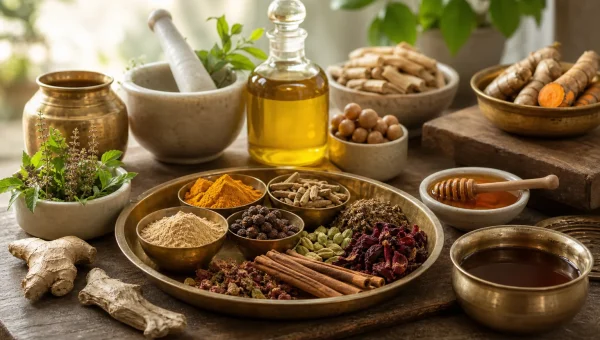
The classical logic behind pre-gardening care is snehana: using oil and touch to counter dryness, roughness, stiffness, and Vata-type strain before work begins. Ten to fifteen minutes before gardening, apply warm sesame oil to the knees, ankles, wrists, finger joints, and lower back. Use circular massage around joints and longer strokes along the muscles. If using a medicated oil such as Mahanarayan taila, choose it with guidance from a qualified practitioner, especially if you have sensitive skin or an active inflammatory condition.
After oiling, walk slowly for a few minutes, roll the wrists and ankles, open and close the hands, and practice a few gentle hip hinges before lifting pots or bending over beds. This turns gardening from sudden strain into measured vyayama. During the session, rotate tasks every 15–20 minutes: pruning, watering, weeding, lifting, and standing work should alternate so that one joint group does not carry the whole morning.
Ayurvedic Herbs for Gardeners’ Joints and Recovery
Herbs can support a gardener’s long-term joint and recovery plan, but they should not be treated as quick substitutes for diagnosis, physical therapy, ergonomic tools, or medical care. The most useful Ayurvedic approach is individualized: the same sore knee may call for Vata-pacifying oil, Kapha-reducing movement, Pitta-cooling measures, or formal evaluation depending on swelling, heat, stiffness, age, constitution, and medical history.
| Herb | Traditional Ayurvedic Relevance | Practical Use for Gardeners |
|---|---|---|
| Shallaki (Boswellia serrata) | Used in Ayurveda for joint comfort, stiffness, and inflammatory patterns; boswellic-acid extracts are commonly used in modern joint supplements. | Consider only as a standardized supplement under professional guidance, especially if taking anticoagulants, antiplatelet medicines, or preparing for surgery. |
| Guggulu (Commiphora mukul) | Traditionally used in Vata-Kapha joint and metabolic formulations, usually as part of compound preparations rather than as casual self-dosing. | Use only with a qualified practitioner; it can interact with medicines and is not an ideal over-the-counter choice for casual gardeners. |
| Ashwagandha (Withania somnifera) | A rasayana herb traditionally used for strength, recovery, sleep support, and Vata-type depletion. | May be more relevant for gardeners with fatigue, poor sleep, or weakness than for hot, swollen joints; avoid in pregnancy and use caution with thyroid, liver, autoimmune, sedative, or hormone-sensitive conditions. |
| Haridra (Curcuma longa) | A classical kitchen and medicinal herb used for Kapha-Pitta disorders, skin, wounds, and inflammatory patterns. | Use regularly in food with fat and spices; concentrated curcumin supplements require medical guidance if taking blood thinners or managing gallbladder, liver, or surgical concerns. |
| Sunthi (dry ginger, Zingiber officinale) | Warming, digestive, and Vata-Kapha balancing; useful where stiffness is cold, heavy, and sluggish. | Best as a food spice or tea for cold-type stiffness; avoid excess when there is burning, acidity, active bleeding tendency, or high Pitta symptoms. |
For detailed joint-pain management protocols beyond gardening, see our comprehensive Ayurvedic joint pain remedies guide.
Barefoot Grounding Without Exaggeration
Ayurveda gives earth a stabilizing symbolic and practical role: prithvi represents steadiness, weight, structure, and groundedness. For gardeners, safe barefoot contact with clean soil or dew-wet grass can be understood as a sensory grounding practice that settles excess mental movement and brings attention back to the body. It should be used as a simple daily habit, not as a replacement for medical treatment of inflammation, arthritis, insomnia, or mood disorders.
Wet soil and morning grass are especially pleasant for short periods because they cool heat, engage the feet, and invite slow breathing. Keep the practice brief if you are elderly, diabetic, prone to poor wound healing, immunocompromised, or unsure about hidden glass, thorns, insects, pesticides, or animal contamination. If there are cuts, rashes, cracked heels, fungal infections, or puncture wounds, wear shoes and gloves and focus on safe gardening rather than barefoot exposure.
Sun Exposure: The Ayurvedic Balance Point
Early morning is the best gardening window for most people because the body is rested, the air is cooler, and Pitta has not yet been provoked by the day’s heat. Midday gardening in strong summer sun can aggravate heat, sweating, thirst, irritability, skin burning, and fatigue. In practical terms, plan heavier garden work before 9 a.m. or later in the afternoon, and reserve midday for watering checks, shaded pruning, or indoor plant care.
When gardening during unavoidable heat, use cotton or breathable protective clothing, a hat, shade breaks, and steady hydration. Ayurveda’s cooling approach can include coriander, fennel, mint, rose, or cardamom-infused water according to constitution and climate. Sandalwood paste is traditionally cooling, but it should be used only when the skin tolerates it and should not replace sun-protective clothing or sunscreen when UV exposure is high. Our Pitta dosha guide covers the full cooling protocol.
Post-Gardening Recovery Rituals
After gardening, recovery should remove soil, calm the joints, and restore warmth without shocking the body. Rinse or bathe with warm water for the body, keeping the head cooler if desired. Classical daily-routine passages praise bathing for removing sweat and fatigue, while oil massage is described as helpful for resisting exertion and Vata-type strain.
After bathing, apply a small amount of sesame oil, coconut oil, or an appropriate medicated oil to any dry or tight areas. Sesame oil is generally more Vata-pacifying and warming; coconut oil is more cooling and better suited to heat-dominant conditions. If joints are swollen, hot, red, or sharply painful, do not mask the symptom with repeated oiling; rest the area and seek medical evaluation.
Within an hour, favor a warm, cooked, easy-to-digest meal such as kitchari, dal-rice with ghee, vegetable soup, or lightly spiced mung dal. Raw salads, iced drinks, and very heavy fried foods are less suitable immediately after exertion because the body benefits from food that supports agni without demanding excessive digestive effort.
Hands and Wrists: The Gardener’s Most Vulnerable Joints
Gardeners often feel strain first in the hands because pruning, gripping, pulling roots, squeezing hoses, and lifting pots repeatedly load the small joints and tendons. Before work, massage each finger joint with warm sesame oil, open and close the fists, and use tools with wider handles where possible. During work, loosen your grip, switch hands, and avoid using fingers as digging tools.
After heavy pruning or digging, wrap the wrists in a warm cloth for a few minutes and gently oil the palms, fingers, and forearms. Persistent numbness, tingling, night pain, swelling, loss of grip strength, or triggering of a finger should not be managed only with home oil massage; these signs need professional assessment.
The Soil Microbiome and Immunity
Healthy soil is a living ecosystem, and modern microbiome science increasingly describes contact with diverse environmental microbes as part of the wider relationship between land, immunity, metabolism, and the nervous system. Ayurveda approached this relationship through a different language: the human body is not isolated from place, season, food, air, water, and earth.
For the regular gardener, the practical conclusion is balanced: spend time with living soil, compost responsibly, wash hands after work, protect open skin, and keep tetanus vaccination current. Gloves are not a failure of “natural” gardening; they are wise protection when the skin barrier is broken, when handling manure or compost, or when pruning thorny plants.
Simple Practice Summary for the Regular Gardener
A safe Ayurvedic gardening routine is most powerful when it is repeated consistently rather than made complicated. The foundation is oil, pacing, sun intelligence, recovery, and respect for the skin barrier.
- Before gardening: Apply warm sesame oil to knees, wrists, fingers, ankles, and lower back; then do a few minutes of gentle movement.
- During gardening: Rotate tasks every 15–20 minutes, stand upright between kneeling work, hydrate, and avoid heavy lifting in strong heat.
- For sun: Prefer early morning or late afternoon; use shade, clothing, hat, and sunscreen when UV exposure is high.
- For soil contact: Enjoy safe barefoot grounding briefly on clean ground, but wear gloves or shoes when wounds, diabetes, immune compromise, manure, compost, thorns, or unknown soil hazards are present.
- After gardening: Bathe or rinse, oil sore dry areas lightly, and eat warm cooked food.
- For herbs: Use turmeric, ginger, and other kitchen spices sensibly in food; reserve concentrated Shallaki, Guggulu, Ashwagandha, and curcumin supplements for practitioner-guided use.
For comprehensive immunity support relevant to soil-contact activities, see our Ayurvedic immunity boosters guide.
Actionable Tip
This weekend, spend 15 minutes tending a plant with full attention. Oil your hands first, garden in the morning, stand upright every few minutes, and finish with a warm rinse and cooked meal. If you do not have a garden, tend a small pot of soil indoors or sit barefoot on clean grass where it is safe. The point is not intensity; the point is repeated, grounded contact with living nature.
Safety note: Gardeners with open wounds, diabetes-related foot problems, skin infections, immune compromise, active inflammatory arthritis, unexplained joint swelling, or persistent nerve symptoms should consult a qualified healthcare provider. Consult a qualified Ayurvedic practitioner or physician before starting herbs or supplements, especially if pregnant, breastfeeding, preparing for surgery, taking medication, using blood thinners, or managing liver, thyroid, autoimmune, kidney, gallbladder, or hormone-sensitive conditions.
Nothing in this article diagnoses, treats, or cures a medical condition. Use it as educational information and consult a qualified Ayurvedic practitioner or licensed healthcare provider for individualized care.
References
- NCCIH
- Charaka Samhita — Matrashiteeya Adhyaya
- Charaka Samhita — Naveganadharaniya Adhyaya
- Easyayurveda (easyayurveda.com)
- The impact of gardening on well-being, mental health, and quality of life: an umbrella review and meta-analysis (2024), PubMed Central
- Gardening is beneficial for health: A meta-analysis (2017), PubMed Central
- Betterhealth (betterhealth.vic.gov.au)
- CDC
- Sunlight and Vitamin D: A global perspective for health (2013), PubMed Central
- NCBI
- CDC
- Mayoclinic (mayoclinic.org)
- Mskcc (mskcc.org)
- NCCIH
- A double blind, randomized, placebo controlled study of the efficacy and safety of 5-Loxin for treatment of osteoarthritis of the knee (2008), PubMed Central
- Mskcc (mskcc.org)
- NIH Office of Dietary Supplements
- Efficacy and Safety of Curcumin and Curcuma longa Extract in the Treatment of Arthritis: A Systematic Review and Meta-Analysis of Randomized Controlled Trial (2022), PubMed
- Efficacy and safety of ginger in osteoarthritis patients: a meta-analysis of randomized placebo-controlled trials (2015), PubMed
- Ayurvedic Pharmacopoeia of India
The sesame oil on knees and hands before gardening is something my grandfather did every morning and I thought was superstition. He gardened into his 80s without joint pain while my father who laughed at the practice needed knee surgery at 68. Sometimes the old people know things.
This helped me understand Gardeners without too much jargon. The main idea is clear even if someone is new to Ayurveda.
This helped me understand Gardeners without too much jargon. This feels more usable than a long list of herbs.
This helped me understand Gardeners without too much jargon. The examples make the advice less abstract.
I’m a professional landscape gardener and the joint protocol described here matches what I’ve developed empirically over 20 years, sesame oil before work, turmeric milk in the evening, and consistent stretching at transitions. Never knew it had a classical basis.
The image of someone applying warm sesame oil to knees before sunrise really sticks with me.
The Pitta accumulation from sun exposure is a real clinical pattern during summer gardening months. I see it as skin flares, irritability, and digestive heat in many patients who garden heavily through June and July without sun management strategies.
the joint protection section, is Mahanarayan oil applied before or after gardening work
what’s the best knee support for someone who gardens a lot? the oil helps but is there more
The copper toxicity risk from using copper tools mentioned in passing deserves more detail. Copper exposure from gardening tools is negligible in normal use. The concern seems overstated relative to the actual dermal absorption risk.
Applying oil to hands and joints seems like a simple habit that could make a difference over time.
My father-in-law has been on this approach for four months. His joints are better than they were at 55. He credits joint and the diet changes together.
I wonder if the morning barefoot practice would feel different on dewy grass versus dry soil.
Is there guidance on sun care for gardeners with very fair skin who are also Pitta-dominant? The regular sun exposure from gardening seems like a particular challenge for that constitution.
The timing advice to garden before 9 a.m. aligns with both Ayurveda and lower UV exposure.
The Gardeners section feels grounded enough to try carefully. Would be useful to see a short checklist next.
Using sandalwood paste on exposed skin during midday could be a nice natural alternative to sunscreen.
Reading about the herb Shallaki made me curious about trying a standardized extract for joint comfort.
The Prithvi Tattva grounding through direct soil contact is both the most useful wellness tip and the one most gardeners already do instinctively. Framing it within Ayurveda makes the activity therapeutic rather than coincidental.
Gardening allergen exposure from pollen, fungal spores, and chemical fertilizers is not addressed. For atopic individuals this is a significant consideration.
the Sandalwood and Turmeric sunscreen paste became my summer gardening routine. works better than I expected and my arms haven’t tanned as dramatically as previous seasons
the article seems written for hobbyist gardeners. professional gardeners or farmers doing 8+ hours daily need a more intensive protocol
some of the recommendations assume a climate-controlled indoor break is available. many gardeners work in rural settings without this luxury
the post-gardening Abhyanga recommendation, is it full body or just the areas that were most used
The Sheetali Pranayama recommendation for heat regulation during summer gardening is practical. The evaporative cooling mechanism through tongue-rolled breathing is physiologically real.
retired and garden daily. this article gave me a framework for the joint and sun care I was doing intuitively. feels more intentional now
I tried the sesame oil application before my weekly allotment sessions. Four weeks in and the knee ache I’d had during and after gardening is noticeably reduced. Simple intervention, surprisingly effective.
the grounding walk after gardening, barefoot on grass for 20 minutes, is now a non-negotiable part of my evening. the mood shift is significant and consistent
The suggestion to take breaks and walk upright between kneeling tasks feels like a practical ergonomic tip.
no mention of tick or insect protection which is a real concern for gardeners. natural insect repellent guidance would be useful here
The Vata-Pitta imbalance from simultaneous physical exertion (Vata) and sun exposure (Pitta) during gardening is an accurate clinical observation. Managing both simultaneously requires the combined protocol described.
The sun exposure recommendations lack specificity for Indian summer gardening. The ‘morning only’ guidance without discussing UV index, which peaks by 10am in South India, is incomplete.
I came for Gardeners and this answered the main question. I would like to know how long to try it before judging results.
I came for Gardeners and this answered the main question. Good starting point for a cautious reader.
I’ve tried warm turmeric water before, but mixing it with black pepper is a new twist for me.
The part about Gardeners feels realistic. The practical details matter more than people think.
The part about Gardeners feels realistic. This is the kind of detail readers can test slowly.
The post-sun Aloe vera and rose water cooling application is the practical first-aid Ayurvedic equivalent of after-sun care, and the Pitta-pacifying combination is more effective than plain Aloe alone.
The part about Gardeners feels realistic. Small daily changes are easier to follow than a perfect plan.
The idea that wet soil conducts electricity better for earthing makes sense when you think about morning dew.
A quick wrist wrap soaked in warm Mahanarayan oil after heavy digging sounds soothing.
It’s interesting how gardening can balance Vata and Pitta while also posing risks if not done mindfully.
the joint protection section, is Mahanarayan oil applied before or after gardening work 292
The part about Gardeners feels realistic. I appreciate that it does not oversell the result.
The post gardening warm shower with neem soap seems like a gentle way to cleanse without shocking the system.
no mention of tick or insect protection which is a real concern for gardeners. natural insect repellent guidance would be useful here 186
the grounding walk after gardening, barefoot on grass for 20 minutes, is now a non-negotiable part of my evening. the mood shift is significant and consistent 185
the article seems written for hobbyist gardeners. professional gardeners or farmers doing 8+ hours daily need a more intensive protocol 611
The part about Gardeners feels realistic. This would be easier to follow with a one-week sample plan.
I’m skeptical about claiming any single herb can prevent cartilage loss, but the traditional combo looks promising.
the Sandalwood and Turmeric sunscreen paste became my summer gardening routine. works better than I expected and my arms haven’t tanned as dramatically as previous seasons 476
Including raw food right after gardening might hinder recovery because the digestive fire is low, as noted.
The Sheetali Pranayama recommendation for heat regulation during summer gardening is practical. The evaporative cooling mechanism through tongue-rolled breathing is physiologically real. 680
The actionable tip to spend fifteen minutes barefoot in the garden this weekend is a nice, low pressure way to start.
The Prithvi Tattva grounding through direct soil contact is both the most useful wellness tip and the one most gardeners already do instinctively. Framing it within Ayurveda makes the activity therapeutic rather than coincidental. 949
The sun exposure recommendations lack specificity for Indian summer gardening. The ‘morning only’ guidance without discussing UV index, which peaks by 10am in South India, is incomplete. 549
Gardening allergen exposure from pollen, fungal spores, and chemical fertilizers is not addressed. For atopic individuals this is a significant consideration. 510
the post-gardening Abhyanga recommendation, is it full body or just the areas that were most used 120
what’s the best knee support for someone who gardens a lot? the oil helps but is there more 190
This makes sense for Gardeners. Would be useful to see a short checklist next.
The post-sun Aloe vera and rose water cooling application is the practical first-aid Ayurvedic equivalent of after-sun care, and the Pitta-pacifying combination is more effective than plain Aloe alone. 472
The Vata-Pitta imbalance from simultaneous physical exertion (Vata) and sun exposure (Pitta) during gardening is an accurate clinical observation. Managing both simultaneously requires the combined protocol described. 565
some of the recommendations assume a climate-controlled indoor break is available. many gardeners work in rural settings without this luxury 580
retired and garden daily. this article gave me a framework for the joint and sun care I was doing intuitively. feels more intentional now 193
The sun exposure recommendations lack specificity for Indian summer gardening. The ‘morning only’ guidance without discussing UV index, which peaks by 10am in South India, is incomplete. Still following this.
This makes sense for Gardeners. This would be easier to follow with a one-week sample plan.
The Vata-Pitta imbalance from simultaneous physical exertion (Vata) and sun exposure (Pitta) during gardening is an accurate clinical observation. Managing both simultaneously requires the combined protocol described. 801
The post-sun Aloe vera and rose water cooling application is the practical first-aid Ayurvedic equivalent of after-sun care, and the Pitta-pacifying combination is more effective than plain Aloe alone. 842
This makes sense for Gardeners. This feels more usable than a long list of herbs.
some of the recommendations assume a climate-controlled indoor break is available. many gardeners work in rural settings without this luxury 849
This makes sense for Gardeners. The examples make the advice less abstract.
the article seems written for hobbyist gardeners. professional gardeners or farmers doing 8+ hours daily need a more intensive protocol 385
Gardening allergen exposure from pollen, fungal spores, and chemical fertilizers is not addressed. For atopic individuals this is a significant consideration. 633
the Sandalwood and Turmeric sunscreen paste became my summer gardening routine. works better than I expected and my arms haven’t tanned as dramatically as previous seasons 687
no mention of tick or insect protection which is a real concern for gardeners. natural insect repellent guidance would be useful here 481
The Sheetali Pranayama recommendation for heat regulation during summer gardening is practical. The evaporative cooling mechanism through tongue-rolled breathing is physiologically real. 777
I would like more detail on Gardeners. Would be useful to see a short checklist next.
The Prithvi Tattva grounding through direct soil contact is both the most useful wellness tip and the one most gardeners already do instinctively. Framing it within Ayurveda makes the activity therapeutic rather than coincidental. 581
the grounding walk after gardening, barefoot on grass for 20 minutes, is now a non-negotiable part of my evening. the mood shift is significant and consistent 588
the post-gardening Abhyanga recommendation, is it full body or just the areas that were most used 581
retired and garden daily. this article gave me a framework for the joint and sun care I was doing intuitively. feels more intentional now 859
the joint protection section, is Mahanarayan oil applied before or after gardening work 968
what’s the best knee support for someone who gardens a lot? the oil helps but is there more 540
some of the recommendations assume a climate-controlled indoor break is available. many gardeners work in rural settings without this luxury 307
no mention of tick or insect protection which is a real concern for gardeners. natural insect repellent guidance would be useful here Found this through a search.
the grounding walk after gardening, barefoot on grass for 20 minutes, is now a non-negotiable part of my evening. the mood shift is significant and consistent 150
The post-sun Aloe vera and rose water cooling application is the practical first-aid Ayurvedic equivalent of after-sun care, and the Pitta-pacifying combination is more effective than plain Aloe alone. 779
The sun exposure recommendations lack specificity for Indian summer gardening. The ‘morning only’ guidance without discussing UV index, which peaks by 10am in South India, is incomplete. 371
Useful post on Gardeners. A few more examples would still help.
Useful post on Gardeners. The practical details matter more than people think.
the Sandalwood and Turmeric sunscreen paste became my summer gardening routine. works better than I expected and my arms haven’t tanned as dramatically as previous seasons 944
The Prithvi Tattva grounding through direct soil contact is both the most useful wellness tip and the one most gardeners already do instinctively. Framing it within Ayurveda makes the activity therapeutic rather than coincidental. 579