
Achilles tendinopathy, often called Achilles tendinitis, is a painful overuse condition of the tendon connecting the calf muscles to the heel. Runners commonly describe pain above the heel, morning stiffness, soreness after hills or speed work, and tenderness that may ease after gentle movement but return after training. Ayurveda offers a complementary framework for this pattern by looking at the tendon itself, the quality of training load, digestion and tissue nourishment, and the balance of Vata, Pitta, Rakta, and Ama in the body.
This article uses the term Kandara Shotha in a practical clinical sense: Kandara refers to tendon-like structures, while Shotha refers to swelling or inflammatory enlargement. Achilles pain should still be assessed medically, because tendon pain can arise from tendinopathy, insertional irritation, bursitis, partial tear, or complete rupture. Ayurvedic care is best used alongside correct diagnosis, appropriate loading, and physiotherapy.
Understanding Kandara Shotha Through the Ayurvedic Framework
In Ayurvedic anatomy, Kandara is correlated with tendon-like fibrous structures and is described as an upadhatu related to Rakta Dhatu. This is clinically important because tendon pain is not viewed only as a local mechanical problem; it is also examined through the condition of Rakta, Vata movement, local circulation, and the nourishment reaching the affected structure.
When pain, cracking sensation, tightness, and morning stiffness dominate, Vata is given special attention. In a runner, this may be aggravated by sudden mileage increases, irregular meals, inadequate sleep, excessive dryness, repeated hill running, and insufficient recovery. Vata’s dry, mobile, rough, and irregular qualities help explain why the tendon may feel stiff on first steps, settle briefly with movement, and flare again after load.
When heat, redness, swelling, burning pain, or sharp tenderness are prominent, the Ayurvedic assessment also considers Pitta and Rakta dushti. When heaviness, sluggish digestion, coated tongue, fatigue, and diffuse inflammatory discomfort accompany the pain, Ama is assessed. A clean protocol therefore does not begin with “strengthening” alone; it first distinguishes whether the case is acute and inflamed, Vata-dry and stiff, Ama-heavy, or chronic and depleted.
Modern Sports-Medicine Context for Runners
Achilles tendinopathy is managed best when training load is corrected. Rest alone may calm pain temporarily, but long-term recovery usually requires progressive tendon-loading exercises, calf strengthening, footwear review, and a gradual return to running. Eccentric heel-drop programs and other structured loading approaches are commonly used, but they must be matched to whether the pain is mid-portion or insertional and to the runner’s current irritability level.
For Ayurvedic practice, this means herbs and oils should not be used to “push through” tendon pain. They are supportive measures used while the runner reduces provocative load, avoids sudden speed or hill work, builds calf capacity, and restores daily routines that support tissue repair. Corticosteroid injections around painful tendons require caution because tendon rupture risk is a recognized concern in sports-medicine literature.
Key Ayurvedic Herbs for Tendon and Musculoskeletal Support
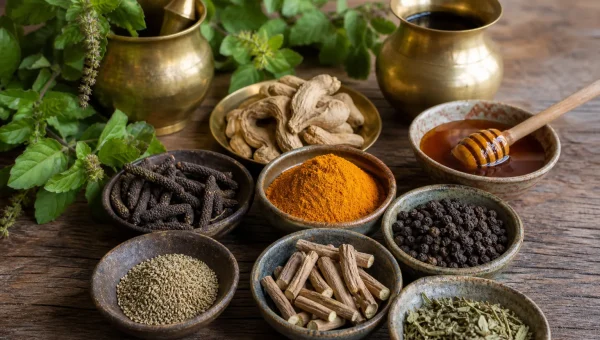
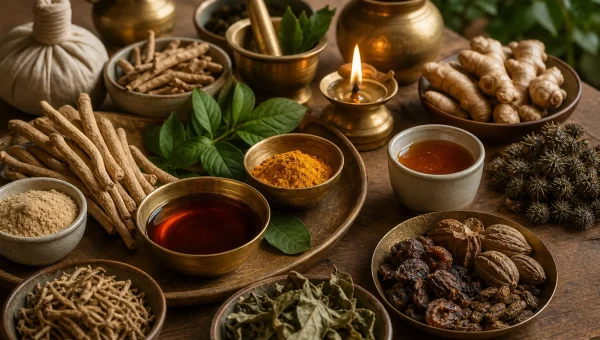
Herb selection should be individualized by a qualified practitioner. The herbs below are included because they are traditionally used for Vata, Shotha, Rakta, musculoskeletal pain, Rasayana support, or recovery, and because their botanical identities or modern pharmacological actions are documented. They are not a substitute for diagnosis, tendon-loading rehabilitation, or medical care.
Rasna (Pluchea lanceolata)
Rasna is used in Ayurvedic practice for Vata-related musculoskeletal discomfort. The Ayurvedic Pharmacopoeia of India identifies Rasna leaf as Pluchea lanceolata. For Achilles presentations, Rasna is best understood as a Vata-pacifying support in formulas chosen for stiffness, pain, and restricted movement, not as a stand-alone cure for tendon injury.
Bala (Sida cordifolia)
Bala means strength and is traditionally valued as a Balya and Brimhana herb. It appears in classical medicated oils such as Bala Taila, Narayana Taila, and Mahanarayana Taila, which are commonly used externally in Vata-dominant musculoskeletal care. Because Sida cordifolia may contain ephedrine-type alkaloids, internal use requires professional supervision, especially in people with hypertension, heart disease, anxiety, thyroid disease, stimulant sensitivity, or medication use.
Shallaki / Kunduru (Boswellia serrata)
Shallaki, listed as Kunduru exudate in the Ayurvedic Pharmacopoeia of India, is the gum-resin of Boswellia serrata. It is widely used for joint and musculoskeletal discomfort. Boswellic acids, including AKBA, have documented 5-lipoxygenase inhibitory activity, and Boswellia extracts have clinical data in osteoarthritis pain and function. For Achilles tendinopathy, it is best positioned as an adjunct for inflammatory musculoskeletal discomfort, not as a replacement for loading rehabilitation.
Guduchi (Tinospora cordifolia)
Guduchi is used in Ayurveda as a Rasayana and as a support when Ama, fatigue, and inflammatory patterns are present. The Ayurvedic Pharmacopoeia lists Guduchi powder and decoction dosing ranges, but modern safety reports require caution: people with liver disease, autoimmune conditions, abnormal liver enzymes, or multiple supplements should use it only under professional guidance.
Ashwagandha (Withania somnifera)
Ashwagandha is a Rasayana and Balya herb used for strength, recovery, and resilience. It may be useful when Achilles pain appears in the context of overtraining, poor sleep, stress, and tissue depletion. It should be avoided during pregnancy and breastfeeding, and caution is needed in liver disease, thyroid disorders, autoimmune disease, sedative use, and multi-supplement routines.
Panchakarma and External Therapies for Kandara Shotha
External therapy is selected according to the stage of the condition. Strong massage and heat are not appropriate for every Achilles presentation. Acute heat, marked swelling, sharp tenderness, or suspected tear calls for medical evaluation first. Once rupture and acute injury are ruled out, Ayurvedic external therapies may be used as supportive care.
Dhanyamla Dhara
Dhanyamla Dhara uses a warm fermented sour liquid poured over the affected area. It is traditionally used in Vata-Kapha and Ama-associated musculoskeletal conditions, especially when heaviness, swelling, stiffness, and sluggishness dominate. In an Achilles protocol, it is better suited to an Ama-heavy or Kapha-associated phase than to a dry, depleted chronic phase.
Pinda Sweda
Pinda Sweda is bolus fomentation using warm herbal bundles. Patra Pinda Sweda, Shashtika Shali Pinda Sweda, or other forms may be selected depending on whether the case needs stiffness relief, Vata pacification, or nourishment. For runners, it is most appropriate after acute irritability has settled and the aim is to reduce stiffness and prepare the tissues for graded movement.
Lepana
Lepana is the local application of herbal paste. In painful swelling, a practitioner may choose a cooling or moderately warm lepa according to the dosha picture. This is especially useful when the pain is localized and the goal is to calm the area without deep massage.
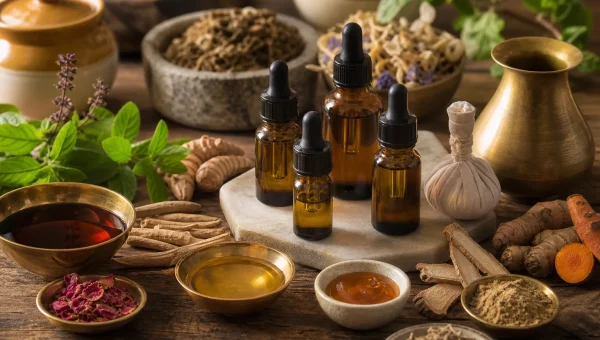
Medicated Oil Application
Warm oil application with Mahanarayana Taila, Bala Taila, Ksheerabala Taila, or plain sesame oil may be used in Vata-dominant stiffness after acute inflammation has reduced. The pressure should be gentle around the Achilles tendon; deep friction over a painful tendon is not advised without professional assessment. Oil application works best when paired with calf mobility, gradual strengthening, and adequate rest.
Agnikarma
Agnikarma is a para-surgical Ayurvedic procedure involving controlled therapeutic heat at selected points. It may be considered only in selected chronic pain patterns by a trained Ayurvedic physician. It should not be attempted at home and should not be used when rupture, infection, open wound, uncontrolled diabetes, vascular compromise, or acute severe inflammation is suspected.
Stage-Based Ayurvedic Protocol for Runners
A safe Ayurvedic plan follows the stage of the tendon rather than using the same remedy for everyone. The goal is to calm irritability, restore Vata balance, support Rakta and tissue nourishment, and then return to progressive loading.
| Stage | Typical Signs | Ayurvedic Focus | Supportive Measures | Training Guidance |
|---|---|---|---|---|
| Acute irritable stage | Sharp pain, heat, swelling, limping, pain after recent overload | Calm Shotha, protect Rakta, avoid aggravating Vata | Medical assessment, rest from running, practitioner-selected lepa, gentle non-painful movement | Avoid hills, sprints, jumps, and painful calf raises until assessed |
| Ama-Kapha stage | Heaviness, swelling, stiffness, sluggish digestion, coated tongue | Deepana-Pachana, Ama reduction, channel clearance | Light warm meals, ginger-cumin-coriander style cooking, Dhanyamla Dhara when suitable | Low-impact cross-training only if pain remains mild and stable |
| Vata-stiff stage | Morning stiffness, dry tight tendon, pain on first steps, improves with warmth | Vata pacification, lubrication, circulation support | Warm sesame oil or medicated oil application, mild Swedana, regular meals, sleep consistency | Begin supervised progressive loading within pain tolerance |
| Rebuilding stage | Less pain, improved walking, mild load sensitivity remains | Balya, Brimhana, Rasayana, gradual return to strength | Practitioner-selected Ashwagandha, Bala-based oils, nourishing warm diet, adequate protein | Progress calf strength, then run-walk intervals, then hills and speed last |
Internal Formulations and Dose Ranges
The following table gives educational dose ranges and usage patterns from pharmacopoeial or commonly referenced sources where available. Exact dose, anupana, duration, and suitability must be determined by a qualified Ayurvedic practitioner after assessing constitution, digestion, medications, pregnancy status, liver health, cardiovascular risk, and the stage of the tendon injury.
| Herb / Formulation | Typical Form | Professional Use Pattern | Best-Fit Presentation | Key Caution |
|---|---|---|---|---|
| Shallaki / Kunduru (Boswellia serrata) | Gum-resin or standardized extract | API lists Kunduru exudate at 5-10 g; standardized extracts vary by product and should follow practitioner direction | Musculoskeletal pain with inflammatory features | Use caution with anticoagulants, antiplatelet drugs, surgery, and bleeding disorders |
| Ashwagandha (Withania somnifera) | Root powder or standardized extract | API-listed root powder range is 3-6 g; extract dose depends on standardization | Overtraining, weakness, poor sleep, chronic Vata depletion | Avoid in pregnancy and breastfeeding; caution with liver, thyroid, autoimmune, sedative, and diabetes medications |
| Guduchi (Tinospora cordifolia) | Stem powder, decoction, or Ghana Vati | API-cited powder range is 3-6 g per day; decoction ranges are preparation-specific | Ama-associated inflammation, fatigue, recovery support | Use only with guidance in liver disease, autoimmune disease, or abnormal liver enzymes |
| Dashamula Kwatha | Decoction of ten roots | Prepared as a classical decoction under practitioner direction | Vata-dominant stiffness, pain, and musculoskeletal aggravation | May not suit every digestive state; avoid self-prescribing during pregnancy or complex illness |
| Rasna-based formulations | Kwatha, tablet, oil, or compound formula | Used as part of formulas for Vata-related musculoskeletal pain | Stiffness, restricted movement, Vata-type discomfort | Botanical identity varies regionally; use authenticated products |
| Mahanarayana Taila / Bala Taila | External medicated oil | Gentle local application after acute irritability has settled | Vata-type stiffness, chronic tightness, post-acute recovery | Do not use deep pressure over suspected tear, severe swelling, infection, rash, or open wound |
Dietary and Lifestyle Modifications for Runners
Ayurveda treats recovery as a full-system process. A tendon that is repeatedly loaded while the runner sleeps poorly, eats irregularly, and trains through fatigue is unlikely to heal well. The following measures support the same intent as the herbal protocol: calm Vata, protect Rakta, maintain Agni, and rebuild tissue gradually.
- Favor warm, cooked, nourishing meals: Rice, mung dal, well-cooked grains, root vegetables, soups, stews, ghee, and sesame oil are suitable for many Vata-dominant runners, especially when dryness and stiffness are present.
- Keep meal timing regular: Skipping meals during heavy training aggravates Vata and weakens recovery. Runners with Ama signs should choose lighter warm meals before using heavy tonics.
- Avoid excess cold, dry, raw, and carbonated foods: These can increase Vata qualities and may worsen stiffness in susceptible runners.
- Prioritize sleep: Late nights and early hard training sessions are a classic Vata-aggravating combination. Recovery blocks should include consistent sleep and reduced stimulants.
- Use warm oil carefully: A short, gentle sesame oil or medicated oil application around the calf and ankle may be used when the tendon is not acutely hot or swollen. Follow it with a proper warm-up, not with immediate sprinting.
- Return to running gradually: Begin with walking tolerance, then calf strength, then run-walk intervals, then flat continuous running. Hills, intervals, and racing should return last.
When to Stop Self-Care and Seek Medical Help
Seek urgent medical care if there is a sudden pop or snap, a feeling of being kicked in the calf, immediate sharp pain near the heel, inability to push off the foot, inability to stand on the toes, major swelling, bruising, or difficulty walking after a sudden injury. These signs may indicate Achilles tendon rupture and should not be managed with massage, heat, herbs, or home exercise.
Also seek professional assessment if pain persists beyond a few days, recurs every time you run, worsens from week to week, causes limping, or is located directly at the heel insertion. Insertional Achilles tendinopathy often needs different loading modifications than mid-portion tendinopathy, and aggressive heel-drop exercises below step level may aggravate some insertional cases.
Safety and Disclaimer
Ayurvedic treatment for Achilles tendinitis is intended to complement, not replace, conventional diagnosis, sports-medicine care, and physiotherapy. Consult a qualified Ayurvedic practitioner and a healthcare provider before beginning herbs, supplements, detoxification, Panchakarma, Agnikarma, or therapeutic oils, especially if you are pregnant or breastfeeding, have liver disease, kidney disease, autoimmune disease, cardiovascular disease, diabetes, bleeding risk, or are taking anticoagulants, antiplatelet drugs, sedatives, thyroid medication, diabetes medication, steroids, antibiotics, or multiple supplements.
Actionable tip: For a non-acute, Vata-stiff Achilles pattern that has already been medically assessed, apply a small amount of warm sesame oil or practitioner-recommended medicated oil around the calf and ankle at night with light pressure only. Keep the tendon comfortable, avoid deep friction, and track morning stiffness, walking pain, and response to loading. If symptoms worsen, stop and seek professional guidance.
Nothing in this article diagnoses, treats, cures, or prevents a medical condition. Use it as educational information and consult a qualified Ayurvedic practitioner or physician before starting herbs, supplements, detoxes, external therapies, or exercise protocols.
References
- NCBI
- Mayoclinic (mayoclinic.org)
- My (my.clevelandclinic.org)
- Epidemiology of insertional and midportion Achilles tendinopathy in runners: A prospective cohort study (2024), PubMed Central
- Current Clinical Concepts: Conservative Management of Achilles Tendinopathy (2020), PubMed Central
- Eccentric Exercise for Achilles Tendinopathy: A Narrative Review and Clinical Decision-Making Considerations (2019), PubMed Central
- Pathogenesis and Management of Tendinopathies in Sports Medicine (2018), PubMed Central
- Ayushdhara (ayushdhara.in)
- Easyayurveda (easyayurveda.com)
- Ayurvedacollege (ayurvedacollege.com)
- Ayurvedic Pharmacopoeia of India
- Pluchea lanceolata (Rasana): Chemical and biological potential of Rasayana herb used in traditional system of medicine (2012), PubMed
- Jaims (jaims.in)
- Webmd (webmd.com)
- Ayurvedic Pharmacopoeia of India
- 5-Lipoxygenase inhibition by acetyl-11-keto-β-boswellic acid (AKBA) by a novel mechanism (1996), PubMed
- A double blind, randomized, placebo controlled study of the efficacy and safety of 5-Loxin for treatment of osteoarthritis of the knee (2008), PubMed Central
- Effectiveness of Boswellia and Boswellia extract for osteoarthritis patients: a systematic review and meta-analysis (2020), PubMed Central
- SAGE Journals
- Tinospora cordifolia (Willd.) Hook. f. and Thoms. (Guduchi) – validation of the Ayurvedic pharmacology through experimental and clinical studies (2010), PubMed Central
- Frontiersin (frontiersin.org)
- NCBI
- Effects of Ashwagandha (Withania somnifera) on Physical Performance: Systematic Review and Bayesian Meta-Analysis (2021), PubMed Central
- Examining the effect of Withania somnifera supplementation on muscle strength and recovery: a randomized controlled trial (2015), PubMed Central
- Ayurvedic Pharmacopoeia of India
- NCCIH
- Botanical identity of plant sources of Daśamūla drugs through an analysis of published literature (2012), PubMed Central
- Wjpr (wjpr.s3.ap-south-1.amazonaws.com)
- Jaims (jaims.in)
- Easyayurveda (easyayurveda.com)
- Ayurvedagrambali (ayurvedagrambali.com)
- Banyanbotanicals (banyanbotanicals.com)
- Role of Agnikarma in Sandhigata Vata (osteoarthritis of knee joint) (2015), PubMed Central
- Phytojournal (phytojournal.com)
- Mayoclinic (mayoclinic.org)
- My (my.clevelandclinic.org)
Ran my fourth marathon last year and Achilles tendinitis forced me to DNS my fifth. The Mahanarayan oil application protocol described here is something my Ayurvedic doctor in Pune prescribed and it genuinely accelerated the return to training compared to what I’d experienced with a previous injury managed purely conventionally.
found this post helpful. will try the suggested approach. (ref 1859-40)
Reading this later and the Achilles Tendinitis (Kandara Shotha) advice still feels relevant. Small daily changes are easier to follow than a perfect plan.
Reading this later and the Achilles Tendinitis (Kandara Shotha) advice still feels relevant. Would be useful to see a short checklist next.
Eccentric heel drops are the gold standard physical therapy intervention for Achilles tendinopathy. Has anyone combined eccentric exercises with the Ayurvedic oil protocol and compared outcomes? That combination would be the most interesting clinical question.
found this post helpful. will try the suggested approach. (ref 1859-26)
Reading this later and the Achilles Tendinitis (Kandara Shotha) advice still feels relevant. This is the kind of detail readers can test slowly.
The connection between dehydration and tendon vulnerability described here matches what my sports nutritionist has told me about collagen hydration. Chronically dehydrated runners have higher tendon injury rates. The Vata-dehydration-tendon link is consistent with current sports science even if framed differently.
The changed perspective on training and recovery mentioned at the end is what matters most to me about Ayurvedic sports medicine. Not just fixing the injury but understanding what the injury is telling you about how you’ve been running and living.
Eccentric heel drops plus the Ayurvedic oil protocol is the combination I’d want someone to study. the combined approach seems more promising than either alone ✨
After reading about the warm sesame oil compress I tried it last night and noticed less stiffness in the morning
I tried similar protocols twice and neither time did the Ayurvedic component make a clear difference over and above the rest and physical therapy. I can’t rule out that it helped but I also can’t say it was the decisive factor. Adding more treatments during recovery makes it impossible to isolate what worked.
🙌 the dietary Vata aggravation contributing to tendon vulnerability is something my sports medicine team never mentioned. changing my diet during my last recovery seemed to make a difference
It seems interesting that Rasna is highlighted for its COX-2 inhibition I wonder how that compares to standard NSAIDs
The dietary adjustment section is the part that surprised me most. The idea that dietary Vata aggravation from poor eating habits could contribute to tendon vulnerability is not something my sports medicine team ever mentioned. Changing my diet during my last recovery seemed to make a difference in how quickly the tissue responded.
The idea that the injury tells you something about how you’ve been living and training is what stays with me. not just fixing the problem but understanding it
@Mark the idea that the injury tells u something about how u’ve been living and training is what stays with me. not just fixing the problem but understanding it
Eccentric heel drops plus the Ayurvedic oil protocol is the combination I’d want someone to study. the combined approach seems more promising than either alone 🌿
The suggestion to cut training load by half feels practical for anyone dealing with recurring ankle pain
Eccentric heel drops plus the Ayurvedic oil protocol is the combination I’d want someone to study. the combined approach seems more promising than either alone
tried Ayurvedic component twice during recovery and neither time made a clear difference over rest and PT alone. impossible to isolate what worked when adding multiple things
The dietary Vata aggravation contributing to tendon vulnerability is something my sports medicine team never mentioned. changing my diet during my last recovery seemed to make a difference
8 months of Achilles pain and sports physio that plateaued. starting Mahanarayan oil twice daily this week as an addition not replacement
@Mark ❤️ eccentric heel drops plus the Ayurvedic oil protocol is the combination I’d want someone to study. the combined approach seems more promising than either alone ठीक है
The idea that the injury tells you something about how you’ve been living and training is what stays with me. not just fixing the problem but understanding it नमस्ते
Eight weeks to significantly changed thinking about body and training is an optimistic timeline. I’ve been working on this for two years. But the direction of change described, understanding the body as a system to maintain rather than a machine to push, is what I’m slowly arriving at too.
The Achilles Tendinitis (Kandara Shotha) angle is useful here. The examples make the advice less abstract.
found this post helpful. will try the suggested approach. (ref 1859-9)
Good reminder on Achilles Tendinitis (Kandara Shotha). The timing advice is the part I would start with.
Good reminder on Achilles Tendinitis (Kandara Shotha). The article avoids making it sound like a quick fix.
Good reminder on Achilles Tendinitis (Kandara Shotha). The safety notes could be expanded a little.
eccentric heel drops plus the Ayurvedic oil protocol is the combination I’d want someone to study. the combined approach seems more promising than either alone नमस्ते
eccentric heel drops plus the Ayurvedic oil protocol is the combination I’d want someone to study. the combined approach seems more promising than either alone 🙌
Not related to this post but does anyone know a good practitioner in Hyderabad?
I came for Achilles Tendinitis (Kandara Shotha) and this answered the main question. The article avoids making it sound like a quick fix.
the idea that the injury tells you something about how you’ve been living and training is what stays with me. not just fixing the problem but understanding it 💯
found this post helpful. will try the suggested approach. (ref 1859-16)
The idea that the injury tells you something about how you’ve been living and training is what stays with me. not just fixing the problem but understanding it 🙏
I’m curious if the Dashamula decoction would be easy to prepare at home with common kitchen ingredients
💯 The idea that the injury tells you something about how you’ve been living and training is what stays with me. not just fixing the problem but understanding it
found this post helpful. will try the suggested approach. (ref 1859-18)
The dietary Vata aggravation contributing to tendon vulnerability is something my sports medicine team never mentioned. changing my diet during my last recovery seemed to make a difference नमस्ते
I’m a recreational runner who has been dealing with a nagging Achilles issue for about four months. My physio has me doing eccentric heel drops and it helps, but the tendon still feels thick and stiff in the mornings. The Mahanarayan oil application caught my attention — is that something you apply before or after the eccentric loading exercises, and does the temperature of the oil matter?
found this post helpful. will try the suggested approach. (ref 1859-83)
The part about Achilles Tendinitis (Kandara Shotha) feels realistic. I would still ask a practitioner before changing medicines.
The part about Achilles Tendinitis (Kandara Shotha) feels realistic. The timing advice is the part I would start with.
found this post helpful. will try the suggested approach. (ref 1859-46)
found this post helpful. will try the suggested approach. (ref 1859-25)
found this post helpful. will try the suggested approach. (ref 1859-31)
found this post helpful. will try the suggested approach. (ref 1859-29)
This makes sense for Achilles Tendinitis (Kandara Shotha). The practical details matter more than people think.
found this post helpful. will try the suggested approach. (ref 1859-27)
found this post helpful. will try the suggested approach. (ref 1859-54)
found this post helpful. will try the suggested approach. (ref 1859-30)
the dietary Vata aggravation contributing to tendon vulnerability is something my sports medicine team never mentioned. changing my diet during my last recovery seemed to make a difference ठीक है
🙏 the dietary Vata aggravation contributing to tendon vulnerability is something my sports medicine team never mentioned. changing my diet during my last recovery seemed to make a difference
found this post helpful. will try the suggested approach. (ref 1859-33)
This makes sense for Achilles Tendinitis (Kandara Shotha). The examples make the advice less abstract.
found this post helpful. will try the suggested approach. (ref 1859-48)
🙌 the idea that the injury tells you something about how you’ve been living and training is what stays with me. not just fixing the problem but understanding it
found this post helpful. will try the suggested approach. (ref 1859-39)
found this post helpful. will try the suggested approach. (ref 1859-41)
the idea that the injury tells you something about how you’ve been living and training is what stays with me. not just fixing the problem but understanding it ✨
found this post helpful. will try the suggested approach. (ref 1859-42)
One thing that stands out is the emphasis on Ama clearance through Guduchi which ties digestion to tendon health
❤️ The dietary Vata aggravation contributing to tendon vulnerability is something my sports medicine team never mentioned. changing my diet during my last recovery seemed to make a difference
I would like more detail on Achilles Tendinitis (Kandara Shotha). I would like to know how long to try it before judging results.
found this post helpful. will try the suggested approach. (ref 1859-47)
Reading about Agnikarma made me hesitant I’d only consider it under expert supervision
found this post helpful. will try the suggested approach. (ref 1859-49)
found this post helpful. will try the suggested approach. (ref 1859-50)
found this post helpful. will try the suggested approach. (ref 1859-51)
The article’s mention of Vyana Vayu and Apana Vayu gives a fresh lens on why morning pain worsens
found this post helpful. will try the suggested approach. (ref 1859-52)
the idea that the injury tells you something about how you’ve been living and training is what stays with me. not just fixing the problem but understanding it धन्यवाद
For Achilles Tendinitis (Kandara Shotha), consistency seems like the hard part. Would be useful to see a short checklist next.
For Achilles Tendinitis (Kandara Shotha), consistency seems like the hard part. This is the kind of detail readers can test slowly.
I appreciated the balanced view that Ayurveda complements rather than replaces physical therapy
found this post helpful. will try the suggested approach. (ref 1859-57)
The dietary Vata aggravation contributing to tendon vulnerability is something my sports medicine team never mentioned. changing my diet during my last recovery seemed to make a difference ✨
For Achilles Tendinitis (Kandara Shotha), consistency seems like the hard part. The main idea is clear even if someone is new to Ayurveda.
A practical tip: massaging the Achilles with warm oil before runs could help lubricate the tissue
found this post helpful. will try the suggested approach. (ref 1859-60)
It would be helpful to see more data on long term outcomes for runners using these herbal protocols
🙏 the idea that the injury tells you something about how you’ve been living and training is what stays with me. not just fixing the problem but understanding it
Reading this later and the Achilles Tendinitis (Kandara Shotha) advice still feels relevant. The practical details matter more than people think.
found this post helpful. will try the suggested approach. (ref 1859-63)
the idea that the injury tells you something about how you’ve been living and training is what stays with me. not just fixing the problem but understanding it ठीक है
found this post helpful. will try the suggested approach. (ref 1859-81)
🙏 Eccentric heel drops plus the Ayurvedic oil protocol is the combination I’d want someone to study. the combined approach seems more promising than either alone
found this post helpful. will try the suggested approach. (ref 1859-66)
found this post helpful. will try the suggested approach. (ref 1859-67)
sorry off-topic but has anyone here used Ayurveda for hair loss?
Reading this later and the Achilles Tendinitis (Kandara Shotha) advice still feels relevant. Good starting point for a cautious reader.
The idea that the injury tells you something about how you’ve been living and training is what stays with me. not just fixing the problem but understanding it ❤️
found this post helpful. will try the suggested approach. (ref 1859-75)
found this post helpful. will try the suggested approach. (ref 1859-73)
found this post helpful. will try the suggested approach. (ref 1859-74)
found this post helpful. will try the suggested approach. (ref 1859-76)
found this post helpful. will try the suggested approach. (ref 1859-77)
found this post helpful. will try the suggested approach. (ref 1859-78)
✨ the idea that the injury tells you something about how you’ve been living and training is what stays with me. not just fixing the problem but understanding it ठीक है
Thank you.
found this post helpful. will try the suggested approach. (ref 1859-82)
found this post helpful. will try the suggested approach. (ref 1859-84)
I liked the practical side of Achilles Tendinitis (Kandara Shotha). The main idea is clear even if someone is new to Ayurveda.
found this post helpful. will try the suggested approach. (ref 1859-86)
found this post helpful. will try the suggested approach. (ref 1859-87)
eccentric heel drops plus the Ayurvedic oil protocol is the combination I’d want someone to study. the combined approach seems more promising than either alone 🙏