
Shatavari Root Mechanisms: How It May Support Female Hormonal Health
A woman in her early forties may present with irregular cycles, disturbed sleep, hot flushes, or concerns about lactation. These symptoms can arise from several reproductive, endocrine, nutritional, psychological, or medication-related causes. Shatavari is frequently considered in Ayurvedic practice, but describing it simply as a herb that “balances female hormones” obscures the distinction between its classical Ayurvedic indications, its chemical constituents, and the outcomes measured in modern clinical trials.
Asparagus racemosus Willd., commonly called Shatavari, is an official Ayurvedic medicinal plant whose tuberous root is used as the drug. Its strongest documented connections with female health are the Ayurvedic designation stanyakara, referring to support for lactation, and modern trials examining milk production and menopausal symptoms. Laboratory work has also explored possible interactions between Shatavari constituents and estrogen receptors. Those experiments provide hypotheses, but they do not establish Shatavari as an estrogen replacement or a selective estrogen receptor modulator.
The Pharmacopoeial Ayurvedic Profile
The Ayurvedic Pharmacopoeia of India identifies Shatavari as the tuberous root of Asparagus racemosus Willd. It records the following pharmacodynamic attributes and traditional actions:
| Ayurvedic Category | Pharmacopoeial Description | Practical Interpretation |
|---|---|---|
| Rasa | Madhura and Tikta | Sweet and bitter tastes |
| Guna | Guru and Snigdha | Heavy and unctuous qualities |
| Virya | Shita | Cooling potency |
| Vipaka | Madhura | Sweet post-digestive effect |
| Selected karma | Balya, Rasayana, Vrishya, Pittahara, Vatahara and Stanyakara | Traditionally used as strengthening, rejuvenative, reproductive and lactation-supporting medicine |
The same monograph lists stanya kshaya, diminished lactation, stanya dosha, disorders affecting breast milk, and sutika roga, postpartum disorders, among its therapeutic uses. These Ayurvedic terms describe patterns of use within a traditional medical system. They should not be converted directly into claims about estradiol concentrations, ovarian reserve, receptor binding, or pituitary feedback.
The Pharmacopoeia also lists Shatavari in preparations such as Shatavari Ghrita, Shatavari Kalpa and Shatavari Guda. A powder, medicated ghee, sweetened preparation and concentrated extract are pharmacologically different products and cannot be assumed to deliver equivalent quantities of saponins or other constituents.
What the Root Actually Contains
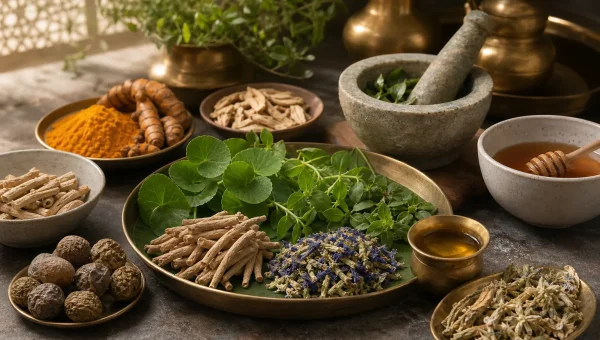
The pharmacopoeial monograph records sugars, glycosides, saponin and sitosterol as important constituents of the root. Modern isolation studies provide a more detailed account of the steroidal saponin fraction, including shatavarin I, IV, V and additional compounds designated shatavarins VI–X.
- Steroidal saponins: These are glycosides containing a steroid-like plant aglycone joined to sugar residues. Their chemical classification does not make them human steroid hormones, and oral ingestion does not automatically produce estrogenic activity.
- Plant sterols and glycosides: Sitosterol and other constituents contribute to the chemical profile of the whole root, although their individual contributions to clinical outcomes have not been separated in human trials.
- Polyphenolic constituents: Compounds such as rutin have been examined in estrogen-receptor models. Activity observed in a cell or docking system does not establish the amount absorbed from a finished oral preparation.
- Extract-dependent composition: Water extracts, hydroalcoholic extracts, crude powders and proprietary standardized extracts contain different constituent ratios.
A 2008 phytochemical investigation isolated several steroidal saponins from Shatavari roots using chromatography, mass spectrometry and nuclear magnetic resonance methods. This verifies the presence and structures of multiple shatavarins, but it does not identify one compound as the sole mediator of lactation or menopausal effects.
Product standardization therefore matters. The Ayurvedic Pharmacopoeia provides macroscopic, microscopic, extractive, ash and thin-layer chromatography specifications for authentic crude root. Some clinical extracts have separately been standardized to more than 10% total shatavarins. “Total shatavarins” is not the same specification as “Shatavarin IV greater than 10%,” and results obtained with one proprietary extract cannot automatically be transferred to an unstandardized capsule or powder.
Estrogen-Receptor Interaction
Estrogen exerts many of its genomic actions through estrogen receptor alpha and estrogen receptor beta. Shatavari-specific experiments have investigated receptor interaction, but the available work does not demonstrate preferential binding of Shatavarin IV to ERβ, clinically selective activation of ERβ, or a uterine-sparing SERM effect in women.
A laboratory study published in 2017 used estrogen-receptor-alpha-functionalized nanoparticles to separate potential estrogen-binding constituents from a Shatavari extract. A later study used T47D breast cells and molecular docking to examine an extract against ERα and reported a notable predicted binding profile for rutin. More recent computational work has docked shatavarins against several hormone-related receptors.
These models address whether constituents may interact with a receptor system under experimental conditions. They do not determine oral bioavailability, circulating metabolite concentrations, human receptor occupancy, tissue-specific agonism, antagonism, endometrial effects, or the relative activation of ERα and ERβ after a person takes the herb.
The accurate mechanistic description is therefore that Shatavari contains constituents capable of investigation in estrogen-receptor models. Labelling the herb a proven natural SERM, claiming established ERβ selectivity, or attributing clinical effects specifically to Shatavarin IV goes beyond what these experiments measured.
Lactation, Prolactin and Milk Production
Lactation is the area in which the classical Ayurvedic designation and modern clinical investigation most clearly converge. Shatavari is described as stanyakara in the Ayurvedic Pharmacopoeia, while several controlled studies have measured maternal prolactin, expressed milk volume, time to breast fullness, infant weight or breastfeeding outcomes.
In a 2011 double-blind randomized trial, 60 nursing mothers received either botanically verified fresh Shatavari root at 20 mg/kg three times daily or rice-powder placebo for 30 days. Prolactin increased by 33% from baseline in the Shatavari group and by 10% in the placebo group. Infant weight increased by 16% and 6%, respectively. The publication did not specify the timing of the final prolactin sample in relation to breastfeeding, an important consideration because prolactin fluctuates around feeding.
An earlier randomized trial published in 1996 evaluated a multi-ingredient preparation containing Shatavari together with dill, Ipomoea digitata, licorice, spinach, cumin and other ingredients. After four weeks, the groups did not differ in prolactin change, infant weight gain or supplementary feeding. Because this was a compound preparation, it neither proves nor excludes an independent effect of Shatavari root.
A 2022 double-blind trial evaluated a food bar containing Shatavari, oats, dry fruits, honey and cocoa. Thirty-nine women received the Shatavari bar and 39 received an otherwise similar placebo bar. Greater expressed milk volume and a shorter time to breast fullness were reported in the active group, although the publication did not state the quantity of Shatavari contained in each bar.
In a 2025 randomized placebo-controlled trial, 120 mothers were assigned to one capsule daily of a standardized Shatavari root extract or placebo during the first three days after delivery. The extract contained more than 10% total shatavarins. At 72 hours, mean expressed milk volume was 97.98 mL with Shatavari and 85.36 mL with placebo. Time to breast fullness was 2.49 hours after the preceding feeding in the active group and 3.05 hours in the placebo group.
These trials provide a clinical signal for lactation support, but they do not establish a dopamine-D2 mechanism, direct hypothalamic dopamine modulation, or ERβ-mediated stimulation of pituitary lactotrophs. Prolactin is involved in secretory activation, while sustained milk production also depends on frequent and effective milk removal, infant attachment, maternal health, infant health and breastfeeding technique.
Menopause, Perimenopause and Hormone Measurements
Several recent randomized trials have evaluated Shatavari extracts for menopausal or perimenopausal symptoms. Their principal outcomes have been symptom-rating scales, stress, quality of life, hot-flush frequency and selected serum hormones rather than receptor occupancy or direct measurement of hypothalamic signalling.
A 2024 multicentre double-blind trial randomized 70 women with menopausal symptoms to Shatavari root extract or placebo. The active group reported greater improvements in menopause-rating and quality-of-life measures over the study period. The trial examined a specific commercial extract, so its dose and composition should not be assumed to match every Shatavari product.
An eight-week 2025 perimenopause trial randomized 80 women to a standardized extract at 300 mg once daily or placebo. Seventy-three participants completed the study. Menopause Rating Scale, perceived-stress and hot-flush outcomes improved in the active group, and the investigators reported differences in serum estradiol and FSH measurements. A change in these blood values does not by itself identify a receptor subtype, GnRH pulse pattern or ovarian feedback mechanism.
Another 2025 trial enrolled 135 women aged 45–65 years and assigned them to Shatavari extract 300 mg daily, Shatavari 300 mg combined with Ashwagandha 250 mg, or placebo for eight weeks. Shatavari alone improved selected somato-vegetative and psychosocial measures, while the combination produced stronger effects for several stress and mood outcomes. Estradiol, FSH, LH and testosterone did not show significant between-group changes attributable to a major alteration of the hypothalamic-pituitary-gonadal axis.
A separate six-week trial in 20 postmenopausal women used 1,000 mg of a Shatavari supplement daily. Handgrip strength improved relative to placebo, but knee-extension strength and plasma markers of bone turnover did not. This finding does not justify presenting Shatavari as a treatment for postmenopausal osteoporosis or as an alternative to established bone-protective care.
Collectively, the human studies support further clinical use and investigation of specific preparations for symptoms and lactation. They do not establish that Shatavari restores ovarian function, normalizes an abnormal FSH-to-LH ratio, suppresses GnRH pulsatility, reverses ovarian insufficiency, or delivers estrogen-replacement-level effects.
Dose and Preparation
The dose must be linked to the exact preparation. The Ayurvedic Pharmacopoeia lists 3–6 g of the crude drug as general adult oral dose guidance. This pharmacopoeial range does not provide a conversion factor for concentrated extracts, and research protocols should not be treated as universal self-treatment instructions.
| Preparation | Dose Used | Context | Interpretation |
|---|---|---|---|
| Crude Shatavari root | 3–6 g per dose | Ayurvedic Pharmacopoeia adult oral guidance | Applies to the pharmacopoeial crude drug, not automatically to extracts |
| Fresh-root preparation | 20 mg/kg three times daily for 30 days | 2011 lactation trial | Study-specific weight-adjusted protocol |
| Standardized root extract | One 300 mg capsule daily for 72 hours | 2025 early-postpartum lactation trial | Contained more than 10% total shatavarins |
| Standardized root extract | 300 mg once daily for eight weeks | 2025 perimenopause trial | Trial-specific preparation and duration |
| Shatavari supplement | 1,000 mg daily for six weeks | 2021 postmenopausal muscle study | Assessed strength and bone-turnover markers, not menopausal hormone replacement |
A clinically useful label should identify the botanical name, plant part, amount per dose and whether the preparation is powder or extract. For an extract, the extraction ratio, solvent and marker specification help determine whether it resembles a studied product. A statement such as “equivalent to 5,000 mg root” is not interchangeable with a laboratory assay of total shatavarins.
Formulation and Herb Combinations
Ayurvedic prescribing commonly uses compound formulations, but the rationale for a combination should be based on the individual’s condition, digestive capacity, stage of life, concurrent medicines and the properties of the complete formulation. A traditional combination should not automatically be reinterpreted as a molecularly synergistic hormone treatment.
Ashwagandha, Lodhra, Vidari, Shatapushpa and Guduchi may appear in female-health formulations, but claims that these combinations lower cortisol, directly activate estrogen receptors, restore ovarian steroidogenesis or create additive estrogenic effects require product-specific investigation. Results from the 2025 Shatavari–Ashwagandha trial apply to the tested 300 mg and 250 mg standardized extracts, not to every powder mixture containing the same plant names.
Similarly, the presence of Shatavari in Shatavari Ghrita, Shatavari Kalpa or Shatavari Guda does not establish dose equivalence between those preparations. Their excipients, manufacturing procedures and concentration influence the administered chemical matrix. Selection and dosing are appropriately made by a qualified Ayurvedic practitioner rather than by combining multiple “hormone-balancing” supplements independently.
Safety and Clinical Boundaries
Short-duration trials generally reported few adverse events, but their findings apply to selected participants and specific preparations. In the 2025 three-arm menopause trial, nausea occurred in the Shatavari-only group, while loose stools and dizziness were reported in the combination group. These events were described as mild. The trials were not designed to establish safety during years of continuous use.
- Breastfeeding: Low milk supply should first prompt assessment of feeding frequency, attachment, milk transfer, infant weight, maternal health and infant health. A galactagogue should not replace lactation support or treatment of an underlying cause.
- Hormone-sensitive conditions: People with hormone-sensitive cancers or receiving endocrine treatment should discuss Shatavari with their oncology team because estrogen-receptor interaction is under investigation and clinical safety in these populations has not been established.
- Hormonal and fertility medicines: Anyone using menopausal hormone therapy, hormonal contraception, ovulation-induction medicines or other endocrine treatment should obtain professional review before adding Shatavari.
- Pregnancy and unexplained symptoms: Pregnancy, unexplained bleeding, persistent cycle irregularity, severe hot flushes or new breast symptoms require medical assessment rather than presumptive self-treatment.
- Product quality: Choose products that clearly identify Asparagus racemosus root and provide appropriate batch testing. A trial result obtained with an authenticated standardized extract does not validate every supplement sold under the name Shatavari.
Shatavari should not be presented as a replacement for menopausal hormone therapy when that treatment is medically indicated, nor as a treatment for premature ovarian insufficiency, infertility, osteoporosis or estrogen-receptor-positive cancer. It may be considered as part of individualized care after the diagnosis, treatment goals and medication profile have been reviewed.
Practical Synthesis
The most defensible account of the Shatavari hormone mechanism separates established pharmacopoeial information, measured clinical outcomes and laboratory hypotheses:
- The official Ayurvedic drug is the tuberous root of Asparagus racemosus, with Madhura–Tikta rasa, Guru–Snigdha guna, Shita virya and Madhura vipaka.
- The Ayurvedic Pharmacopoeia identifies Shatavari as stanyakara and lists diminished lactation and postpartum disorders among its uses.
- The root contains steroidal saponins, including multiple shatavarins, but these compounds are not human hormones and should not be described as direct estrogen substitutes.
- Cell-based, receptor-capture and docking experiments support investigation of estrogen-receptor interaction; they do not demonstrate preferential ERβ binding or SERM-like tissue selectivity in women.
- Controlled lactation trials have reported changes in prolactin, milk volume, breast fullness or infant weight, while another trial of a multi-herb preparation found no advantage over placebo.
- Recent menopause and perimenopause trials have reported improvements in selected symptom scales, but their hormone measurements do not establish normalization of the hypothalamic-pituitary-ovarian axis.
- Crude root doses and concentrated extracts are not interchangeable. Clinical interpretation requires the exact product, marker specification, dose and duration.
Shatavari can therefore be described as an Ayurvedic rasayana and lactation-supporting root with emerging human data for specific postpartum and menopausal outcomes. Its clinical effects should be discussed in terms of the preparation and outcomes actually studied, without assigning an unmeasured ERβ, dopamine, GnRH or ovarian-restoration mechanism.
Medical Disclaimer: This article is for educational purposes and is not a diagnosis, prescription or substitute for medical care. Hormonal symptoms, menstrual changes and lactation problems can have multiple causes. Consult a qualified Ayurvedic practitioner and an appropriate healthcare provider before using Shatavari, particularly during pregnancy or breastfeeding, with fertility or hormonal treatment, or when there is a history of hormone-sensitive disease or cancer.
References
- Ayurvedic Pharmacopoeia of India
- Steroidal saponins from the roots of Asparagus racemosus (2008), PubMed
- Estrogenic Receptor-Functionalized Magnetite Nanoparticles for Rapid Separation of Phytoestrogens in Plant Extracts (2017), PubMed
- Asparagus racemosus (Shatavari) targeting estrogen receptor α: – An in-vitro and in-silico mechanistic study (2020), PubMed
- Molecular docking analysis of shatavarins with female hormonal receptors (2024), PubMed Central
- A Double-Blind Randomized Clinical Trial for Evaluation of Galactogogue Activity of Asparagus racemosus Willd (2011), PubMed Central
- Randomized controlled trial of Asparagus racemosus (Shatavari) as a lactogogue in lactational inadequacy (1996), PubMed
- Postpartum Use of Shavari Bar® Improves Breast Milk Output: A Double-Blind, Prospective, Randomized, Controlled Clinical Study (2022), PubMed Central
- Shatavari (Asparagus racemosus Willd) root extract for postpartum lactation: A randomised, double-blind, placebo-controlled study (2025), PubMed
- NCBI
- Efficacy and Safety of Shatavari Root Extract for the Management of Menopausal Symptoms: A Double-Blind, Multicenter, Randomized Controlled Trial (2024), PubMed Central
- Efficacy and Safety of Shatavari (Asparagus racemosus) Root Extract for Perimenopause: Randomized, Double-Blind, Placebo-Controlled Study (2025), PubMed Central
- Frontiersin (frontiersin.org)
- Mdpi (mdpi.com)
- Abm (abm.memberclicks.net)
- ACOG
- Mskcc (mskcc.org)
I had exactly the presentation described in the opening: irregular cycles, night sweats, borderline estradiol. My gynecologist also had nothing actionable to offer. Started Shatavari root powder 8 weeks ago. The night sweats have reduced from every night to 2-3 times per week. My cycle length normalized from 45-50 days to 32-35 days. It is too early to call it conclusive but the direction is clear.
Doing this
What is the difference between Shatavari root powder and Shatavari extract standardized for saponin content? I have seen both recommended and do not understand whether the traditional whole root preparation or the standardized extract is more appropriate for the hormonal applications described here.
I am a reproductive endocrinologist and the phytoestrogen activity of Shatavari saponins has been on my research radar since the 2019 paper on its ERbeta selectivity. If it really does preferentially bind ERbeta rather than ERalpha, the safety profile for long-term use is considerably better than commonly assumed. This mechanistic article is the clearest lay explanation I have seen.
Tried this, results were good.
I would like more detail on Shatavari Root Mechanisms. I appreciate that it does not oversell the result.
I took Shatavari during breastfeeding on my vaidya’s recommendation and my milk supply which had been dropping since month 3 stabilized. I have seen this recommended by many Ayurvedic practitioners for lactation. The prolactin effect described here gives me a mechanism to point to when people ask why I did this.
tbh wasnt expecting much from this but the specifics are actually helpful
My endocrinologist hadn’t heard of shatavari. Sent her this article actually
Helpful article, thank you.
My wife has endometriosis and was prescribed Shatavari by an Ayurvedic practitioner. Her gynecologist is concerned because some phytoestrogen-containing preparations could potentially stimulate estrogen-dependent endometriosis tissue. Does the ERbeta selectivity of Shatavari saponins make it safe for endometriosis patients or does this remain a theoretical concern?
The Kapha-aggravating property at high doses is something most shatavari articles skip
Anyone else tried this for longer than 6 months? Wondering about long-term effects
Good article on this subject. #65
Good article on this subject. #93 धन्यवाद
Three years of trying to get my digestion right and finally something that addressed the root. The shatavari protocol described here is essentially what turned things around for me.
The ERalpha receptor interaction you mentioned is that the same pathway as estrogen replacement therapy?
Good article on this subject. #55
The Asparagus racemosus taxonomy is worth noting. The species is threatened in parts of India from overharvesting. When recommending this herb at scale, sustainability questions are relevant. Is there an ethical sourcing standard for Shatavari that ensures the wild populations are not depleted?
This helped clarify my doubts. 🙏
Good article on this subject. #60
Good article on this subject. #71
The galactagogue mechanism is one I have confirmed in my practice. Three of my patients who were supplementing with Shatavari for perimenopause symptoms noticed increased breast tenderness which resolved when I reduced their dose. The prolactin activity at higher doses is real and patients should be monitored for this.
Good article on this subject. #64
I want to know the contraindications more specifically. The article mentions hormone-sensitive cancers as a concern. Is this based on direct evidence of harm or theoretical concern from the estrogenic activity? The ERbeta selectivity argument suggests it may be safer than standard phytoestrogens but theoretical concerns drive practice until evidence resolves them.
Following this protocol now. ✨
The article clarifies why calling Shatavari a simple hormone balancer misses the nuance between Ayurvedic labels and lab data.
That’s a real limitation worth noting. The article is careful to distinguish between symptom relief and hormonal biomarker changes, which I appreciate. For something like irregular cycles where subjective experience matters enormously, I wonder how much of the benefit is measurable through standard bloodwork versus patient-reported outcomes. Did your approach include any objective markers alongside the symptoms?
Good article on this subject. #70
The section on dosage was the most practically useful for me
Will try
Been following Ayurveda for 5 years and this article still taught me something new 🌿
The adaptogenic aspect alongside the hormonal aspect does it actually do both or primarily one? 🙌
Good article on this subject. #59
The contraindications section was important and often missing from similar articles
The testosterone interaction in men is there concern about feminizing effect at normal doses?
Good information on this topic.
Good article on this subject. #61
Good article on this subject. #85
Can this be combined with modern medication or is it better standalone?
Does this protocol change if someone is pregnant or breastfeeding?
This explains something I’ve experienced but couldn’t name. Good validation
Same here
Did this for 6 weeks exactly as described, going to update here with results
Will try this approach soon.
Is the morning or evening timing more important for this protocol overall?
I appreciate how specific the instructions are compared to most Ayurveda articles
The connection between gut health and this condition is the angle most allopathic doctors miss
The Ayurvedic framing made this topic much easier to understand than the Western medical version
Would love a follow-up article going deeper on the herb preparation methods
One question I have is whether the standardized extracts used in trials reflect what’s available in typical over the counter powders.
Are there clinical studies backing the specific herb combination you mentioned?
Good mechanistic explanation but citations to specific studies would strengthen the article
How long typically before seeing results with this approach?
The root powder vs standardized extract which form gives the hormonal benefit more reliably?
What’s the typical duration of the treatment before reassessing?
The dosage range given is wide. Is there a way to determine where in the range I should start?
Thanks!
The traditional context helps understand why it’s done this way. Not just ‘eat this herb’
Shared this with my Ayurveda practitioner. She agreed with most points
My doctor dismissed this as pseudoscience. Going to try it anyway and report back
The seasonal variation angle is underused in most health content. Good to see it here
Not skeptical about Ayurveda generally but some claims here need stronger evidence
The section on phytoestrogens interacting with estrogen receptors without actually raising serum estradiol finally explains something my doctor couldn’t. My levels kept testing within normal range but the symptoms were clearly there, and she had no explanation. Has there been any research on how Shatavari behaves in women who are already on low-dose HRT, or is that combination still largely unstudied?
started this 3 weeks ago, too early to say but the process itself feels right
I tried a similar approach last year but without the specific sequencing. Wonder if that’s why it didn’t work
Does the mechanism change for perimenopausal use vs reproductive age use?
The galactagogue effect of shatavari during breastfeeding any safety concerns for the infant?
Is this suitable for elderly patients or does the dosage need adjustment?
Where do you recommend sourcing the herbs mentioned here in India?
Does this apply to children or only adults?
Good article on this subject. #91 💯
good info, sharing with my father who has been looking for something like this
I took shatavari for 6 months for PCOS. Cycles became more regular. Causation uncertain but timing matched
Good article on this subject. #89
It notes that steroidal saponins like shatavarins do not automatically act as human estrogen which is an important caveat.
Useful post
Interesting perspective here. ❤️
Thanks for the clear explanation.
Useful and actionable.
Good article on this subject. #80
Bookmarked for future reference.
Good article on this subject. #56
Good article on this subject. #57
Good article on this subject. #58
Good article on this subject. #62
Good article on this subject. #63
Some readers might wonder how the twenty milligrams per kilogram dose from the 2011 lactation study translates to everyday capsules.
Good article on this subject. #66
Good article on this subject. #67
Good article on this subject. #68
Good article on this subject. #69
The discussion of extract dependent composition reminds me to check labels for marker specifications before buying.
Good article on this subject. #72
Good article on this subject. #73
Good article on this subject. #74
According to the Pharmacopoeia details the sweet and bitter taste profile aligns with its traditional rejuvenative use.
Good article on this subject. #75 ✨
Good article on this subject. #76
Good article on this subject. #77
Good article on this subject. #78
After reading about the menopause trials I’m curious if the observed estradiol shifts are clinically meaningful.
Good article on this subject. #79
Good article on this subject. #81
It is useful that the piece separates classical indications like stanyakara from modern symptom scores avoiding over reach.
Good article on this subject. #82
Good article on this subject. #83
Many may appreciate the reminder that safety data are limited to short durations and specific formulations.
Good article on this subject. #84
Good article on this subject. #86
Good article on this subject. #87
Good article on this subject. #88
Good article on this subject. #90
Good article on this subject. #92
Good article on this subject. #94
Good article on this subject. #95 ठीक है
Good article on this subject. #96
Good article on this subject. #97
Good article on this subject. #98
Good article on this subject. #99
Good article on this subject. #100
Good article on this subject. #101
Good article on this subject. #102
Good article on this subject. #103
Good article on this subject. #104
Good article on this subject. #105
Good article on this subject. #106
Good article on this subject. #107
Good article on this subject. #108
Good article on this subject. #109
Good article on this subject. #110