
In many Indian homes, the spice box does double duty: it flavours food and provides small, practical supports for digestion, throat comfort, mild nausea, restlessness, and temporary aches. Ayurveda treats such kitchen substances with respect because even familiar spices can be sharp, heating, drying, soothing, or heavy depending on the ingredient, dose, person, and season.
The remedies below keep that household-spice tradition practical and measured. They are intended for mild, short-lived discomforts only. Stop any remedy that irritates your skin, throat, or stomach, and consult a qualified Ayurvedic practitioner or healthcare provider if symptoms are severe, persistent, recurrent, associated with fever, pregnancy, infancy, chronic illness, or regular medication use.
1. Mild Forehead Heaviness: Dry Ginger Forehead Paste
Mix 1/2 teaspoon dry ginger powder (saunth/shunthi) with enough warm water to make a smooth paste. Apply a thin layer to the forehead, keeping it away from the eyes, eyebrows, nostrils, and broken skin. Leave it on for 10 to 15 minutes, then wash off with cool water. Use this only when the head feels heavy, dull, or cold-type; avoid it for burning, red, overheated, or migraine-like headaches.
Dry ginger is a warming spice. In Ayurvedic language it is used to support agni and to reduce vata-kapha heaviness; in household use, the paste gives a local warming sensation. Patch-test first on a small area of skin. If it burns, reddens strongly, or makes the headache worse, remove it immediately and do not repeat.
2. Bloating: Cumin-Fennel-Coriander Tea
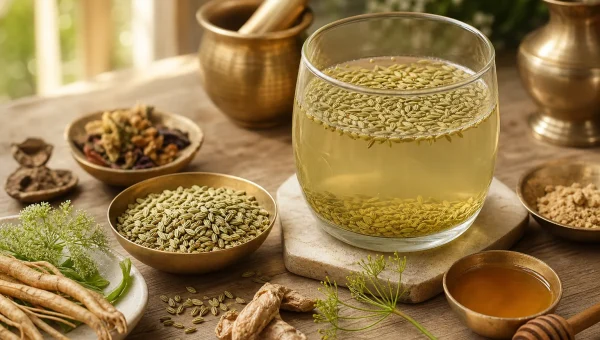
Combine 1/2 teaspoon cumin seeds, 1/2 teaspoon fennel seeds, and 1/2 teaspoon coriander seeds with 2 cups of water. Bring to a boil, reduce the heat, simmer for 5 minutes, strain, and sip warm after meals.
Cumin is the warming, agni-supporting seed in this trio. Fennel brings a sweeter aromatic quality and is widely used for gas and cramping after meals. Coriander makes the tea lighter and gentler, especially when digestion feels warm, heavy, or waterlogged. For persistent abdominal swelling, sharp pain, vomiting, blood in stool, or unexplained weight loss, seek medical care rather than relying on digestive tea.
3. Cold-Season Comfort: Turmeric Milk with Black Pepper
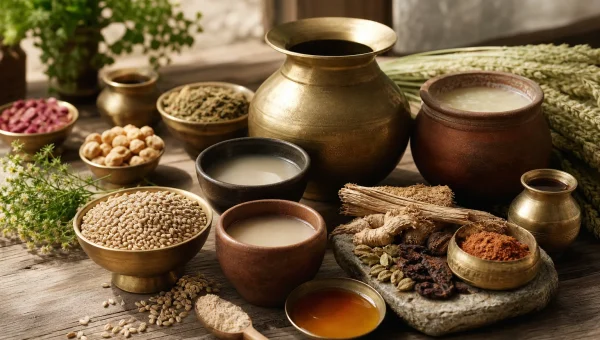
Warm 1 cup milk or unsweetened coconut milk with 1/2 teaspoon turmeric powder, a small pinch to 1/8 teaspoon black pepper powder, and a pinch of cinnamon. Sweeten with a little jaggery if desired. Drink warm at bedtime for 2 to 3 nights during mild cold-season throat irritation or body heaviness.
Turmeric is the household form of haridra, and its main colouring constituent is curcumin. Black pepper supplies piperine, which can markedly improve curcumin bioavailability in measured-dose contexts. Keep the pepper small; too much can irritate acidity, mouth ulcers, gastritis, or a sensitive throat.
4. Sore Throat: Turmeric-Salt Gargle with Tulsi
Dissolve 1/4 teaspoon turmeric powder and 1/4 teaspoon salt in 1 cup warm water. Add 4 to 5 crushed fresh tulsi leaves, steep for 2 minutes, strain if needed, gargle for 20 to 30 seconds, and spit it out. Repeat up to 3 times daily for a scratchy throat.
Warm saltwater gargles can soothe throat discomfort, while turmeric and tulsi add traditional aromatic support. This gargle is for adults and older children who can gargle safely without swallowing. If sore throat comes with high fever, pus on the tonsils, breathing difficulty, dehydration, rash, or symptoms lasting more than a few days, consult a healthcare provider.
5. Nausea: Fresh Ginger with Lemon
Grate 1/2 to 1 inch fresh ginger root and squeeze out 1/2 to 1 teaspoon ginger juice. Mix it with 1 teaspoon fresh lemon juice and a tiny pinch of rock salt. Take it slowly in small licks when mild queasiness appears, preferably not on a completely empty stomach if you are prone to acidity.
Ginger contains pungent constituents such as gingerols and shogaols, and ginger is commonly used for nausea support. Use smaller amounts if you have reflux, ulcers, or a very hot constitution. During pregnancy, use only food-level amounts unless your healthcare provider approves a stronger preparation, especially if nausea is severe, persistent, or associated with dehydration.
Safety note: Severe nausea, repeated vomiting, dizziness, dehydration, abdominal pain, or pregnancy-related vomiting that prevents normal eating or drinking needs professional care.
6. Restless Sleep: Tiny-Pinch Nutmeg Milk
Add 1/16 to 1/8 teaspoon freshly grated nutmeg to 1 cup warm milk. Stir well and drink 30 minutes before bed. Do not use this every night as a habit; reserve it for occasional restlessness.
Nutmeg is strong even though it is a familiar kitchen spice. Large amounts can cause serious unwanted effects, including confusion, hallucinations, agitation, rapid heartbeat, nausea, and drowsiness. Avoid nutmeg sleep remedies with alcohol, sedative medicines, pregnancy, liver disease, or for children unless a qualified clinician advises it.
Important: Never treat nutmeg as “more is better.” Keep the dose tiny. If accidental excess intake causes confusion, palpitations, hallucinations, severe sleepiness, or vomiting, seek urgent medical help.
7. Acidity After Meals: Fennel Seed Chew
After meals, chew 1/2 to 1 teaspoon fennel seeds (saunf) slowly for 2 to 3 minutes, then swallow or spit out according to comfort. If raw fennel tastes too sharp, dry-roast the seeds on low heat for about 1 to 2 minutes and store them after cooling.
Chewing fennel increases saliva and leaves a cooling, sweet-aromatic aftertaste. Fennel contains anethole-rich essential oil and is commonly used for post-meal gas and digestive uneasiness. If acidity is frequent, wakes you at night, causes chest pain, black stools, trouble swallowing, or unexplained weight loss, get medical evaluation.
8. Dry Cough: Black Pepper and Honey
Mix 1/8 teaspoon freshly ground black pepper with 1 to 2 teaspoons honey. Take it slowly so it coats the throat. Use up to 2 times daily for a short period, and do not drink water immediately afterward.
Honey can soothe a cough-irritated throat, while black pepper adds a warming kapha-clearing quality. This is best suited for a dry, tickly cough without high fever or breathing difficulty. For a very dry cough, add 1/4 teaspoon ghee. For a mucus-heavy cough, add a tiny pinch of dry ginger powder. For cough with throat scratchiness, add a small pinch of turmeric.
| Cough Type | Simple Modification |
|---|---|
| Dry, tickly cough | Add 1/4 teaspoon ghee |
| Mucus-heavy cough | Add a tiny pinch of dry ginger powder |
| Cough with scratchy throat | Add a small pinch of turmeric powder |
Honey safety: Do not give honey to infants under 1 year of age. Seek medical care for wheezing, chest pain, blood in sputum, blue lips, high fever, dehydration, or cough lasting more than a few days.
9. Afternoon Slump: Cumin-Jaggery-Ghee Bites
Dry-roast 2 tablespoons cumin seeds until aromatic, cool, and grind to a powder. Mix with 2 tablespoons powdered jaggery, 1 tablespoon ghee, and a pinch of cardamom powder. Roll into marble-sized bites and store in an airtight container. Eat 1 small bite when the slump is clearly from a long gap between meals.
This is a food preparation, not a treatment for medical fatigue. Jaggery supplies quick carbohydrates, ghee makes the bite more sustaining, and cumin keeps the snack aromatic and digestive. Avoid this remedy or use only with medical guidance if you have diabetes, insulin resistance, fatty liver, unexplained fatigue, or a condition requiring sugar restriction.
10. Toothache: Clove with Sesame Oil
Crush 1 whole clove lightly and mix it with 1 teaspoon warm sesame oil. Apply a small amount to the painful tooth area with a clean cotton bud for 5 to 10 minutes, then rinse gently. Do not swallow clove oil or pack strong clove directly against the gum for long periods, as it can irritate tissue.
Clove contains eugenol, a compound long used in dentistry for temporary local pain relief. Sesame oil dilutes the clove and makes application gentler. This is only a temporary comfort measure and does not treat cavities, gum infection, abscess, cracked teeth, or impacted wisdom teeth.
Dental disclaimer: Persistent toothache needs a dentist. Seek urgent dental or medical care for swelling of the face or jaw, fever, pus, difficulty opening the mouth, difficulty swallowing, or pain after injury.
Stocking Your Kitchen Pharmacy
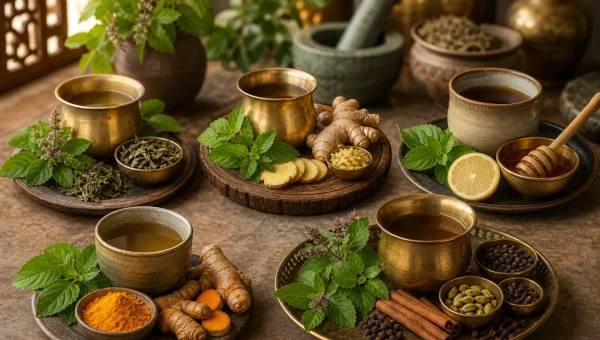
You do not need exotic ingredients to begin. A practical kitchen set includes turmeric powder, whole black pepper, cumin seeds, fennel seeds, coriander seeds, dry ginger powder, fresh ginger root, whole cloves, whole nutmeg, tulsi leaves, jaggery, ghee, and sesame oil.
Buy whole spices when possible and grind small amounts as needed. Store spices in airtight glass or stainless-steel containers in a cool, dark, dry place away from sunlight, steam, and stove heat. Whole spices generally keep their aroma longer than ground spices, but all spices lose flavour and potency over time.
A Few Practical Notes
Use small quantities. Kitchen spices are potent because they contain aromatic oils and pungent constituents. More is not better, especially with nutmeg, clove, black pepper, dry ginger, and concentrated ginger juice.
Match the remedy to the symptom. Heating spices such as dry ginger and black pepper are not ideal for burning acidity, mouth ulcers, red inflamed skin, or high-pitta irritation. Cooling or gentler preparations such as fennel or coriander are usually better tolerated in those situations.
Keep these remedies in their proper place: mild, short-term household support. When symptoms are intense, unusual, recurrent, or not improving, a qualified practitioner or healthcare provider should guide diagnosis and treatment.
References
- Ayurvedic Pharmacopoeia of India
- Ayurvedic Pharmacopoeia of India
- Cuminum cyminum and Carum carvi: An update (2011), PubMed Central
- Foeniculum vulgare Mill: a review of its botany, phytochemistry, pharmacology, contemporary application, and toxicology (2014), PubMed Central
- Fennel Tea Has a Region-Specific Effect on the Motility of the Stomach (2025), PubMed Central
- Acute diuretic effect of continuous intravenous infusion of an aqueous extract of Coriandrum sativum L. in anesthetized rats (2008), PubMed
- Influence of piperine on the pharmacokinetics of curcumin in animals and human volunteers (1998), PubMed
- NCCIH
- Mayoclinic (mayoclinic.org)
- Antimicrobial Activity of Tulsi (Ocimum tenuiflorum) Essential Oil and Their Major Constituents against Three Species of Bacteria (2016), PubMed Central
- NCCIH
- Ginger and its pungent constituents non-competitively inhibit serotonin currents on visceral afferent neurons (2014), PubMed
- Nutmeg poisonings: a retrospective review of 10 years experience from the Illinois Poison Center, 2001-2011 (2014), PubMed Central
- Nutmeg Intoxication: A Case Report (2023), PubMed Central
- Mayoclinic (mayoclinic.org)
- Mayoclinic (mayoclinic.org)
- NCBI
- Analgesic effect of the aqueous and ethanolic extracts of clove (2013), PubMed Central
- Mayoclinic (mayoclinic.org)
- Nin (nin.res.in)
- Value Addition and Fortification in Non-Centrifugal Sugar (Jaggery): A Potential Source of Functional and Nutraceutical Foods (2022), PubMed Central
- NIH Office of Dietary Supplements
- Mccormick (mccormick.com)
- Thespicehouse (thespicehouse.com)
- NHS
skeptical at first not gonna lie. but two weeks later and yeah im surprised
love the nuance here. most wellness content just tells you what to do not why or when not to
The advice around Your Kitchen Is a Pharmacy is specific enough to be useful. A few more examples would still help.
The black pepper and turmeric combination for headaches is my most-used remedy from this list. Within 45 minutes of a mild tension headache the pain has usually reduced significantly. I take it with warm water and the effect is reliable.
The cumin for gas and bloating remedy is the one I reach for first now before any over-the-counter antacid. Roasted cumin with warm water works for mild digestive distress better than simethicone in my experience.
The advice around Your Kitchen Is a Pharmacy is specific enough to be useful. Would be useful to see a short checklist next.
The cloves for toothache remedy is genuinely well-supported. Eugenol is used in commercial dental preparations and chewing a clove is essentially delivering food-grade eugenol to the affected area. This is one of the spice remedies with direct pharmaceutical parallel.
The Kerala kitchen as first-response medical cabinet is a useful framing. My family operated this way entirely unconsciously. Every household member knew which spice for which complaint. It was practical knowledge transmitted without ever being codified.
The advice around Your Kitchen Is a Pharmacy is specific enough to be useful. The article avoids making it sound like a quick fix.
The idea of a brass vaidya petty storing spices feels like a tangible link between kitchen and healing.
The advice around Your Kitchen Is a Pharmacy is specific enough to be useful. I appreciate that it does not oversell the result.
How does the ginger black pepper paste measure up against a simple cold compress for tension headaches?
Two of these remedies I tried and they didn’t work for me. The ajwain for gas made my heartburn worse and the ginger for nausea was too strong for morning sickness. I want to share this as a reminder that these remedies are not universally effective.
A cup of turmeric milk with black pepper at bedtime sounds comforting when a cold starts.
The CCF tea ratio of equal parts cumin fennel and coriander seems easy to remember after a heavy meal.
The advice around Your Kitchen Is a Pharmacy is specific enough to be useful. This would be easier to follow with a one-week sample plan.
Chewing fennel seeds after dinner could be a simple way to curb acidity without medication.
A tiny grating of nutmeg in warm milk helped me drift off faster when I tested it.
The clove and sesame oil mix for a toothache feels like a handy first aid step until you can see a dentist.
Using fresh tulsi leaves in the turmeric salt gargle adds a nice aromatic twist to the remedy.
The warning about nutmeg dosage is useful because even a small excess can cause unwanted effects.
The fatigue fighting cumin and jaggery balls seem like a tasty alternative to an afternoon coffee slump.
Does the ginger lemon nausea mix work equally well for motion sickness on a boat as it does for morning sickness?
Starting with small amounts is wise since spices are potent and can surprise you.
The suggestion to keep whole spices in airtight glass jars makes sense for preserving their bioactive compounds.
It’s interesting that the Kerala version of golden milk includes jaggery and a pinch of cinnamon for extra warmth.
After reading about the vaidya petty, I’m tempted to set aside a small brass container for my own spice remedies.