
Cervical health sits at an important intersection of preventive gynecology, menstrual health, fertility care, and long-term wellbeing. Ayurveda approaches the cervix as part of the wider female reproductive tract rather than as an isolated structure: a tissue environment influenced by apana vata, the quality of menstrual and reproductive flow, the balance of pitta and kapha, digestion, elimination, and daily habits. In practical care, this means supporting the terrain around the cervix while continuing appropriate Pap testing, HPV testing, vaccination when indicated, and medical follow-up for abnormal results.
The Ayurvedic Understanding of Cervical Tissue
Classical Ayurveda discusses disorders of the female genital tract under yoni vyapad, with diagnosis and management organized around disturbed dosha, affected tissues, local therapies, diet, purification measures, and strengthening care. When this framework is applied to cervical health, apana vata is central because it governs downward pelvic functions such as menstruation, urination, bowel movement, and childbirth. Pitta-dominant patterns are understood through heat, burning, redness, irritation, sharp smell, or inflamed discharge; kapha-dominant patterns through heaviness, congestion, itching, excessive mucus, and thick discharge; vata-dominant patterns through dryness, irregularity, pain, and tissue fragility. Contemporary cervical care also recognizes the importance of a Lactobacillus-predominant, low-pH cervicovaginal environment, while dysbiosis and inflammation are associated with higher vulnerability to persistent HPV and cervical epithelial changes.
Foundational Herbs for Cervical Health
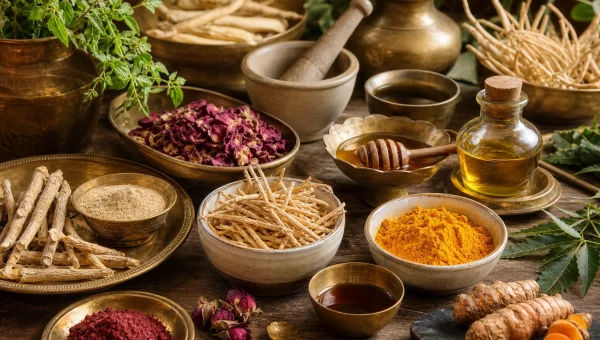
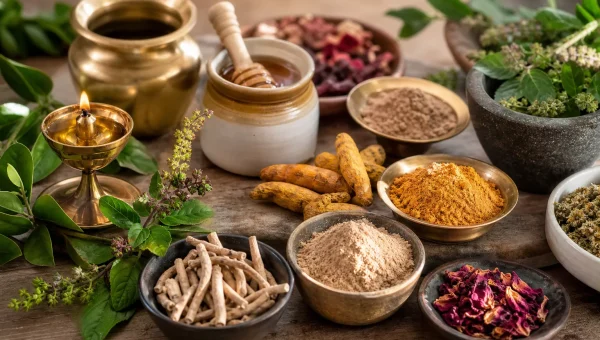
Ayurvedic herbs for cervical wellness should be chosen according to constitution, symptoms, age, menstrual pattern, pregnancy status, medical diagnosis, and current medication use. The following herbs are best understood as traditional supports for tissue tone, discharge patterns, inflammation balance, and immune terrain; they do not replace Pap smear follow-up, HPV testing, colposcopy, biopsy, antimicrobial treatment, or oncology care when those are indicated.
Lodhra (Symplocos racemosa): The Classical Astringent Support
Lodhra is one of Ayurveda’s most important astringent herbs for conditions involving excess moisture, looseness, discharge, and inflammatory swelling. The Ayurvedic Pharmacopoeia of India identifies its stem bark as kashaya rasa dominant, with laghu guna, shita virya, katu vipaka, and actions including kaphapittanut and grahi. Its listed therapeutic uses include pradara and shotha, making it relevant in classical practice for excessive discharge and inflamed tissue states. The API dose range for the crude powder is 3–5 g, but internal or local use should be individualized by a qualified practitioner.
Ashoka (Saraca asoca): Uterine and Rakta-Pitta Support
Ashoka bark is a major classical herb for the female reproductive system, especially where uterine bleeding, heat, swelling, or rakta-pitta disturbance is part of the picture. The Ayurvedic Pharmacopoeia of India describes it as kashaya and tikta in taste, laghu and ruksha in quality, shita in potency, and katu in post-digestive effect, with actions such as grahi, varnya, hrdya, and shothahara. In cervical wellness protocols, Ashoka is most appropriate when cervical irritation occurs alongside uterine or menstrual imbalance, spotting, heat, or inflammatory reproductive symptoms, and it is traditionally used through preparations such as Ashokarishta or Ashokaghrita under guidance.
Guduchi (Tinospora cordifolia): Rasayana and Immune-Terrain Support
Guduchi is a classical rasayana used to support strength, resilience, inflammatory balance, and rakta purification. The Ayurvedic Pharmacopoeia of India lists it as tikta and kashaya in taste, laghu in quality, ushna in potency, and madhura in post-digestive effect, with actions including tridoshashamaka, balya, dipana, rasayana, and raktashodhaka. In women with HPV positivity, recurrent infections, or repeated abnormal screening results, Guduchi belongs only as supportive terrain care; it should be combined with regular gynecological surveillance and never used to delay indicated medical procedures.
Haridra and Amalaki: Daily Food-Based Allies
Haridra (Curcuma longa) is classically used for kapha-pitta disorders, wounds, skin conditions, and krimi-related states, and its API profile lists tikta and katu rasa, ruksha guna, ushna virya, and katu vipaka. Amalaki (Emblica officinalis) is a cooling rasayana rich in sour, astringent, sweet, bitter, and pungent taste dimensions, traditionally used for pitta, rakta, and tissue nourishment. In cervical wellness, these are most safely used as part of food and daily nourishment unless a practitioner prescribes medicinal doses.
Dietary Protocols for Cervical Health
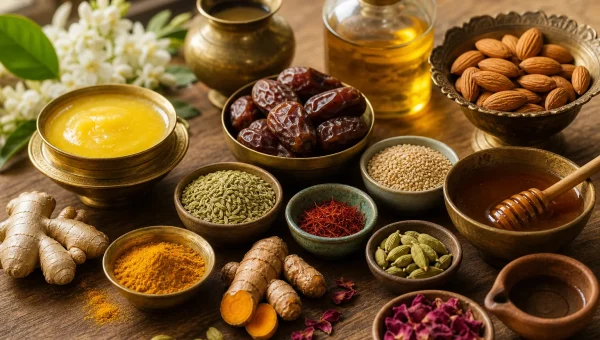
The dietary aim in Ayurvedic cervical care is to keep agni steady, prevent excess ama, nourish rasa and rakta, reduce inflammatory heat when present, and avoid building excessive kapha in the reproductive tract. A simple foundation includes warm cooked meals, adequate protein, legumes as tolerated, leafy vegetables, seasonal fruits, pomegranate, amalaki, turmeric in food, sufficient hydration, and regular bowel movement.
Anti-Inflammatory and Rakta-Nourishing Foundation
A cervical-supportive diet should emphasize a broad range of plant foods that provide folate, vitamin C, carotenoids, polyphenols, minerals, and fiber. Pomegranate (dadima) is especially useful in Ayurvedic dietetics because the API describes the fresh fruit as amla, madhura, and kashaya in taste, with laghu and snigdha qualities and actions including dipana, pachana, rucya, grahi, and hrdya. This makes it a good food choice where digestion, tissue tone, appetite, and gentle pitta-vata balance are priorities.
Foods to Reduce During Active Symptoms
When there is burning, yellowish discharge, irritation, pelvic heat, or bleeding tendency, reduce excess pungent, sour, salty, fermented, fried, alcoholic, and highly heating foods until the inflammatory pattern settles. When discharge is thick, heavy, sticky, itchy, or recurrent, reduce refined sugar, ultra-processed foods, excess dairy, and heavy late-night meals that increase kapha and dampness. Tobacco should be avoided because it is a recognized cervical cancer risk factor, and women with abnormal Pap or HPV results should continue screening and clinician-directed follow-up regardless of dietary changes.
Preventive Practices and Topical Applications
Ayurvedic local therapies for the female reproductive tract include practitioner-directed measures such as yoni dhavana, yoni prakshalana, yoni pichu, and other forms of sthanika chikitsa. For home care, local herbal use should remain external unless a qualified practitioner specifically prescribes otherwise; self-douching or inserting herbs is not appropriate during pregnancy, unexplained bleeding, pelvic pain, active infection, after procedures, or when cervical dysplasia is under evaluation.
| Practice | Method | Frequency | Ayurvedic Rationale | Key Supports |
|---|---|---|---|---|
| External yoni cleansing | Lukewarm external rinse only; avoid internal douching unless prescribed | 1–3 times weekly when indicated | Local cleanliness, kapha-pitta balance, comfort during discharge patterns | Lodhra or triphala decoction under guidance |
| Triphala internal support | Powder in warm water, adjusted to bowel tolerance | Usually at night when suitable | Bowel regularity, digestive support, reduction of ama accumulation | Amalaki, Haritaki, Bibhitaki |
| Lower-abdomen abhyanga | Gentle warm oil massage over lower abdomen and hips; avoid during acute pain or heavy bleeding | 3 times weekly or as advised | Apana vata grounding, pelvic relaxation, vata pacification | Sesame oil or prescribed medicated oil |
| Warm sitz bath | External hip bath in comfortably warm water; herbs only when prescribed | 1–3 times weekly when suitable | Pelvic relaxation, local comfort, vata-pitta soothing | Plain warm water, triphala, or lodhra as advised |
| Screening-linked immune support | Rasayana, diet, sleep, stress regulation, and follow-up testing | Ongoing | Strengthening terrain while respecting medical surveillance | Guduchi, amalaki, wholesome diet, clinician follow-up |
A Three-Tier Cervical Health Protocol
This tiered structure is a practical framework for discussion with an Ayurvedic practitioner and gynecologist. It is not a substitute for diagnosis, Pap smear, HPV testing, colposcopy, biopsy, antimicrobial therapy, vaccination, or treatment of precancerous lesions when indicated.
Yoga and Apana Vata Regulation
Cervical wellness is supported by practices that calm the pelvis, regulate breath, and reduce chronic vata aggravation. Gentle options include supported Baddha Konasana, relaxed Malasana when comfortable, Viparita Karani without strain, slow diaphragmatic breathing, and pelvic floor relaxation rather than aggressive contraction. These practices should be avoided or modified during heavy bleeding, pregnancy, acute pelvic pain, recent procedures, dizziness, or any condition where a clinician has advised activity restriction.
Cervical health is not only a matter of screening, and it is not only a matter of herbs. It is a continuing practice of maintaining tissue quality, local microbial balance, healthy menstrual flow, good digestion, regular elimination, and appropriate medical surveillance. Ayurveda’s strength is in creating a resilient inner terrain; modern gynecology’s strength is in detecting and treating cervical disease early. Used together with discernment, both approaches support prevention and long-term reproductive wellbeing.
Nothing in this article diagnoses or treats a medical condition. Use it as educational information and consult a qualified Ayurvedic practitioner and a licensed healthcare provider before starting herbs, supplements, detoxes, local therapies, or therapeutic protocols, especially if pregnant, trying to conceive, managing HPV, abnormal Pap results, cervical dysplasia, recurrent infection, unexplained bleeding, pelvic pain, cancer history, or taking medication.
References
- Charaka Samhita — Yonivyapat Chikitsa
- Kottakkalayurvedacollege (kottakkalayurvedacollege.ac.in)
- Mdpi (mdpi.com)
- From Microbiome to Inflammation: The Key Drivers of Cervical Cancer (2021), PubMed Central
- CDC
- CDC
- ACOG
- Ia800501 (ia800501.us.archive.org)
- Tinospora cordifolia (Willd.) Hook. f. and Thoms. (Guduchi) – validation of the Ayurvedic pharmacology through experimental and clinical studies (2010), PubMed Central
- Therapeutic Uses of Triphala in Ayurvedic Medicine (2017), PubMed Central
- Webprod (webprod.hc-sc.gc.ca)
- Link (link.springer.com)
- NCCIH
The ‘gateway of garbhashaya’ framing for the cervix is one of those Ayurvedic conceptualizations that changes how you think about reproductive health. It’s not an isolated structure that occasionally malfunctions it’s an integral part of the whole system.
HPV positive patient here. My gynecologist is doing watchful waiting. My Ayurvedic doctor added Neem, Turmeric, and Guduchi based on the immune-modulating properties described here. At my last Pap, the cellular changes had regressed. My OB-GYN noted it without comment.
I want to flag strongly that HPV and cervical dysplasia are serious and require conventional medical monitoring. Any Ayurvedic support should be in addition to regular Pap smears and colposcopy, not instead of them. This article is generally responsible but readers may not pick up on that.
I liked the practical side of Cervical Health in Ayurveda. I would like to know how long to try it before judging results.
My doctor in Bangalore suggested something similar but used different herbs. Is there regional variation in how Ayurvedic practitioners approach this condition?
This matches my clinical experience. I’ve recommended inflammation to patients with similar presentations and the response rate is consistent with what the article describes.
The dietary recommendations for cervical health reducing Pitta-aggravating foods during active HPV infection is this evidence-based or traditional recommendation? I’d want to know the basis before following a restricted diet.
The safest part of the Cervical Health in Ayurveda advice is keeping it simple. Small daily changes are easier to follow than a perfect plan.
The research cited here is from the 2015-2020 period. Is there more recent work that confirms or updates these findings?
The fact that this topic exists as an article at all is significant. Cervical health gets almost no preventive wellness attention. The section on maintaining cervical mucus quality and the role of Vata and Pitta balance in the local tissue environment is genuinely useful clinical information.
The section on lodhra as a cervical astringent caught my eye, I have seen it used in oral care but not for vaginal health
How often do practitioners recommend doing the yoni pichavoori wash alongside the triphala internal dose
I wonder if the estrogenic activity of ashoka bark translates to noticeable changes in cervical thickness for post menopausal women
Adding pomegranate juice to the morning routine seems like an easy way to get ellagic acid without changing much else
I tried the warm sesame oil abhyanga on my lower abdomen after reading this and noticed less tension during my period
Does the guduchi protocol need to be continued after HPV clears, or is it meant as a short term boost
The yoga poses listed (malasana, baddha konasana, viparita karani) seem simple enough to fit into a lunch break
Avoiding hot spicy foods during inflammation might not make a big difference, but I’ll give it a try
not sure if its the herbs or the diet changes that made the difference
just found this via Google search, is the protocol here still the current recommendation?
Doing this
The Cervical Health in Ayurveda explanation is clearer than most short posts. A few more examples would still help.
Scheduling a triphala sitz bath two times weekly feels doable if you already have a tub and can simmer the herbs
Thanks!
the basic concepts here match what I learned in my yoga teacher training
reading this in 2027, has anything changed about the dosage recommendations since this was published?
following this from UK, hard to find some of these herbs here
which of these approaches works best for Kapha constitution? the article mixes all three doshas
I liked the practical side of Cervical Health in Ayurveda. The practical details matter more than people think.
same here
I liked the practical side of Cervical Health in Ayurveda. The examples make the advice less abstract.
same question as above, any substitute for herbs not available outside India?
The safest part of the Cervical Health in Ayurveda advice is keeping it simple. The safety notes could be expanded a little.
The safest part of the Cervical Health in Ayurveda advice is keeping it simple. The examples make the advice less abstract.
Saved this
This helped me understand Cervical Health in Ayurveda without too much jargon. I appreciate that it does not oversell the result.
the quality of herbs varies so much between brands. really hard to replicate these results
does the approach differ for someone with multiple doshas elevated at once?
sharing with my mom 🙌
tried this for 30 days, mixed results. maybe my constitution assessment is wrong
Good read
I was looking for a plain explanation of Cervical Health in Ayurveda. This would be easier to follow with a one-week sample plan.
will try and report back. fingers crossed
my vaidya says the same thing about agni being central to everything
The advice around Cervical Health in Ayurveda is specific enough to be useful. This would be easier to follow with a one-week sample plan.
Very helpful, thank you
this is the most detailed breakdown of the topic I’ve found. saving for reference
good information but the references section would make this much more credible
useful info but hard to find a practitioner who does this type of treatment outside major cities
not sure about some of the claims here. would like to see proper citations for the traditional references
धन्यवाद for the detailed protocol
I wish more doctors knew about this approach
would love a follow-up article on the same topic but for elderly patients
late to this but wanted to ask if anyone has combined these approaches with conventional treatment
💯 My nutritionist sent me this link 🌿
the translation of Sanskrit terms throughout helps a lot for those of us learning this system
the seasonal rotation idea is something I had never considered before
The part about Cervical Health in Ayurveda feels realistic. I appreciate that it does not oversell the result.
useful