
Lodhra (Symplocos racemosa): Ayurvedic Bark for Pradara, Bleeding-Discharge Patterns, and Skin Care
Lodhra is a precise medicinal bark in Ayurveda, not a kitchen spice or casual daily tonic. It is valued especially for conditions marked by excess flow, discharge, moisture, Kapha-Pitta involvement, and Rakta-related disturbance. In classical practice it appears both as a single drug and as an ingredient in compound formulations for women’s reproductive health, diarrhea, swelling, eye disorders, and selected external skin applications.
The main Ayurvedic angle of Lodhra is restraint and restoration: its astringent taste, light quality, cooling potency, and absorbing action make it useful where the body needs to check excessive discharge, support tissue tone, and calm Kapha-Pitta patterns. Because these same actions can be too drying or constricting in the wrong person, Lodhra is best used with the guidance of a qualified Ayurvedic practitioner or healthcare provider.
What Is Lodhra?
Lodhra is the dried mature stem bark of Symplocos racemosa Roxb., a tree of the Symplocaceae family. Classical and official Ayurvedic references also use the name Rodhra. The tree is described as an evergreen that grows in the plains and lower hills of India, and the bark is the medicinal part most commonly used.
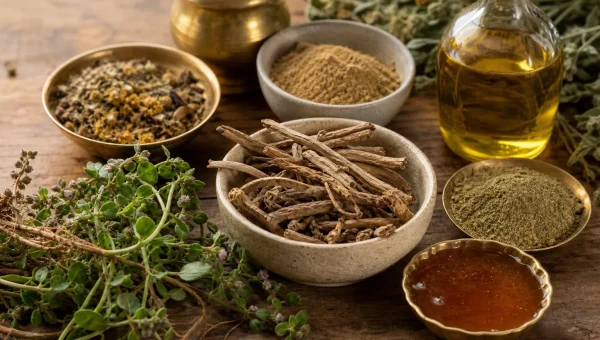
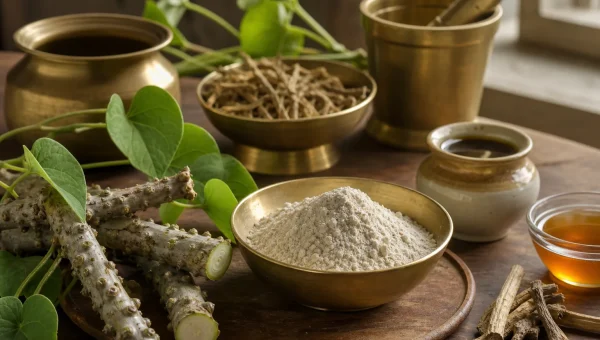
Good-quality mature Lodhra bark is typically found in curved, channelled pieces. The outer surface is greyish-brown to grey and rough with cracks and fissures, while the inner surface is pale to whitish-brown. Its taste is strongly astringent and mildly bitter, which reflects its core therapeutic character.
In Ayurvedic pharmacology, Lodhra is described as follows:
- Rasa (taste): Kashaya (astringent)
- Guna (quality): Laghu (light)
- Virya (potency): Shita (cooling)
- Vipaka (post-digestive effect): Katu (pungent)
- Karma (actions): Kaphapittanut, Grahi, Chakshushya
- Classical therapeutic uses: Raktapitta, Atisara, Shotha, Pradara, and Netraroga
These properties explain why Lodhra is traditionally selected in Kapha-Pitta presentations with abnormal discharge, heavy or irregular bleeding patterns, loose stools, swelling, and certain external skin or eye-related contexts.
Why Ayurveda Uses Lodhra in Women’s Health
Lodhra’s most important traditional role is in women’s reproductive health, especially in the broad Ayurvedic category of Pradara. In practice, this may include abnormal uterine bleeding, excessive menstrual flow, intermenstrual spotting, or abnormal vaginal discharge, depending on the person’s full presentation and diagnosis.
Its Kashaya rasa and Grahi action make it a natural choice when the clinical picture calls for astringing, absorbing, and stabilizing. Its Shita virya and Kaphapittanut action make it especially relevant when heat, inflammation, Kapha-type discharge, or Rakta-Pitta disturbance are part of the pattern. It is not, however, a universal remedy for every irregular period or every discharge complaint.
Heavy Menstrual Bleeding and Spotting
In classical formulation practice, Lodhra is strongly represented in preparations used for Asrigdara, a term used for excessive or abnormal uterine bleeding patterns. The best-known example is Pushyanuga Churna, an official formulation that includes Lodhra among its ingredients and is indicated for Asrigdara, Shveta Pradara, Rajodosha, Arsha, and Yonidosha.
For a person with heavy flow, prolonged bleeding, spotting between periods, or bleeding after intercourse, Lodhra should not be used as a way to avoid diagnosis. Ayurveda may support the pattern after proper assessment, but abnormal bleeding can also arise from fibroids, polyps, endometrial changes, pregnancy-related conditions, infections, medication effects, bleeding disorders, or other medical causes.
Leucorrhoea and Abnormal Vaginal Discharge
For Shveta Pradara, traditionally understood as excessive white vaginal discharge, Lodhra’s astringent and Grahi profile is especially relevant. It is used when the discharge pattern reflects Kapha predominance, dampness, heaviness, and loss of local tissue tone, often with Pitta involvement if irritation or heat is present.
Pushyanuga Churna is the main classical formulation to remember here. It is taken with anupana such as honey and Tandulodaka in the official reference, but the exact suitability depends on the woman’s constitution, digestive strength, cycle pattern, and associated symptoms. Discharge with foul smell, itching, burning, pelvic pain, fever, greenish or yellowish color, thick curdy texture, or bleeding outside the period requires medical evaluation for infection or other gynecological causes.
PCOS and Cycle Irregularity
PCOS is a modern endocrine-metabolic diagnosis rather than a single classical Ayurvedic disease name. In Ayurvedic care, a person with PCOS may be assessed through features such as Rajodosha, Artava disturbance, Kapha-Meda involvement, Agni impairment, weight changes, acne, abnormal hair growth, delayed cycles, or abnormal bleeding and discharge.
Lodhra fits only some PCOS-related presentations. It may be considered when the individual has Lodhra-relevant features such as Pradara, Asrigdara, Kapha-Pitta discharge, or Rakta-Pitta disturbance. It should not be treated as a stand-alone PCOS cure; diet, metabolism, sleep, exercise, stress, digestion, and the person’s exact menstrual pattern all shape the Ayurvedic plan.
Key Classical Formulations Containing Lodhra
Lodhra is often used in compound preparations rather than as an isolated herb. Official formularies give reference doses for adults, but these are not self-prescription instructions; the correct medicine, dose, anupana, and duration depend on diagnosis and practitioner judgment.
| Formulation | Lodhra Role | Verified Classical/Official Use | Reference Adult Dose |
|---|---|---|---|
| Pushyanuga Churna | Includes Lodhra among the equal-part ingredients | Asrigdara, Shveta Pradara, Rajodosha, Arsha, Yonidosha | 1-3 g with honey and Tandulodaka |
| Rodhrasava / Lodhrasava | Contains Rodhra/Lodhra as a principal ingredient in an asava preparation | Garbhashaya roga along with Grahani, Pandu, Kushta, Kandu, Krimi, Sthaulya and other listed indications | 12-24 ml |
| Brihat Gangadhara Churna | Includes Lodhra with Musta, Dhataki, Kutaja and other Grahi-supporting herbs | Pravahika, Atisara, Grahani | 3-6 g with honey and Tandulodaka |
| Lodhra single-drug use | Dried stem bark used as powder or decoction material | Raktapitta, Atisara, Shotha, Pradara, Netraroga | 3-5 g powder; 20-30 g drug for decoction preparation |
Lodhra for Skin and External Care
Lodhra’s external use follows the same Ayurvedic logic as its internal use: it is astringent, light, cooling, and Kapha-Pitta pacifying. This makes it suitable in selected oily, inflamed, oozing, or acne-prone skin patterns, especially when used as part of a short-contact paste rather than as a harsh or drying daily scrub.
Traditional skin use should be gentle. Lodhra is not meant to strip the skin barrier or replace medical care for infected lesions, cystic acne, eczema, fungal infection, or allergic rash. For facial use, it should be patch-tested first and kept away from the eyes, lips, and broken skin.
Simple Lodhradi Lepa for Oily or Acne-Prone Skin
A practical Lodhradi-style external paste may combine Lodhra, Dhanyaka, and Vacha powders in equal proportions, mixed with clean water or rose water to form a thin paste. Apply a light layer to clean skin for about 10-15 minutes and rinse before it becomes overly dry or tight. Use once or twice weekly at first, and stop if burning, redness, itching, or excessive dryness appears.
- Lodhra: Astringent and cooling, useful for Kapha-Pitta skin presentations
- Dhanyaka: Mild, cooling, and traditionally suitable in Pitta-involved skin care
- Vacha: Sharp and penetrating, so it should be used sparingly and avoided on sensitive or irritated skin unless advised
Digestive, Eye, and Wound Applications
Beyond women’s health and skin care, Lodhra has several classical applications that arise from its Grahi, Kashaya, Kaphapittanut, and Chakshushya actions. These uses should be understood within Ayurvedic diagnosis rather than as casual home remedies.
Diarrhea and Dysentery Patterns
Lodhra is listed for Atisara and has Grahi action, making it relevant in loose-stool patterns where absorption, astringency, and checking excess flow are needed. Brihat Gangadhara Churna, an official formulation containing Lodhra, is indicated for Pravahika, Atisara, and Grahani.
Acute diarrhea, blood in stool, high fever, dehydration, severe abdominal pain, diarrhea in children, or diarrhea during pregnancy requires prompt medical care. Lodhra should be used only as part of an appropriate plan, especially when infection, dehydration, or inflammatory bowel disease is possible.
Eye Conditions
Lodhra is described as Chakshushya and is listed for Netraroga in official Ayurvedic reference material. This supports its traditional relevance in eye-related formulations, but it does not make homemade eye washes safe.
Anything placed in the eye must be sterile and appropriate for the condition. Do not put homemade Lodhra decoctions, powders, rose water mixtures, or cold infusions into the eyes. Redness, pain, discharge, light sensitivity, injury, sudden vision change, or suspected infection should be evaluated by an eye-care professional.
External Wound and Swelling Care
Lodhra is listed for Shotha and is traditionally used externally where astringent, cooling, and tissue-supportive action is appropriate. In practical Ayurvedic care, this may include selected non-infected superficial lesions, mild swelling patterns, or local applications chosen by a practitioner.
Deep wounds, spreading redness, pus, fever, diabetic wounds, animal bites, burns, and wounds that do not heal require medical care. Lodhra paste should not be used to cover infection or delay proper wound management.
Phytochemical Profile
The official Ayurvedic pharmacopoeial description of Lodhra bark lists alkaloids including loturine and colloturine, along with red colouring matter. These constituents are part of the pharmacognostic identity of the bark and help distinguish genuine Lodhra material from poorly identified substitutes.
Published phytochemical summaries of Symplocos racemosa discuss the stem bark as the principal investigated part and describe multiple laboratory and preclinical activity domains. In clinical Ayurveda, however, Lodhra is still selected primarily by dravya-guna, disease pattern, formulation context, and patient suitability.
Dosage and Administration
The following reference ranges come from official Ayurvedic sources and should be interpreted by a qualified practitioner. Dose varies with age, strength, digestion, menstrual pattern, pregnancy status, coexisting disease, and whether Lodhra is used alone or in a compound formulation.
| Form | Reference Adult Dose | Typical Context | Notes |
|---|---|---|---|
| Lodhra Churna | 3-5 g | Pradara, Raktapitta, Atisara, Shotha, Netraroga contexts | Anupana and frequency should be selected by a practitioner |
| Lodhra Kwatha material | 20-30 g drug for decoction preparation | When decoction form is specifically prescribed | Preparation strength and final quantity depend on the prescription |
| Pushyanuga Churna | 1-3 g | Asrigdara, Shveta Pradara, Rajodosha, Arsha, Yonidosha | Given with honey and Tandulodaka in the official reference |
| Rodhrasava / Lodhrasava | 12-24 ml | Garbhashaya roga and other listed indications | Use only when an asava preparation is appropriate |
| Brihat Gangadhara Churna | 3-6 g | Pravahika, Atisara, Grahani | Given with honey and Tandulodaka in the official reference |
Safety and Precautions
Lodhra should be treated as a medicinal herb. It is best used after proper diagnosis, especially for gynecological symptoms, digestive disorders, eye complaints, pregnancy-related concerns, or chronic skin conditions. Consult a qualified Ayurvedic practitioner and, when symptoms are significant, a qualified healthcare provider.
- Heavy or abnormal bleeding: Seek medical evaluation for bleeding between periods, very heavy flow, bleeding after sex, bleeding after menopause, dizziness, anemia symptoms, severe pain, or pregnancy-related bleeding.
- Abnormal discharge: Discharge with odor, itching, burning, pain, fever, greenish or yellowish color, thick curdy texture, or bleeding outside the period should be evaluated for infection or other gynecological causes.
- Pregnancy and nursing: Use Lodhra only under direct professional supervision during pregnancy or breastfeeding.
- Dryness and constipation tendency: Because Lodhra is astringent and Grahi, it may be unsuitable when marked dryness, constipation, or Vata aggravation dominates unless balanced appropriately.
- Eye use: Do not use homemade Lodhra preparations in the eyes. Eye medicines must be sterile and condition-specific.
- Product quality: Use authenticated, clean, properly labelled material from a reputable Ayurvedic pharmacy.
Sourcing Quality Lodhra
Correct identification matters because Lodhra is a bark drug and related Symplocos species may need pharmacognostic differentiation. Buy from suppliers that clearly state the botanical name Symplocos racemosa Roxb., the plant part as stem bark, and preferably provide quality or batch testing.
- Look for mature stem bark that is greyish-brown to grey outside and pale to whitish-brown inside.
- The taste should be strongly astringent and slightly bitter.
- Avoid material that smells musty, moldy, damp, rancid, or chemically treated.
- For powder, choose fresh, sealed, labelled material rather than loose, unidentified market powder.
- Do not self-harvest or self-identify bark unless trained in Ayurvedic pharmacognosy and botany.
Bottom Line
Lodhra is one of Ayurveda’s important astringent barks, especially for Pradara-type women’s health concerns, Kapha-Pitta discharge patterns, Rakta-Pitta bleeding patterns, loose-stool disorders, selected skin applications, and classical eye-related formulations. Its value lies in precise use, not casual use.
When prescribed appropriately, Lodhra can be a powerful support in the Ayurvedic pharmacy. When used without diagnosis, it can mask symptoms that need medical care or aggravate dryness and Vata-type imbalance. The safest approach is to use Lodhra as Ayurveda intended: with correct identification, correct formulation, correct anupana, and professional guidance.
Medical Disclaimer: This article is for educational purposes only. Heavy menstrual bleeding, abnormal vaginal discharge, pelvic pain, pregnancy-related bleeding, eye symptoms, diarrhea with dehydration, and non-healing wounds require proper medical evaluation. Do not self-treat these conditions without a diagnosis. Consult a qualified healthcare provider and a qualified Ayurvedic practitioner before using Lodhra or any herbal preparation, especially if you are pregnant, nursing, taking prescription medicines, using hormonal therapy, taking blood thinners, or managing a chronic health condition.
That’s a fair concern. I found leucorrhea worked better when I also adjusted my diet simultaneously.
How long does it typically take before the uterine tonic effects become measurable in blood markers? My next labs are in three months.
Three months is actually a reasonable window from what I’ve seen discussed. Hormonal markers tend to shift slowly with herbal tonics. It might be worth asking your doctor to include FSH and estradiol in that panel if they’re not already on it.
I don’t think three months would be enough to see changes in bloodwork honestly. My practitioner said to expect at least two full cycles before the uterine effects become measurable. Might be worth setting expectations with your doctor before those labs.
Not sure I agree on symplocos being suitable for Vata-Pitta. My experience was different.
Could you share more about what was different for you? I’m Vata-Pitta as well and I’m trying to figure out if I should adjust the dosage or look at a different formulation altogether. 🌿
tryd skin nothing happend
The claim about skin reducing inflammation in two weeks seems optimistic. My experience was more like four months before any noticeable change.
Not sure I agree on leucorrhea being suitable for Vata-Pitta. My experience was different.
is skin ok during pregnancy? asking for my wife who is in second trimester
way too vague about dosage for symplocos. ‘2 to 3 capsules’ covers a huge range depending on body weight ❤️
The section on lodhra dosage timing was something I had not seen explained this clearly before. Taking it 30 minutes before meals has made a real difference.
same here, lodhra helped me but took longer than the article suggests
yeah lodhra quality is huge. local brand didnt work, switched to a standardized extract and different story
Yeah the lodhra timing thing confused me too. I do it before meals now based on another source. 💯
The description of lodhra’s astringent taste and cooling potency really helped me understand why it works for heavy bleeding.
yeah symplocos quality is huge. local brand didnt work, switched to a standardized extract and different story
how long do u need to take leucorrhea before results show? been 3 weeks, nothing yet
Can children use leucorrhea? The post covers adults but my 11-year-old has similar symptoms.
I was skeptical when my sister’s doctor prescribed lodhra for heavy bleeding, but after reading this I understand the astringent action on uterine tissue. The explanation of how Symplocos racemosa works as a stambhana herb finally makes sense to me.
Same experience with skin here. Took me about 6 weeks to notice real change.
way too vague about dosage for uterine tonic. ‘2 to 3 capsules’ covers a huge range depending on body weight
The skin application side of lodhra surprised me. I’d only ever heard of it for menstrual issues, so learning that the same bark extract is used in traditional lepa formulations for acne is something I hadn’t come across before.
Where is the evidence for the lodhra dosage recommended here? I could not find any peer-reviewed backing in the Indian Journal of Ayurveda for these specific numbers.
Peer-reviewed backing for classical Ayurvedic dosages is genuinely thin, I agree. The lodhra doses here seem to follow the Sharangadhara Samhita ranges rather than modern RCT data. Worth flagging to your practitioner rather than relying on the article alone. 🌿
i have pitta excess and symplocos worked fine for me, but started at lower dose
honestly try lodhra for at least 3 months before deciding it doesnt work
honestly try leucorrhea for at least 3 months before deciding it doesnt work
My doctor actually recommended symplocos last month, so finding this detailed explanation of the dosing schedule is exactly what I needed.
The claim about leucorrhea reducing inflammation in two weeks seems optimistic. My experience was more like four months before any noticeable change.
Wondering how the lodhra face pack compares to using sandalwood powder alone for brightening skin.
didnt work for me lodhra waste of money tbh
For the skin preparation described, does the water temperature affect the active compounds during the decoction process? 🌿
Is uterine tonic safe to use alongside SSRIs? My psychiatrist has not cleared any supplements and I want to go in informed.
bought leucorrhea from a random brand and got no results. does quality vary that much between suppliers?
The formulation type matters a lot for leucorrhea. Churna vs capsule vs kashayam gave me different results.
these ayurvedic treatments take so long to work. western medicine might be faster for acute issues
The recipe for lodhra churna with rice water seems simple enough to try at home.
The explanation connecting skin with uterine tonic in Ayurvedic theory here is cleaner than anything I found in the textbooks I have.
dosw for kids same or diff
tryd leucorrhea nothing happend
bought skin from a random brand and got no results. does quality vary that much between suppliers?
The claim about uterine tonic reducing inflammation in two weeks seems optimistic. My experience was more like four months before any noticeable change.
The formulation type matters a lot for uterine tonic. Churna vs capsule vs kashayam gave me different results.
my practitioner told me something different about uterine tonic. this article contradicts what i was told
Has anyone experienced lodhra aggravating vata symptoms like dry skin or joint discomfort?
how long do u need to take uterine tonic before results show? been 3 weeks, nothing yet
tried symplocos for months, did nothing for me honestly. maybe doesnt work for everyone
@Rachel My practitioner said the same thing about uterine tonic. Results vary by individual constitution.
@Rachel That’s a fair concern. I found symplocos worked better when I also adjusted my diet simultaneously.
Started following the diet guidelines mentioned for skin about a month ago. The bloating that had bothered me for years is now very manageable. ✨
The safety note about pregnancy is a helpful reminder to consult a practitioner before trying lodhra.
The explanation connecting symplocos with symplocos in Ayurvedic theory here is cleaner than anything I found in the textbooks I have.
my aunt has been doing skin for years, finally understand why it actually helps after reading this
Quick question: is the uterine tonic dose mentioned here for KSM-66 extract or full-spectrum powder? The potency difference is significant.
r side effects of uterine tonic real
hw mny wks 4 skin 2 work 🌿
the studies quoted for symplocos are like 10 years old, anything more recent?
There’s been some work published in the Journal of Ethnopharmacology in the last few years on Symplocos racemosa bark constituents, not specifically the uterine effects but the tannin and flavonoid fractions. Might be worth searching there for more recent data.
Seeing the mention of loturine and colloturine alkaloids made me want to look up their role in uterine muscle tone.
can you combine symplocos with uterine tonic or is that too much at once
My practitioner actually combines lodhra with shatavari as a uterine tonic combination quite regularly. She said lodhra provides the astringent grounding while shatavari adds the nourishing quality, so they complement rather than overlap. Definitely ask your vaidya though.
can you combine symplocos with leucorrhea or is that too much at once
does brand matter for leucorrhea or is generic fine
i have high pitta, would the lodhra protocol here work or make things worse
Can children use symplocos? The post covers adults but my 11-year-old has similar symptoms.
this helped. been confused about lodhra timing for weeks now
Glad it helped. The timing guidance here is clearer than most I’ve found. Do you take it with warm water or as part of a decoction? My practitioner never specified and I’ve just been doing warm water.
I tried skin for two months following a similar protocol and saw zero improvement. Not sure if dosage was wrong or the formulation matters that much.
anyone here tried skin for the specific issue in the article? what was your experience
I used lodhra for irregular cycles specifically. Took about two months to see a difference in flow regularity, and the skin brightening effect was actually a bonus I didn’t expect. Quality of the source mattered a lot in my case.
Where is the evidence for the symplocos dosage recommended here? I could not find any peer-reviewed backing in the Indian Journal of Ayurveda for these specific numbers.
The combination of lodhra with ashoka for menorrhagia sounds like a classic synergy worth discussing with an Ayurvedic doctor.
the studies quoted for uterine tonic are like 10 years old, anything more recent?
can you combine lodhra with skin or is that too much at once
The part about lodhra’s use in wound healing caught my attention, especially the fibroblast proliferation claim.
the dosage chart for symplocos is really helpful. been overdoing it apparently
Is there a seasonal consideration for skin? I read elsewhere that some adaptogens should be paused in summer.
The explanation connecting symplocos with uterine tonic in Ayurvedic theory here is cleaner than anything I found in the textbooks I have.
where r the studies for symplocos tho
I am Vata-Pitta constitution. Would the leucorrhea protocol here need modification or is it generally dosha-agnostic?
Been using lodhra for three weeks now and the difference in energy is noticeable. The morning fatigue that used to hit by 11am has reduced quite a bit. 🌿
Does the quality of leucorrhea source matter significantly? Organic vs non-organic makes a big cost difference where I live.
Can children use skin? The post covers adults but my 11-year-old has similar symptoms.
Quick question: is the symplocos dose mentioned here for KSM-66 extract or full-spectrum powder? The potency difference is significant.
does brand matter for symplocos or is generic fine
Where is the evidence for the leucorrhea dosage recommended here? I could not find any peer-reviewed backing in the Indian Journal of Ayurveda for these specific numbers.
any1 tried symplocos here tell me
my vaidya suggested symplocos but never explained the why. this article fills that gap 🙏
finally smthing useful abt skin
The article mentions starting lodhra on an empty stomach. Does this apply even when taking it in ghee form?
my vaidya suggested leucorrhea but never explained the why. this article fills that gap 🙏
Same with me, my vaidya just said ‘take lodhra’ with no context. Reading here about the kashaya and stambhana properties made it obvious why it’s the first choice for this kind of issue. Now I actually want to take it instead of forgetting half the time. 🙏
does brand matter for leucorrhea or is generic fine ✨
my practitioner told me something different about symplocos. this article contradicts what i was told
I asked my vaidya the same question about symplocos. He said constitution matters more than standard dose.
Does the quality of symplocos source matter significantly? Organic vs non-organic makes a big cost difference where I live.
In my experience, organic vs non-organic mattered less than whether the bark was properly dried and stored. I bought a cheaper non-organic batch from a reputable Ayurvedic supplier and got good results, while an expensive organic one from a general health store seemed weak.
how long do u need to take symplocos before results show? been 3 weeks, nothing yet
I am Vata-Pitta constitution. Would the lodhra protocol here need modification or is it generally dosha-agnostic?
For the uterine tonic preparation described, does the water temperature affect the active compounds during the decoction process?