
Chronic prostatitis/chronic pelvic pain syndrome (CP/CPPS) is not only an older-man prostate problem. It can occur in younger and middle-aged men, and it commonly presents without a proven bacterial infection. The symptom picture may include pelvic, perineal, genital, lower abdominal, or low-back pain; urinary frequency, urgency, hesitancy, weak stream, or a sensation of incomplete emptying; pain around ejaculation; erectile or libido changes; sleep disturbance; and the emotional strain of living with chronic pelvic pain.
Modern care treats CP/CPPS as a diagnosis of exclusion: bacterial prostatitis, urinary obstruction, stones, neurological issues, malignancy, and other causes should be assessed before a chronic non-bacterial pelvic pain label is accepted. A useful integrative approach is therefore not “herbs instead of diagnosis,” but a structured plan that combines proper medical evaluation with Ayurvedic assessment of Mutra Vaha Srotas, Apana Vata, Sanga, Vata-Kapha obstruction, and Shukra-related symptoms where relevant.
The Ayurvedic Pathogenesis of Chronic Pelvic Prostatitis
Ayurveda does not need to force CP/CPPS into a single classical disease name. It is better understood through the urinary-channel framework of Mutra Vaha Srotas, the downward-moving function of Apana Vata, and the classical disease-fields of Mutrakrichra (difficult or painful urination), Mutraghata (obstructed or retained urine), Ashmari (calculus tendency when stones are present), and Shukra Dosha when ejaculatory or semen-related symptoms dominate.
Classical descriptions place the roots of Mutra Vaha Srotas around Basti and Vankshana in the Charaka/Vagbhata stream, and around Basti and Medra in the Sushruta stream. In practical language, this points the clinician toward urinary storage, urethral passage, groin referral, pelvic pain, and bladder-emptying patterns. Apana Vata is located in the lower abdomen and pelvis and governs the expulsion of urine, stool, semen, menstrual fluid, and fetus. When this downward movement becomes irregular, obstructed, or strained, urinary and pelvic symptoms can appear even when infection is not the central cause.
- Vata-Sanga pattern: Pain, spasm, variable urinary flow, urgency, pelvic floor guarding, anxiety-linked flares, symptoms aggravated by cold surfaces, long sitting, or strain.
- Kapha-Ama/Sanga pattern: Heaviness, sluggish flow, incomplete-emptying sensation, dull pelvic congestion, and a need to clear obstruction without overstimulating Vata.
- Pitta-Rakta alert pattern: Burning, fever, chills, blood in urine, severe pain, or systemic illness require medical assessment before home protocols are considered.
The daily nidana correction is simple but important: do not habitually suppress the urge to urinate or defecate, avoid prolonged perineal pressure during flares, keep the pelvis warm, reduce hard-surface sitting, and maintain regular bowel movements so Apana Vata is not forced upward or obstructed.
The Herbal Protocol
The herbs below preserve the classical Ayurvedic focus on urinary channels, Apana Vata, obstruction, swelling, and reproductive tissue support. They are not presented as a self-prescription for prostatitis. Dose, combination, duration, and suitability should be decided by a qualified Ayurvedic practitioner after ruling out infection and urgent urological causes.
Primary Herbs
These single herbs are the core dravya options most relevant to Mutra Vaha Srotas and the Vata-Kapha pelvic pattern commonly seen in chronic non-bacterial pelvic pain.
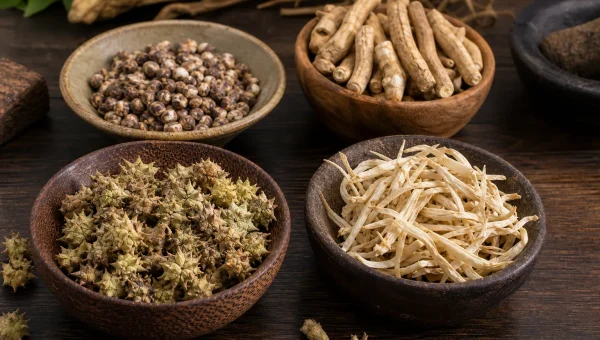
- Gokshura (Tribulus terrestris): The Ayurvedic Pharmacopoeia of India lists Gokshura root with Madhura rasa, Guru and Snigdha guna, Shita virya, Madhura vipaka, and actions including Mutrala, Vatanut, Vrishya, and Brimhana. Its listed therapeutic uses include Mutrakrichra and Ashmari. In this protocol it is most useful where urinary discomfort, Vata irritation, and reproductive-tissue depletion coexist. Classical decoction reference: 20–30 g crude drug as kvatha, practitioner-directed.
- Varuna (Crataeva nurvala): Varuna stem bark is listed with Tikta and Kashaya rasa, Laghu and Ruksha guna, Ushna virya, Katu vipaka, and Vata-Shleshmahara action. Its listed therapeutic uses include Ashmari and Mutrakrichra. In CP/CPPS-style presentations, it is most relevant when obstruction, sluggish urine, or a stone/gravel tendency is part of the clinical picture. Classical decoction reference: 20–30 g, practitioner-directed.
- Punarnava (Boerhaavia diffusa): Punarnava is classically valued for Mutrala, Shothahara, Vata-Shleshmahara, and Anulomana actions. It is appropriate where pelvic heaviness, swelling, water retention, or Kapha-type congestion complicates urinary flow. Classical decoction reference: 20–30 g, practitioner-directed.
- Shatavari (Asparagus racemosus): Shatavari is not a direct obstruction-clearing herb. It is supportive when the presentation shows Vata-Pitta dryness, burning tendency, depletion, reproductive-tissue weakness, or post-illness fragility. The Pharmacopoeia lists it with Madhura and Tikta rasa, Snigdha and Guru guna, Shita virya, Madhura vipaka, and actions including Vrishya, Balya, Rasayana, Pittahara, and Vatahara. Classical powder reference: 3–6 g, practitioner-directed.
Classical Formulations
Compound formulations should be used more carefully than single herbs because they combine many ingredients and may include mineral, salt, kshara, resin, or bhasma components. They are best selected after a practitioner decides whether the case is Vata-dominant, Kapha-Sanga dominant, Pitta-irritative, stone-related, or complicated by infection.
- Chandraprabha Vati: The Ayurvedic Formulary of India lists Candraprabha Vati as a classical preparation from Sharangadhara Samhita with 37 ingredients, including plant drugs, ksharas, salts, Lauha bhasma, Shilajatu, and Guggulu. Its listed uses include Mutrakrichra, Prameha, Ashmari, Mutraghata, Shukra Dosha, and Daurbalya. The AFI adult dose reference is 250–500 mg. Because it includes mineral and alkaline ingredients, it should be used only from a quality-tested source and under supervision.
- Gokshuradi Guggulu: The Ayurvedic Formulary of India lists Gokshuradi Guggulu with Gokshura fruit decoction, Shuddha Guggulu, Trikatu, Triphala, and Musta. Its listed uses include Prameha, Mutrakrichra, Mutraghata, Ashmari, Vataroga, and Shukra Dosha. The AFI dose reference is 3 g, though commercial tablet strength varies. In this context it is more appropriate for urinary obstruction and Vata-Kapha channel involvement than for a vague “prostate tonic” use.
External Therapies
External therapies are most useful when pain, coldness, guarding, low-back tension, or pelvic floor tightness shows a Vata-dominant pattern. They should not replace medical evaluation, urine testing, culture when indicated, prostate assessment, or emergency care when red-flag symptoms are present.
Kati Basti and Clinical Basti
Kati Basti is the retention of warm medicated oil over the lower back or lumbosacral region. It is not a direct prostate procedure, but it may be selected by an Ayurvedic clinician when low-back, sacral, hip, or pelvic Vata symptoms accompany chronic pelvic pain. Matra Basti or other internal Basti therapies should only be performed under trained clinical supervision; they are not home treatments for prostatitis.
Warm Sitz Bath
A plain warm sitz bath for about 10 minutes can be used during symptom flares to relax pelvic tension and reduce perineal discomfort. Avoid excessive heat, prolonged soaking, or any external therapy that increases burning, dizziness, swelling, or pain.
Pelvic Floor Yoga Protocol
The home practice should favour release over force. CP/CPPS often overlaps with pelvic floor spasm or tension myalgia, so strong squeezing, aggressive bandha work, or forceful Ashwini Mudra can aggravate some cases. The aim is to soften the abdomen, hips, groin, and pelvic floor while supporting Apana Vata’s natural downward movement.
- Diaphragmatic breathing: Lie on the back with knees supported. Breathe into the lower abdomen for 5 minutes, allowing the pelvic floor to release on each inhale and soften on each exhale.
- Supported Baddha Konasana: Sit or recline with the soles of the feet together and knees supported by cushions. Hold for 3–5 minutes without forcing the groin.
- Supported Malasana: Use blocks or a wall-supported squat for 30–90 seconds only if knees, hips, and back tolerate it. The goal is pelvic release, not intensity.
- Supta Baddha Konasana: Recline over cushions with the chest open and knees supported. Stay 5–10 minutes for nervous-system calming.
- Gentle Ashwini Mudra: Use only if it does not increase pain or tightness. Practice 5–10 soft contraction-release cycles, then rest longer than you contract. Skip it during spasm-dominant flares.
Complete Treatment Framework
This table keeps the protocol practical while separating classical dose references from self-medication. Do not stack all herbs and tablets together. A practitioner should choose a narrow plan, reassess symptoms, and coordinate with a physician when urinary infection, obstruction, severe pain, or blood in urine is suspected.
| Support | Classical/Reference Dose | Best-Fit Pattern | Important Notes |
|---|---|---|---|
| Gokshura kvatha | 20–30 g crude drug as decoction | Vata urinary discomfort, Mutrakrichra, reproductive-tissue depletion | Use practitioner-directed; avoid assuming extract doses from unsourced trials. |
| Varuna kvatha | 20–30 g stem bark as decoction | Obstruction, stone/gravel tendency, Vata-Kapha Sanga | Not a substitute for evaluation of urinary retention or stones. |
| Punarnava kvatha | 20–30 g whole plant as decoction | Shotha, pelvic heaviness, Kapha congestion, sluggish fluid movement | Use caution in kidney disease or when taking diuretics unless supervised. |
| Shatavari churna | 3–6 g powder | Vata-Pitta dryness, depletion, burning tendency, Shukra support | Not ideal as the main herb in heavy Kapha obstruction. |
| Chandraprabha Vati | 250–500 mg | Mutrakrichra, Mutraghata, Prameha-type urinary patterns, Shukra Dosha | Contains mineral and kshara components; use only quality-tested products under supervision. |
| Gokshuradi Guggulu | 3 g AFI reference dose; tablet strength varies | Urinary obstruction, dysuria, Ashmari tendency, Vata-Kapha involvement | Do not combine casually with other Guggulu or mineral formulations. |
| Warm sitz bath | About 10 minutes | Pelvic tension, perineal discomfort, Vata coldness | Stop if burning, dizziness, swelling, or pain increases. |
| Pelvic floor release practice | 15–20 minutes daily | Pelvic floor guarding, stress-linked flares, Vata aggravation | Prioritise relaxation; avoid forceful contractions during spasm flares. |
Daily Apana Vata Care
Long-term improvement depends on removing the daily pressures that keep Apana Vata disturbed. The essentials are simple, but consistency matters more than intensity.
- Do not suppress the urge to urinate or defecate.
- Take standing or walking breaks during long work sessions.
- Avoid cycling, hard seats, and cold surfaces during pelvic pain flares.
- Use a soft supportive cushion when sitting aggravates perineal pain.
- Keep bowel movements regular so pelvic pressure and Vata obstruction do not build.
- Reduce caffeine, alcohol, very spicy food, and personal urinary irritants when they trigger symptoms.
For related guides on men’s health and urinary function, see our piece on Shukra Dhatu nourishment, our guide to Srotovibhanga and channel obstruction, and Vyayama Shakti and pelvic health in exercise.
Safety: Fever, chills, nausea, vomiting, severe burning urination, blood in urine, severe pelvic pain, inability to urinate, urinary blockage, or systemic illness may indicate acute bacterial prostatitis or another urgent condition and requires immediate medical care. Chronic non-bacterial pelvic pain protocols are appropriate only after infection and urgent urological causes have been assessed by a healthcare provider.
Nothing in this article diagnoses or treats a medical condition. Use it as educational information and consult a qualified Ayurvedic practitioner and physician before starting herbs, supplements, classical formulations, Panchakarma therapies, or therapeutic protocols, especially if you have kidney disease, liver disease, recurrent UTI, urinary retention, are taking medication, or are using products that contain minerals, bhasma, kshara, Shilajit, or Guggulu.
References
- Common Questions About Chronic Prostatitis (2016), PubMed
- NCBI
- NIDDK
- NCCIH
- Jaims (jaims.in)
- Ijrti (ijrti.org)
- Ijhsr (ijhsr.org)
- Ayurvedic Pharmacopoeia of India
- Ayurvedic Pharmacopoeia of India
- Ia800501 (ia800501.us.archive.org)
- Dravyaguna notes
- Effects of yoga and add on Ayurvedic Kati Basti therapy for patients with chronic low back pain: A randomized controlled trial (2024), PubMed Central

The stress-Apana Vata connection for prostatitis symptoms is something I’ve noticed clinically. Worth researching further.
Sitz bath protocol, warm or hot? The article says warm but doesn’t define temperature range.
Useful
नमस्ते, longtime reader first comment. This post finally convinced me to start.
Doing this
Will try
27 years old with chronic non-bacterial prostatitis for 2 years. The Mutra Vaha Srotas framework describes my symptom pattern exactly.
The part about this condition being most demoralising precisely because no one talks about it — that line landed. I spent two years thinking I was the only person my age dealing with this. The Mutra Vaha Srotas framing at least gives it a name and a logic, which is more than most of what I found in conventional medicine.
✨ धन्यवाद for explaining this so clearly
Saw a urologist, a pelvic floor therapist, and now an Ayurvedic practitioner. All three give different explanations.
Tried Chandraprabha Vati 2 tablets twice daily. Noticed improvement by week 3.
Same here
Gokshura + Varuna protocol for 3 months. Urinary symptoms improved, but the pelvic floor pain is still present. ✨
Just found this. Really helpful for my situation.
The classical references you include make this more credible than most Ayurveda blogs.
This is something men my age genuinely don’t talk about. I had symptoms for almost two years before a doctor even mentioned chronic pelvic pain syndrome. The part about Mutra Vaha Srotas being implicated makes a lot of sense — would be curious whether the protocol here addresses the psychological toll alongside the physical symptoms.
Late to this post, found it via Google. Is this still the recommended approach in 2027?
My Ayurvedic doctor recommended the same thing last month. Good to find it confirmed here.
Found this helpful. The Prostatitis in Young Men section was particularly useful for my situation.
Found this helpful. The Prostatitis in Young Men section was particularly useful fpr my situation. (asking as someone dealing with this since 2024)
Found this helpful. The Prostatitis in Young Men section was particularly useful for my situation. (asking as someone dealing with this since 2020)
Found this helpful. The Prostatitis in Young Men section was particularly useful for my situation. 💯 (asking as someone dealing with this since 2021)
found this helpful. The Prostatitis in Young Men section was particularly useful for my situation. 🌿 (asking as someone dealing with this since 2021)
I never realized how common pelvic pain is in guys under forty until reading this.
💯 found this helpful. The Prostatitis in Young Men section was particularly useful for my situation.
🌿 Found this helpful. The Prostatitis in Young Men section was particularly useful for my situation.
What does the article say about the role of suppressed urges in younger men?
🙌 Found this helpful. The Prostatitis in Young Men section was particularly useful for my situation.
✨ Found this helpful. The Prostatitis in Young Men section was particularly useful for my situation.
The herbal list looks solid, especially Gokshura and Varuna for urinary flow.
Has anyone tried the Chandraprabha Vati dose mentioned and noticed any change?
🙏 Found this helpful. The Prostatitis in Young Men section was particularly useful for my situation.
Curious if the pelvic floor yoga routine can be done alongside regular workouts.
❤️ Found this helpful. The Prostatitis in Young Men section was particularly useful for my situation.
It’s interesting that the text links cold damp exposure to aggravating Apana Vata.
The explanation of Vataja versus Kaphaja Mutraghata helped me see why symptoms vary.
Do the studies cited show long term safety of Punarnava for months of use?
Reading about Matra Basti made me wonder how many clinics actually offer that procedure.