
Sauna use is often reduced to a simple rule: stay in the heat until sweating feels intense, cool down, and repeat. Ayurveda offers a more disciplined framework. Swedana is therapeutic warmth or fomentation whose intensity, medium, body area, season, and duration are adjusted to the person and condition. Finnish saunas, steam rooms, infrared cabins, and hot-water immersion can be compared with this framework, but they are neither interchangeable nor identical to classical Ayurvedic procedures.
The useful meeting point is not the claim that every sauna is an “Ayurvedic detox.” It is the recognition that heat has a dose, purpose, stopping signs, and contraindications. Modern studies show potentially useful cardiovascular responses but do not establish sauna as a cure, a substitute for exercise, or a universally safe longevity treatment.
What Swedana Is—and What It Is Not
Swedana is therapeutic sudation or fomentation. Charaka Samhita, Sutrasthana 14, explains it after the chapter on oleation and describes well-administered Swedana as useful particularly in selected Vata- and Kapha-dominant conditions. The text directs the physician to vary the strength of treatment according to the illness, climate, treatment site, and the patient’s strength. Its practical endpoint is not indefinite sweating: treatment is stopped when cold, pain, stiffness, and heaviness have eased and the body has become softer.
In Panchakarma practice, Swedana is commonly used after Snehana or oleation and before selected cleansing procedures. The cited classical passages do not say that sauna sweat automatically removes modern “toxins” or mechanically pushes Ama into the bloodstream; such physiological claims require separate evidence.
Charaka Samhita lists thirteen forms involving a heat source and ten methods that produce sweating without direct fire. Ashtanga Hridaya, Sutrasthana 17, also groups Swedana by method into Tapa or heated contact, Upanaha or warm poultice, Ushma or steam and heated vapour, and Drava or warm liquid application. Several classical procedures provide useful analogies for modern heat practices:
- Jentaka or Kuti-type sudation: Whole-body exposure in a heated chamber is the closest analogy to a dry sauna, although the procedure and therapeutic goals differ.
- Ushma and Nadi Swedana: Steam is applied generally or directed through a tube to a particular area.
- Avagaha Swedana: Immersion in a prescribed warm liquid resembles therapeutic bathing, but immersion differs physiologically from hot air.
- Prastara Swedana: Lying on warmed medicinal material is contact heating, not an exact infrared-mat equivalent.
Infrared cabins have no exact counterpart in the cited classical classifications. Likewise, results obtained in Finnish dry saunas should not be transferred automatically to steam rooms, hot tubs, or infrared devices. The landmark Finnish cohort itself cautioned against directly generalising its findings to other forms of heat exposure.
What the Cardiovascular Evidence Actually Shows
The best-known mortality study is the Kuopio Ischemic Heart Disease Risk Factor Study, published in JAMA Internal Medicine in 2015. It followed 2,315 Finnish men aged 42 to 60 for a median of 20.7 years. Compared with men reporting one sauna session per week, those reporting four to seven sessions had adjusted hazard ratios of 0.50 for fatal cardiovascular disease, 0.60 for all-cause mortality, and 0.37 for sudden cardiac death. These figures correspond to relative-risk associations of approximately 50%, 40%, and 63% lower, respectively—not proof that sauna caused the reductions.
The frequent-use group contained only 201 men; sauna habits were assessed through a baseline questionnaire; participants were accustomed to Finnish sauna; and habits, illnesses, or medications may have changed during follow-up. Mean session length was approximately 14.2 minutes and mean sauna temperature was 78.9°C. The findings are associations, not a prescription for daily sauna use.
Short-term experimental research helps describe plausible cardiovascular effects. In a non-randomised study of 102 asymptomatic adults with at least one cardiovascular risk factor, a 30-minute sauna session at 73°C and 10%–20% humidity reduced mean systolic blood pressure from 137 to 130 mmHg and diastolic pressure from 82 to 75 mmHg immediately afterward. Carotid-femoral pulse-wave velocity also fell, while heart rate increased from 65 to 81 beats per minute. These acute responses are consistent with peripheral vasodilation and a meaningful cardiovascular workload, which is why sauna can feel relaxing while remaining physiologically demanding.
Reviews discuss blood-pressure regulation, endothelial function, arterial stiffness, autonomic balance, and inflammatory signalling as possible pathways. They are proposed mechanisms rather than proven explanations for longer survival. Claims that heat-shock proteins, “cellular Agni,” plasma-volume expansion, or the removal of Ama explain the cohort findings go beyond the available evidence.
Ayurvedic Individualisation: More Than a Dosha Label
Ayurveda does not provide validated modern-sauna prescriptions such as “80°C for Kapha” or “two sessions weekly for Pitta.” Classical dosing depends on the disorder, Dosha involvement, patient strength, season, treatment site, and response. Prakriti does not replace medical history, medication use, hydration, heat tolerance, or cardiovascular assessment.
Vata-Predominant Situations
Warmth and unctuousness can be selected for cold, stiff, or painful Vata-dominant presentations. Charaka Samhita recommends an unctuous form of Swedana for appropriate Vata conditions, while the exact intensity still depends on the individual. This may translate clinically into mild, comfortable heat after suitable oleation rather than very dry, prolonged exposure. The goal is relief of coldness, pain, or stiffness without causing exhaustion, excessive thirst, dizziness, or further dryness.
- Begin conservatively and increase exposure only if it remains comfortable.
- Therapeutic oleation is individualised; do not pre-oil when it creates slipping, overheating, or conflicts with facility rules.
- Avoid combining heat with fasting, dehydration, or strenuous exercise.
- An ice plunge is not required and may produce abrupt cardiovascular stress.
Pitta-Predominant Situations
Classical sources advise against Swedana in Pitta-dominant disorders and list Pitta aggravation, fainting, fatigue, thirst, burning, weak voice, and weakness of the limbs among signs of excessive sudation. A person with marked heat intolerance, burning symptoms, significant thirst, bleeding, or fever should not try to “sweat it out.” Mild treatment or avoidance is more faithful to the texts than assigning an arbitrary lower sauna temperature.
- Stop with light-headedness, nausea, headache, palpitations, burning, or marked weakness.
- Cool gradually when prone to fainting or blood-pressure changes.
- Infrared sauna is not proven inherently “Pitta-safe,” and claims of superior detoxification are unestablished.
Kapha-Predominant Situations
Dry or more stimulating fomentation may be selected for certain Kapha-dominant conditions. Charaka distinguishes dry, unctuous, and combined approaches rather than prescribing the same method for everyone. This supports the principle that heavy oleation is not automatically appropriate before every heat session. It does not justify daily high-temperature sauna, prolonged dehydration, or a mandatory cold plunge.
- Choose the duration by response, not by the belief that more sweat equals more benefit.
- Leave before fatigue, nausea, dizziness, or breathing difficulty develops.
- With hypertension, avoid rapid hot-cold alternation unless a clinician has cleared it.
- Aromatic vapours are not a substitute for appropriate treatment of respiratory disease.
The Classical Stopping Rule Is Better Than a Fixed Timer
Charaka’s stopping rule is clinically sensible: stop when the intended symptoms—cold, pain, stiffness, or heaviness—have eased and softness has appeared. Modern public-sauna use cannot reproduce a physician-supervised classical treatment, but the same restraint is valuable. A timer is an upper boundary, not a target that must be endured.
Studies and reviews of Finnish sauna commonly describe brief exposures of approximately 5–20 minutes at around 80°C–100°C with low humidity and intervals for cooling. This describes studied sauna practice, not an Ayurvedic verse or a universal prescription. Beginners and people with chronic disease or heat-sensitive medicines may need shorter exposure, avoidance, or medical advice.
Faintness, confusion, chest discomfort, severe breathlessness, persistent palpitations, vomiting, or inability to stand steadily are reasons to leave the heat and cool down. Severe or persistent symptoms require urgent medical assessment.
Contraindications and Situations Requiring Medical Advice
Classical contraindications and modern medical cautions overlap most clearly around pregnancy, bleeding, marked weakness, dehydration, impaired consciousness, and unstable health. The table below separates the classical statement from a prudent modern interpretation rather than treating the two medical systems as if they used identical diagnoses.
| Situation | Classical Ayurvedic basis | Practical modern guidance |
|---|---|---|
| Pregnancy | Pregnant women are included among those unsuitable for Swedana in Charaka and Ashtanga Hridaya. | The American College of Obstetricians and Gynecologists advises that it is best not to use a sauna or hot tub early in pregnancy because prolonged overheating may be associated with birth defects. Obtain obstetric advice rather than following a dosha protocol. |
| Bleeding or marked Pitta aggravation | Raktapitta, Pitta predominance, burning, thirst, and related states are cautioned against; excessive Swedana can aggravate Pitta and blood-related symptoms. | Avoid heat with active bleeding, severe heat intolerance, or fever until medically assessed. |
| Dehydration, hunger, exhaustion, or severe debility | Charaka lists thirst, hunger, fatigue, weakness, extreme dryness or emaciation, and diminished strength among contraindications. | Do not use a sauna when dehydrated, after heavy fluid loss, during heat illness, or when faint or acutely unwell. |
| Impaired consciousness or recurrent fainting | Loss of consciousness and a tendency to blackouts are included among unsuitable states. | Heat exposure can contribute to hypotension and fainting. Recurrent syncope requires medical evaluation, and affected people should not use a sauna alone. |
| Cardiovascular disease or uncontrolled blood pressure | The precordial region is treated as a sensitive area that should be protected or heated only very mildly when necessary. | Stable cardiovascular disease may not always prohibit sauna, but unstable angina, recent myocardial infarction, severe aortic stenosis, or poorly controlled blood pressure require clinician guidance. |
| Alcohol use | Charaka includes alcohol-related disorders and regular alcohol use among circumstances in which Swedana is unsuitable. | Do not combine alcohol and sauna. Alcohol can increase sweating and urination and impair heat perception. |
Herbal Steam Is a Clinical Procedure, Not Aromatherapy on Stones
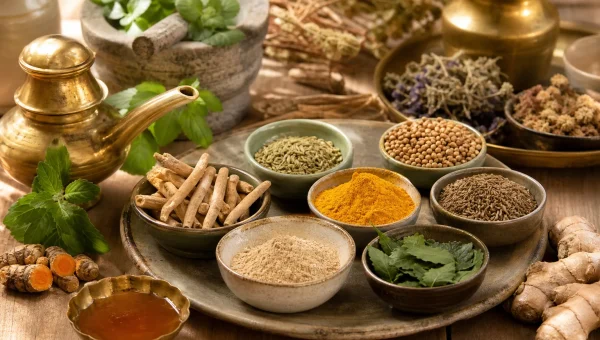
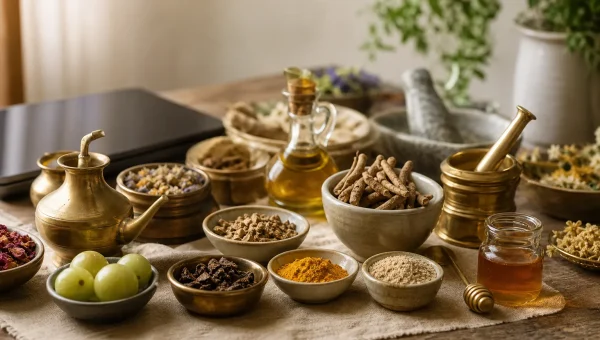
Classical Swedana may use prescribed leaves, roots, grains, decoctions, oils, milk, or other media according to the disease and the desired dry or unctuous effect. Ashtanga Hridaya includes Dashamula and several other plant materials in descriptions of steam-based treatment. This verifies that medicated heat exists in Ayurveda, but it does not verify that volatile compounds from herbs placed in a recreational sauna are absorbed through the skin or lungs in therapeutic doses.
Do not pour herbal decoctions, oils, or undiluted essential oils onto sauna heaters unless the manufacturer and facility permit a suitable product. Classical Nadi, Ushma, and Avagaha treatments use selected materials, controlled preparation, and professional judgement. Adding eucalyptus, mint, ginger, mustard, or Vacha to sauna stones does not reproduce those procedures. Claims that such vapours efficiently cross the blood-brain barrier or treat neurological disease are unverified.
For joint stiffness or a Vata-Kapha condition, an Ayurvedic physician may choose a local rather than whole-body procedure and may select dry, unctuous, bolus, poultice, directed-steam, or immersion therapy. That specificity is the real classical contribution: matching the medium and body area to the person instead of treating every complaint with maximal whole-body heat.
A Safer Post-Sauna Protocol
After properly administered Swedana, Ashtanga Hridaya describes gentle rubbing or massage, a warm bath, and the regimen associated with oleation. Charaka advises suitable food and avoidance of exercise for the remainder of the day in the therapeutic context. These directions do not prove that drinking cold water “closes the channels” or cancels the benefit. Modern safety is better served by replacing fluid loss, cooling comfortably, and watching for delayed dizziness.
- Cool gradually: Sit before standing. Sudden ice immersion is optional and may be inappropriate with cardiovascular disease or hypertension.
- Rehydrate: Drink according to thirst and sweat loss. Follow any medically prescribed fluid or sodium limits.
- Rest: Avoid immediate intense exercise, prolonged reheating, or alcohol.
- Use the correct sequence: Classical Snehana generally precedes Swedana; applying oil afterward as skin care is not the standard preparatory sequence.
- Track the response: Reduce or discontinue future exposure if recovery, dizziness, or blood-pressure control worsens.
For context, see Abhyanga self-massage, the Panchakarma overview, and the Ayurvedic weekend reset. Do not combine them into an unsupervised “detox stack.”
References
- Charaka Samhita — Swedadhyaya
- Easyayurveda (easyayurveda.com)
- Jamanetwork (jamanetwork.com)
- Sauna exposure leads to improved arterial compliance: Findings from a non-randomised experimental study (2018), PubMed
- Cardiovascular and Other Health Benefits of Sauna Bathing: A Review of the Evidence (2018), PubMed
- ACOG
- Benefits and risks of sauna bathing (2001), PubMed
- Heart (heart.org)
- CDC
Nothing in this article diagnoses or treats a medical condition. Use it as educational information and consult a qualified Ayurvedic practitioner or physician before starting herbs, supplements, detoxes, or therapeutic protocols, especially if pregnant, managing a condition, or taking medication.
Been using saunas for 8 years. The Pitta-aggravation warning for staying in too long finally explains why I always felt slightly irritable and inflamed after longer sessions, even though I felt virtuous. I was overheating my Pitta constitution and calling it health.
The distinction between dry sauna for Kapha types and steam room for Vata types is something my Ayurvedic doctor has mentioned but never explained this clearly. Now I understand why the steam room works so much better for me personally.
Asking for a family member — she has had prolapse symptoms since her third child and her gynaecologist has only discussed surgical options so far. The dietary recommendations in this article make sense but she is managing another chronic condition with medication. Is there a general principle for how to check whether the Ayurvedic herbs mentioned here might interact with existing prescriptions, or is that something only a qualified vaidya can assess individually?
The recommendation to avoid sauna during Pitta season without any qualification is oversimplified. People in hot climates use steam therapy year-round. The Pitta-season rule makes more sense in a European context than in, say, Chennai.
The safest part of the to Saunas advice is keeping it simple. The article avoids making it sound like a quick fix.
The safest part of the to Saunas advice is keeping it simple. I appreciate that it does not oversell the result.
The Bashpa Sweda protocol at home any guidance on minimum viable setup? I don’t have access to a professional steam room. Would a steam tent or even a very hot bath approximate the effect well enough?
The safest part of the to Saunas advice is keeping it simple. This would be easier to follow with a one-week sample plan.
I appreciated how the article distinguishes Swedana from just sitting in a hot room
The research cited here is from the 2015-2020 period. Is there more recent work that confirms or updates these findings?
The safest part of the to Saunas advice is keeping it simple. The main idea is clear even if someone is new to Ayurveda.
The point about individualized heat dose makes me wonder how to apply it at home
Good overview but I wanted more specificity on temperature ranges and timing. Saying ‘moderate heat’ for a Pitta type doesn’t help me set my sauna thermostat. Actual recommended temperature ranges for each dosha type would make this actionable.
I found the section on stopping signs more useful than a fixed timer
Does the article suggest any safe length for beginners with high blood pressure
is this suitable for pitta dominant people or mainly vata?
How long after Abhyanga should you wait before entering the sauna? the article says 15 to 20 minutes. ✨
The oil application before sauna is something my Kerala vaidya always insisted on. I never understood why you’d apply oil before sweating it off. The article explains it perfectly the heat drives the oil in, it doesn’t just sit on the surface.
Does this interact with blood pressure medication? asking because my father wants to try it.
Quick question: does the dosage change if someone is also on other medication?
tried this for 6 weeks and saw no difference, maybe im applying it wrong
Where can you source the herbs in India outside of major cities? I’m in a tier-2 town.
The part about adjusting based on prakriti was exactly what I needed.
this works in theory but practically very hard to source authentic herbs
the comparison of traditional sauna versus infrared versus steam in swedana terms was genuinely useful for deciding which to use
Appreciate that this goes into contraindications, most blog posts skip that part.
late to this but wanted to ask, do these recommendations still hold in 2027?
the dosage here seems higher than what my ayurvedic doctor recommended
where are the actual clinical trials? i need rct data before trying anything
How long before seeing results? the article mentions 4 to 6 weeks but is that for everyone.
I find the sauna too heating for my Pitta constitution even at lower temperatures, this article should address that more directly.
Followed the dosage table for 10 days and my sleep improved, will continue 🙏.
just started exploring ayurveda after years of allopathy, still a lot to absorb
The distinction between Sagni Sweda and Niragni Sweda opened up a whole area I hadn’t considered 🌿 I had been treating the sauna as one undifferentiated tool. Understanding that the type of heat, the timing relative to meals, and the dosha-specific duration all change the therapeutic effect makes it feel more like an actual practice than just sitting in a hot room. What is the recommended approach for someone who runs both Vata and Pitta high depending on the season?
some of these claims are very strong for what is essentially anecdote-level evidence
where can u source teh herbs in india outside of major cities? i’m in a tier-2 town
My constitution is Vata-Pitta, the article seems focused on one or the other.
The comparison between Finnish sauna and steam rooms clarified why they aren’t interchangeable
is the pre-sauna oil application appropriate for pitta types or is it too heating?
reading this after finding it on google, is this dosage still recommended? ✨ ठीक है
Would this protocol work if I travel frequently and can’t maintain a fixed routine.
just found this post, the section 3 protocol seems intensive for a beginner, any lighter version?
bookmarked this to share with my mother who has been struggling with the same issue
tried the morning routine for 2 months, gave up the timing is impossible with kids and a job
Tried this for 6 weeks and saw no difference, maybe I’m applying it wrong. नमस्ते
followed the dosage table for 10 days and my sleep improved, will continue 🙏
Tried the morning routine for 2 months, gave up the timing is impossible with kids and a job. धन्यवाद
does this interact with blood pressure medication? asking bcz my father wants to try it
Starting this next week, will report back in about a month.
the pitta protocol here caused a lot of heat and skin irritation for me
I liked the reminder that oleation usually comes before heat treatment
the steam versus infrared distinction deserves more evidence-based discussion, the ayurvedic equivalence isn’t straightforward
Can this protocol be used during active Ama states or only once Agni is strong?
Packaging this as science when most of it is tradition makes me skeptical.
starting this next week, will report back in about a month
can this protocol be used during active ama states or only once agni is strong? नमस्ते
how long before seeing results? the article mentions 4 to 6 weeks but is that for everyone नमस्ते
the part about adjusting based on prakriti was exactly what i needed
the sourcing section was a surprise, didnt know the extract grade mattered this much
the comparison of traditional sauna versus infrared versus steam in swedana terms was genuinely useful for deciding which to use 🙏
my constitution is vata-pitta, teh article seems focused on one or the other
Reading this after finding it on Google, is this dosage still recommended?
How long after Abhyanga should you wait before entering the sauna? the article says 15 to 20 minutes.
would this protocol work if i travel frequently and cant maintain a fixed routine
been following this for 3 weeks and my energy levels are much better, the protocol described here really clicked for me
i find the sauna too heating for my pitta constitution even at lower temperatures, this article should address that more directly
Will try this
It’s interesting that classical texts list thirteen forms of Swedana using different media
my constitution is vata-pitta, the article seems focused on one or the other
the swedana timing relative to meals was something i had been doing wrong, fixing that made the session feel more effective
appreciate that this goes into contraindications, most blog posts skip that part
the specific morning timing recommendation is practical, most articles skip that detail
The contraindications section is the part I needed most. I have a Pitta-dominant constitution and I’d been using dry sauna three or four times a week thinking more heat was always better for detox. The explanation of why excess heat increases Pitta rather than purging it is the kind of nuance that never comes up in standard gym advice. I’ve switched to shorter sessions with the cool-down protocol you describe and the difference in how I feel afterward is noticeable.
The Swedana timing relative to meals was something I had been doing wrong, fixing that made the session feel more effective.
My functional medicine doctor mentioned something similar, helpful to have the Ayurvedic framing too.
Good reminder on to Saunas. Small daily changes are easier to follow than a perfect plan.
I wonder if infrared cabins really fit into any of the ancient categories described
does this interact with blood pressure medication? asking because my father wants to try it
how long after abhyanga should you wait before entering the sauna? the article says 15 to 20 minutes
packaging this as science when most of it is tradition makes me skeptical
where can you source the herbs in india outside of major cities? im in a tier-2 town
my vaidya recommended something similar last month, good to see the reasoning explained
some of these claims are very strong for what is essentially anecdote-level evidence 🙏
The caution about combining heat with fasting feels practical for daily routines
Good reminder on to Saunas. The main idea is clear even if someone is new to Ayurveda.
How long before seeing results? the article mentions 4 to 6 weeks but is that for everyone. ✨
Helpful 💯
Tried the morning routine from this article and noticed a difference by day 5.
Where are the actual clinical trials? I need RCT data before trying anything.
tried this for 6 weeks and saw no difference, maybe i’m applying it wrong
Seeing the contraindications listed helps me think about when to skip a session
Doing this 🙏
The dosage here seems higher than what my Ayurvedic doctor recommended.
starting this next week, will report back in about a month नमस्ते
The Pitta protocol here caused a lot of heat and skin irritation for me.
My constitution is Vata-Pitta, the article seems focused on one or the other. 💯
The article’s emphasis on listening to the body matches what I’ve read elsewhere about heat therapy
Just started exploring Ayurveda after years of allopathy, still a lot to absorb.
This works in theory but practically very hard to source authentic herbs.
I’m curious about how seasonal adjustments work in practice for someone living in a humid climate
my functional medicine doctor mentioned something similar, helpful to have the ayurvedic framing too
The part about to Saunas feels realistic. The practical details matter more than people think.
Overall the piece frames sauna use as a therapeutic tool rather than a quick detox fix
how long before seeing results? the article mentions 4 to 6 weeks but is that for everyone
Some of these claims are very strong for what is essentially anecdote-level evidence.
Useful post
Been following this for 3 weeks and my energy levels are much better, the protocol described here really clicked for me.
The steam versus infrared distinction deserves more evidence-based discussion, the Ayurvedic equivalence isn’t straightforward.
tried the morning routine from this article and noticed a difference by day 5
Can this protocol be used during active Ama states or only once Agni is strong? 🌿
reading this after finding it on google, is this dosage still recommended? 🙏
The comparison of traditional sauna versus infrared versus steam in Swedana terms was genuinely useful for deciding which to use.
The part about to Saunas feels realistic. I would like to know how long to try it before judging results.
where are the actual clinical trials? i need rct data before trying anything 🙌
The Swedana timing relative to meals was something I had been doing wrong, fixing that made the session feel more effective. 💯
tried this for 6 weeks and saw no difference, maybe i’m applying it wrong 🌿
quick question: does the dosage change if someone is also on other medication? 🙏
Been following this for 3 weeks and my energy levels are much better, the protocol described here really clicked for me. 💯
This makes sense for to Saunas. I appreciate that it does not oversell the result.
i find teh sauna too heating for my pitta constitution even at lower temperatures, this article should address that more directly
The steam versus infrared distinction deserves more evidence-based discussion, the Ayurvedic equivalence isn’t straightforward. 🙏
packaging this as science when most of it is tradition makes me skeptical 🙏
Tried the morning routine for 2 months, gave up the timing is impossible with kids and a job.
Will try
Helpful