
At a glance
| Type | Internal Panchakarma therapy; medicated enema given by rectal route, mainly as Niruha/Asthāpana Basti and Anuvasana/Sneha Basti |
| Typical duration | One sitting may take 30–60 minutes including preparation and observation; a course may be 8, 16 or 30 bastis depending on strength, disease and physician’s plan |
| Main indications | Vata disorders such as low back pain, sciatica, osteoarthritis, stiffness, constipation, abdominal distension, neuromuscular pain and selected degenerative or wasting conditions |
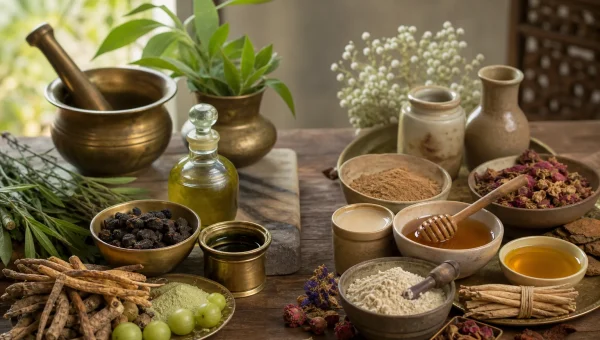
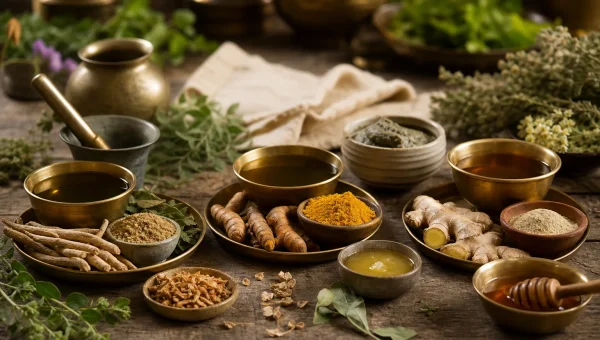
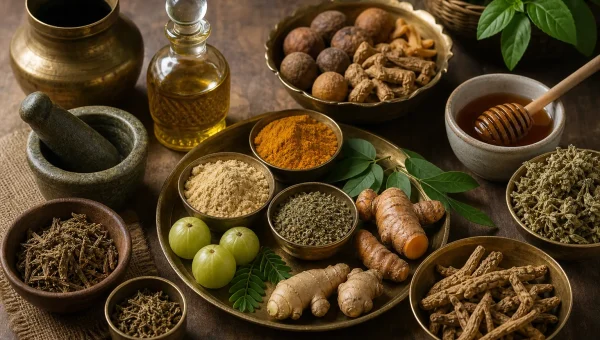
| Oils/herbs used | Sesame oil, Bala Taila, Sahacharadi Taila, Dhanvantaram Taila, Ksheerabala Taila; decoctions of Dashamula, Bala, Rasna, Eranda, Guduchi and other herbs chosen for the condition |
| Primary dosha | Vata, especially when seated in Pakvashaya, the colon region |
What is it?
Basti is one of the principal Panchakarma therapies of Ayurveda and is classically regarded as the most important treatment for aggravated Vata. In practice it means the carefully supervised administration of medicated oil, ghee, herbal decoction or a combined formulation through the rectal route. It is not the same as an ordinary cleansing enema: the medicine, dose, timing, patient preparation, retention period and post-care are selected after Ayurvedic assessment of dosha, agni, strength, age, bowel pattern and disease stage. The two main forms are Niruha or Asthapana Basti, in which a decoction-based mixture is used for stronger Vata-shamana and shodhana action, and Anuvasana or Sneha Basti, in which medicated oil or other unctuous substance is used for lubrication, nourishment and Vata pacification. Matra Basti is a smaller-dose oil basti often used more gently, especially when strong purification is unsuitable.
How it is done
- Assessment and planning: The physician examines prakriti, vikriti, agni, bowel habits, strength, age, season, disease stage and contraindications. The type of basti, medicine, dose and number of sittings are then prescribed.
- Preliminary preparation: Depending on the case, deepana-pachana herbs, light diet, internal or external oleation and mild swedana may be used so that Vata is softened and the body is ready to receive basti.
- Meal timing: Niruha Basti is usually given on an empty or appropriately light stomach, while Anuvasana or Matra Basti is commonly given after suitable light food, according to the physician’s judgement.
- Medicine preparation: For Niruha Basti, ingredients such as honey, rock salt, medicated oil or ghee, herbal paste and decoction are mixed in a specific order to form a smooth, lukewarm formulation. For Anuvasana or Matra Basti, the medicated oil is warmed gently.
- Positioning: The patient is placed comfortably, usually on the left side with the right knee flexed. The anal region and nozzle are lubricated to avoid trauma.
- Administration: The prescribed medicine is introduced slowly and steadily by trained staff using sterile, appropriate equipment. Force, haste and excessive pressure are avoided.
- Retention and observation: The patient rests quietly. In Niruha Basti, evacuation is expected after a suitable interval; in Anuvasana or Matra Basti, longer retention is often desired. The physician observes comfort, bowel response, pain, bloating, nausea, urgency and overall response.
- Post-procedure care: After evacuation or adequate retention, the patient is given rest, warm water if suitable and a light diet such as thin rice gruel, soup or easily digestible warm food. The next basti in the sequence is adjusted according to the previous response.
Indications
Basti is traditionally indicated where Vata is dominant, obstructed, depleted or moving abnormally. Common clinical uses include Gridhrasi-like sciatica, Kati-shoola or low back pain, Sandhigata Vata-like osteoarthritis, stiffness of joints, constipation with dryness, abdominal distension, dryness of tissues, certain neuromuscular pains, post-illness debility and selected reproductive or urinary Vata disorders under specialist care. It may also be included in Amavata or inflammatory joint presentations only after proper assessment, because the presence of ama, fever, poor digestion or acute inflammation changes the treatment approach.
Benefits
When correctly prescribed, Basti is intended to pacify Vata at its main seat, support normal movement of flatus, stool and urine, reduce dryness, soften rigidity, improve bowel regularity, ease pain and stiffness, and support mobility. Oil-based bastis are more nourishing, lubricating and strengthening, while decoction-based bastis are more cleansing and regulating. In classical Ayurvedic reasoning, Basti acts both locally in the colon and systemically through correction of Vata, but the benefit depends strongly on correct case selection, medicine choice, dose and after-care.
Oils & herbs used
The formulation is never chosen casually. For Vata disorders, sesame oil is a common base because of its warming, unctuous and Vata-pacifying qualities. Frequently used medicated oils include Bala Taila, Ksheerabala Taila, Sahacharadi Taila, Dhanvantaram Taila, Mahanarayana Taila and Eranda Taila, selected according to pain, stiffness, weakness, degeneration or bowel dryness. Decoction bastis may use Dashamula, Bala, Rasna, Eranda, Guduchi, Punarnava, Gokshura or other herbs according to the target tissue and dosha. A classical Niruha Basti may include honey, saindhava lavana, medicated oil or ghee, herbal paste and decoction; the proportions are adjusted for Vata, Pitta, Kapha, strength and disease stage.
Contraindications
Basti should not be self-administered. It is generally avoided or postponed in acute fever, severe indigestion or ama, acute diarrhea, dysentery, rectal bleeding, severe dehydration, marked exhaustion, immediately after heavy meals, uncontrolled vomiting, acute abdominal emergency, recent rectal or intestinal surgery, active severe piles or fissure with bleeding, severe cardiac or renal instability, and during pregnancy unless a qualified specialist has a specific indication and safety plan. Strong Niruha Basti is unsuitable for very weak, emaciated or fragile patients unless modified; oil basti is avoided when there is heavy ama, severe Kapha obstruction, poor digestion or conditions in which unctuous therapy is inappropriate.
What to expect & after-care
During administration, a mild sense of fullness, warmth or urge to pass stool may occur. Niruha Basti is expected to return with stool, gas and liquid after a suitable time; very rapid expulsion, no expulsion, severe cramps, dizziness, sweating, bleeding or persistent pain should be reported immediately. After Basti, keep warm, rest, avoid cold exposure, wind, heavy exercise, long travel, alcohol, sexual exertion, suppression of natural urges and heavy, dry or incompatible foods. Warm, light, freshly prepared meals are preferred. The physician may alter the next sitting if the previous basti caused poor retention, excessive purgation, bloating, fatigue or incomplete evacuation.
What the research says
Modern clinical evidence for Basti is promising but still limited. Published studies include small open-label or comparative clinical trials of Matra Basti or Kala Basti in conditions such as sciatica-like Gridhrasi, Sandhigata Vata or osteoarthritis, and Amavata correlated with rheumatoid arthritis; many report symptom improvement, but most have small sample sizes, limited blinding, variable formulations and short follow-up. Broader Ayurveda trials in osteoarthritis suggest possible benefit from multimodal Ayurvedic care, but they do not isolate Basti as the only active component. Therefore, Basti is best presented as a classical, physician-supervised Ayurvedic intervention with early clinical support, not as a proven replacement for urgent, surgical, neurological, rheumatological or conventional medical care. :contentReference[oaicite:0]{index=0}
FAQ
No. In Ayurveda, Basti is a therapeutic route for delivering specific medicines to treat Vata disorders. Some forms are cleansing, but others are nourishing, lubricating and strengthening. Calling it only a detox enema is inaccurate.
Classical Panchakarma Basti should be done only under a qualified Ayurvedic physician. Wrong medicine, dose, timing or technique can cause cramps, diarrhea, dehydration, aggravation of symptoms, injury or infection.
Neither is universally better. Niruha Basti is decoction-dominant and more cleansing or regulating; Anuvasana Basti is oil-dominant and more nourishing and lubricating. Many classical schedules combine them in a planned sequence.
It depends on the disease and strength of the patient. Traditional schedules include shorter courses such as Yoga Basti, moderate courses such as Kala Basti and longer courses such as Karma Basti, but modern practice often individualizes the number of sittings.
References
- Charaka Samhita, Siddhi Sthana, Chapter 2: Panchakarmiya Siddhi; indications and contraindications for Panchakarma and Basti. :contentReference[oaicite:1]{index=1}
- Charaka Samhita, Siddhi Sthana, Chapter 3: Bastisutriyam Siddhi; standard practices, apparatus, preparation, administration, posture and post-procedure regimen of Basti. :contentReference[oaicite:2]{index=2}
- Charaka Samhita, Siddhi Sthana, Chapter 4: Snehavyapat Siddhi; classical context for Sneha Basti and Matra Basti. :contentReference[oaicite:3]{index=3}
- Charaka Samhita, Siddhi Sthana, Chapter 10: Basti Siddhi; disease-specific Basti formulations and principles for dosha-based formulation. :contentReference[oaicite:4]{index=4}
- Sushruta Samhita, Chikitsa Sthana, Chapter 35: Netra Basti Pramana Vibhaga Chikitsitam; enema apparatus and dose considerations. :contentReference[oaicite:5]{index=5}
- Sushruta Samhita, Chikitsa Sthana, Chapter 37: Anuvasanottara Basti Chikitsitam; Anuvasana Basti procedure, dose and after-care.
- Ashtanga Hridaya, Sutra Sthana, Chapter 19: Basti Vidhi; classification, indications, contraindications and practical procedure of Basti. :contentReference[oaicite:6]{index=6}
- Ali M, Shukla VD, Dave AR, Bhatt NN. “A clinical study of Nirgundi Ghana Vati and Matra Basti in the management of Gridhrasi with special reference to sciatica.” AYU. 2010;31(4):456–460. doi:10.4103/0974-8520.82042. PMID: 22048539; PMCID: PMC3202251. :contentReference[oaicite:7]{index=7}
- Shah MR, Mehta CS, Shukla VD, Dave AR, Bhatt NN. “A clinical study of Matra Vasti and an Ayurvedic indigenous compound drug in the management of Sandhigatavata (Osteoarthritis).” AYU. 2010;31(2):210–217. doi:10.4103/0974-8520.72399. PMID: 22131712; PMCID: PMC3215366. :contentReference[oaicite:8]{index=8}
- Baria R, Joshi N, Pandya D. “Clinical efficacy of Panchamuladi Kaala Basti (enema) in the management of Amavata (Rheumatoid Arthritis).” AYU. 2011;32(1):90–94. PMID: 22131764. :contentReference[oaicite:9]{index=9}
- National Center for Complementary and Integrative Health. “Ayurvedic Medicine: In Depth.” Evidence and safety overview for Ayurvedic interventions. :contentReference[oaicite:10]{index=10}

Didn’t realize basti involved this much planning. The breakdown of Niruha and Anuvasana made the therapy feel a lot more precise than a basic cleansing enema.
The left side positioning, warm oil, and careful observation after administration make sense. It reads like a very controlled process, not something random.
Interesting that Vata is treated at its main seat in the colon region. That idea connects the bowel symptoms and the pain patterns in a way that is easy to follow.
The list of oils and herbs was helpful, especially Bala Taila and Dhanvantaram Taila. It shows how individualized the therapy can be.
Appreciated the note that food timing changes depending on the basti type. That kind of detail matters when people assume all enemas are the same.
The precaution about using trained staff and sterile equipment stood out. That should probably be emphasized more often in Ayurvedic articles.
Makes sense that constipation, back pain, and stiffness are all grouped under Vata imbalance here. The article ties the symptoms together in a practical way.
The 30 to 60 minute sitting time was more detailed than I expected. Helpful to know it includes prep and observation, not just the administration itself.
How do physicians decide between a shorter Matra Basti course and a longer sequence like 16 or 30 bastis? The article mentions strength and disease stage, but I wonder what that looks like in practice.
Is there a typical recovery window after a basti session before someone goes back to normal meals and activities? The post-care section got me curious about the rest of the day.
would someone with sensitive digestion usually start with oil-based basti first, or does the choice depend more on dryness versus ama? The distinction seems important.
For people dealing with sciatica or osteoarthritis, how often is basti combined with other Panchakarma therapies instead of used alone? That part would be useful to understand.
The article makes basti sound promising for Vata issues, but I still wonder what kind of clinical evidence supports it beyond traditional use. The specific conditions listed would be more convincing with study details.
The individualized planning sounds ideal, though in real life that also means cost and access could be a barrier. Not every patient is going to have a trained practitioner available for repeated sessions.
Seems like the safety depends a lot on proper assessment, which is reassuring, but the retention and preparation steps also sound easy to get wrong. I would want to see clearer guidance on who should avoid it altogether.