
As winter gives way to spring, skin that tolerated rich creams, thick balms, and heavier facial oils can begin to feel congested. The forehead and cheeks may look dull, pores may appear more clogged, and the products that felt protective in cold weather may suddenly feel too heavy. In Ayurveda, this is a seasonal signal: the routine that soothed cold-season dryness needs to become lighter, clearer, and more Kapha-balancing.
Why Your Winter Routine Backfires in Spring
Ayurveda explains seasonal skincare through Ritucharya, the practice of adjusting diet, lifestyle, and self-care according to the season. Classical Ayurvedic timing places Vasanta Ritu, or spring, roughly from mid-March to mid-May. During this period, Kapha that has accumulated through the cold season becomes mobilized by increasing warmth, and the classics advise lighter, more stimulating routines instead of heavy, oily habits.
That seasonal shift also makes sense from a practical skincare perspective. Warmth can increase sebum excretion on the skin, while acne and blackheads form when follicles become blocked with oil and dead skin cells. When warmer weather increases oiliness, layering thick creams, heavy occlusive balms, and rich facial oils can make the complexion feel waxy, dull, and congested.
The solution is not harsh stripping. Spring skincare in Ayurveda is about gradual transition: reduce heaviness, keep the skin hydrated, add mild cleansing and exfoliation, and support digestion and elimination without overcorrecting into dryness.
Step 1: Swap Heavy Oils for Lighter Spring Emollients
During colder months, richer oils and creams can be useful for dry, rough, wind-exposed skin. In spring, the same products may feel too occlusive, especially for combination, oily, or acne-prone skin. Keep the moisturizing step, but make it lighter.
Best spring facial oil choices:
- Sunflower seed oil – A light, linoleic-acid-rich oil that supports the skin barrier without the heavy feel of sesame or very rich balms.
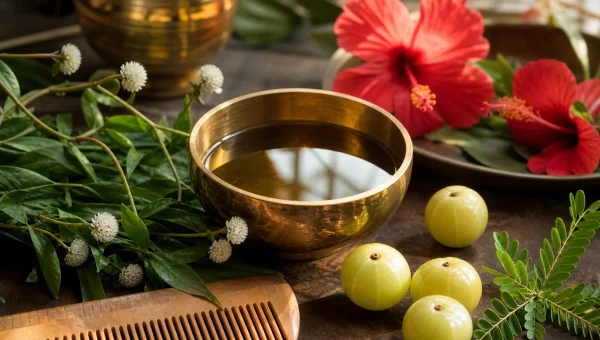
- Grapeseed oil – A lightweight oil naturally rich in linoleic acid and vitamin E, suitable when the skin needs slip and softness without a greasy finish.
- Aloe vera gel under oil – A good option when the skin feels dehydrated but congested. Apply aloe first, then seal with only a few drops of light oil.
How to apply: After cleansing, mist the skin with rose water or plain water. Warm 2-4 drops of sunflower or grapeseed oil between your palms and press gently into damp skin. Skip the heavy cream on top unless your skin still feels tight after 10 minutes.
Safety note: Mustard oil is pungent and can irritate facial skin, especially when used neat. Avoid using mustard oil on the face, broken skin, rosacea, eczema, or highly sensitive skin. Patch-test every new oil before regular use, and consult a qualified practitioner or dermatologist if you have active acne, dermatitis, or a diagnosed skin condition.
Step 2: Add Garshana-Style Dry Massage
Classical spring regimen recommends movement, exercise, and udvartana, a dry rubbing or powder-massage practice used to counter Kapha heaviness. A gentle Garshana-style dry massage is a simple home adaptation for spring: it refreshes the skin surface, helps remove dead surface cells, and brings a feeling of lightness before bathing.
How to practice Garshana-style dry massage:
- Before your morning shower, use raw silk gloves or a soft natural-bristle body brush on completely dry skin.
- Use long strokes on the arms and legs, moving from the hands and feet toward the center of the body.
- Use gentle clockwise circles over the abdomen.
- Keep the pressure firm but comfortable. The skin may look slightly pink, but it should not become red, scratched, or irritated.
- Spend 3-7 minutes total, then shower with warm water.
Practice this 2-3 times per week during spring. Avoid dry brushing over active rashes, inflamed acne on the body, varicose veins, wounds, sunburn, or any area that feels painful.
Step 3: Use a Kapha-Clearing Spring Ubtan
Ubtan is a traditional cleansing paste made from fine powders and liquid. For spring, the goal is to keep the formula light, mildly exfoliating, and non-greasy so it can refresh dull, oil-prone skin without damaging the barrier.
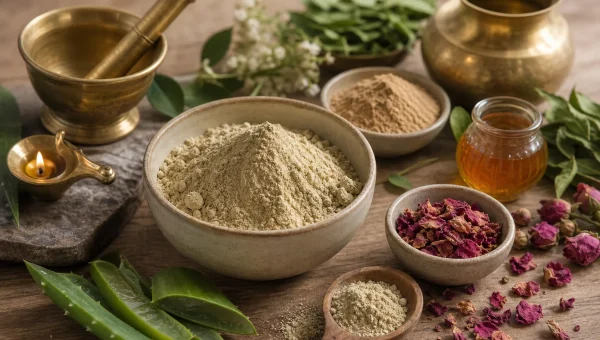
Kapha-Balancing Spring Ubtan
This ubtan can be used for the face or body. Make the dry mix in a clean jar and activate only the amount you need each time.
Dry mix:
- 4 tablespoons besan (chickpea flour), as the gentle cleansing base
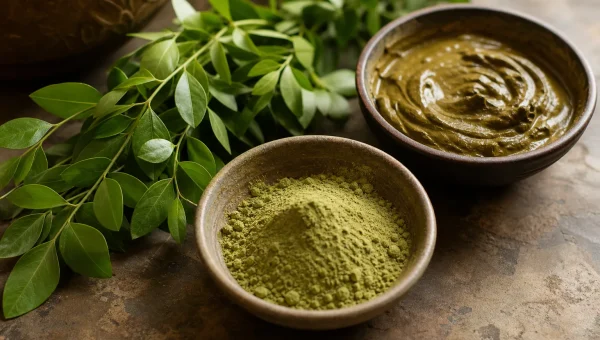
- 1 tablespoon neem powder (Azadirachta indica), for a bitter, cleansing Ayurvedic profile
- 1 tablespoon tulsi powder (Ocimum tenuiflorum), for an aromatic, refreshing quality
- 1 teaspoon turmeric (Curcuma longa), used sparingly to avoid staining
- 1/2 teaspoon lodhra powder (Symplocos racemosa), a traditional astringent herb
To use: Take 1 tablespoon of the dry mix in a small bowl. Add enough rose water, plain water, or aloe vera gel to make a thin paste. Apply to damp skin with gentle circular motions. Leave on for 2-5 minutes, then rinse with lukewarm water. Use 2-3 times per week instead of using it aggressively every day.
Sensitive skin modification: Avoid lemon juice on the face if you have sensitive skin, Pitta-prone redness, eczema, rosacea, or recent sun exposure. Citrus juice can irritate the skin and may trigger a phototoxic reaction when followed by sunlight. Use rose water, aloe vera gel, plain water, or a small amount of plain yogurt instead.
Step 4: Use a Weekly Multani Mitti Mask
Multani Mitti, or Fuller’s earth, is a clay traditionally used in Indian skincare for oily, dull, and congested skin. Cosmetic clays are valued because they can adsorb oiliness, sweat, and surface impurities, making them useful when spring skin feels heavy or shiny.
Neem and Multani Mitti Spring Mask
This mask is best used once weekly. Keep the paste moist while it is on the skin; letting clay crack completely dry can leave the face tight and irritated.
- 2 tablespoons Multani Mitti
- 1 teaspoon neem powder
- Rose water or plain water to mix
- Optional: 1 drop tea tree essential oil, only if your skin already tolerates it
Method: Mix the clay and neem in a glass or ceramic bowl. Add rose water gradually until you get a smooth paste. Apply an even layer to the face, avoiding the eyes and lips. Leave on for 8-10 minutes, or until the edges begin to dry while the center is still slightly damp. Rinse with lukewarm water and follow with aloe vera gel or 2-3 drops of sunflower oil.
Use this mask once per week. Very oily skin may tolerate it twice weekly, but dryness, burning, flaking, or tightness means the frequency is too high.
Allergy warning: Tea tree oil can irritate the skin and may cause allergic contact dermatitis in some people. Never apply it undiluted. Omit it completely during pregnancy, breastfeeding, eczema flares, rosacea flares, or if your skin reacts easily to essential oils.
Step 5: Switch from Heavy Oil Layers to Rose Water and Aloe
If you used Kumkumadi Tailam, sesame-based oils, rich creams, or balm-like moisturizers through winter, spring is the time to use them more sparingly or pause them if your pores feel congested. Replace heavy layering with a simple hydrating toner that gives freshness without heaviness.
Spring toner:
- 3 parts pure rose water (Rosa damascena hydrosol or distilled rose water)
- 1 part pure aloe vera gel, fragrance-free if store-bought
Mix a small amount in a clean spray bottle and store it in the refrigerator. Make small batches and use within a few days. Spritz onto clean skin before applying a light oil. Rose water keeps the step refreshing, while aloe vera gives lightweight hydration without the heavy feel of cream.
This approach also fits the broader principle of a Tridoshic skincare routine: keep a stable foundation, then adjust the weight, texture, and herbs according to season and skin response.
Step 6: Support Spring Skin from Within
Ayurveda does not treat spring skin congestion as only a surface issue. Vasanta routines traditionally emphasize lightness, movement, appropriate cleansing, and support for digestion. Internal herbs should be individualized, especially if you are pregnant, breastfeeding, taking medication, or managing a medical condition.
Triphala for Gentle Digestive Support
Triphala is the classic three-fruit Ayurvedic blend of Amalaki, Bibhitaki, and Haritaki. It is traditionally used as a digestive and eliminative support, which makes it a common choice when spring routines feel sluggish or heavy. Use it only in a dose and form appropriate for your constitution and current health status.
Manjistha for Traditional Skin and Rakta Support
Manjistha (Rubia cordifolia) is traditionally associated with skin, complexion, and Rakta-related Ayurvedic formulations. It is better used with practitioner guidance rather than casually added to every spring routine, because internal herbs can interact with medications and may not suit every person.
Important: Do not start internal herbs during pregnancy, breastfeeding, fertility treatment, anticoagulant or antiplatelet medication use, chronic illness, or active medical treatment without consulting a qualified Ayurvedic practitioner and healthcare provider.
Your Spring Transition Timeline
Use this four-week timeline as a gentle transition rather than a rigid prescription. The aim is to reduce heaviness step by step while watching how your skin responds.
| Week | Action |
|---|---|
| Week 1 | Reduce heavy creams and rich facial oils. Begin rose water and aloe toner. Use sunflower or grapeseed oil in small amounts. |
| Week 2 | Add Garshana-style dry massage 2 times per week. Introduce the spring ubtan 2 times per week. |
| Week 3 | Add the weekly Multani Mitti mask. Continue keeping moisturizers light and non-greasy. |
| Week 4 | Assess your skin. If it feels dry, reduce clay and ubtan frequency. If it still feels congested, review product heaviness and cleansing habits. |
Putting It All Together
The core Ayurvedic principle is simple: your routine should change with the season. Spring asks for lightness, movement, mild cleansing, and intelligent hydration. Instead of trying to moisturize your way through Kapha-type congestion, reduce product heaviness, cleanse gently, add dry massage and ubtan in moderation, and keep internal herbs practitioner-guided.
Your skin is not betraying you in spring. It is responding to a new season. When your routine becomes lighter and more rhythmic, the skin often looks clearer, fresher, and less burdened by the products that were helpful in winter.
If you are new to Ayurvedic skincare and want a year-round foundation to build on, start with our complete Tridoshic Skincare Routine and adjust seasonally from there.
For a deeper understanding of how dry brushing fits into your self-care practice, read our detailed Garshana guide.
Disclaimer: This article is for educational purposes only and does not replace professional medical advice. If you have acne, rosacea, eczema, dermatitis, allergies, pregnancy, breastfeeding, or any diagnosed skin or medical condition, consult a dermatologist, qualified Ayurvedic practitioner, or healthcare provider before making changes to your routine.
References
- Charaka Samhita — Tasyashiteeya Adhyaya
- The effect of local temperature variations on the sebum excretion rate (1970), PubMed
- Mayoclinic (mayoclinic.org)
- Lipid mediators in acne (2010), PubMed Central
- Anti-Inflammatory and Skin Barrier Repair Effects of Topical Application of Some Plant Oils (2017), PubMed Central
- Grape Seed Oil Compounds: Biological and Chemical Actions for Health (2016), PubMed Central
- NCBI
- Dose-response study of topical allyl isothiocyanate (mustard oil) as a human surrogate model of pain, hyperalgesia, and neurogenic inflammation (2017), PubMed
- The Antimicrobial Potential of the Neem Tree Azadirachta indica (2022), PubMed Central
- Tulsi – Ocimum sanctum: A herb for all reasons (2014), PubMed Central
- Potential of Curcumin in Skin Disorders (2019), PubMed Central
- Mdpi (mdpi.com)
- Melaleuca alternifolia (Tea Tree) oil: a review of antimicrobial and other medicinal properties (2006), PubMed Central
- The efficacy of 5% topical tea tree oil gel in mild to moderate acne vulgaris: a randomized, double-blind placebo-controlled study (2007), PubMed
- A review of the toxicity of Melaleuca alternifolia (tea tree) oil (2006), PubMed
- Phytophotodermatitis from making sangria: a phototoxic reaction to lime and lemon juice (2015), PubMed Central
- Dermnetnz (dermnetnz.org)
- Moisturizing effect of cosmetic formulations containing Aloe vera extract in different concentrations assessed by skin bioengineering techniques (2006), PubMed
- Aloe vera: a short review (2008), PubMed Central
- Webprod (webprod.hc-sc.gc.ca)
- Therapeutic Uses of Triphala in Ayurvedic Medicine (2017), PubMed Central
- A comprehensive review of Rubia cordifolia L.: Traditional uses, phytochemistry, pharmacological activities, and clinical applications (2022), PubMed Central
- Americanpregnancy (americanpregnancy.org)
Reading this later and the Spring Skincare Reset advice still feels relevant. This is the kind of detail readers can test slowly.
I had this exact experience this year. Skin was perfect all winter with my heavy moisturizer and then March arrived and everything congested. The Kapha accumulation explanation is more useful than what my dermatologist said, which was ‘hormones probably’.
Does the transition need to be gradual over 2 weeks or can you switch products immediately? I live in a climate where winter-to-spring temperature shift is rapid and I do not have 2 weeks to phase out my winter routine.
The connection between Kapha-heavy winter diet and spring skin congestion is something I would not have made without this article. I eat more dairy and heavier food in winter. Reading that this also affects the skin through the inside-out pathway makes me want to change both the skincare and the diet simultaneously.
The Ubtan recipe for spring skin clearing is something my mother made with besan and turmeric every spring without calling it seasonal skincare. I was embarrassed by it as a teenager. Using it now for my own children and they will not be embarrassed because they will understand why.
I am a man and had never thought about seasonal skincare. Reading this I realize my persistent dry but oily skin in spring every year is a Kapha-Vata transition pattern. The dryness is leftover Vata and the oiliness is new Kapha accumulation. Treating them the same way was the mistake.
The lymphatic drainage massage for face in spring is the recommendation I am most interested in. I notice puffiness specifically in spring and have never known what to do with it. The Kapha accumulation in lymphatic channels makes anatomical sense.
Switching from sesame oil to sunflower oil made my forehead feel less congested after just a few days.
This article conflicts with advice I was given by a conventional aesthetician who said to keep the same routine year-round and just adjust for weather. The seasonal dosha approach suggests the underlying skin physiology is shifting, not just the environmental conditions.
My wife has rosacea and the spring Pitta aggravation described here tracks with her annual flare exactly. The first warm days trigger a visible flush response. Is there a modified spring transition for Pitta-sensitive skin that manages the Pitta increase while still clearing Kapha?
I tried the rose water and aloe toner recipe and noticed my pores looked tighter by the weekend.
Reading this later and the Spring Skincare Reset advice still feels relevant. I would like to know how long to try it before judging results.
Dry brushing in spring as described here has been part of my grandmother’s morning routine forever. She calls it removing the winter skin. Seeing it described as Kapha-clearing Garshana makes me laugh. She was practicing Ayurveda and calling it common sense.
Does anyone else find that dry brushing before shower leaves the skin tingling but not irritated?
The garshana routine with raw silk gloves helped reduce the puffiness around my jawline.
I added the neem and tulsi ubtan to my Wednesday routine and saw fewer blackheads on my cheeks.
Using multani mitti once a week seemed to absorb the excess shine that usually appears by midday.
I was skeptical about diluting mustard oil, but the mix with sunflower oil felt light and warmed my skin nicely.
The advice to layer only a light oil in spring matches what I noticed about my skin feeling suffocated by heavy cream.
Has anyone tried the manjistha tea and noticed a clearer complexion after two weeks?
I appreciate the step by step timeline; week three felt like the turning point for my oily T zone.
The explanation about kapha season liquefying accumulated toxins made sense of my winter breakout pattern.
Switching to a lighter toner helped my makeup sit better without sliding off by noon.
not sure about some of the claims here. would like to see proper citations for the traditional references
good information but the references section would make this much more credible
reading this in 2027, has anything changed about the dosage recommendations since this was published?
Saved this
trying the lip scrub recipe with honey and sugar. first time in years my lips aren’t chapped in winter
Reading this later and the Spring Skincare Reset advice still feels relevant. Good starting point for a cautious reader.
I found the caution about pregnancy and mustard oil useful; I skipped it and stuck with grapeseed oil.
this is the most detailed breakdown of the topic I’ve found. saving for reference
The suggestion to store the rose water and aloe mix in the fridge kept it fresh for the whole week.
The Spring Skincare Reset explanation is clearer than most short posts. The examples make the advice less abstract.
following this from UK, hard to find some of these herbs here
been doing this for 6 months, amazing difference in energy levels
useful info but hard to find a practitioner who does this type of treatment outside major cities
started this protocol 2 weeks ago. nothing notable yet but will report back in a month
🙌 Very helpful, thank you
I tried something similar on my own without guidance and had side effects. really recommend consulting a vaidya first ठीक है
rose water as a toner before kumkumadi is the step most people skip according to my Ayurveda teacher
been following this blog for 6 months and this is one of the more grounded posts 🙏
which of these approaches works best for Kapha constitution? the article mixes all three doshas
the basic concepts here match what I learned in my yoga teacher training
kumkumadi has been in my routine for 8 months now. hyperpigmentation around chin area reduced by maybe 40%. patient process
tried 3 of the suggestions here. 2 worked well, 1 made no difference. good enough ratio for me
my vaidya in Pune recommended exactly this. nice to see it confirmed here
I was looking for a plain explanation of Spring Skincare Reset. This would be easier to follow with a one-week sample plan.
udvartana once a week for 6 weeks and the texture change is real. kapha skin needs this kind of stimulation
not sure if its the herbs or the diet changes that made the difference
Doing this
tried this for 30 days, mixed results. maybe my constitution assessment is wrong
the translation of Sanskrit terms throughout helps a lot for those of us learning this system ठीक है
the quality of herbs varies so much between brands. really hard to replicate these results
late to this but wanted to ask if anyone has combined these approaches with conventional treatment
Good read
The Spring Skincare Reset angle is useful here. A few more examples would still help.
would prefer more citations in the text itself
just found this via Google search, is the protocol here still the current recommendation?
the layering order you described is exactly where I was going wrong. oil after moisturizer was blocking absorption
would love a follow-up article on the same topic but for elderly patients